

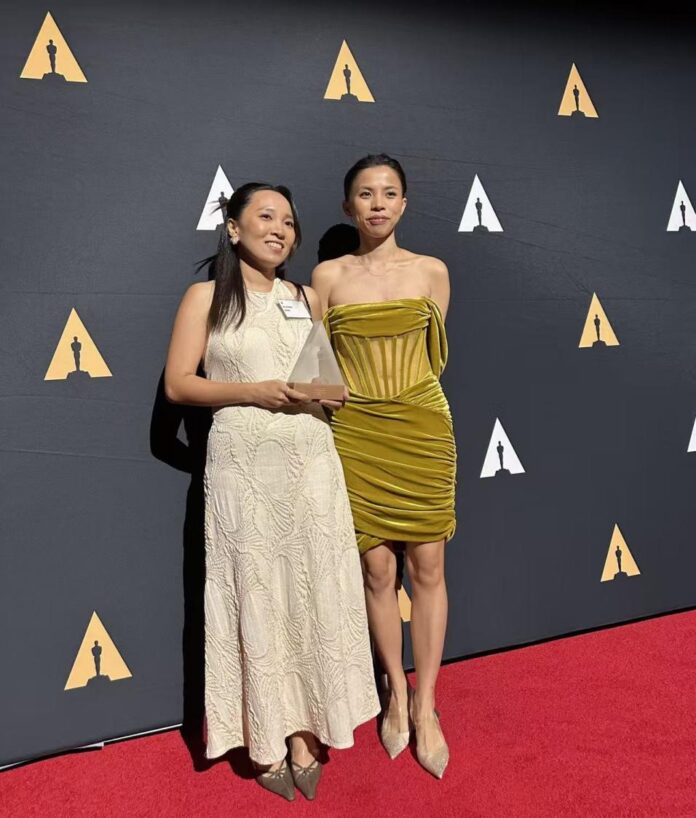
Active between New York and Asia, the producer Ni-Chun Shih is redefining the possibilities of short-form and vertical screen storytelling with her unique cross-cultural perspective and deeply humanistic narrative approach. Drawing from her experience in theatre and immersive performances, she brings the emotional architecture and spatial dynamics of the stage to the screen, continuously pushing formal boundaries while maintaining a rare emotional sensitivity.
In recent years, the vertical short films she has produced have amassed over 20 million views worldwide, challenging the conventional belief that short formats cannot convey depth. The documentary 《I Remember》, which she produced, further demonstrates her powerful narrative voice. Spanning five years of filming, it gently yet resolutely captures the fear, loneliness, and resilience of ordinary people during the pandemic, hailed as a “rare work that delves into the emotions of the era through personal memory.”
Whether exploring familial impacts of Alzheimer’s in the musical 《Where Are You》 depicting the internal experiences of mental illness in 《Awake》 or capturing the lived reality of a transgender woman in 《In This Moment》she consistently focuses on individuals often overlooked by mainstream narratives, striving to reveal the complexity of their emotional experiences within limited time and frame.
In this interview, Ni-Chun Shih discusses her transition from theatre to film, how her cross-cultural work has shaped her narrative philosophy, and the breakthroughs, struggles, and ongoing exploration in her work with vertical formats and documentary filmmaking.
What first drew you to the world of cinematography? What sparked your initial interest in this field?
My path into cinematography didn’t begin with film—it began in the world of live performance. Working in theatre and immersive shows, I became acutely aware of how a single visual decision—an angle of light, a shift in color, the placement of a performer—could completely alter the emotional temperature of a moment. What drew me in wasn’t the spectacle, but the emotional precision that visual choices could unlock.
Over time, that curiosity deepened into a more fundamental question: How do we translate an internal experience into something an audience can see, feel, and genuinely understand? That question inevitably led me toward cinema.
When I later transitioned into screen-based storytelling in New York, it felt as though the visual vocabulary I’d been searching for finally revealed itself. Cinematography offered a way to merge structure with intuition—to frame human vulnerability, shape rhythm, and construct emotional architecture in ways that theatre could only hint at.
And working in vertical formats added yet another layer. Rather than limiting expression, the smaller frame intensified it. It created a more intimate pathway between the story and the viewer, allowing emotional moments to land more directly and, in many cases, more universally. The frame becomes narrower, but the connection often becomes sharper.
How have your cross-cultural journeys influenced your creative inspiration or presented challenges?
Working across China and the United States has reshaped not only how I understand culture, but how I understand people.
I’ve come to believe that while culture informs behavior, human vulnerability is universal. And as a producer, that’s where my work begins—not with aesthetics or scale, but with the emotional contradictions that define us.
No matter the country, I’m drawn to stories rooted in the lives of ordinary individuals – people who often slip through the cracks of headline-driven narratives. Their struggles may look different on the surface, but the underlying questions are the same: How do we love under pressure? How do we endure when systems fail us? What does resilience look like in private moments? These questions guide the projects I choose to push forward.
In China, I developed the musical Where Are You, which examines a mother-daughter relationship strained by Alzheimer’s—an intimate portrait of caregiving that quietly mirrors broader social anxieties around aging and responsibility.
In New York, producing Awake allowed me to explore the internal landscapes of mental illness through a blend of theatre and music. Instead of explaining the condition, we aimed to inhabit it—to give form to the unseen and unspoken.
In This Moment examines the lived reality of a transgender woman navigating conflicting societal expectations. The film asks what it means to be visible, and at what cost. As a producer, my role was to protect the emotional truth of the narrative while ensuring the team had the psychological safety to handle such delicate terrain with respect.
And in the documentary I Remember, we captured how everyday people endured the early years of the pandemic—how fear, grief, and perseverance unfolded not in institutions but in living rooms, kitchens, and hospital corridors. It’s a story about politics, yes, but told through the lens of personal survival.
Across these works, I’ve learned that small stories can hold enormous weight, often revealing the social pressures that shape us far more honestly than grand narratives do.
The challenge, of course, lies in the reality that each society has its own boundaries— different thresholds for what can be shown, asked, or questioned. But as a producer, part of my job is navigating those boundaries without diluting the truth.
I’m constantly looking for creative strategies—whether through form, character, or platform—to ensure these stories are not only made, but heard.
At the end of the day, my work is about creating spaces where difficult questions can be asked safely, compassionately, and with artistic rigor. And if I can help bring stories across borders—geographical, cultural, or emotional—then I feel I’ve done my job.
You’ve transitioned through various roles, from stage manager to producer. Which stage of your career has had the most profound impact on your current philosophy of visual storytelling?
The stage of my career that shaped my vision most profoundly was the years I spent producing theater and live performance. Working in those environments taught me something essential: every story—no matter its scale or medium—must begin with a question of intention. Not “What can we make?” but “What truth are we trying to express?”
Different formats come with different constraints, but the stories I’m drawn to have always revolved around humanity—its fractures, its resilience, its contradictions. That means the central task of producing, for me, is not logistical but philosophical:
How do we protect the emotional integrity of a narrative? How do we build creative systems where vulnerability, honesty, and complexity can surface without being compromised?
Theater trained me to see storytelling as an ecosystem—one where timing, space, bodies, and emotion move together. But it also made me aware of the deeper responsibility a producer carries: to create the conditions in which artists can articulate something truthful, and audiences can genuinely feel it.
That perspective ultimately pushed me beyond the boundaries of format. It led me to film and digital storytelling in New York, not because I was seeking a new medium, but because I wanted to expand the types of human questions I could explore— and the audiences who might encounter them.
In that sense, my career has been less about changing industries and more about refining a single conviction: that storytelling, in any form, is a search for emotional truth—and my role as a producer is to safeguard that search.
At DramaBox, you led the production of vertical short dramas that accumulated over 20 million views worldwide. What do you consider the most innovative aspect of this project?
The innovation lies not only in adapting stories for a vertical screen format, but also in challenging the preconceived notion that “short films and action-driven content are inherently superficial.” For us, the question has never been “How to make it more fashionable?”, but rather “How to preserve emotional authenticity within a compressed narrative form?”
We don’t see vertical screen film as a technological limitation, but rather as a completely new cinematic language. We focus on the emotional structure of each story: how intimacy is amplified when the screen is held in hand; how limited field of vision enhances tension; how the meaning of silence differs when the audience is so close to the characters.
We have never viewed vertical screen film as “fast food.” We see it as a space where empathy, moral conflict, and social commentary can coexist—simply presented through visuals reflecting contemporary viewing patterns.
The global impact we’ve achieved is not accidental. It stems from our firm belief that simplicity does not diminish emotional depth. With careful planning, even a short 60- second story can carry the weight of the human predicament. And audiences, wherever they are, will be moved by this sincerity.
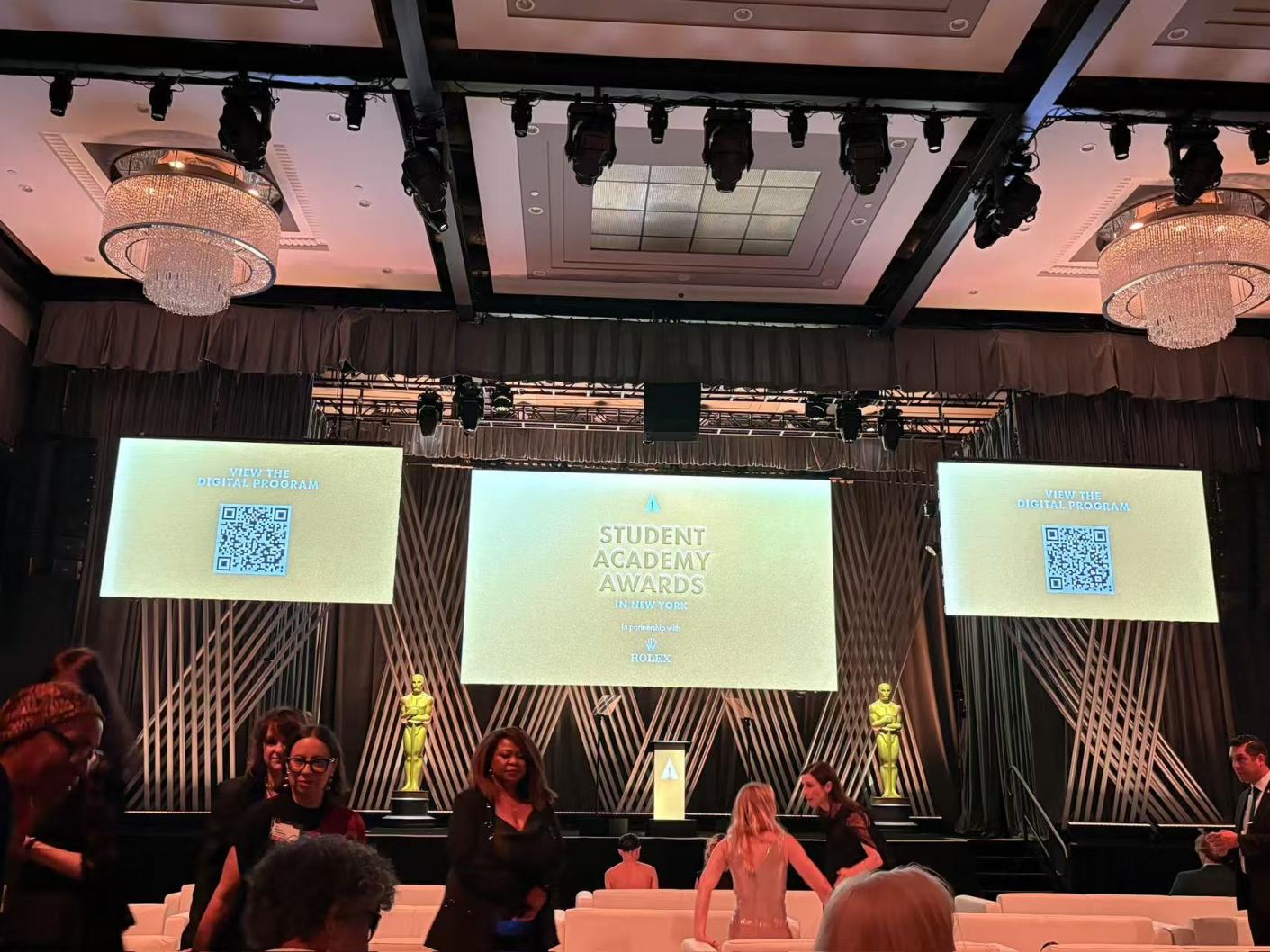
As a producer, your documentary I Remember won the Bronze Medal at the 2025 Student Academy Awards. What inspired this project, and what were some of the most groundbreaking aspects of its production?
The inspiration for I Remember stems from the director’s deep concern with the fragility of memory—and of humanity itself—in the face of a collective catastrophe. Fleeting, imperfect, yet intensely private memories gradually coalesce into a shared history. For me, the pandemic has always been more than a global event; it comprises millions of individual emotional timelines, each marked by fear, isolation, resilience, and loss. As a filmmaker, I feel a responsibility not only to document events, but to capture the psychological resonance they leave behind.
The project spans five years. The director, then an emerging documentary filmmaker, arrived in Wuhan during the initial lockdown with the intent to film the unfolding crisis. Her personal relationships, her commitment to the craft of documentary, and her own journey of growth intersected with the extraordinary circumstances in Wuhan, producing a film that is intimate yet profoundly expansive.
I Remember does not aim to sensationalize or pass judgment. It quietly records the decisions and dilemmas faced by ordinary people in extreme circumstances, and the moments when their lives intersect in unexpected ways.
Ultimately, the film exists at the intersection of personal and collective experience. From a producer’s perspective, my priority was never spectacle, but honoring the singularity of each story while revealing the social and emotional threads that bind us. I Remember is at once a meditation on memory, a testament to human resilience, and a statement about the ethical imperatives of documentary filmmaking: authenticity, empathy, and a meticulous attentiveness to the subtleties of lived experience.
Looking ahead, what kind of change do you hope your future works will inspire in the film and entertainment industry?
Looking ahead, I hope my work can expand the possibilities of short films and vertical- screen storytelling. These formats are often dismissed as secondary or optional, yet I
believe they can carry emotional depth, cultural nuance, and cinematic beauty. I also see them as a way to explore forms of expression that transcend the current limitations of screen formats. My aim is to create work that demonstrates small screens can tell grand stories and
highlights the appetite of global audiences for diverse, cross-cultural voices. Ultimately, I want to help shape an industry where form does not constrain artistic ambition—where creators can move freely across borders, genres, and platforms to tell stories that resonate universally while remaining deeply personal.

