

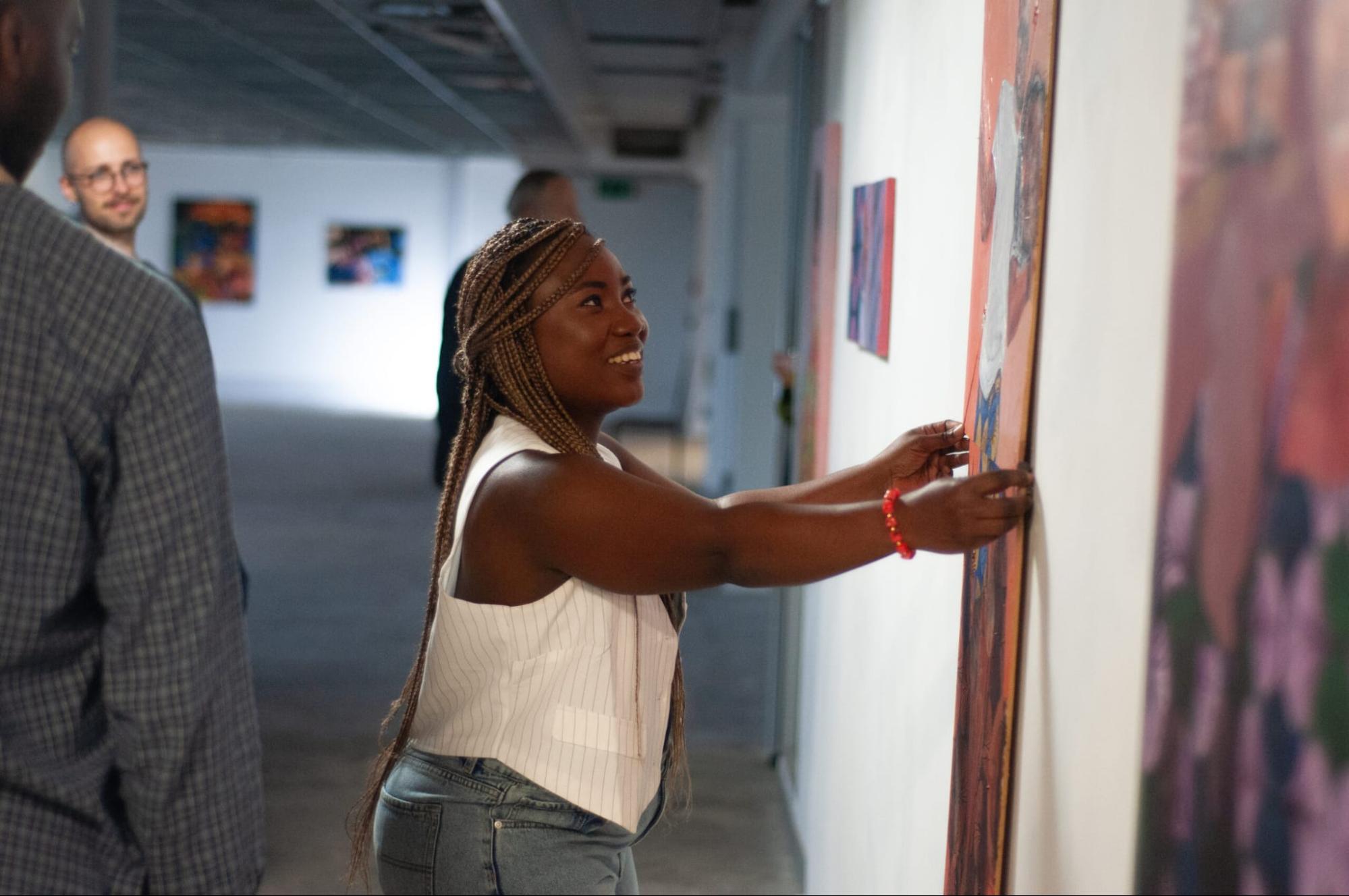
When we see an artwork, we are seeing the final output of a creative journey. While it can be inspiring in itself, sometimes the value lies in witnessing how the work was created. Oluwaseun Ademefun applies this to her creative practice, opening it up so that others can see her creating art, and this extends to her participatory workshops.
Art has therapeutic benefits in viewing and creating it, and it’s this community value that the artist applies to her work. Community is vital in her native Nigeria, but here in the UK, it can often feel fractured, with many viewing our current generations as living through a loneliness epidemic. Her work embodies the idea of community and how it can create bridges across divides.
In her work ‘Generational Identities’, we see how persons from different generations are wrenched apart as the canvas curves away from the frame, leaving a gap between them. Yet it’s not a gap so large that it can’t be overcome. It’s recognising a communication problem, but it strikes me as hopeful work.
In her painting of Gbemisola, we see a young girl struggling to fit into British society while remembering her Nigerian roots. It’s a struggle that many immigrant children face as they want to assimilate with their new friends, adopting a Western name and values, while often putting their home country behind them. Yet it’s an identity that many of those same individuals return to as they age, proving that it’s what makes us different and stand out that is our strength. It’s an experience any first-generation migrant can identify with, and many second-generationers like myself also find personal.
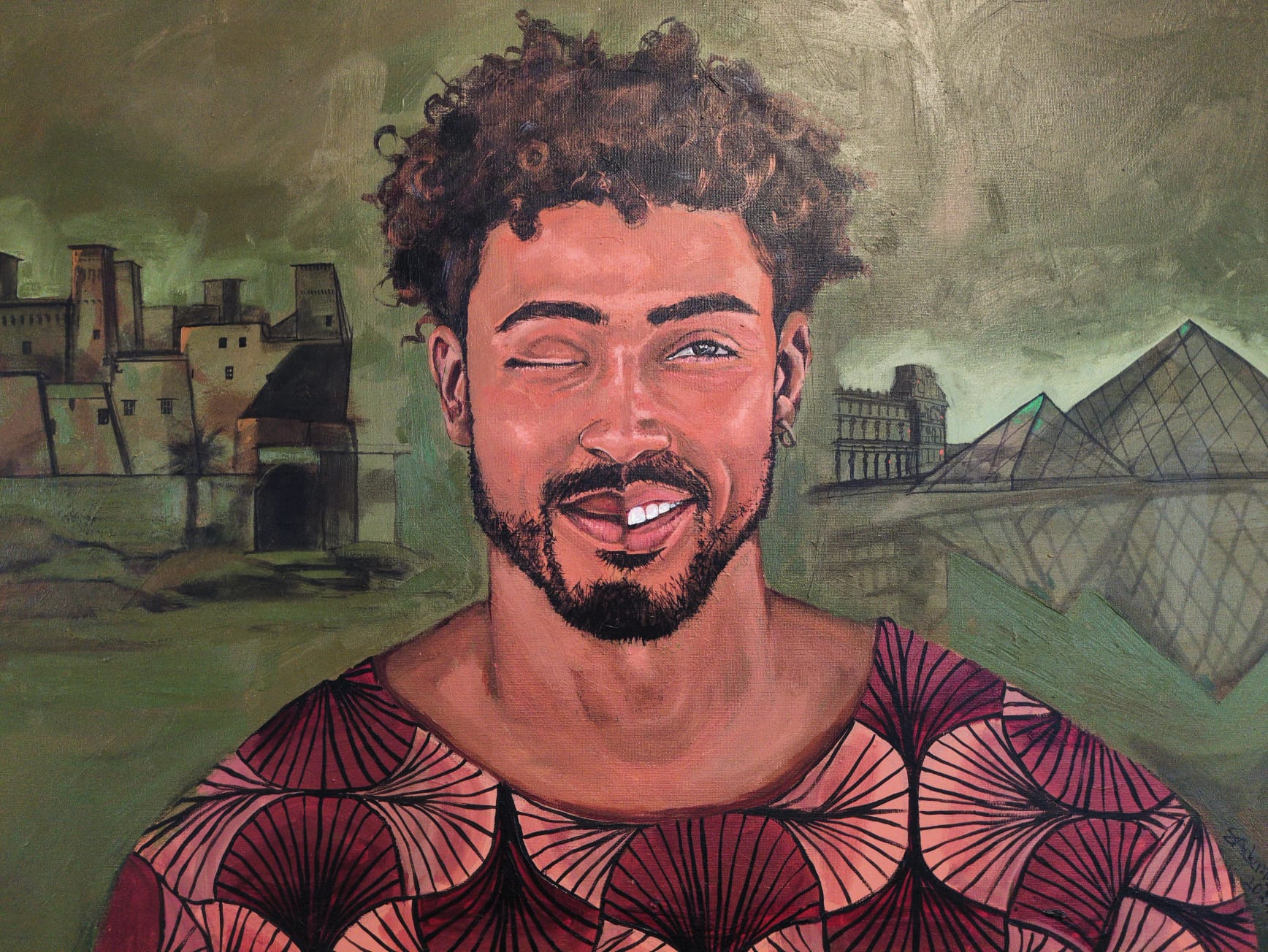
We see a similar story of dual identities play out in the painting ‘Morrocan’. On one side is his Moroccan hometown, and Le Louvre on the other, as he has travelled to Paris for financial opportunities. It’s that delicate balance of remembering one culture, while assimilating another, and many of us feel like we can never fully fit into either, becoming what are referred to as ‘third culture kids’.
Ademefun can also apply this vision to murals, as we see in one she designed in Southwark, now on display in Clichy, France. Some of her works incorporate discarded items, with a nude woman’s breast made of wine corks and a smoking man collaged from non-biodegradable materials. It’s a recognition that we are over-polluting the planet. If artists are going to provide a better vision for the planet’s future, they must also incorporate sustainability into their practice. Using other materials can add unique textures to artworks, beyond what paint alone can achieve. It also draws people in to interact with the works and study the intricate details and materials of each.
While recognising contemporary issues, including the climate catastrophe and the growing number of people living alone on a more populous earth, these aren’t works that espouse doom and gloom. They are a symbol of hope. Yes, we find ourselves in dark times. Still, it’s through community and collective engagement that we can create a better future for humanity, and Oluwaseun Ademefun’s work will continue to champion her wish for togetherness.
You can find out more about Oluwaseun Ademefun’s art on her website.

