

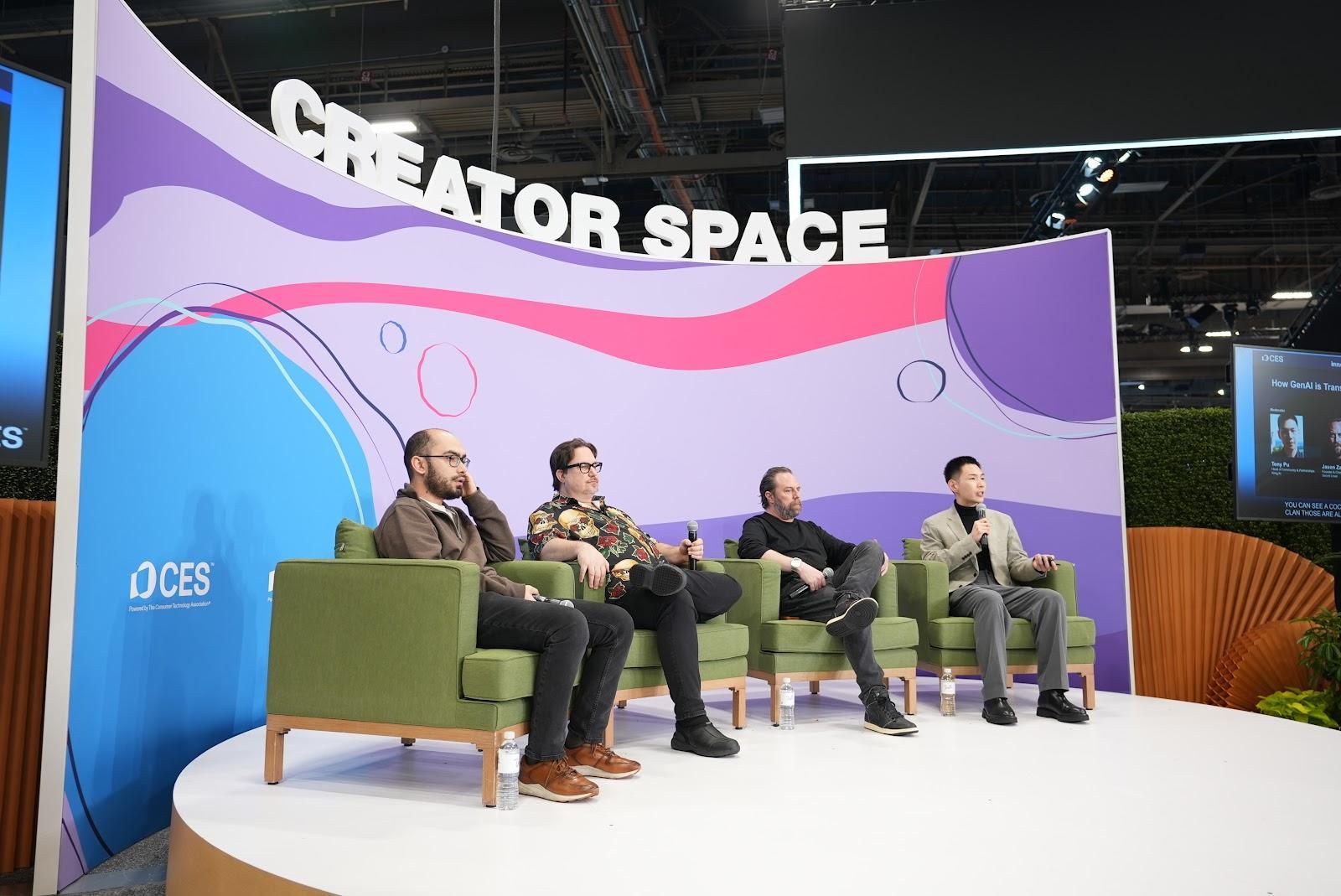
Generative AI at the Consumer Electronics Show didn’t arrive as a flashy tech demo or speculative promise. Instead, it showed up proving a point. A working production tool in the form of Kling AI, and evidence that it can actually deliver films.
Two recent projects powered by Kling AI, “A Very AI Yule Log” and the upcoming sci-fi short “The Seeker,” suggest that generative AI is moving past novelty and into real production territory. Knowing that The Seeker is led by Stephan Bugaj, Chief Creative Officer at Genvid and an Emmy Award winner, adds a layer of credibility that’s hard to dismiss. This isn’t an experimental side project from a first-time creator, but a deliberate test of whether AI-generated video can stand up to professional expectations and be released commercially.
A Holiday Fireplace That Became a Proof of Concept
On the surface, “A Very AI Yule Log” looks like a playful twist on a familiar holiday trope: the endlessly looping fireplace video. But beneath its cozy framing is a radical production process. Created by creative studio Secret Level in collaboration with Kling AI, the project unfolds across more than 600 surreal AI-generated scenes, each ten seconds long, adding up to nearly two hours of continuously evolving imagery. Snowmen wander into rooms. Strange figures flicker in and out of the firelight. Nothing was filmed. Nothing was animated by hand.
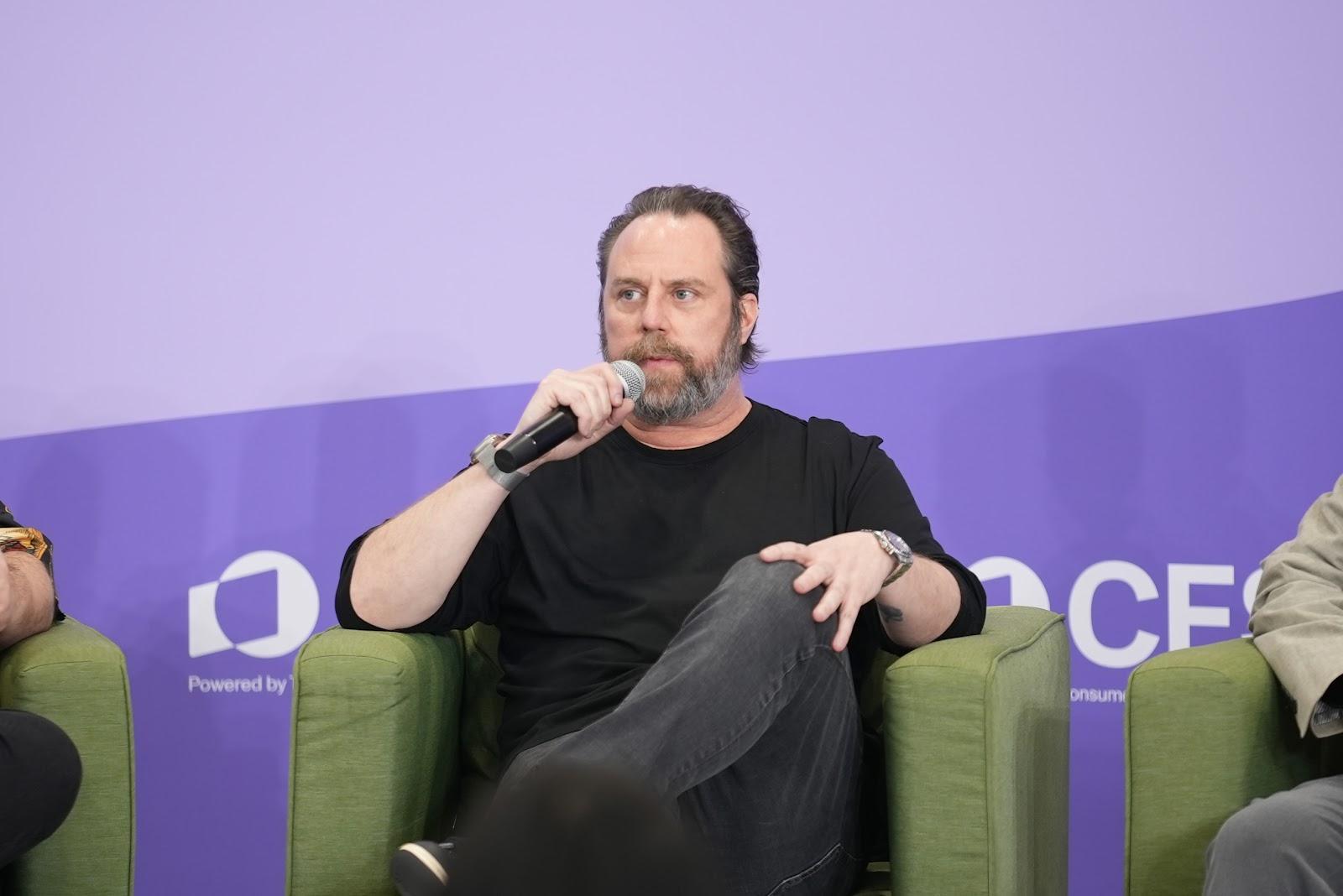
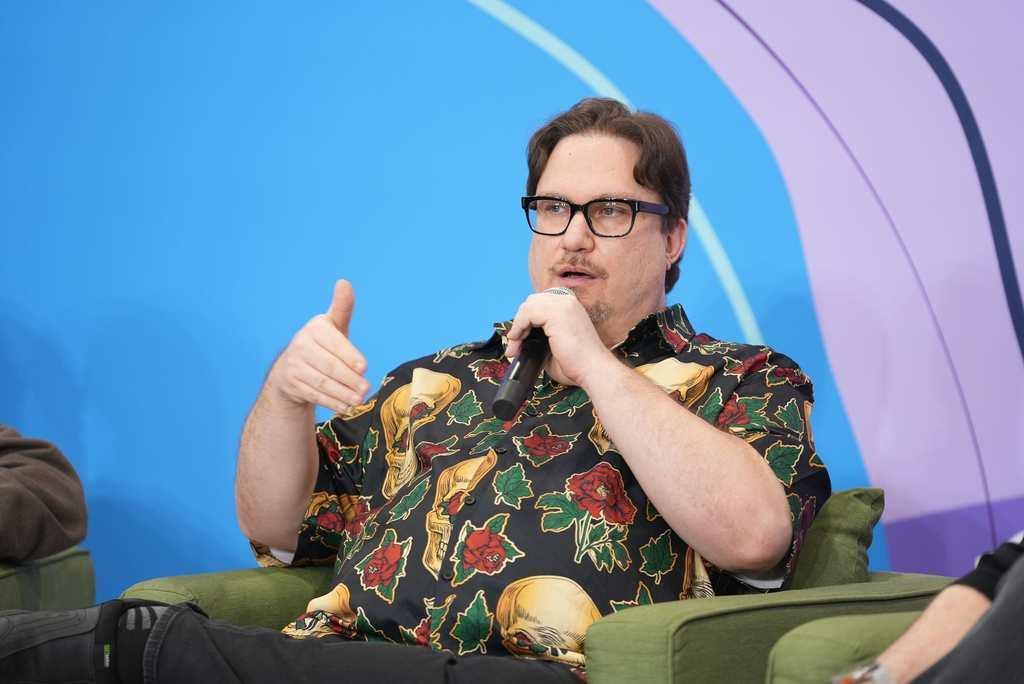
Speaking on a CES panel titled “How GenAI Is Transforming the Creative Industry,” director Jason Zada framed the project less as a stunt and more as a marker of how fast the tools are maturing. According to Zada, in making “A Very AI Yule Log,” nearly two hours of original video and original AI music were produced, but only took under two weeks. This is something that would be unthinkable using traditional production pipelines. Not to mention, this shift meant less complexities with having major team sizes in the hundreds. “The movie Flow that won Best Picture last year for best animated film, you know, was just a small team that put that together and beat the people that had 200, 300, 500-person animation,” Zada added.
From AI Short Film to Commercial Release
If A Very AI Yule Log hints at how AI can reimagine production scale, The Seeker pushes the conversation into even more disruptive territory: monetization.
Developed by Stephan Bugaj, Chief Creative Officer at Genvid and an Emmy Award winner, The Seeker is being positioned as the first commercially released AI-generated short film. Rather than debuting at festivals or circulating freely online, the film is set to be distributed like a conventional independent release, with plans to appear on Amazon and Apple platforms.
The economics are what make the project hard to ignore. Bugaj says the entire film was produced using a team of just two core creators, a sound editor, two voice actresses, and approximately $2,000 in AI usage credits. The rest, from visuals and music to background voices, was generated. According to Bugaj, “we did that in six weeks, which also included both learning the models and how to prompt them and also building the generative tool that we were also released in December.”
Bugaj emphasized that this was not an exercise in cutting corners, but in testing whether AI could support a film that still feels like a film. He deliberately leaned into a 1980s low-budget sci-fi aesthetic, citing influences closer to Roger Corman than Hollywood spectacle. Film grain, stylized visuals, and restrained realism were intentional choices, not limitations.
Perhaps most tellingly, Bugaj described abandoning the idea of letting AI write the entire script after early attempts fell flat. Instead, he treated AI as a virtual film crew that’s capable of executing shots, visuals, and audio, while keeping creative authorship grounded in human decision-making.
The Real Shift: Access, Not Automation
What links both projects isn’t just the technology, but what it unlocks. Rather than chasing hyper-realism, creators used Kling AI to lower the barrier between idea and execution. For independent filmmakers, that shift is significant. The Seeker was framed as an experiment in bypassing traditional gatekeepers, going directly to audiences instead of festivals or studios, suggesting AI doesn’t just change how films are made, but how they’re released.
That thinking mirrors Kling AI’s rapid rise since mid-2024, as its tools evolve from experimentation into usable production infrastructure. At CES, the progress felt less like hype and more like something settling into place.
A Line Has Been Crossed
Neither project claims to define the future of cinema, but together they signal a turning point. AI-generated films are moving beyond the fringes and into commercial and cultural circulation. The question is no longer whether AI can make films, but who gets to make them now.

