

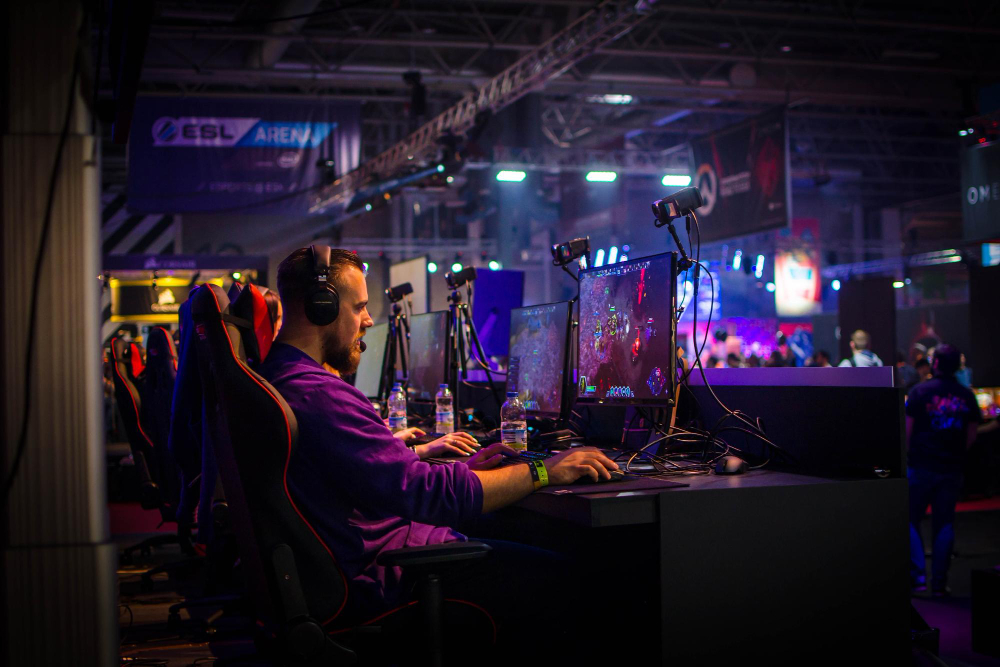
Gaming has long since left the bedroom. What was once framed as a solitary pastime now sits comfortably alongside film, music, and fashion as a driver of contemporary culture. From story-led titles inspiring television adaptations to esports filling arenas, games shape how people socialise, create, and consume media.
That cultural shift matters because it reframes who gamers are. Players are increasingly visible as artists, organisers, streamers, and fans, engaging with wider creative scenes rather than retreating from them. The real change is not technological, but perceptual: gaming is being recognised as a legitimate cultural language.
From Hobby To Cultural Capital
Gaming’s elevation is closely tied to its creative and social output. These days, people engage with games in a variety of ways beyond traditional single-player experiences. Many enjoy cooperative or competitive multiplayer titles, where strategy, teamwork, and real-time communication shape interactions. Others gravitate toward narrative-driven or open-world games, exploring stories and environments with the depth of a novel or film. Mobile and casual games offer quick, accessible moments of relaxation between daily tasks, while simulation and management games let players experiment with control, creativity, and decision-making.
Even forms of online entertainment, such as playing at safe and secure casino sites not registered with GamStop, have become part of the gaming world. When approached responsibly, these platforms provide flexible, engaging experiences that combine strategy, chance, and reward—similar to skill-based digital games or competitive esports.
In this way, gaming today spans entertainment, social interaction, and personal challenge, positioning it not just as a pastime but as a culturally relevant and creative medium. Its economic footprint underlines that shift. UK spending on games and related activities reached £7.8 billion in 2023–24, according to Business & Industry, reinforcing the sector’s role as both a creative and commercial force. Money alone does not equal cultural value, but it enables investment in talent, storytelling, and infrastructure.
Importantly, participation is broad. Gaming cuts across age, gender, and background, challenging outdated stereotypes and opening cultural spaces to more voices.
Esports Enters The Mainstream
Esports has accelerated this normalisation. Competitive gaming now mirrors traditional sports in structure, with leagues, teams, and global fanbases. Broadcast deals and cross-media coverage place tournaments alongside established entertainment formats.
Audience diversity supports that momentum. In 2023, more than 37 million people in the UK identified as gamers, with women accounting for around 48% of the audience, as outlined by Media Agency Group. That balance disrupts the idea of esports as a narrow subculture.
Culturally, esports functions as a shared spectacle. Fans gather online and offline, creating rituals, language, and identities that mirror music scenes or film fandoms, while remaining rooted in interactive play.
Regulation And Cultural Responsibility
Where culture grows, scrutiny follows. The blending of gaming mechanics with monetisation has prompted debates about consumer protection.
The financial stakes explain the attention. Esports betting revenue in the UK exceeded £1.8 billion in 2023, representing 15% of online gambling revenue. Such figures highlight why regulators are alert to overlaps between play and wagering.
For cultural platforms, the challenge is balance. Preserving creative freedom while ensuring transparent systems will shape how trust is maintained within gaming communities.
Where Culture And Competition Go Next
The cultural impact of gaming and esports lies in their adaptability. They absorb influences, respond to audiences, and continuously reinvent how stories are told and shared. That flexibility explains their staying power.
For readers engaged with art, film, and music, gaming now sits in the same conversation. It informs aesthetics, sound, and narrative structure, while offering participatory experiences that other media cannot. The takeaway is simple: understanding contemporary culture increasingly means understanding games.
As esports matures and regulation catches up, the sector’s influence will likely deepen rather than fade. Gaming is no longer knocking at culture’s door. It is already inside, rearranging the room.

