

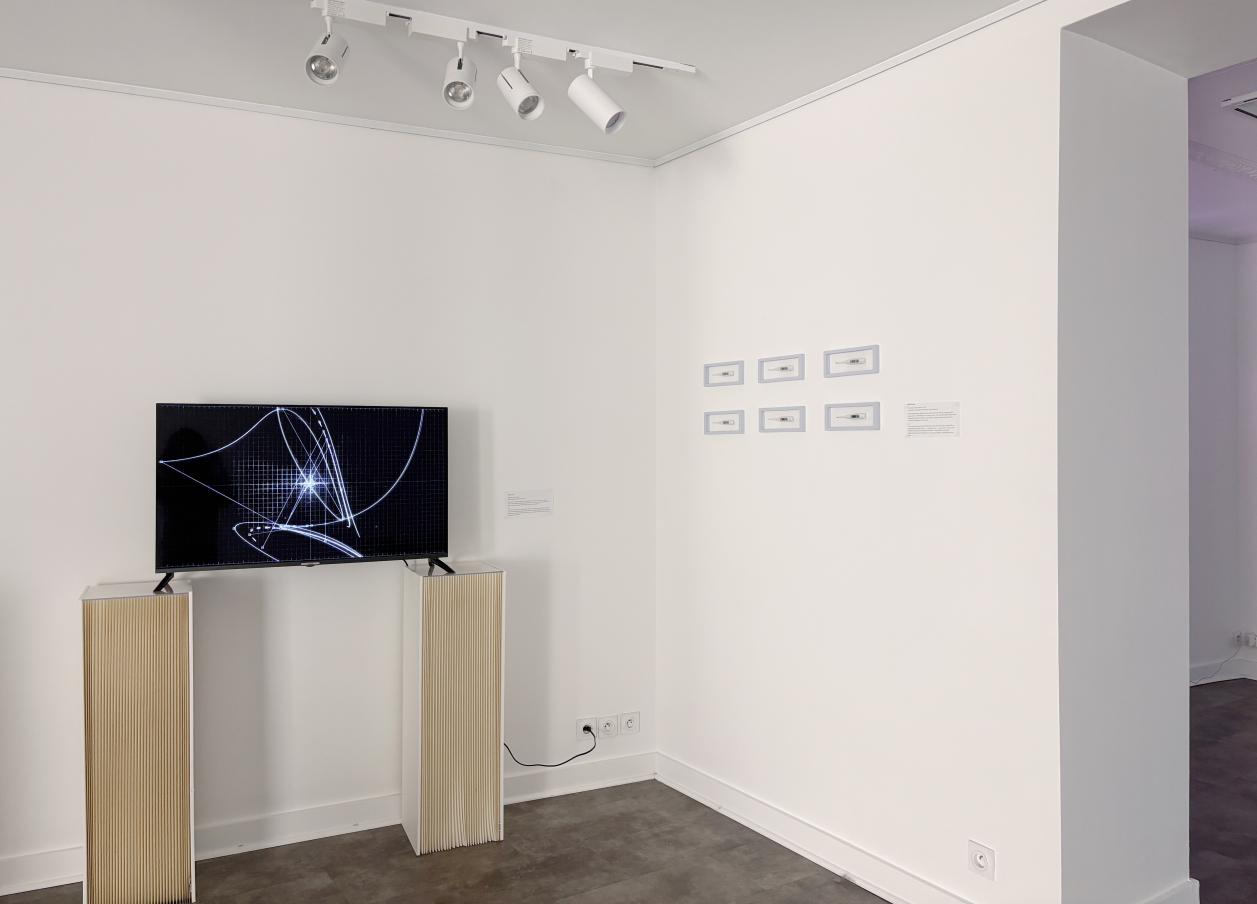
Albert Einstein is once supposed to have said “if I can’t picture it, I can’t understand it”. A principle that London-based artist Yaxuan Liao impels to the nth degree. In her multimedia artworks, she visualises the cosmic and terrestrial energies that occur beyond the perimeters of our consciousness.
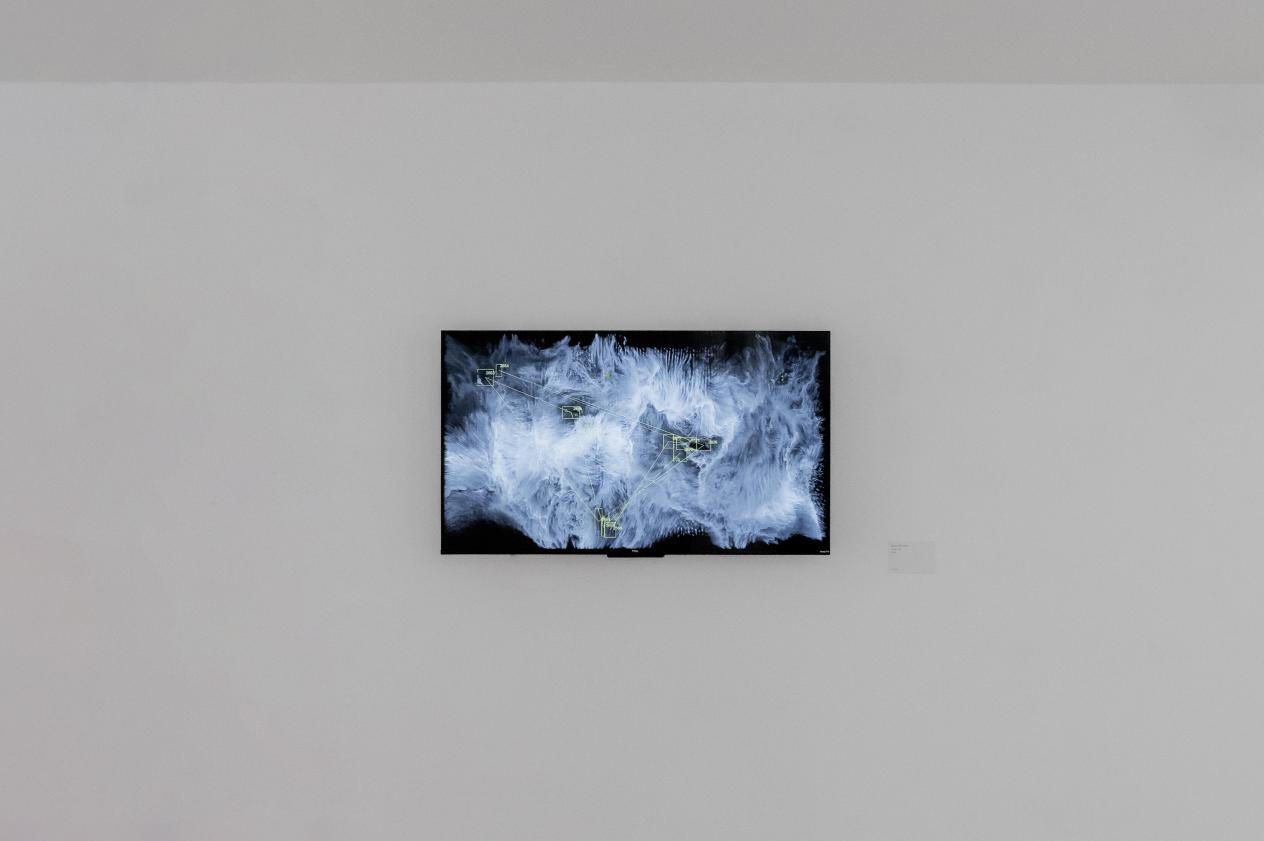
For Liao, the universe is an immense information structure, every event or disturbance of a node within its reticulate network. In her most recent moving-image piece, Frequency Fields (2025), she translates the shifting frequencies and segmentations of network data packets and sound waves into a dynamic visual field. Using point-cloud formations, flowing particle systems, and variations in light and colour density, the piece transforms the flotsam and jetsam of frequency data into perceptible patterns that ripple and evolve in real time.
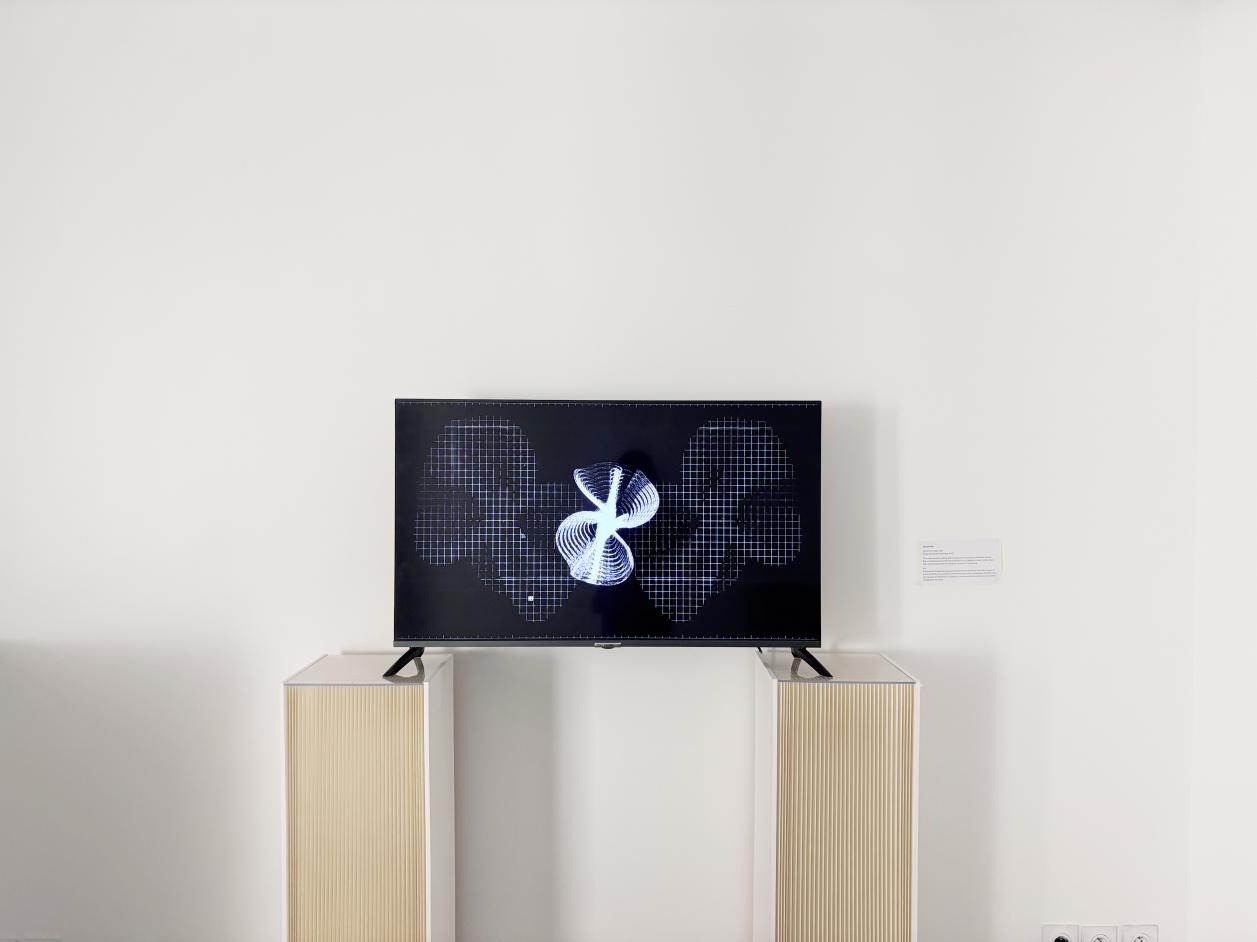
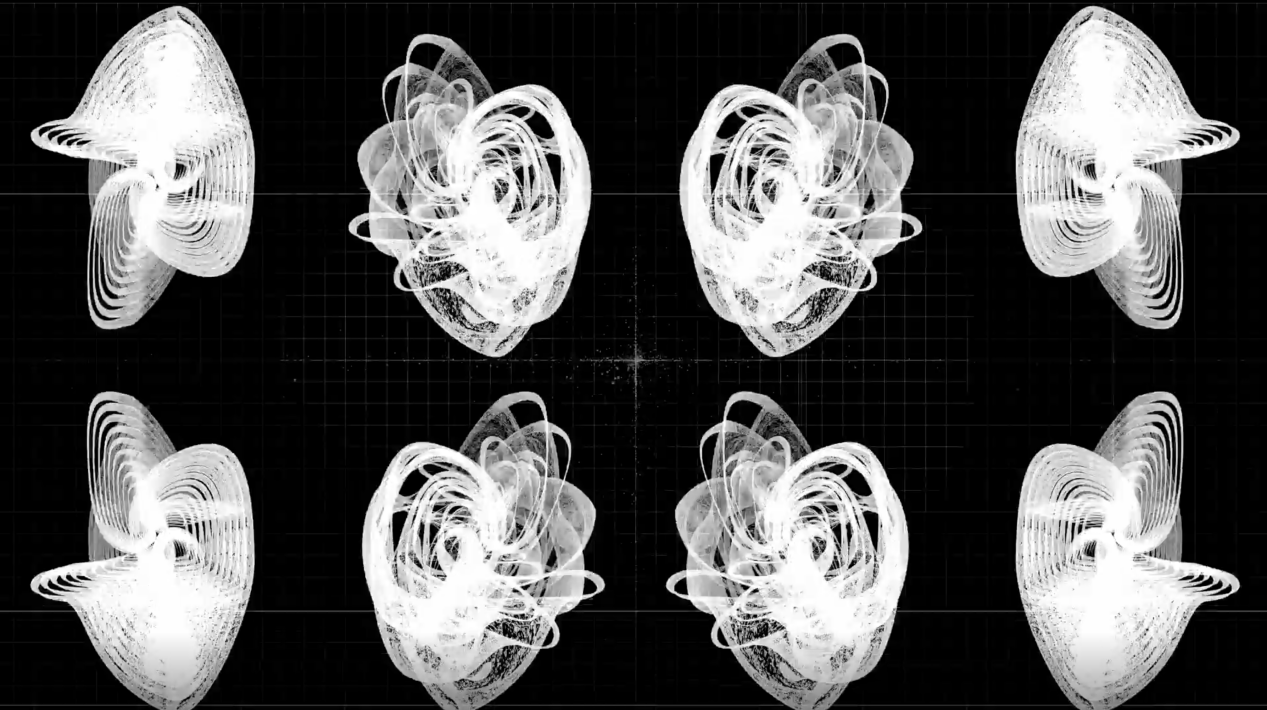
Through multi-channel projection and an immersive soundscape, the work encourages viewers to encounter frequency as both a visual and auditory experience. Frequential constellations explode, multiply and mutate from a progenitive axis; kinetic energy mapped in sgraffito-like gestures across space and time. Cybernetic warbling and pulsations glitch against a vast, ambient soundscape, and despite the unpredictability of it all, it feels rather hypnotic. In fact, once our eyes and ears have adjusted, it’s as though we’re now in full possession of the faculties for seeing in the dark.
Amidst more abstract compositions, celestial formations flash in quick succession; the glowing arc of an accreditation disk formed in orbit around a black hole and images from the Event Horizon Telescope which captured the first-ever image of a black hole’s shadow located in the galaxy M87. Both outline a point of no return, beyond which no light or matter can escape.
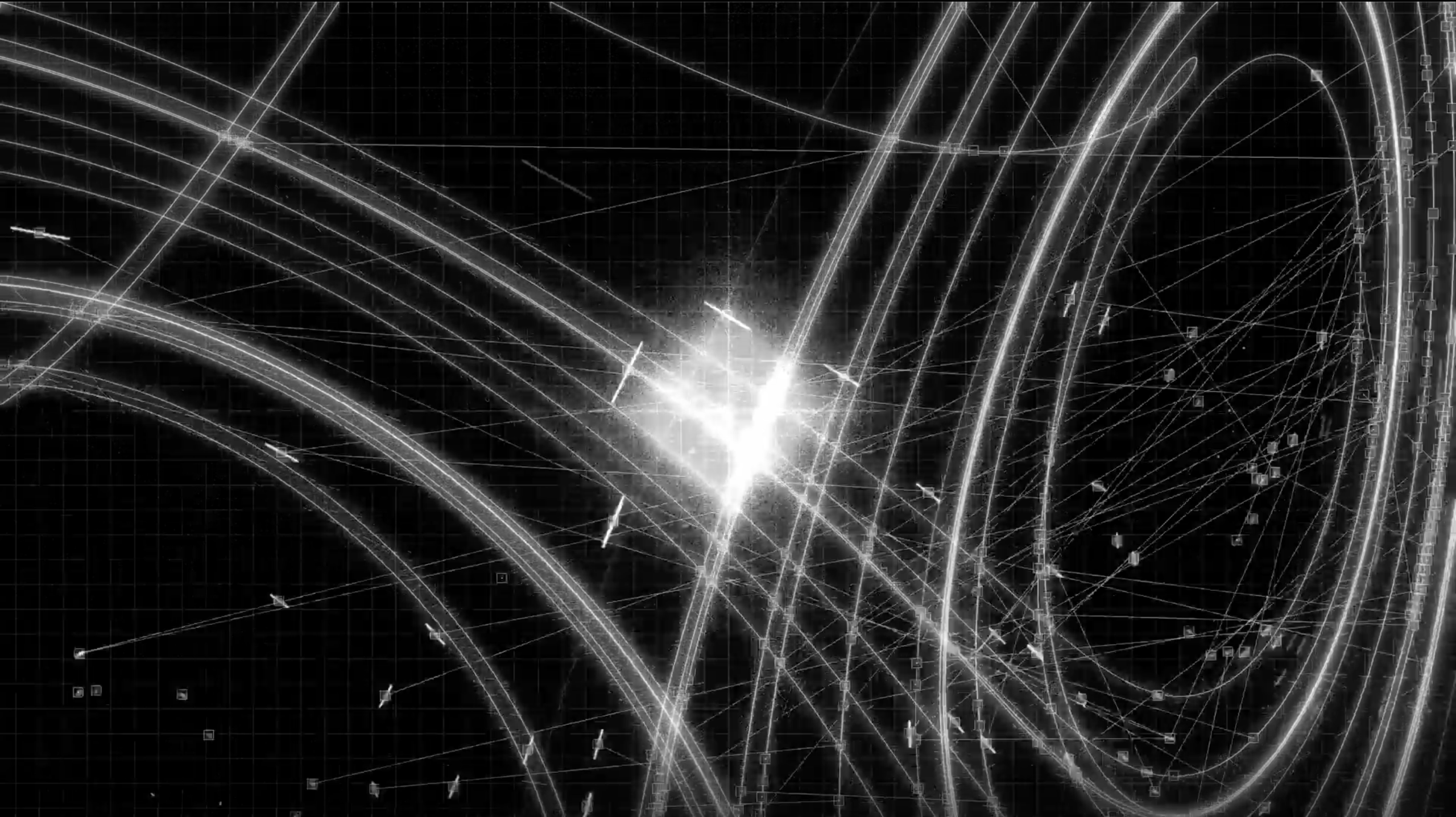
In Liao’s practice, these silhouettes also represent the frontier of human comprehension. In the piece Self as Data (2024) she first questioned the freedom of humanity in a universe that is fundamentally informational and increasingly algorithmic. Here, she directs existentialist sentiment to ponder what it means to be but a string in the cosmic database.
Thinking of all natural, social, and aesthetic phenomena within the framework of informational metaphysics as Liao does, has the ability to make one feel infinitismally small. But it’s no bad thing. Art has the ability to embody knowledge that is not entirely propositional, and we may read Liao’s vivid digital landscapes as an active epistemic inquiry, forcing us to confront our inability to ever fully grasp the ‘facts’ of life.

