

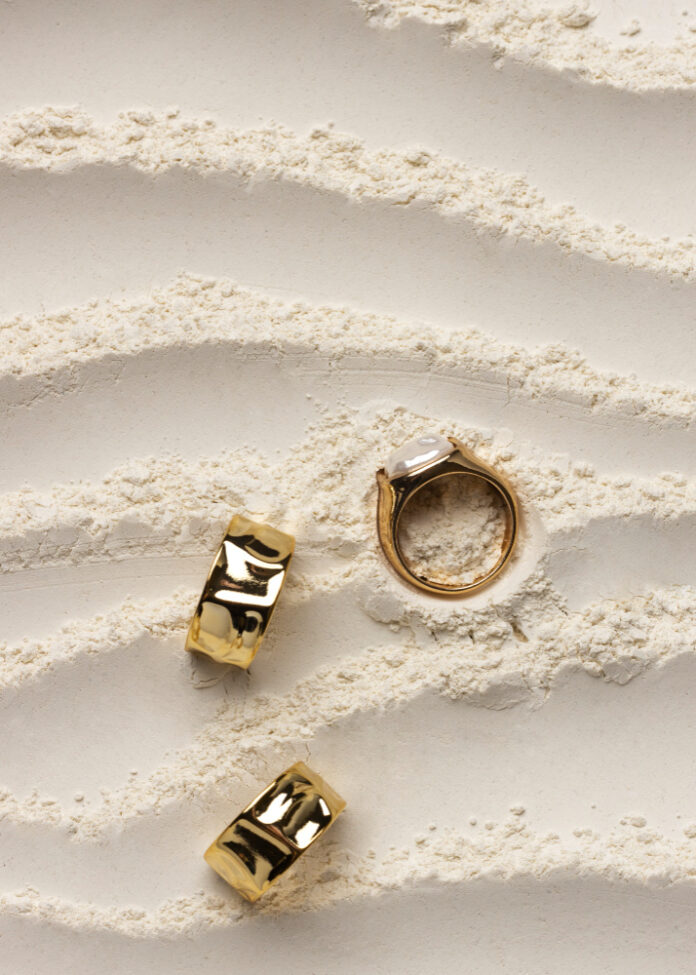
Minimalism is often mistaken for emptiness, a lack of detail, colour, or character. In truth, it’s the opposite. It’s about focus, form, and the quiet beauty that comes from stripping things back to their essence. From architecture and interiors to fashion and fine art, the minimalist movement has long been about balance and clarity.
Delicate bracelets and finely crafted necklaces have become central to this evolution, not as decoration for decoration’s sake, but as deliberate design choices that reflect how we see ourselves and the spaces we occupy.
A philosophy of less
Minimalism in design grew from the belief that simplicity allows for purity of purpose. The Japanese concept of ma, meaning the space between things, captures this perfectly. It’s the understanding that what is left unsaid, or unfilled, carries as much importance as what is present.
This idea was translated into Western art and design during the mid-20th century, where figures like Donald Judd and Agnes Martin championed form, repetition, and emptiness as expressions of harmony. The same sensibility now shapes how many people approach fashion and personal style.
In jewellery, minimalism is not about having nothing, it’s about having just enough. A fine chain that catches the light, a subtle curve in silver or gold, or a small, sculptural pendant can say more than an ornate statement piece. Each element is intentional.
Jewellery as wearable design
Minimalist jewellery mirrors the evolution of design thinking itself. Today, we value clean lines, refined materials, and a sense of ease. This shift reflects a broader cultural desire for calm amidst the visual noise of everyday life.
A simple bracelet, for example, functions much like a Bauhaus chair. It’s beautiful because it serves a purpose without excess. Similarly, a minimalist necklace follows the same design logic as a well-considered building: proportion, structure, and light. These are not ornaments, but extensions of design philosophy made wearable.
The connection between modernist principles and jewellery lies in the respect for craftsmanship. Minimalist pieces require precision and discipline.
Cultural resonance of simplicity
Minimalist jewellery has become more than a style trend; it’s a cultural marker. It reflects a growing preference for authenticity over abundance – a quiet rebellion against the culture of constant consumption.
This isn’t new. Throughout history, simplicity has been a recurring theme during moments of cultural reset. After decades defined by excess, societies often return to design principles that prioritise honesty, function, and material integrity. Today’s resurgence of pared-back aesthetics feels similar. It’s an antidote to digital overload, fast fashion, and the performative nature of social media.
Simplicity offers relief. It allows the individual to exist without the noise of branding or opulence. A minimal bracelet or necklace becomes a subtle symbol of self — unspoken, intentional, and grounded.
The emotional weight of restraint
There’s a quiet intimacy to minimalist jewellery. Without bright gemstones or ornate detailing, what remains feels closer to the body, to the person wearing it.
Many people are drawn to this kind of design because it resonates emotionally. The simplicity allows room for interpretation, such as a plain band might signify strength, a single pendant could represent connection or memory. In this way, minimalist jewellery becomes not just an accessory, but a vessel for thought.
Modern influences and aesthetic crossover
The minimalist aesthetic has long blurred the boundaries between fashion, art, and architecture. Designers such as Phoebe Philo and Jil Sander transformed clothing into something akin to sculpture, while architects like John Pawson and Tadao Ando redefined luxury through space, shadow, and silence.
Jewellery follows this same dialogue. The pieces that stand out today are those that echo architectural simplicity. A curved cuff might resemble the arc of a gallery wall; a pendant might recall the geometry of a modernist building.
In photography and film, this visual language has become equally powerful. Close-up shots of bare metal, soft light, and organic form dominate campaigns across fashion and design. The appeal lies not in showcasing extravagance, but in framing beauty through stillness.
Minimalism as quiet confidence
There’s something inherently confident about simplicity. To wear minimal jewellery is to resist the urge to overstate. It’s the confidence of knowing that presence doesn’t rely on decoration.
This approach to adornment also challenges conventional notions of femininity. Historically, women’s jewellery was often designed to signify status or draw attention. The minimalist movement shifts that focus inward towards individuality, mindfulness, and the appreciation of subtle detail.
A pair of small earrings, a slim bracelet, a fine chain: together they create rhythm without noise. This kind of restraint feels modern because it acknowledges that power can exist quietly.
The enduring appeal
Like modernist furniture or abstract painting, minimalist jewellery endures because it transcends fashion. It doesn’t rely on trends or ornamentation, and therefore doesn’t age in the same way. It adapts to seasons, to moods, and to personal evolution.
In a world increasingly defined by excess and speed, there’s something quietly radical about choosing less. The art of minimalism reminds us that meaning doesn’t come from accumulation, but from attention. It’s about noticing the small details such as the curve of a wrist, the fall of a chain, the way light moves across metal.
Minimalist jewellery, much like minimalist art, invites stillness. It doesn’t demand to be seen; it invites you to look closer. And in that closeness lies its true beauty.

