

Audrey Ni Ruorong is a Chinese-born interdisciplinary artist and researcher currently pursuing a practice-led PhD at the Glasgow School of Art. Working across photography, collage and algorithmic image construction, she situates her practice within the narrative tendencies of the New Weird. Rather than attempting to clarify the world, Ni’s images foreground its resistance to comprehension, approaching reality as something structurally unstable and fundamentally opaque. Her work investigates how moments of failed understanding can, paradoxically, produce new narrative forms.
Central to Ni’s practice is a methodological framework she refers to as the Weird Methodology. Developed through ongoing artistic and theoretical research, it draws on Surrealist automatism and the logic of New Weird fiction. The methodology treats image-making as a form of reverse construction: meaning does not precede the work but emerges from fragments, misreadings and unintended outputs. In this context, AI is not used for clarity or efficiency, it functions instead as a narrative agent whose distortions and uncertainties shape the visual field.
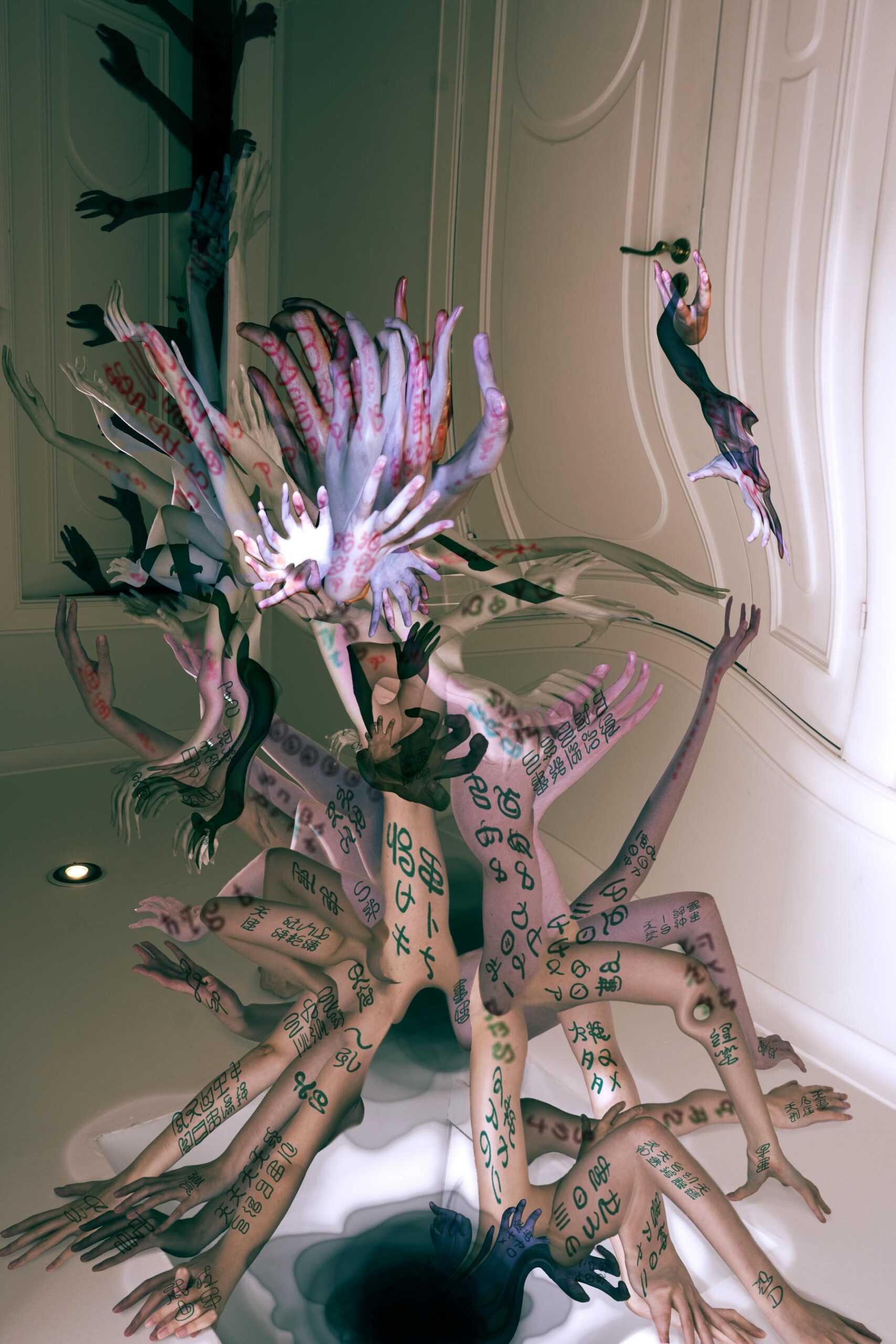
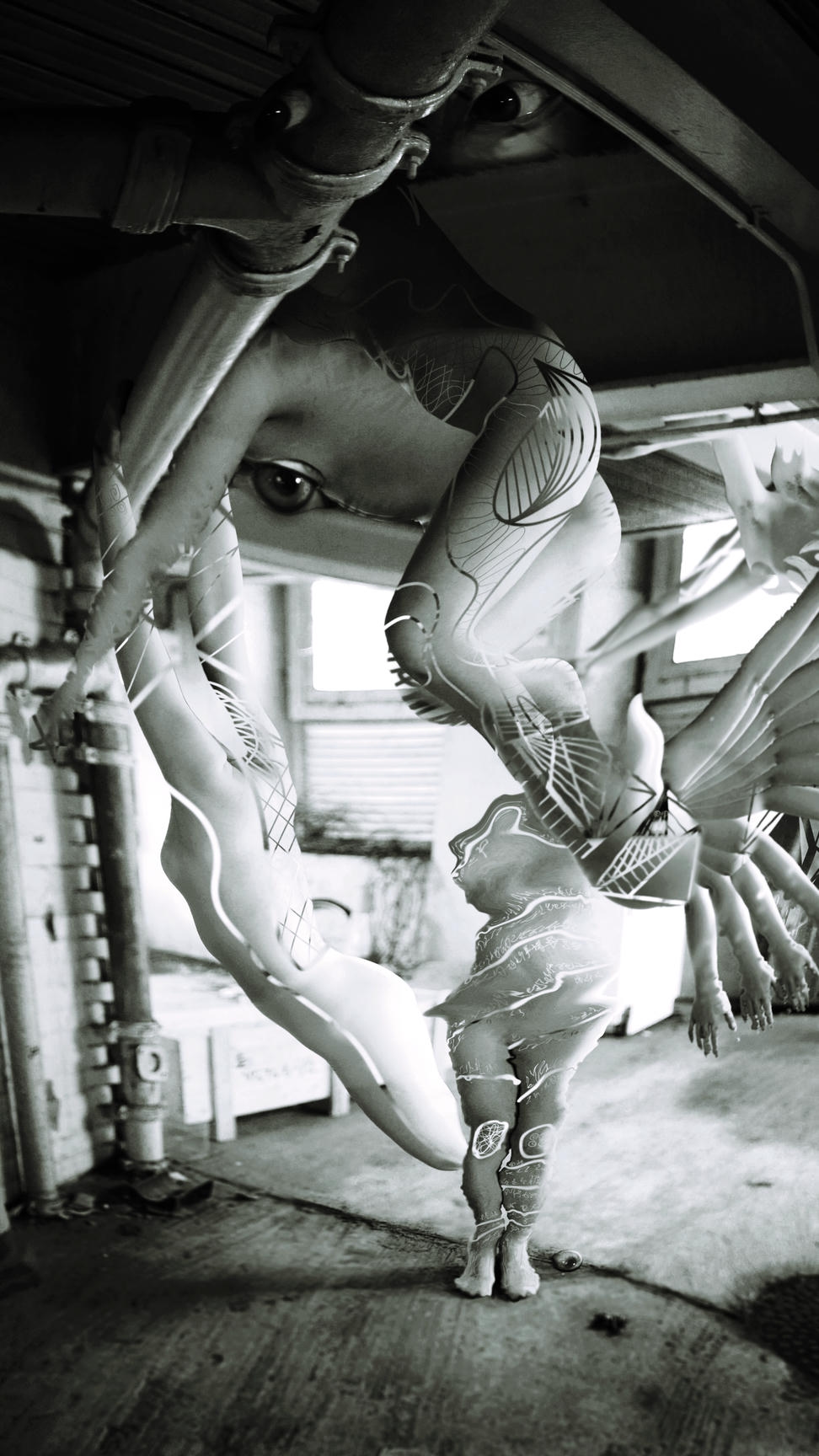
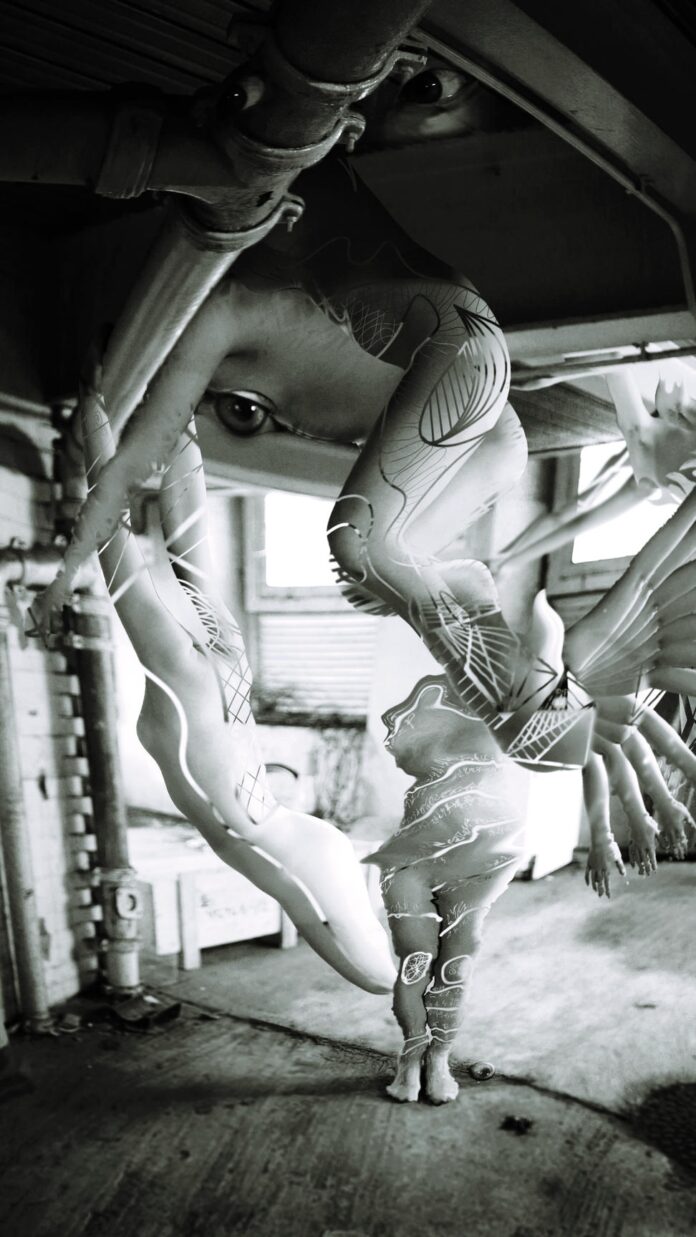
This approach becomes visible in Is It 1 (2024) and Is It 2 (2025). Created entirely without AI, these large-scale photographic collages use Ni’s own body as source material. Through a process of staging, fragmentation and reconstruction, the works manifest a logic that feels almost algorithmic: limbs are extended, folded and split; eyes appear in impossible positions, and the body seems rearranged across ruptured planes of time and space. Although grounded in real environments, the images carry a strangeness that exceeds the physical world, as if the grammar of computation had seeped into flesh.
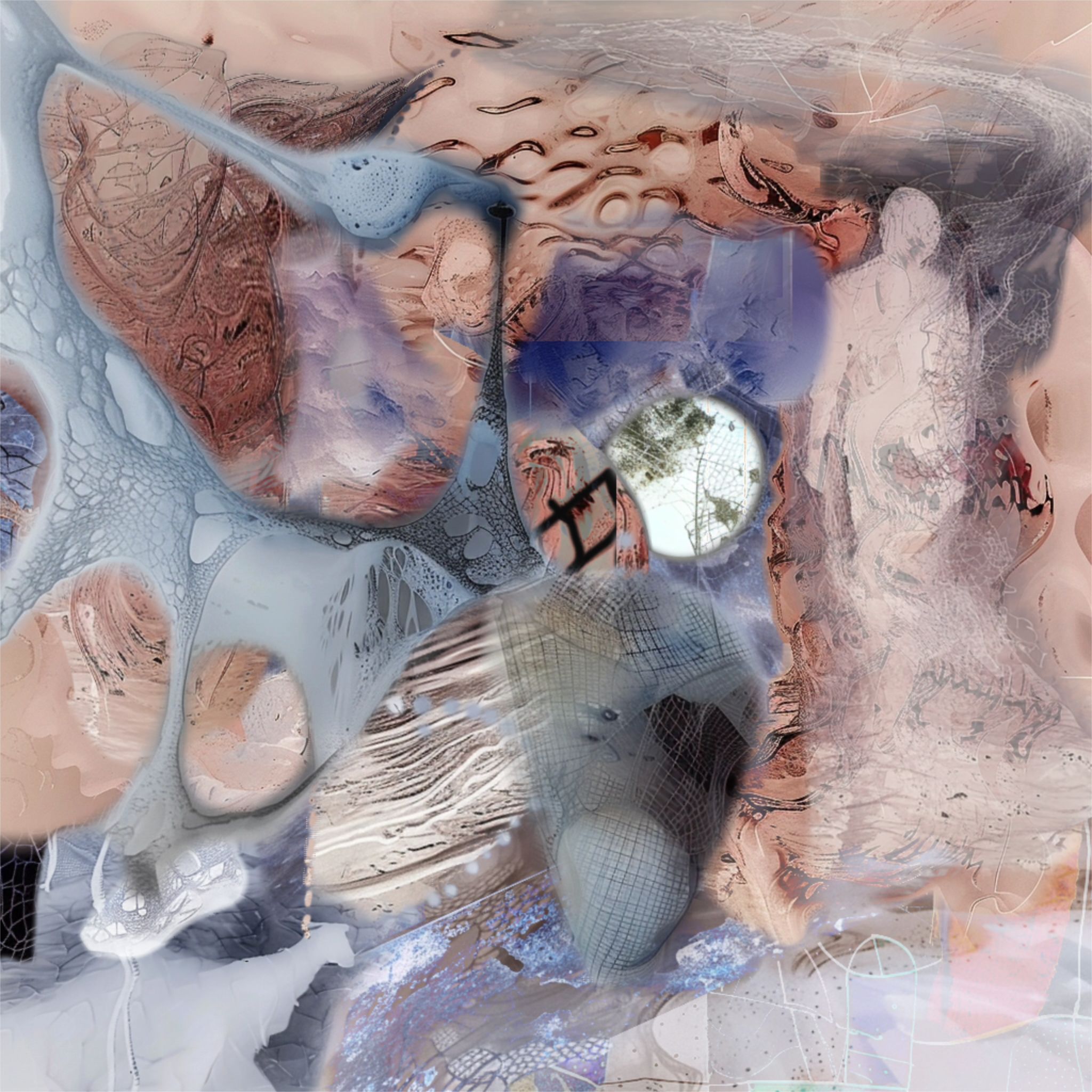
Vesica (2024) extends this instability into language and cognition. Developed during a period of isolation, the work begins with automatic writing that is passed through an AI system before being reworked through extensive digital processing. The resulting image-textures shift between emergence and dissolution, reflecting the instability of interpretation itself. Rather than presenting a unified reading, Vesica gestures toward the slippages that occur when language transitions into image, and the illusions that accompany such attempts at understanding.
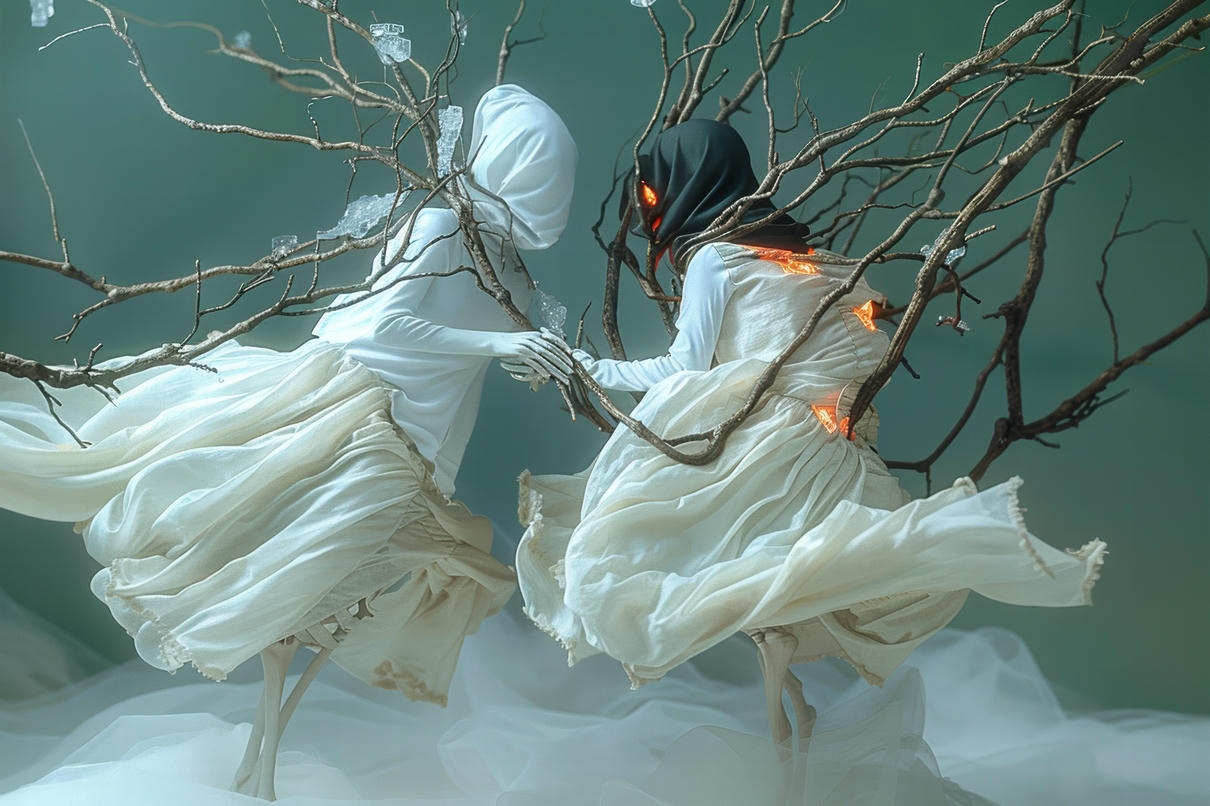
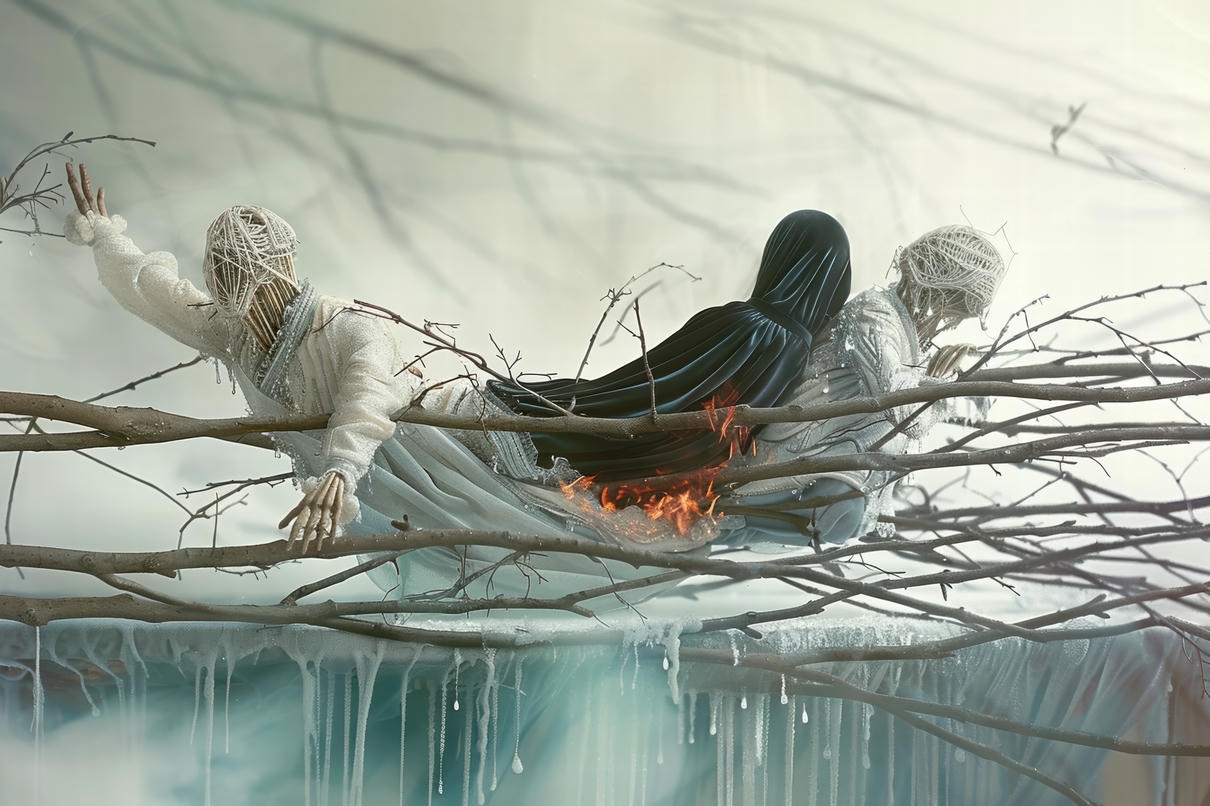
Ni’s earliest text-to-image experiments appear in Three of Wands (2024) and Two of Cups (2024). Although she never referenced tarot in her prompts, the outputs resonate strongly with archetypal tarot structures. From thousands of generated images, she selected these two for their striking sense of recognition, positioning them within a deeper methodological enquiry:
Can meaning arise spontaneously within random systems? How and why do machines, even without intention, touch the deep structures of human symbolism?
In these works, AI becomes an unconscious participant, entering narrative construction through its own uncontrollable operations.
As her research develops, Ni continues to refine the conceptual and narrative structures underpinning her practice. Her recent works suggest an expanding engagement with recursive storytelling, symbolic drift and the afterlives of automatist strategies within machine-led image regimes. What emerges is a visual language attuned to uncertainty: one that does not seek to explain the world, but to register the points where explanation fails.
More of Audrey Ni Ruorong’s work can be found at:
Website: https://www.niruorong.com/
Instagram: @AudreyNiRuorong

