

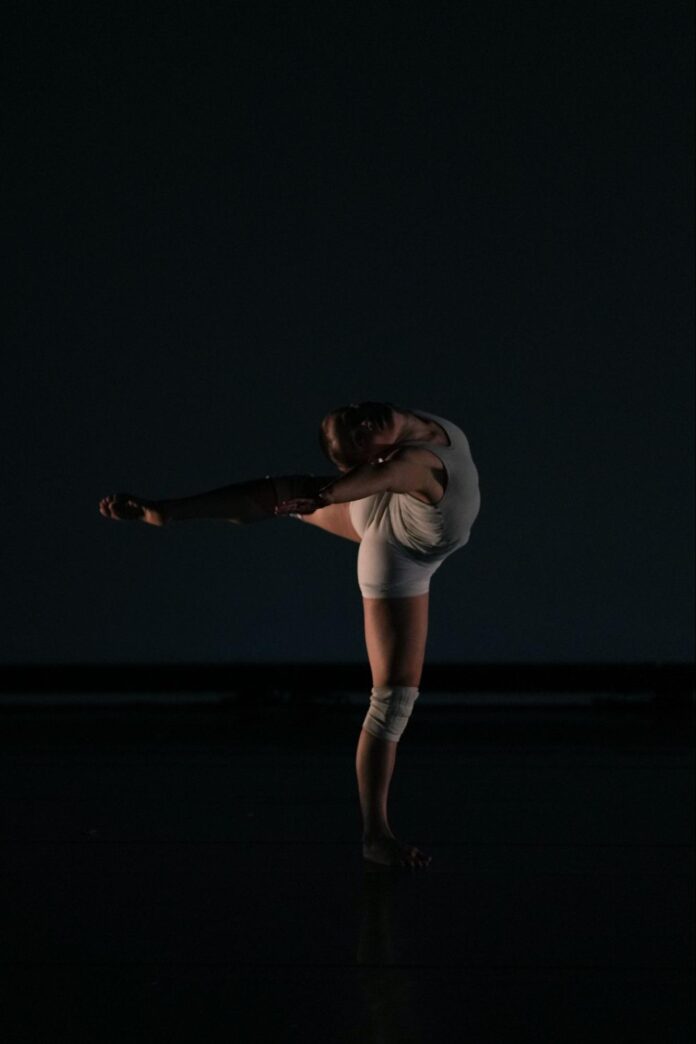
In the world of contemporary dance, the stage is a place of presentation—a void to be filled with movement, storytelling and metaphor. But for Canadian dancer and choreographer Lola Rose Jenkins (they/them), the stage became something far more intimate and specific: a reconstruction of their childhood bedroom. This fall, Jenkins premiered “Bedroom Studies” at the renowned American Dance Guild at Ailey Studios, transforming the historic theater into a vessel for the quiet, introspective hours of adolescence, reflecting on the past while looking to the future.
The performance marks a significant milestone in Jenkins’ dance career; it is not only their first solo work presented to an audience but also their first time performing original choreography in New York City, a city that holds deep roots for their artistic development.
The Architecture of Memory
The concept for “Bedroom Studies” did not begin with a set design, but with a feeling. Jenkins, who recently graduated from the Conservatory of Dance at SUNY Purchase College, began developing the phrase work in the summer of that year. “I started this solo with just the idea of the ‘stage’ representing a room,” Jenkins explained. “When I first started the solo, I didn’t know the container of the stage or the ‘room’ I was building would end up being my childhood bedroom.”
As the choreographic process deepened, Jenkins found themselves drawn to the specific emotional landscape of adolescence. The work began to orbit around the solitary hours between 12 a.m. and 4 a.m., which was the only time, Jenkins noted, that was guaranteed to be free from the demands of the outside world.
“As I kept developing the phrasing and researching the emotions that were coming up, I realized this solo was going to be about all the time I spent alone in my childhood bedroom during those late hours,” Jenkins said.
A Historic Stage
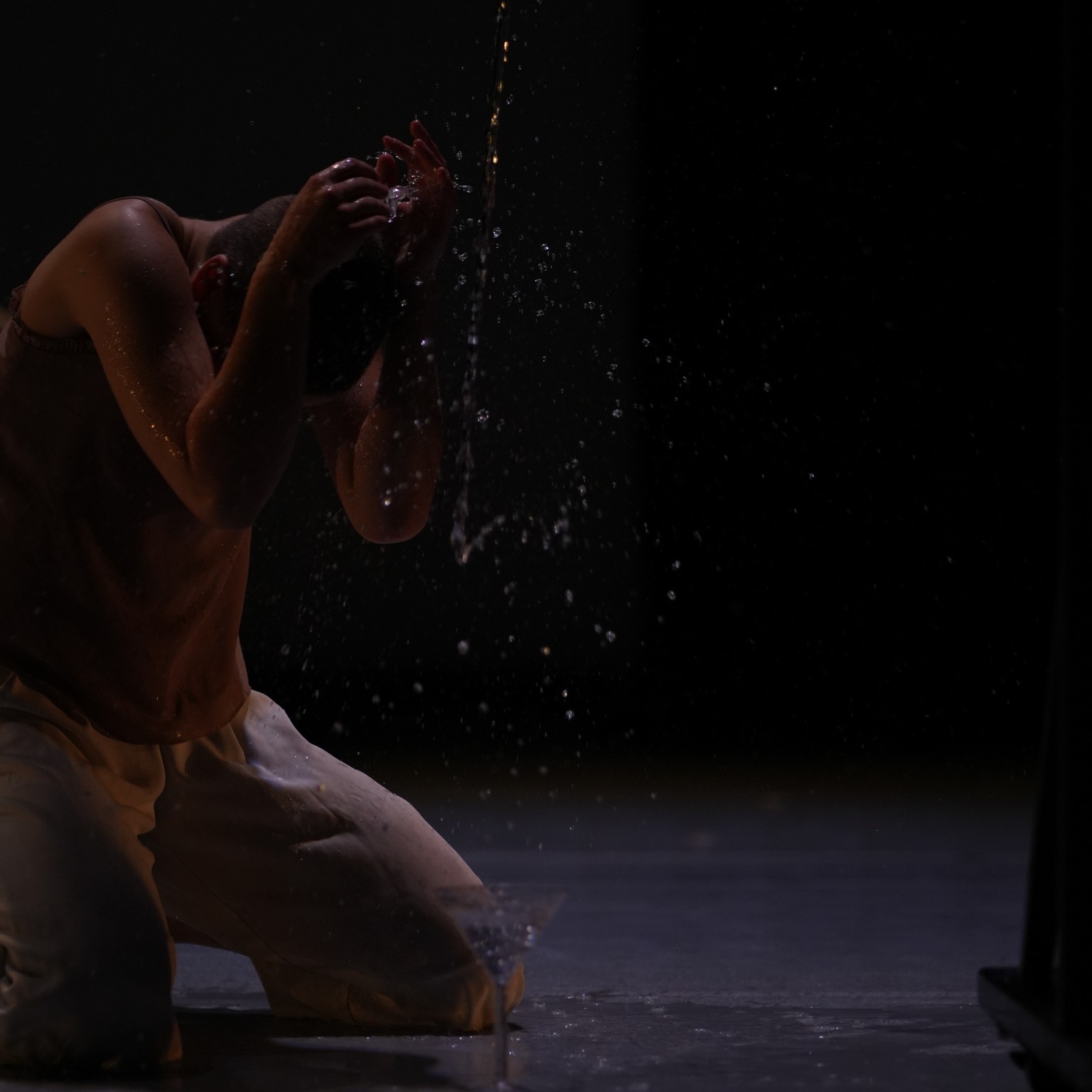
Performing at the Joan Weill Center for Dance, home to the American Dance Guild at Ailey Studios, carries a weight of history that is palpable for any dance artist or choreographer. While the showing was not officially affiliated with the Alvin Ailey American Dance Theater company, the venue is a pilgrimage site for dancers worldwide.“It felt like an honour performing there,” Jenkins said. “Being able to perform in a historical building that so many legends in the dance field have worked and trained in was a big deal for me.”
The connection to Ailey is personal for Jenkins. During their traditional American dance education, they studied the Horton technique, a staple of the Ailey repertoire. Jenkins studied under Linda Celeste Sims, a former dancer and rehearsal director for the Ailey company until 2020.
“Even though I wasn’t interacting with the Ailey Company for this performance, it was a huge honour to share a space with such legends in the dance field,” Jenkins noted. The facilities, described by Jenkins as beautiful, provided a fitting backdrop for a work that explored the beauty of internal stillness.
The Vulnerability of Solo Choreography
Transitioning from a repertory dancer to a choreographer—and specifically, a solo performer—presented a unique set of challenges. Jenkins, who began their training at the Canadian Contemporary Dance Theatre (CCDT) in Toronto, is accustomed to collaborative environments.
“What’s different for me is the way my body settles in the work,” Jenkins explained. “There is obviously a more direct personal connection, since the research is coming from my own somatic memories.” Jenkins described the rehearsal process for “Bedroom Studies” as a solitary endeavor. Unlike dancing for another choreographer, where the rehearsal process is about finding oneself within an existing framework, creating a solo meant Jenkins was the source material. It was about looking inward, looking within.
“I find it takes me longer to truly settle and relax into the work, since it is so energetically charged,” Jenkins said. “When I ‘am’ the work, it’s more about finding ways to ground myself in the material. This was the first solo I made on my own and it was a big learning curve to not have any other people in the space for most of the rehearsals. It was all up to me.”
Offline Artistry in the Digital Age
Jenkins’ artistic voice arrives at a pivotal moment in the performing arts. As attention spans shorten and the digital landscape becomes increasingly saturated, the mandate for dance is shifting. “We are at a very interesting time for performance art as the world becomes more and more digital,” Jenkins notes. “I think in order to be cutting edge in a time when so many fields feel saturated with information, is to captivate audiences.”
For Jenkins, the antidote to digital noise is deep, emotional resonance. “I just care about feeling deeply. I want to feel moved when watching a piece of art,” said Jenkins. “I think audiences want to see real people on stage, they want to see someone they can connect to and someone they can relate to in some way.”
A Signature of Gravity and Truth
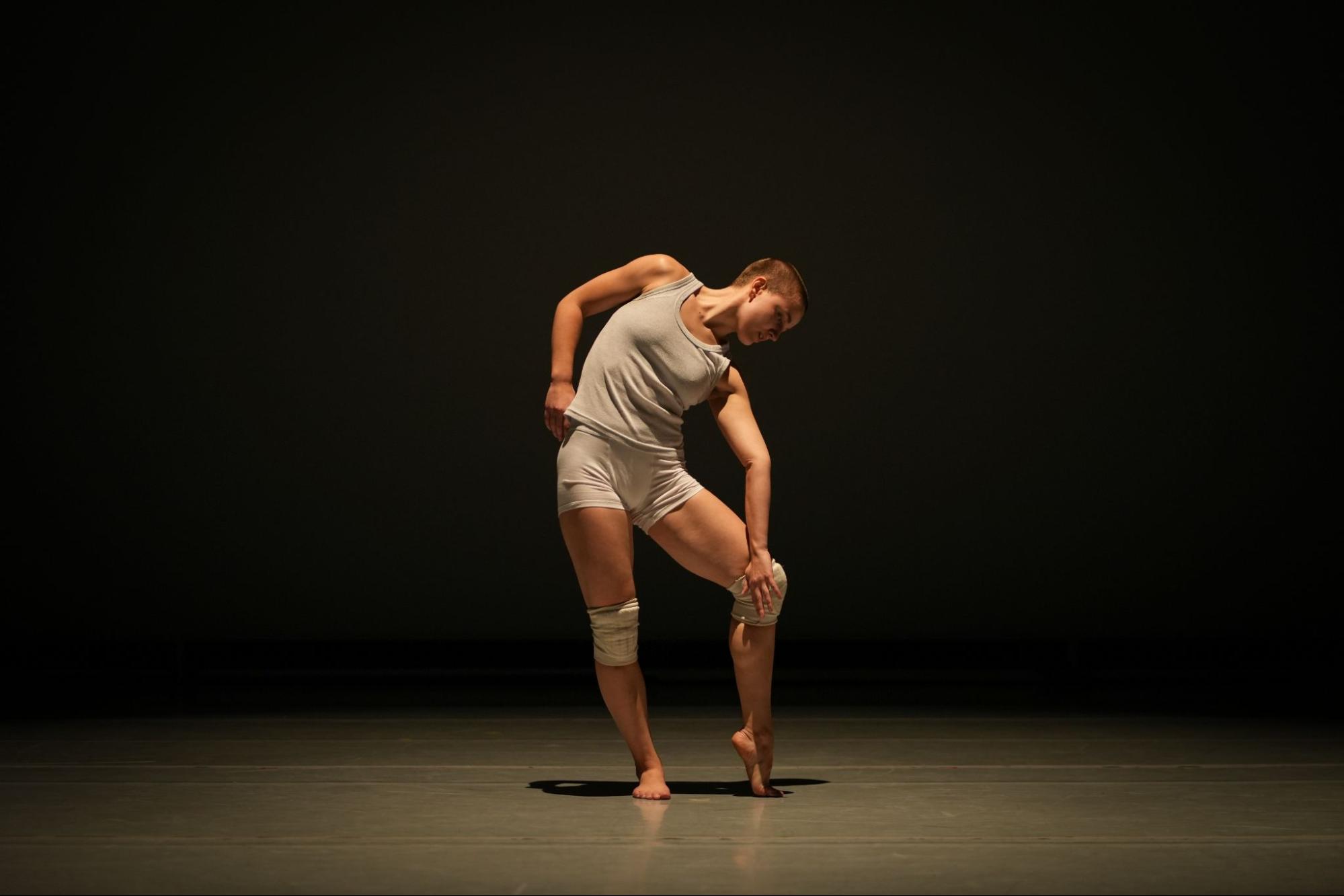
Jenkins’ movement vocabulary is a synthesis of rigorous training and emotional intuition. Their background is diverse, spanning the professional repertory company CCDT, Limón technique at SUNY Purchase, and study abroad at London Contemporary Dance School. When asked about their signature as a dancer, Jenkins points to a blend of dramaturgy and physicality. “I grew up with parents who are both actors, and my dad was often talking about ‘the emotional why’ for a scene,” Jenkins shared. “This really stuck with me as I started to develop my own artistic practice.”
This influence is paired with a deep appreciation for the Limón technique, specifically the principles of gravity, fall, and recovery. “There is extreme honesty in gravity and allowing yourself to feel the true weight of the limbs and the body,” Jenkins said. “What I hope to create in all my performances and choreographies are states of presentness and honesty. I used “Bedroom Studies” to explore how highly physical and complex movement can come from these simple human concepts.”
While “Bedroom Studies” is a defining moment, it is one of many accomplishments in a career that has moved at a professional pace from a young age. Jenkins lists performing at the prestigious Joyce Theatre in 2015 as a major early milestone, as well as performing 21 different repertory works with CCDT. Perhaps one of the most technically demanding roles Jenkins has undertaken was performing as “Blue Woman” in Doug Varone’s “RISE.”
“That was one of the hardest roles I have ever danced,” Jenkins admitted. Yet, they view “Bedroom Studies” as equally significant. “It was my first time ever presenting a solo to an audience and also my first time performing my own work in New York City. I feel incredibly lucky that it was so well received and I was able to create something so personal to me that an audience resonated with.”
Looking Ahead to 2026
The success of “Bedroom Studies” is not a conclusion but a catalyst. Jenkins, currently based in Brooklyn, NY, has a packed schedule for 2026 that showcases their versatility as both a performer and a collaborator. Jenkins will be performing Thomas Hogan’s work at Arts on Site, Green Space, and Green Lung Studio. Jenkins will also serve as a rehearsal assistant for acclaimed dancer Hannah Garner as the company restages “Light Labor.”
The performance calendar continues with work by Sundari Joseph at the Gibney Theatre under the “Lucid” Dance Company in March, and participation in the DIG residency for Chisato Fujii in May. In June, Jenkins will present a new untitled duet with collaborators Jasmine Alisca and Cameron Stedman at Fertile Ground. “I am so incredibly grateful for the community I have here and all the talented lovely artists I know,” Jenkins said.
Photos by Isabella Pagano

