

When we talk about art, we talk about the work: the stylistic composition, colours, recurring motifs and hidden messages. How much an artist’s life ought to shape our reading of that work is a question that’s been debated for as long as people have written about art.
What has grown, however, is a willingness to look more honestly at aspects of identity pushed to the margins or altogether ignored, including sexuality. In the spirit of LGBTQ+ History Month, here are five queer artists we think you should know:
Rosa Bonheur (1822–1899)
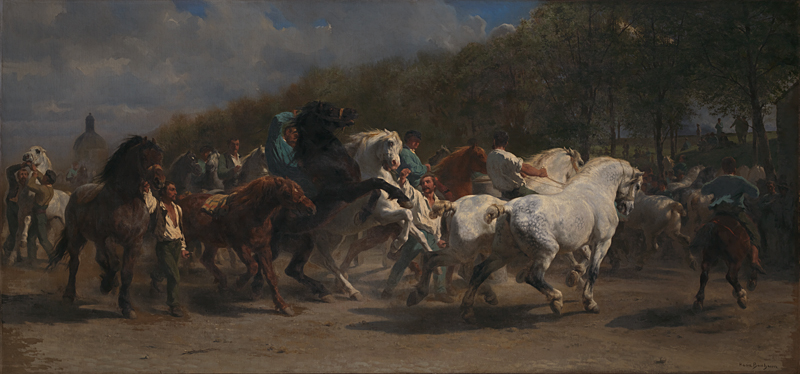
French painter Bonheur was famous for her distinct animal paintings, including The Horse Fair. Bonheur lived openly with her female partner for decades, wore men’s clothing with an official government permit and was one of the most celebrated artists in Europe in her lifetime. “As far as males go,” Bonheur has been quoted to say, “I only like the bulls I paint.”
View this post on Instagram
Romaine Brooks (1874–1970)
Brooks was an American painter based largely in Paris and Capri, known almost exclusively for her portraits. She belonged to the circle that gathered at Natalie Barney’s Paris salon, a meeting point for queer writers and artists of the early twentieth century. Her silvery portraits of queer women and gender-nonconforming figures feel very ahead of their time.
View this post on Instagram
Frida Kahlo (1907–1954)
You may already be familiar with this fact, given Kahlo’s bisexuality has become more widely recognised in recent years – and rightly so. She existed in radically queer and bohemian circles, and her relationships with women, including Josephine Baker, were no secret to those around her.
View this post on Instagram
David Hockney (b. 1937)
Hockney has been openly gay since before it was legal to be so in Britain, a fact worth remembering when looking at the sun-drenched California swimming pool paintings that make him so recognisable. The sense of ease and pleasure they carry are telling. He moved to Los Angeles in the 1960s partly because it offered a freedom unavailable at home.
View this post on Instagram
Félix González-Torres (1957–1996)
González-Torres never named the AIDS crisis directly in his work, but its influence is unmistakable. His candy piles, mounds of sweets whose combined weight matches that of his partner Ross Laycock who died in 1991, invite visitors to take a piece, slowly reducing the work, which is then replenished. His billboard of two indented pillows was shown across New York in 1992. He died of AIDS-related illness four years later, aged 38.
View this post on Instagram

