

Following the Year of the Wood Snake, the world welcomed the Year of the Fire Horse on February 17, 2026, a rare combination that only rolls around once every 60 years. In Chinese tradition, the horse symbolises freedom, grace, endurance, vitality and success. Paired with fire, those qualities are said to intensify. There’s even a Chinese idiom that goes: when the horse arrives, success arrives.
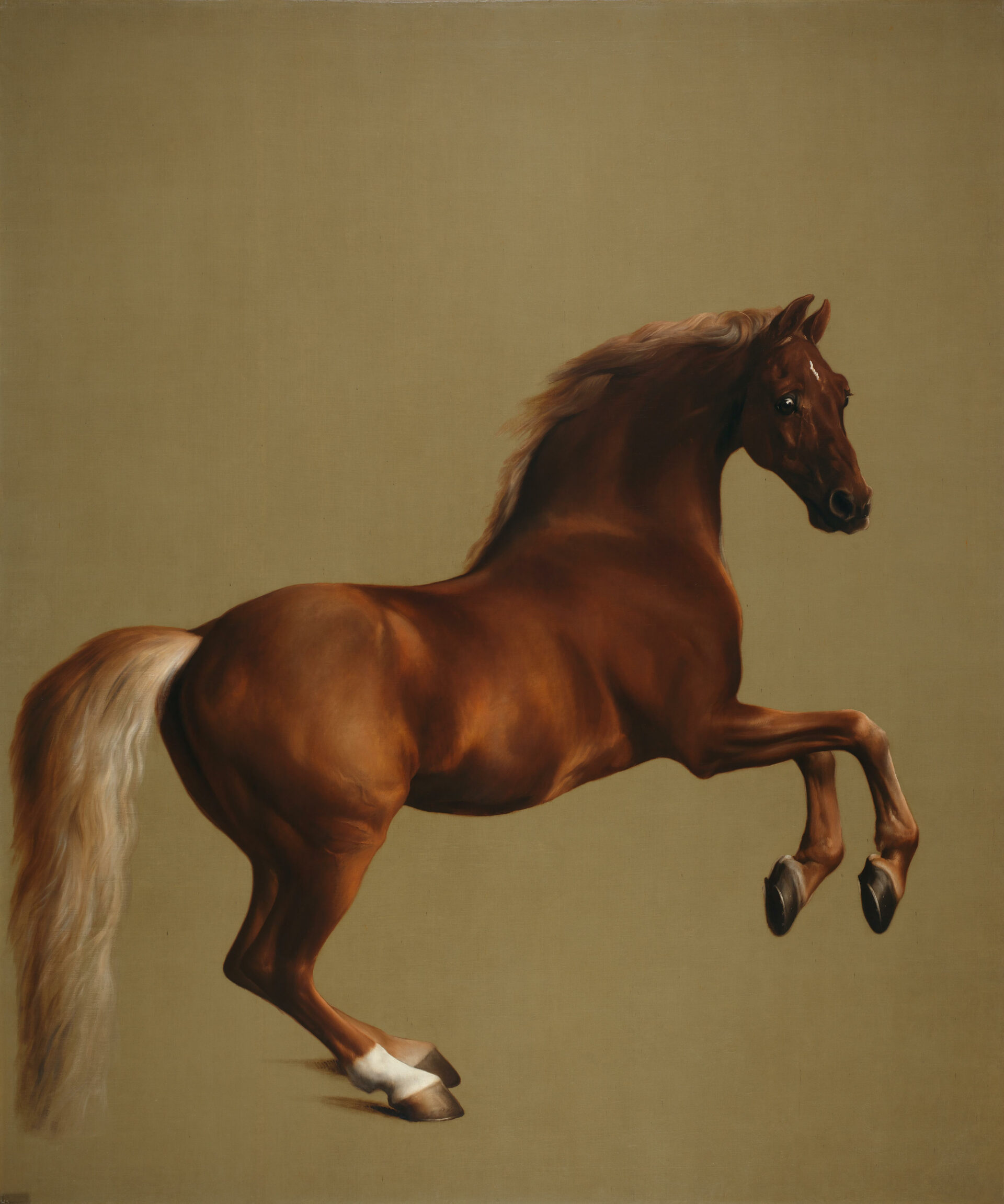
What better time, then, to look at horses in art. The horse appeared in prehistoric cave paintings such as those in Lascaux, estimated to be about 17,000 years old, and has barely left the canvas since. When depicting horses, artists are faced with one of the great technical challenges in painting: their anatomy is complex, with powerful muscle groups and bone structures that shift with every movement. Some painters, like George Stubbs, took the challenge so seriously that he hung a succession of horse carcasses from the ceiling of a barn and, over the course of eighteen months, peeled off layer after layer of equine tissue to understand the underlying anatomy.
As we embrace this new era of the Fire Horse, here are four exceptional horse paintings to return to:
Edgar Degas — The Parade (Racehorses in front of the Stands), c. 1866–68
This marks one of Degas’s earliest racecourse paintings, where he is already doing something unexpected with the subject. He was more interested in the silhouettes of riders and their mounts than in the race itself, and deliberately left out the details that would allow identification of the place or the owners, for instance, the colours of shirts. The composition pulls the eye toward a single, restless horse at the far end, the only figure that hints at what is about to happen.
View this post on Instagram
George Stubbs — Whistlejacket, c. 1762
Whistlejacket was an Arabian chestnut stallion with a track record of success in racing. Stubbs was commissioned by the horse’s owner, Charles Watson Wentworth, the 2nd Marquess of Rockingham, to paint a life-size portrait once the horse had retired from racing. What makes it extraordinary is the absence of everything else, including rider and props. It was revolutionary as a piece which focuses solely on the horse, challenging the hierarchy of painting.
View this post on Instagram
Rosa Bonheur – The Horse Fair, 1853
The painting crackles with danger, showcasing handlers attempting to corral enormous draft horses while straining against their bonds or rearing to buck their riders. At over two and a half metres high and nearly five metres wide, the scale was part of what made it such a sensation at the Paris Salon of 1853.
View this post on Instagram
Edvard Munch — Galloping Horse, 1910–12
Here, Munch composes a feeling of confinement and anxiety through a narrow passage filled with people and an oncoming horse and rider, with the horse’s bulging eye conveying a claustrophobic terror as the five figures look on helplessly. The horse fills the canvas and seems to be bearing down on the viewer.
View this post on Instagram

