

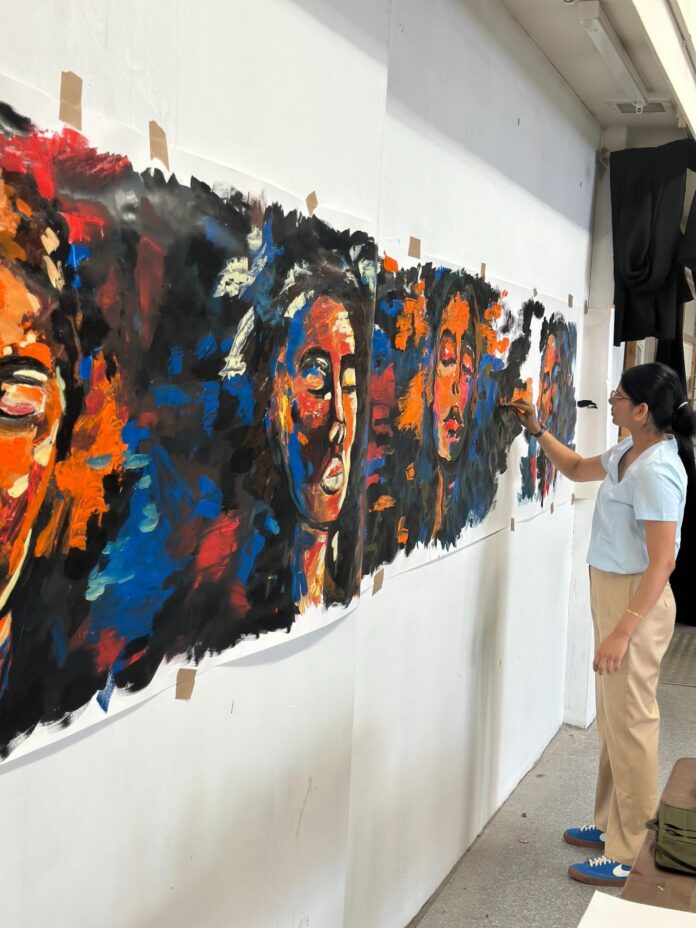
What are we looking for in a portrait of a person? Since the dawn of photography, painting has sought to show us more of a person’s character, rather than being limited to an accurate representation. We see that in the works of great British painters such as Lucian Freud and Jenny Saville. Twinkle applies a similar approach to her paintings. Still, she bases them on the Indian arts concept of Rasa, aiming for an aesthetic that evokes an indescribable feeling in the viewer.
When we look at her painting ‘Silent Roar’, the colours reflect the emotions in this face, which appears contemplative, but the vivid tones suggest emotions bubbling beneath the surface, waiting to be released. In ‘Fragments of Self’, four floating heads hint at four different emotional states. The thick impasto texture evokes the works of artists such as Frank Auerbach and Leon Kossoff, but unlike their duller hues, she paints in lurid greens and yellows, hinting at something beyond the physical world we see around us.
This sense of the unnatural continues in ‘Happy pills’, where the pink face on the left appears full of joy, almost too joyous, as if it’s a manic episode induced by medication. It becomes more disturbing the longer you spend with it, and it makes you want to look away. It feels confrontational in the same way the works of great female painters such as Paula Rego and Frida Kahlo can.
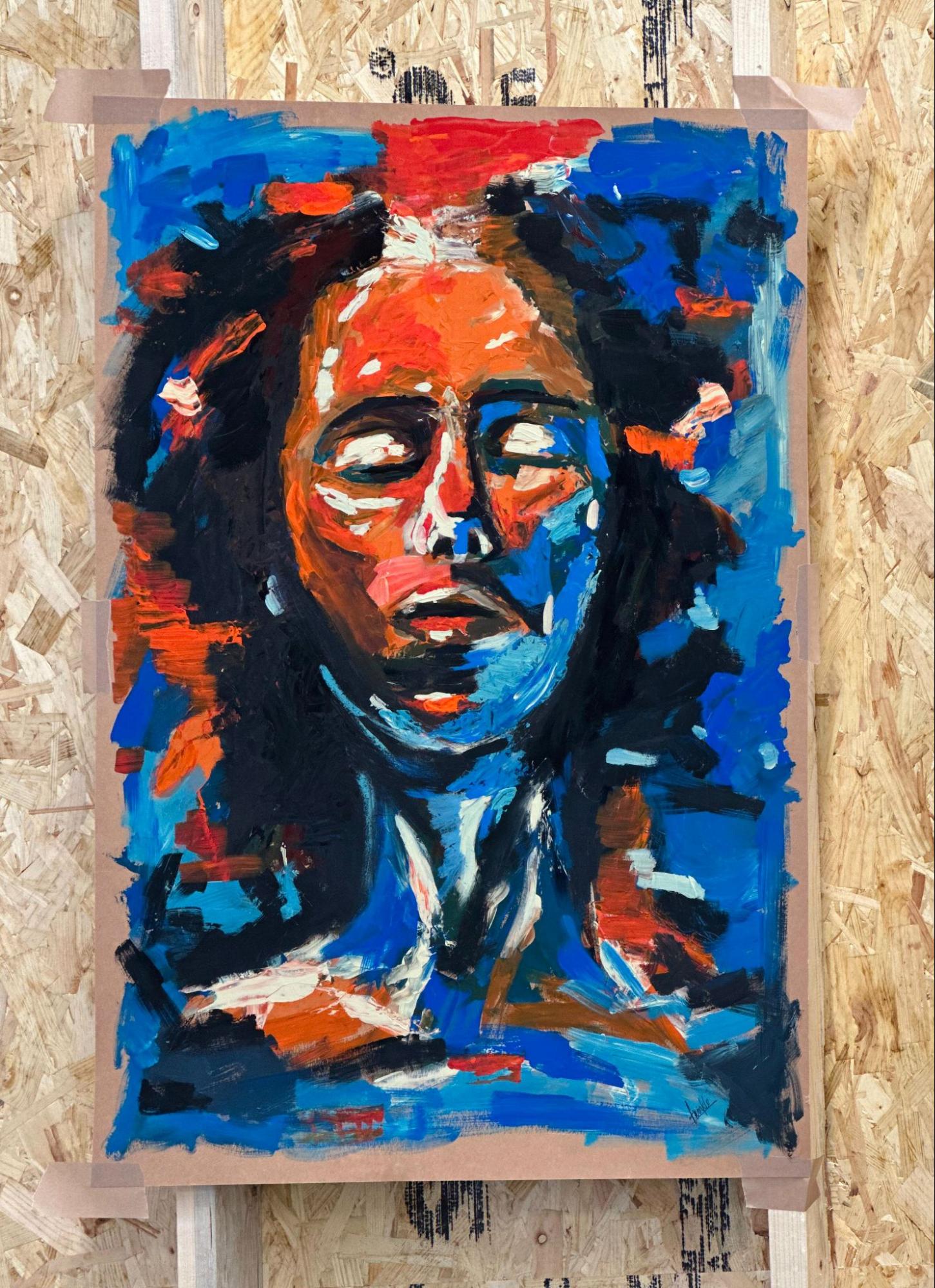
Rasa theory works its way into Twinkle’s sketches, as well as in the scene of a prisoner screaming and in contrasting portraits depicting fear and valour. She’s willing to plumb the darkest elements of our emotions but also surface human strength and the power of emotions to help us overcome seemingly impassable obstacles.
Her output isn’t limited to paintings and drawings of the human figure, as seen in a drawing of a Chinese street that captures its wooden, makeshift architecture, or in the corner of an Indian hut lit by the orange glow of a lamp. In both works, she captures the homely, lived-in feel of these places, providing a sense of the people who may live there without depicting them directly. We also see that she can create abstract compositions through her collograph print series.
Throughout her wider practice, I see a coming together of her Western education and her Indian heritage, creating a unique style that draws on both while forging her own path. As her work progresses, we’ll likely see new influences work their way into her paintings as she continues to explore depicting the emotional range that exists in all of us. Ultimately, it will all come back to rasa theory, which will remain the core value guiding her exploration of painting and making her work distinct from other artists.
More information on Twinkle may be found on her website and Instagram.

