

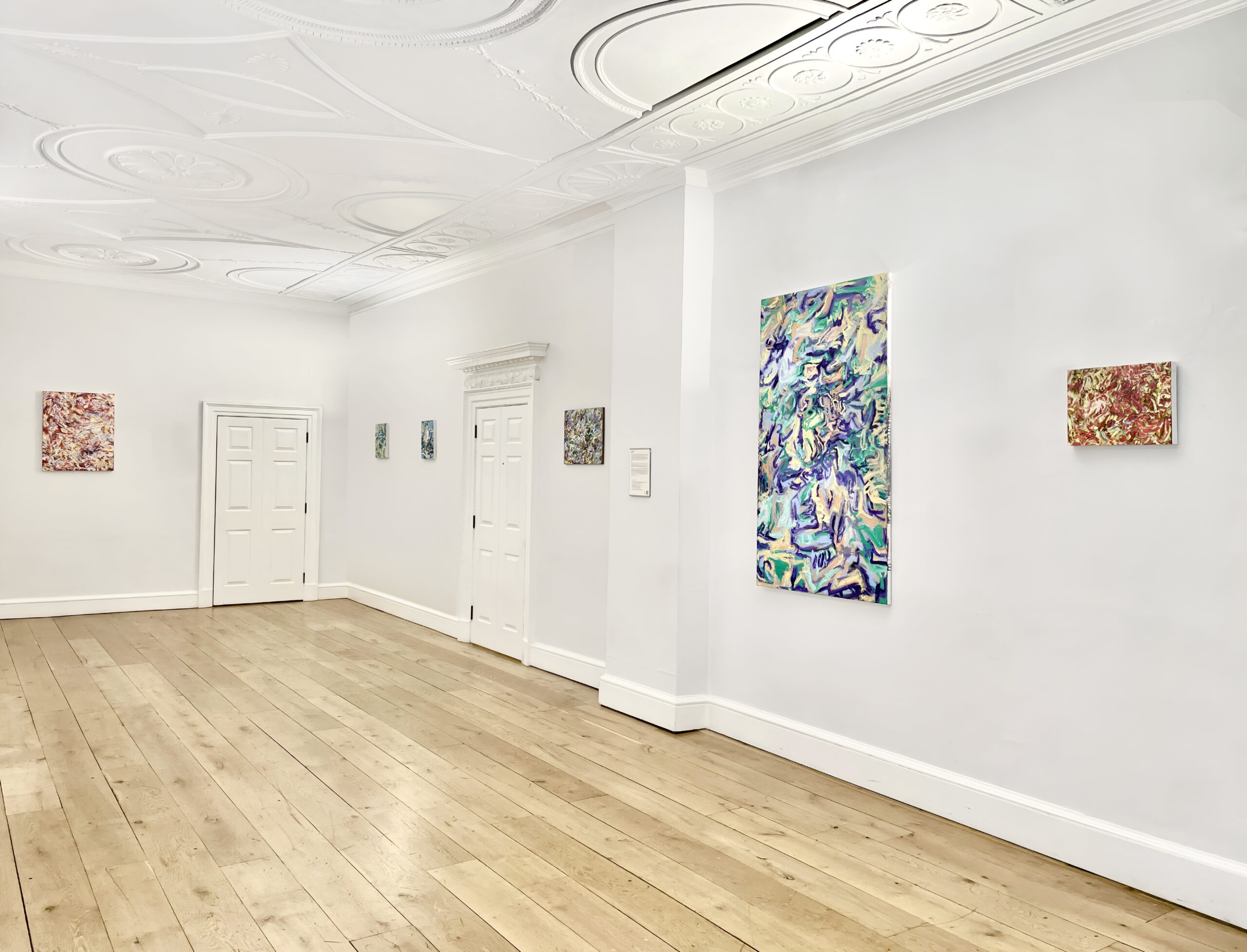
On 28 January, guests gathered at the Royal Society of Arts for an evening event at the Tavern Room, RSA House, featuring the High Commissioner of India, Vikram Doraiswami, in conversation with broadcaster Mishal Husain. Their discussion reflected on the contemporary relationship between India and the UK. For this occasion, Divya Balivada was a featured artist, and her solo exhibition at the RSA, In Between, offered a personal counterpart, which lived through the body, experiences, and memory. This exhibition was specifically curated and presented by Hannah De Rozario, head of House Curation & Governance at RSA House and Laure Barthelemy, House Curation Officer. The In Between show was later opened to the public, with the private view on 12th February and runs until 15th March 2026.
As an emerging talent who recently graduated with an MA in Painting from the Royal College of Art, Balivada’s first solo exhibition at RSA is a confident step forward. Additionally, she recently exhibited at “Small is Beautiful” at Flowers Gallery in London and the Goa Open Arts Group Exhibition and Festival in Goa. Balivada’s paintings at In Between offered a more intimate reflection on the India-UK relationship, through memory, identity and lived experience. The exhibition explores what it means to exist between memory, geographies, and histories. For Balivada, India and the UK are formative forces that continue to shape perception and belonging. The In Between becomes both a physical condition and an emotional state.
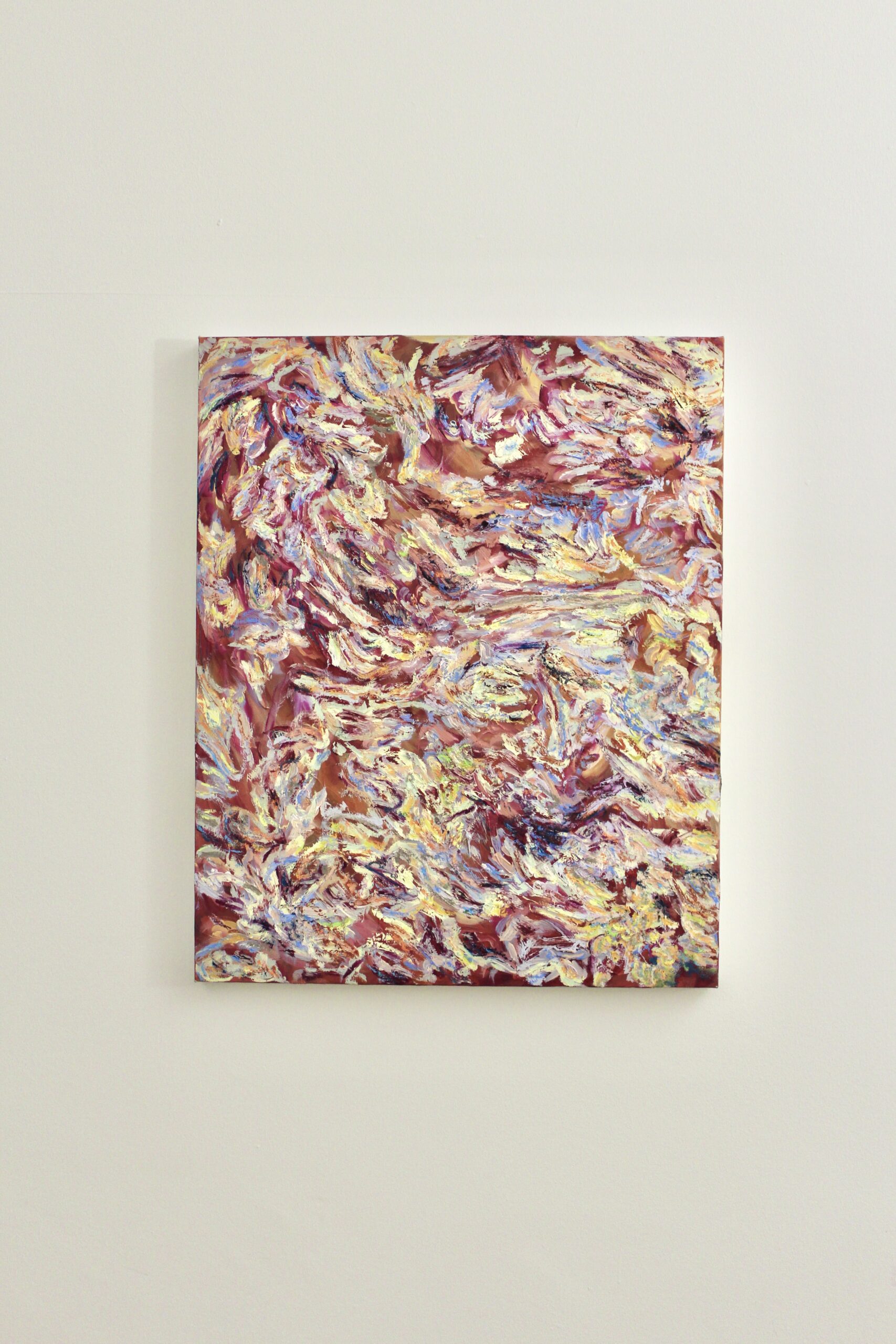
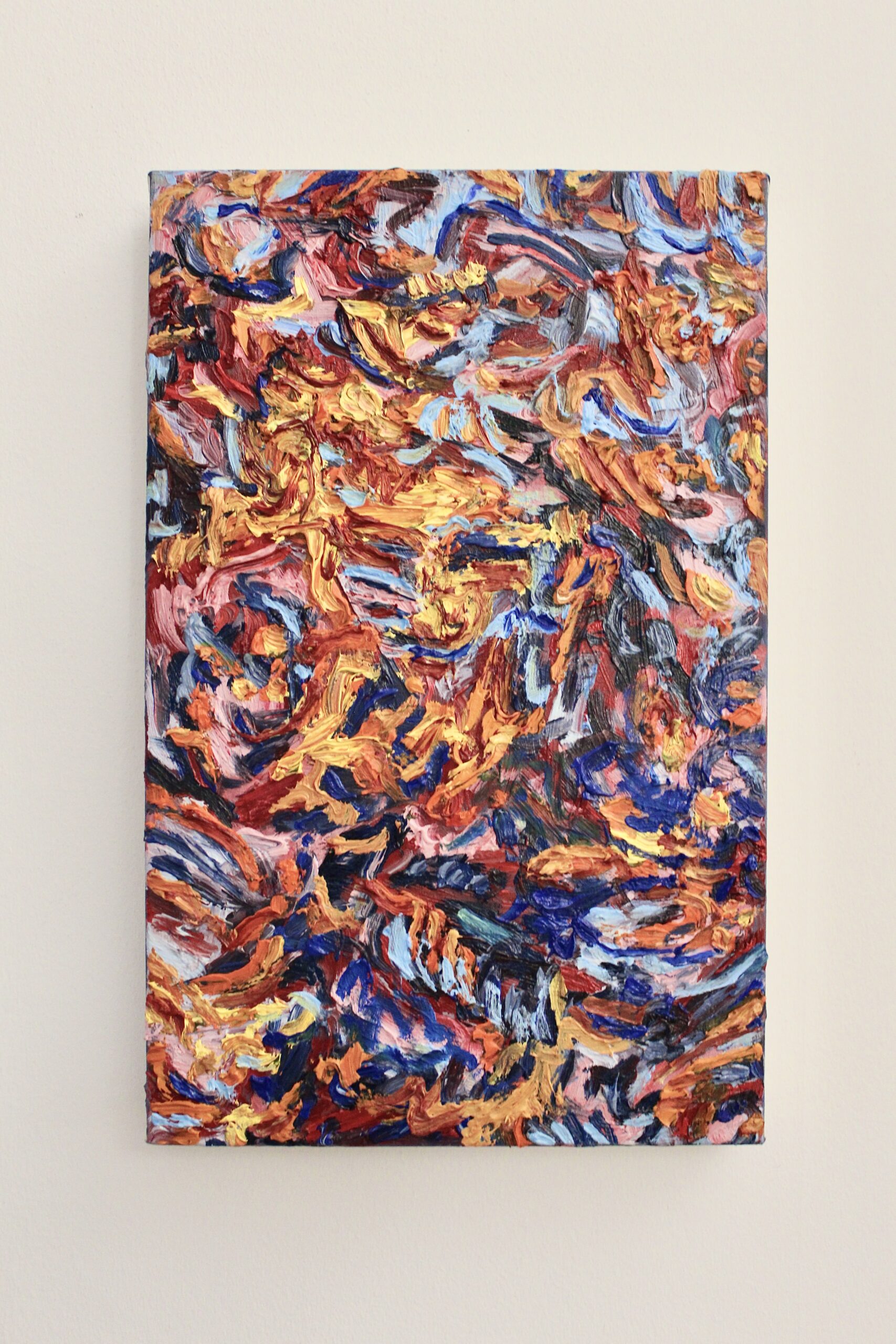
A former dentist turned artist, painting is the language through which Balivada takes up space. In this exhibition, she has developed a visual language that feels at once intimate yet vast through gestures that are in constant movement. Her paintings indeed carried gesture, colour, and emotional density at once. These unplanned compositions held rhythm, built from urgency and repetition. The surfaces read more as bodily accumulations, becoming records of endurance, healing, and reclamation. Generational trauma, memory, gender biases, and displacement are present, but never illustrated directly. The tension between control and excess in her mark-making reflects the violence of imposed structures and the body’s attempt to reclaim agency within them.
Colour in Balivada’s works carried so much emotional depth, and the surfaces felt alive with movement. Oil paint, pigment sticks, and pastels are not merely applied. They are pressed, dragged, and layered to the point of over-saturation in places. Beneath the exuberance of her palette, she challenges the historical devaluation of the ‘decorative’ within art histories. It brings to mind Emily Kam Kngwarray’s negotiation of ornament and identity. Divya also interrogates how the impact of colonialism is inadequately acknowledged in contemporary contexts. This interrogation is embedded in the material language of Balivada’s paintings.
These themes can be seen to be exemplified in Almost There, Never Enough and Meant To Fail. In Almost There, Never Enough, the multitude of bright colours at first may seem decorative but are contrasted with the distinctive mark making. Colours seem to be drawn from India, where the artist grew up. On the other hand, the process of the definitive strokes espouses the expression of the body in its force and the mind in varying concentration across the canvas. As such, allowing the work to show the aesthetic form of her cultural upbringing while also featuring the intensity of lived experience and the reclamation of the expression of said experience. This work perhaps finds a place to sit between the traditionally western dichotomy of decor vs meaning.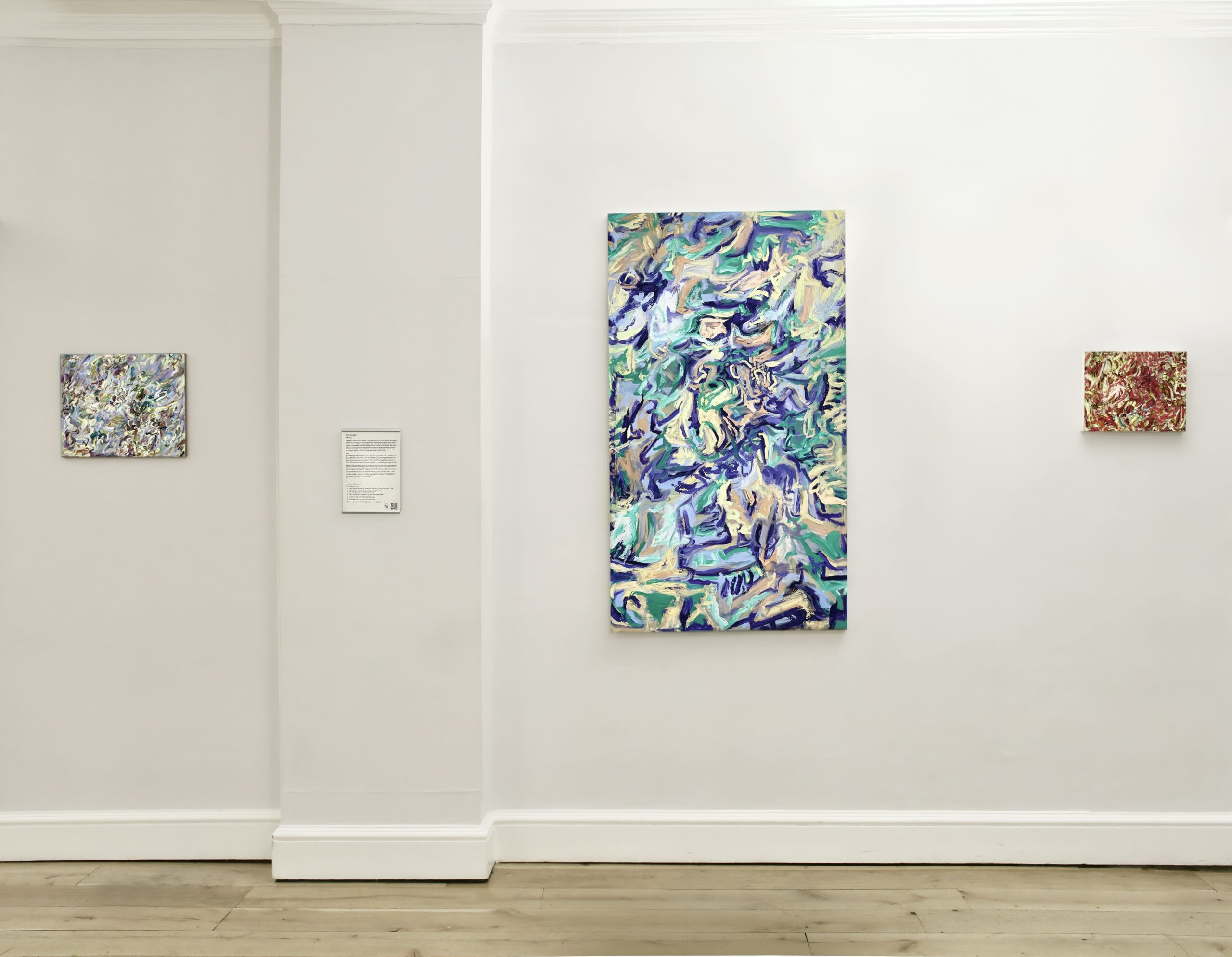
Similarly, in Meant To Fail, some of the same common features were seen but at a different scale with its own distinct energy. The canvas measuring 160 by 90 cm claims space to be seen and witnessed. The gestures are less concentrated but still have areas of higher and lower density. These places of higher density seem to suggest places where emotion is stored, whereas areas of the canvas left to breathe lean more to a reflective atmosphere. Do these places and moments outside the concentration reflect on clusters of obsessive mark-making and paint? Perhaps. The colour palette is of cooler blues and green. While Balivada uses a range of different tones in these works, the emotion and experience linked to each does not feel intrinsically attached and escapes the cliche of the standardised associations between colour and emotion. The memories and feelings are explored through the movement and repetition of mark-making, and her use of colour allows one to visualise all this.
Balivada believes that contradiction is intrinsic to being human. Emotions like joy, anger, fear, and grief can coexist. Hence, her paintings at the RSA insist on complexity, multiplicity, and a lot of questions. What highlights from Balivada’s In Between exhibition is not merely its autobiographical transformation of lived experience into a visual narrative of survival, but its ability to activate beyond the material, operating politically and spiritually at the same time. They do not seek healing or repair in a conventional sense. Instead, they arrive as a necessity where painting becomes an act of surrender. Balivada positions herself less as an author and more as a vessel, allowing something larger than herself to move through the body and onto the surface.

