

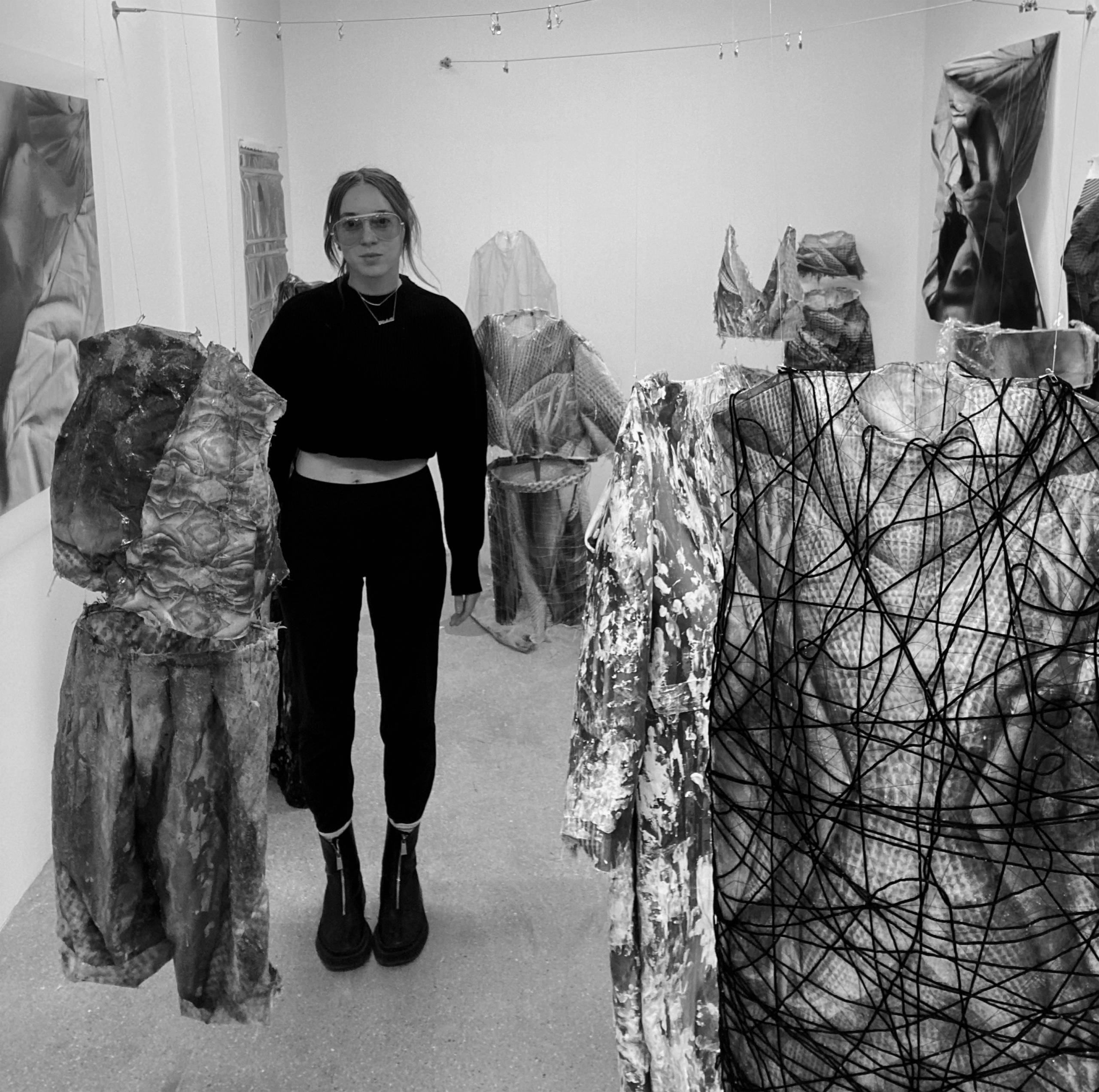
Michelle Alexander is a Canadian-born artist living and working between Montreal and Chicago. She holds a Bachelor of Fine Arts from the University of Miami, an Associate’s degree in Applied Science from Parsons School of Design, and a Master of Fine Arts from the School of the Art Institute of Chicago. Her work has been exhibited at institutions including the Design Museum of Chicago, Mana Contemporary Chicago, The Current (Stowe, VT), and galleries at both the University of Miami and SAIC.
Working across image and material, Alexander explores the body’s response to internal tension, examining themes of identity, self-perception, and the complexities of inhabiting one’s own skin. Her practice centres on process — melting, manipulating, and destabilising materials — to make visible what is often unseen, creating spaces that confront discomfort while inviting viewers to recognise themselves within a shared experience.
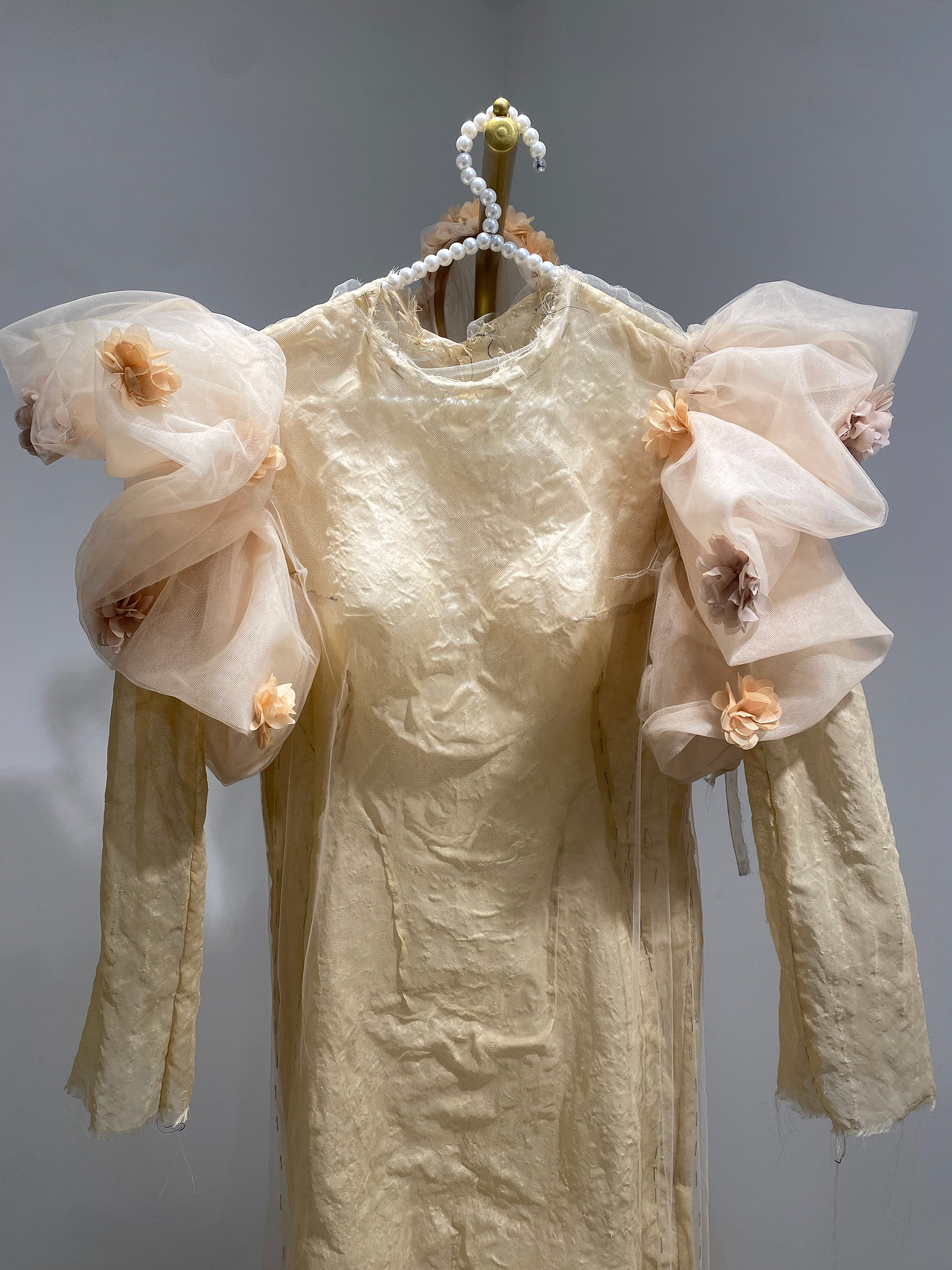
Her recent sculpture, The Mother. The Sister. The Pressure exemplifies this approach: a skin-like torso constructed from fabric and glue, cinched with staples and layered with delicate tulle inspired by familial wedding dresses. Both fragile and constricted, the work reflects the emotional weight of inherited expectations around womanhood, marriage, and identity. The Pressure was the centrepiece of her curated exhibition Connective Thread, which brought together six women artists to explore the tensions between fragility and resilience within collective female experience.
You studied fashion design at Parsons before going on to do your MFA. How much does that training still live in the work?
It’s still very present. Fashion taught me how garments shape the body and how much pressure lives within something that is meant to look effortless. It also showed me how clothing can both conceal and accentuate the body. That tension between hiding and highlighting the body has stayed with me.
Fashion also trains you to think in terms of seams, tension, structure, and how fabric quietly directs posture and movement. It can restrict the body while altering how it is perceived. That way of thinking about the body never left me.
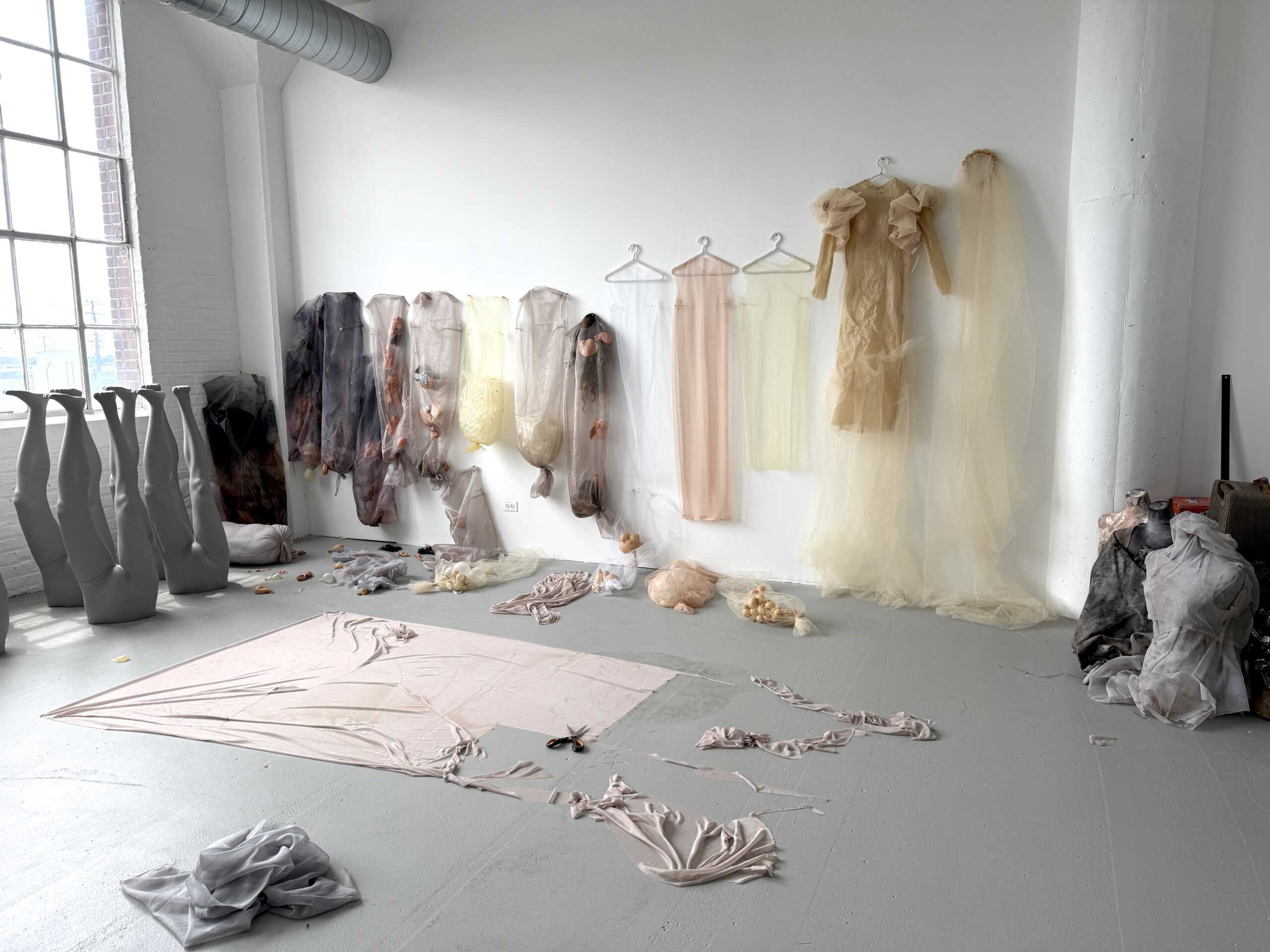
In my sculptures, garments become stand-ins for the body itself. I stretch them, pin them, harden them, or let them collapse. They carry the memory of being worn and the pressure that comes with it.
Did you always work in three dimensions, or did you come to sculpture from somewhere else?
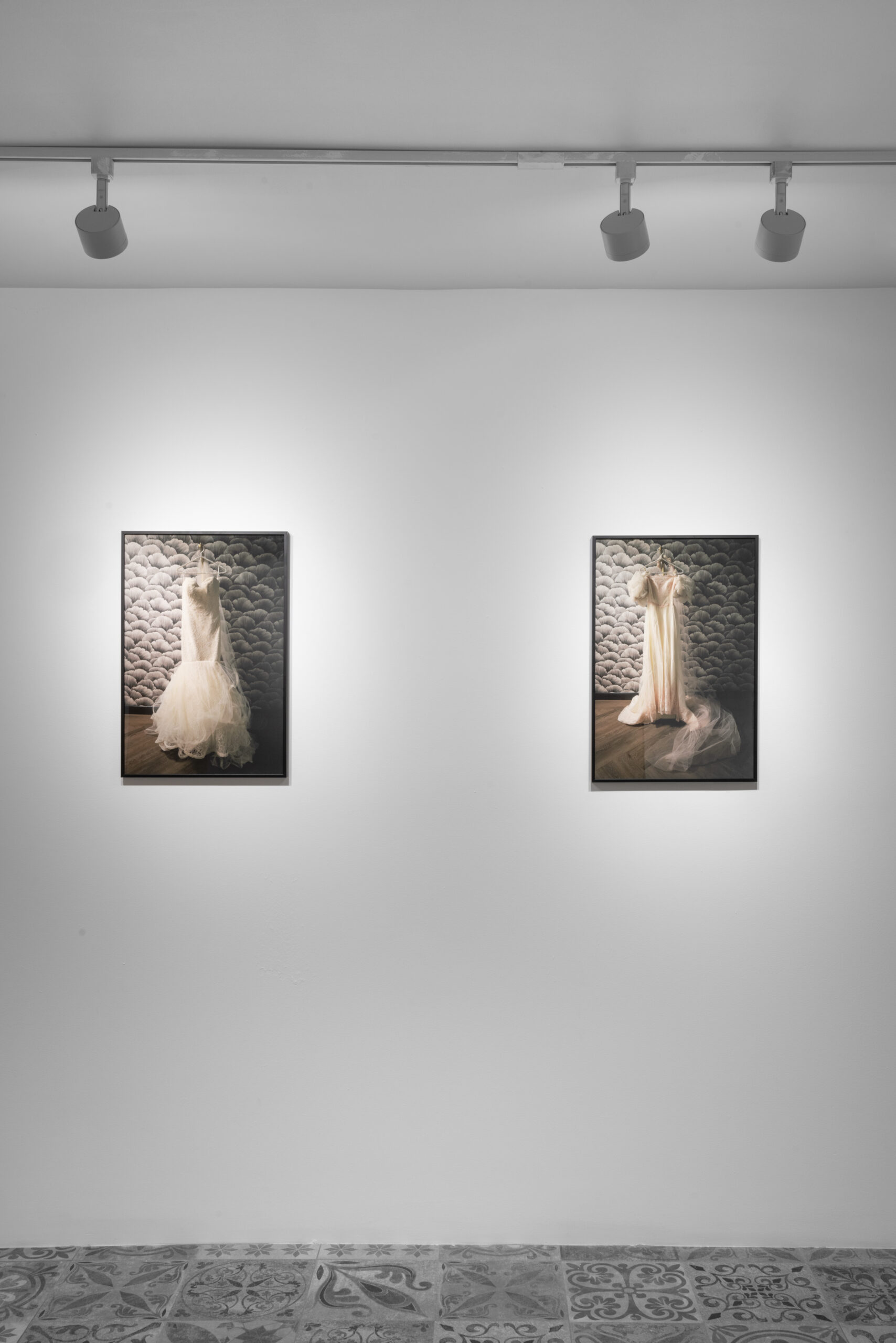
I actually started in photography, painting, and drawing. Over time, those media began to feel too distant from my body. I wanted the work to exist physically in space, to have weight and tension.
Sculpture allowed me to work more directly with materials that had already lived alongside a body. Once I began building with materials, it felt much closer to how I think and experience the world. Having something physically present in space also creates a kind of confrontation or reckoning. The viewer can’t just look past it. They have to encounter it with their own body.
There’s something very physical about how you work: stapling, cinching, melting. What does that intensity give the work that a more controlled process wouldn’t?
Physicality is important because the work is about pressure and endurance. The process mirrors that. I’m pulling, binding, and stretching materials until they either hold or fail.
The work is deeply informed by its physical process and transformation. It isn’t performance, but the act of making is performative in its own way. There’s a transfer of pressure from my body to work.
If the process were too controlled, the work would lose that tension. I want the materials to show strain. Those moments are important to me because they expose the limits of control. The material begins to speak back, and the work starts to carry the pressure it was built under.
How do you know when a piece is finished?
Usually, when the piece reaches a point where it feels like it’s holding something emotionally. I’m looking for a balance where the work feels tense but stable enough to exist.
Often, that moment comes when the material stops resisting me and starts speaking back. When the form begins to feel like a body rather than an object, I know it’s close.
It’s also a process of letting go of traditional ideas of beauty and pushing past my own comfort zone. Sometimes the work only feels finished once I’ve allowed it to become something less controlled or less polished than I initially intended.
The dress in The Pressure carries elements of your mother’s wedding and your sister’s wedding. Did making the work change how you feel about those events, or about your own relationship to that ritual?
It made me realise how layered those objects are. A wedding dress carries a lot of expectations about love, family, and what life should look like. It also carries a lot of pressure around appearance, the expectation that on that day, you embody a flawless version of yourself and perform a kind of idealised perfection.
Working with those references allowed me to hold both the tenderness of those memories and the pressure that sits alongside them. The piece isn’t rejecting those rituals, but it does acknowledge how heavy they can feel. In many ways, it reflects the same pressures I explore throughout my work, the quiet weight placed on bodies to perform an ideal.
Your bio states you “remain stuck with the friction of what happened,” which implies the artwork doesn’t resolve things. Is that frustrating, or is staying stuck the point?
I don’t think the work is meant to resolve anything. If anything, it holds the moment where things remain unresolved.
Staying with that friction feels honest to me. The body doesn’t neatly process pressure or memory. Sometimes it just carries it. You can understand something emotionally and even move through it, but that doesn’t mean the body processes it at the same rate, or even processes it at all.
What you’ve been through stays with you in some form. The pressure doesn’t just disappear. The sculptures reflect that. They sit in that tension rather than offering closure.
What made you want to curate Connective Thread, rather than just participate in it?
Curating it actually came out of the fact that if I hadn’t organised it, the exhibition wouldn’t have existed. I developed the concept, pitched it to the gallery, and reached out to the artists who ultimately participated in the show.
Curating it allowed me to think more intentionally about how different practices speak to each other. I’m interested in how artists carry personal histories and how those experiences surface through material.
Connective Thread brought together artists who were each dealing with the body, identity, or memory in different ways. Seeing those works in conversation created a kind of collective language that felt larger than any one piece.
Are there any artists whose work you keep coming back to?
I often return to artists who treat the body as something both vulnerable and powerful. Joan Semmel is someone whose work I often think about. In many of her paintings, she leaves her head outside the frame, so the viewer sees the body from her perspective rather than as an object. That shift allows the viewer to inhabit the body rather than observe it from a distance.
I also return to Felix Gonzalez-Torres for the quiet power of his work. The way viewers physically engage with his pieces and become part of the work is incredibly moving to me.
Both artists approach the body in very different ways, but they share a sensitivity to how a viewer physically and emotionally encounters the work.

