

Linwei Hu, a Los Angeles-based cinematographer, has a distinctive visual language, mainly because he brings emotional depth to filmmaking through his work. With a background rooted in documentary and a Master of Fine Arts from Chapman University, Hu’s unique approach to storytelling through light and shadow has brought critical acclaim to his recent projects, ranging from short films to vertical drama series, be it titles like “So You Remember to Miss Me” and “Emily.”
Born and raised in China, Hu’s journey from Shanghai Documentary College to the forefront of independent cinema has been marked by an unwavering commitment to authenticity and a flair for the artistic. His filmography, which includes the upcoming feature “Days Flow By” and the recently released “Old Yang,” showcases a versatility that makes him a sought-after talent.
Crafting a “Quiet Apocalypse” in “So You Remember to Miss Me”
One of Hu’s most talked-about works is the short film “So You Remember to Miss Me,” celebrated for its painterly, artistic aesthetic. Hu describes his vision for the film as anchored in the idea of a “quiet apocalypse.”
“For me, the film is not concerned with apocalypse in a literal or catastrophic sense, but rather with the slow implosion of two interior worlds unfolding against an external reality that remains seemingly stable, indifferent, and serene,” Hu explains.
He aimed to portray the contradiction of two outsiders navigating American life: “a world that appears composed and tranquil on the surface, yet is charged with instability, vulnerability, and emotional disintegration underneath.”
This nuanced visual approach was a product of his close collaboration with director Nan Li. Hu praises Li, who also brings a background in photography and theater performance, for her strong storytelling instincts and sensitivity to acting. “Working with Nan Li was a really meaningful collaboration for me,” Hu shares. “She’s the kind of director whose eyes genuinely light up during the creative process, and that kind of presence brings a lot of life to the work.”
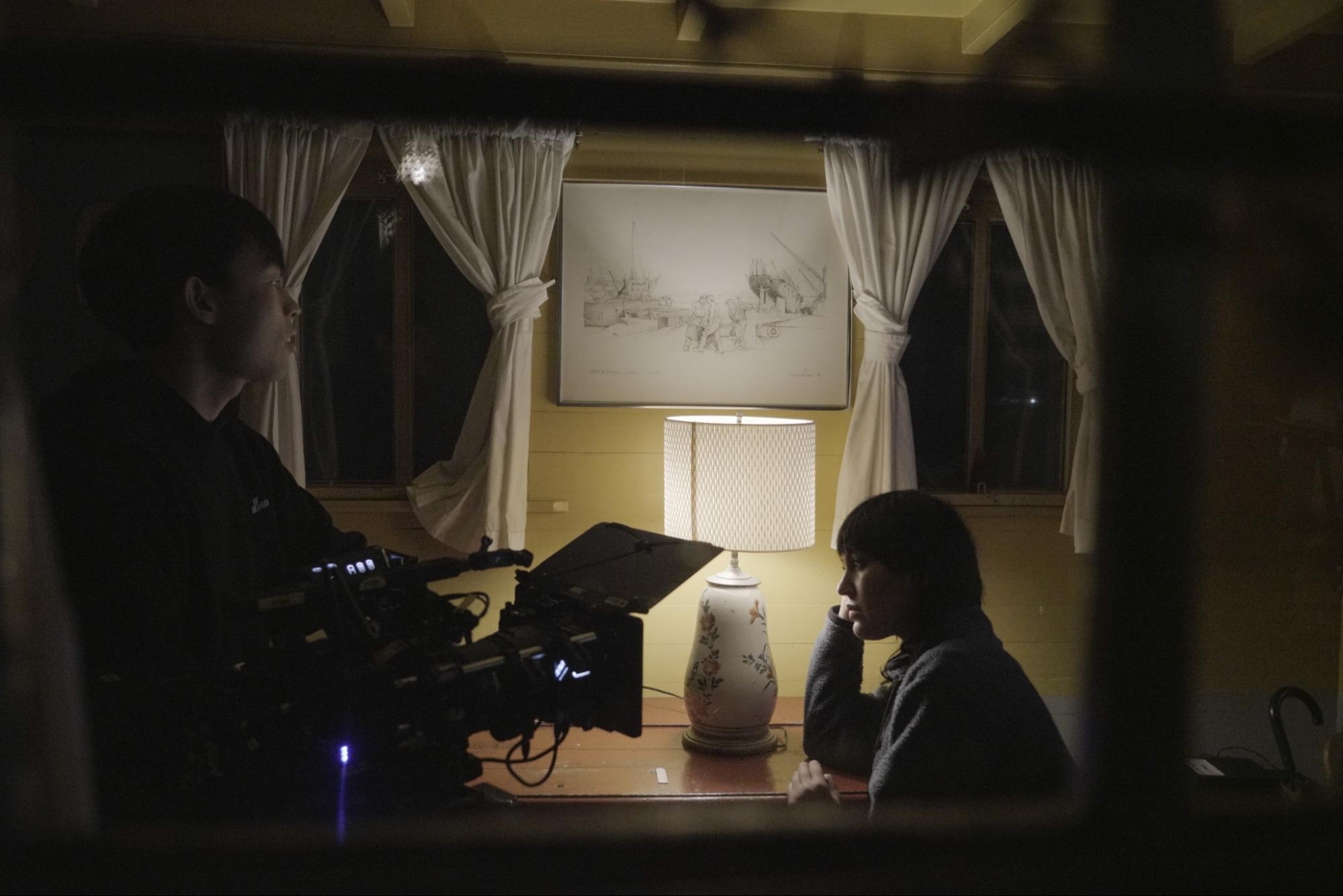
Despite Li’s own visual strengths as a photographer, Hu appreciated her openness: “she remained open to dialogue and trusted my input on the technical and cinematographic side. That openness made the collaboration feel very alive, respectful, and creatively fulfilling.”
The film’s impactful realism, a quality Hu deeply values, stems from its authentic settings. “Every location was carefully chosen from real spaces that naturally aligned with the story’s world and emotional setting. That gave the film a strong sense of authenticity and helped the characters feel truly embedded in their environment,” Hu notes. This commitment to grounding the narrative in tangible reality is a key factor in its resonance with audiences, particularly those “trying hard to stay and survive in the U.S.”
Central to “So You Remember to Miss Me” is the visual conveyance of “revenge” through chiaroscuro—the dramatic use of light and shadow. Hu approached this not as a mere stylistic choice, but as a “psychological visual language.” He clarifies, “In my understanding, the essence of revenge is not surface-level violence, but an inner darkness formed through long-term repression.” Behind the lens, this translated into “selective lighting, a controlled dark tonal range, preserved shadow detail, and spatial obstruction to keep the characters in a visual state that feels incomplete, unstable, and at times almost consumed by darkness.” He adds, “If I were to describe how I tried to capture the visual essence of revenge, I would say the key was to make the emotion visible before the action itself.”
The film’s ability to connect deeply with viewers has been affirmed by its screenings at prestigious festivals, including the New York Shorts International Film Festival, Rome Prism Film Awards, and Venezia Shorts Italy.
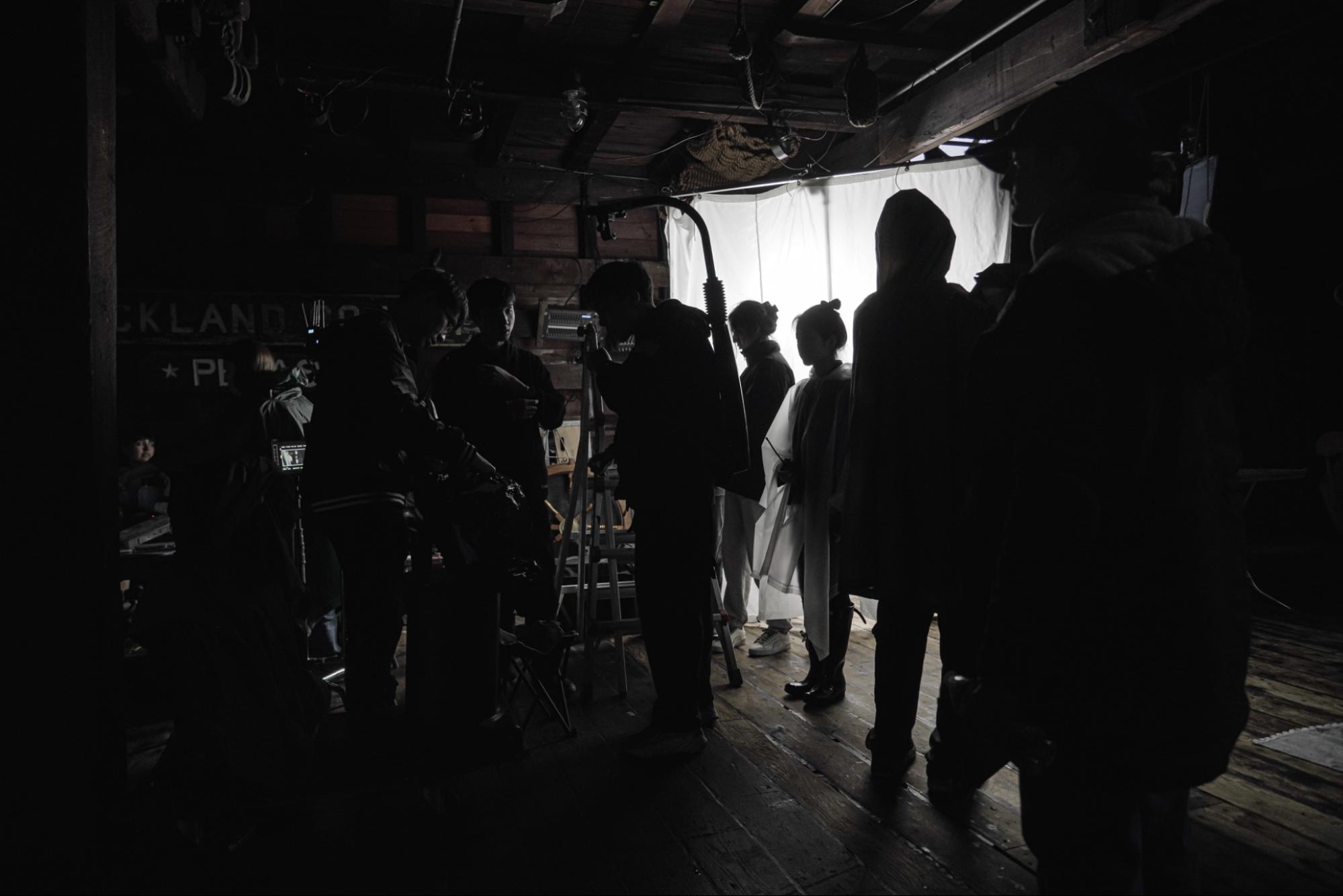
In a striking aesthetic departure, Hu also served as DP for the short film “Emily,” directed and written by Hsiao-Hsia Huang. The film follows David, a teenage boy fixated on his older neighbor, Emily, an actress. David’s secret observations through binoculars form the core of the narrative.
Hu meticulously crafted the film’s voyeuristic style. “Visually, we built that voyeuristic feeling in two ways,” he explains. “One was through David’s imagined scenes, which let the audience step into his fantasy world. The other was by using multiple POV shots through his binoculars, so viewers could experience Emily the way he sees her from across the street.”
As Emily’s behavior grows increasingly unusual, observed by David, Hu ensures this plot progression is captured visually with subtlety. “In the beginning, Emily feels more soft, dreamy, and almost magical,” Hu describes. “But as David starts noticing that her behavior is becoming unusual, the images also become a little more unsettling. It’s a subtle shift in mood, framing, and atmosphere, so the audience can slowly experience that change with him.”
Aesthetically, Hu approached “Emily” as “something closer to a fairy tale.” He sought to create “imagery that felt dreamlike and emotionally heightened, with many scenes carrying a soft, magical quality.”
“I aimed for a visual world less bound by realism and more guided by emotion, imagination, and a sense of wonder,” he said. “Emily” was selected for the LA Shorts, an Oscar-qualifying festival, as well.

