

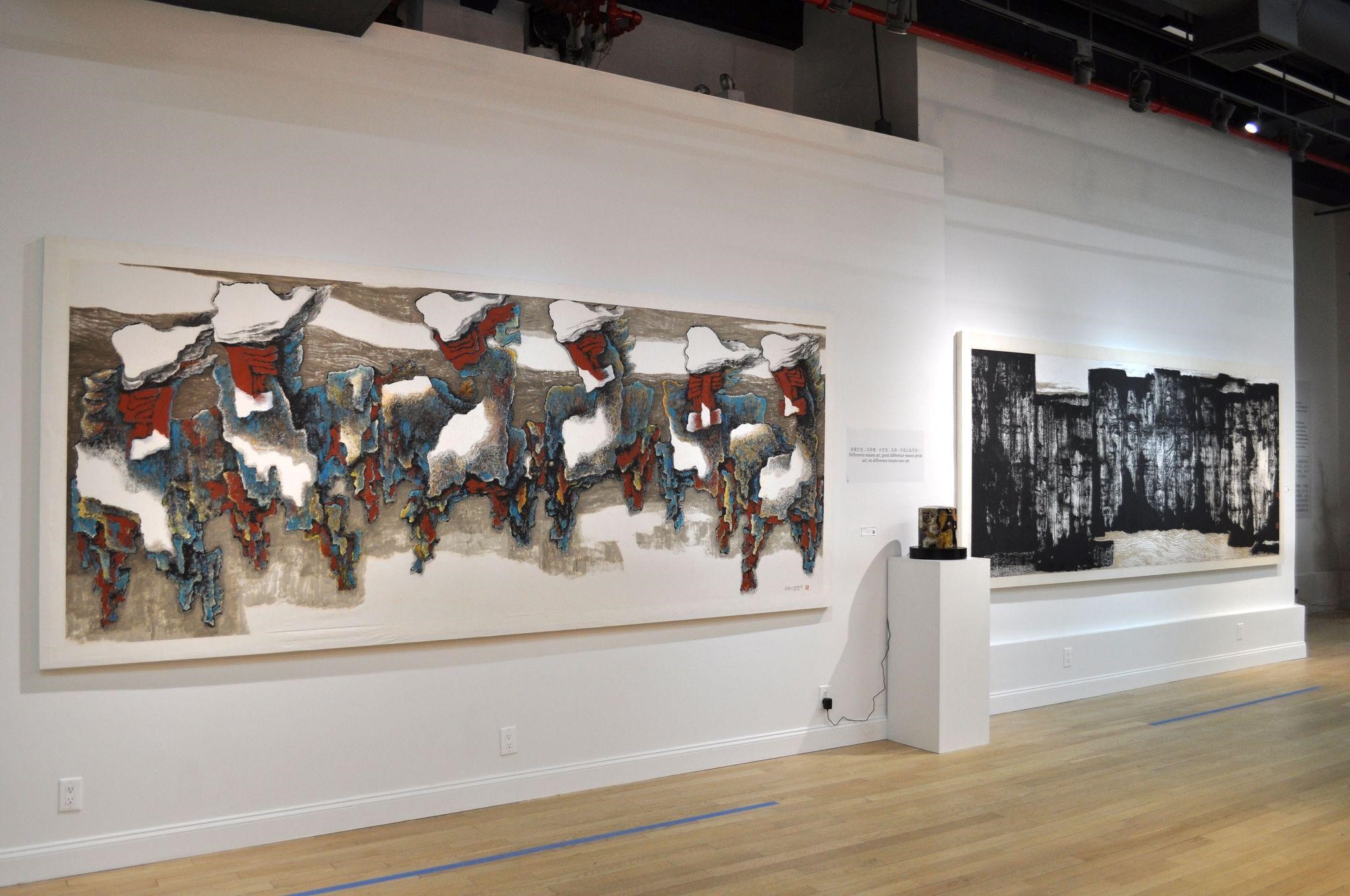
When Gallery A.T. 108 opened at 108 West 25th Street in Chelsea, it announced itself not merely as a new exhibition space but as a considered statement about what contemporary art can do across cultural divides. Central to that statement is Judie Huier Zhao, whose curatorial sensibility and intellectual rigor helped define the gallery’s inaugural exhibition — Presence and Becoming, a solo presentation by scholar-artist Q.X. Wang.
Zhao and gallery founder Annie Teng first met at Sotheby’s, where both moved fluently through the global art world. Teng recognized in Zhao a rare quality: a deep literacy in both Eastern and Western artistic traditions paired with an instinct for nuance. When Teng launched Gallery A.T. 108, she brought Zhao on as a collaborator, trusting her to shape a program that holds scholarly depth and public accessibility in balance.
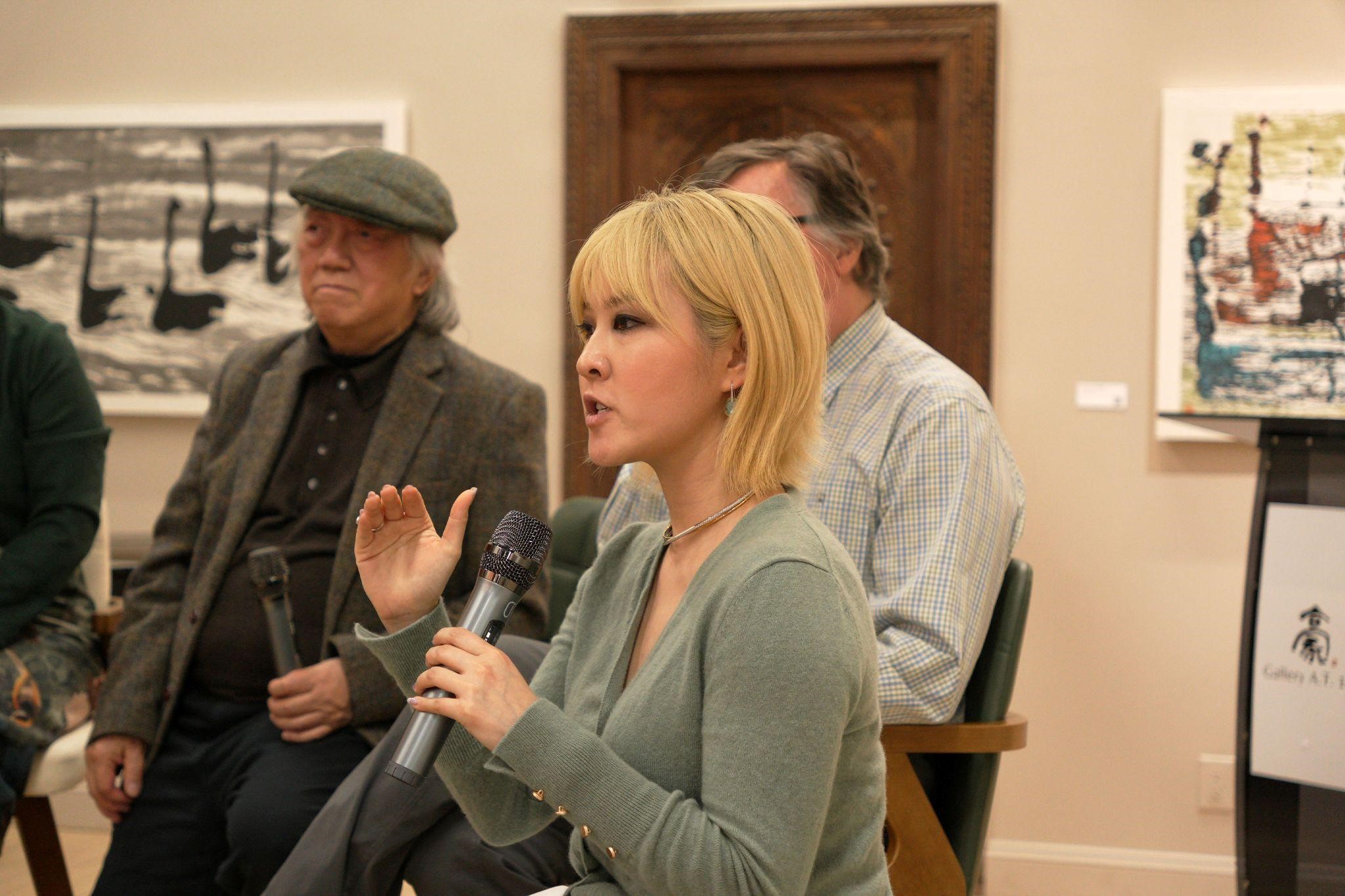
That balance was evident at the opening, where Zhao moderated a panel discussion with Wang, Teng, and a museum director. The conversation ranged widely: tracing the evolution of ink art from its East Asian classical roots to its contemporary reception in the West, and examining how institutions today navigate the competing demands of cultural stewardship and critical inquiry. Zhao’s questions were precise and generative, drawing out the tensions between tradition and innovation that animate Wang’s practice.
Presence and Becoming earns its title. Through layered compositions and a restrained yet charged visual language, Wang treats identity and perception not as fixed states but as ongoing processes of negotiation. Zhao’s curatorial framing made those themes legible without reducing them — the exhibition functioned simultaneously as aesthetic experience and critical platform, a forum for thinking through how artistic ideas travel and transform across cultures.
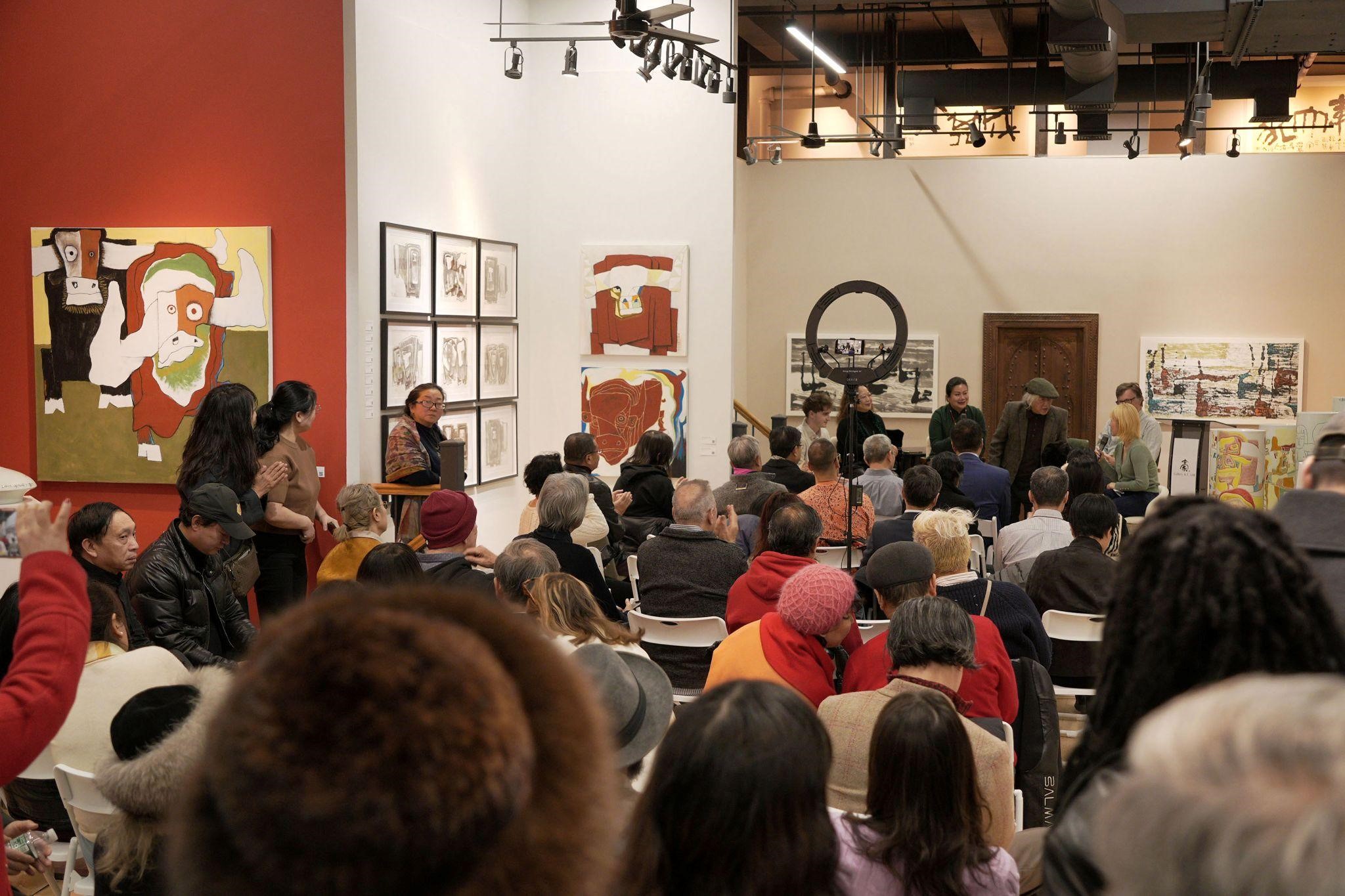
For Zhao, curation is fundamentally relational. Her work moves between artists, collectors, and institutions, building conversations rather than simply organizing objects. The Gallery A.T. 108 debut illustrated how that approach can transform an opening into something more durable: not just a launch, but a proposition about the role of art in a globalized world.
As Chelsea continues to recalibrate its place in the contemporary art landscape, Zhao’s contribution offers a model for how curators can do more than mediate: they can orient. By placing Presence and Becoming within both historical depth and global context, she amplified the artist’s voice while staking out her own position in an ongoing and necessary conversation.

