

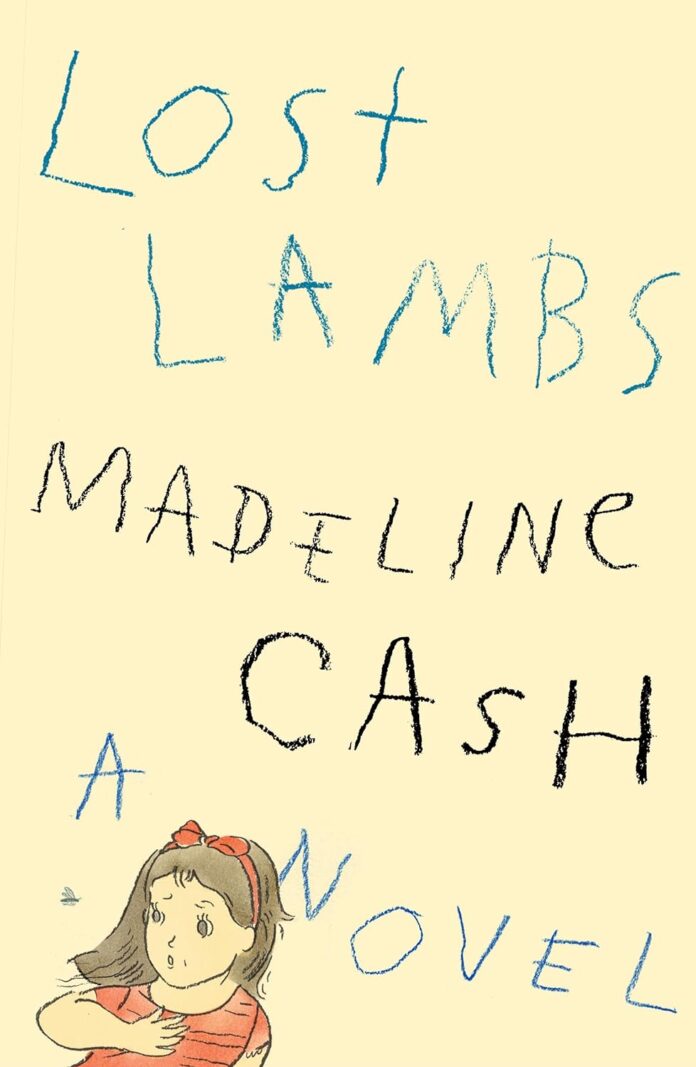
Have you heard of the newest literary conspiracy? According to author Freddie deBoer, the onslaught of positive coverage surrounding Madeline Cash’s debut novel Lost Lambs is “a coordinated media campaign that has been, to some degree and in some way, orchestrated from above.” That The New York Times, New York Magazine, The Atlantic, LitHub, The Washington Post, and likely many other publications reviewed the book is all because “someone with connections and influence sweated their way to ensure that this rollout happened.”
That person is called a publicist, and Madeline Cash has quite the good one. But I empathize and agree with DeBoer in that there are, regardless of quality, some books that lap up all the attention and get awarded with constant coverage and interviews, leaving many others to the wayside. In her essay for The Walrus, Tajja Isen shows that even if a writer does everything correctly, publishing switch-ups or mishaps might still put them at a disadvantage to the buzzier and more popular books that are selected for mass consumption. They’re the ones that earn their spot in Vulture’s Approval Matrix, are more than briefly noted in The New Yorker, and sometimes appear on TV as part of a book club roundup. Cash accumulating all three is a lot of luck and a lot of hard work. So while there is a network of people writing and talking about Cash, they’ve been doing so for years, and it’s more than likely a result of natural waves of intrigue and word of mouth. This “conspiracy” really is just chatter.
Plus, I’d heard of Cash long before all of this, rifling through her short story collection, Earth Angel, when it was released on the indie publisher Clash, at a local store (I was in the middle of a self-imposed book spending embargo). And later, when I noticed her book deal, and later, when I saw the cover of the novel, or throughout the years seeing her literary magazine, Forever, which she runs with Anika Jade Levy, another writer whose novel got a lot of coverage, including in these pages. So this explosion of hype around Lost Lambs hasn’t been out of nowhere, and it’s not as sinister as it’s made out to be.
Ironically, it couldn’t have happened to a better book. The Flynn family at Lost Lambs’s center revolves around a conspiracy in their town regarding Paul Alabaster, who the father, Bud, works for. One day on the family laptop, Harper—the youngest, a Stewie-like girl who learns languages in her spare time—notices some misplaced data points. Bud shrugs it off, but it turns into a catastrophe when he digs deeper at work and is thrust into a global plan that he’s suggested to knock off.
Reeling from his recently opened marriage and chastised at work, Bud enrolls in the Lost Lambs support group, where he sets his sight on Miss Winkle, the group’s administrator who complains about the church’s broken bells while not donating anything to the fundraisers. Catherine, whose relationship with her neighbor ends when she discovers his collection of clay vaginas stored in his basement, is more able to separate her emotions and make the best of their situation, pivoting to lesbianism.
But Lost Lambs centers the girls, who, like in most movies starring snarky and adventurous children, figure out the mystery. The lisping Louise chats with an online terrorist and is eventually put on the no-fly list for attempting to bring a bomb onto an airplane, and Harper starts dating a man working security at Alabaster’s mansion, who is dubbed “War Crimes Wes” as he won’t reveal what he saw in combat. And Harper, unstimulated and looking for something fulfilling, almost dies while trying to win Our Lady of Suffering’s Inner Beauty Pageant by holding her breath for as long as she can.
Cash is a natural and smart storyteller, and her Franzen-esque family novel unfolds with confidence and playfulness. There are puns and word tricks—owing to a gnat problem in the church’s basement, words like “donated” are retyped as “extermignated,” which, to me, never got old, even when cheeky business names like the bar “Olive Or Twist” were a little light)—but a genuine humor to conversations as she gets into the mind of this anxious, singular family. It feels like the narrative was always there, waiting for a talented writer to come along and imagine it. Believe the hype—or the conspiracy.
Lost Lambs is out now.

