

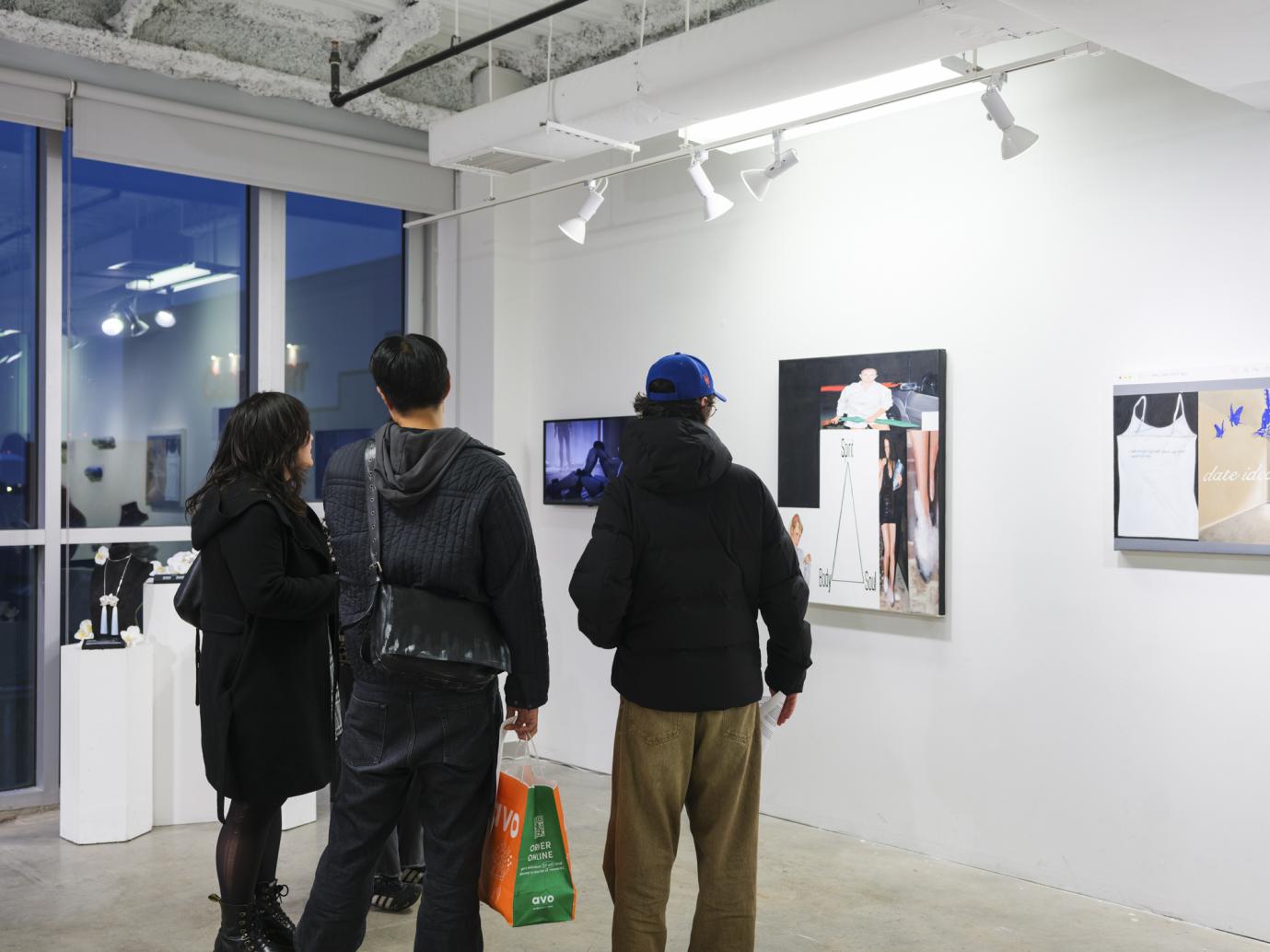
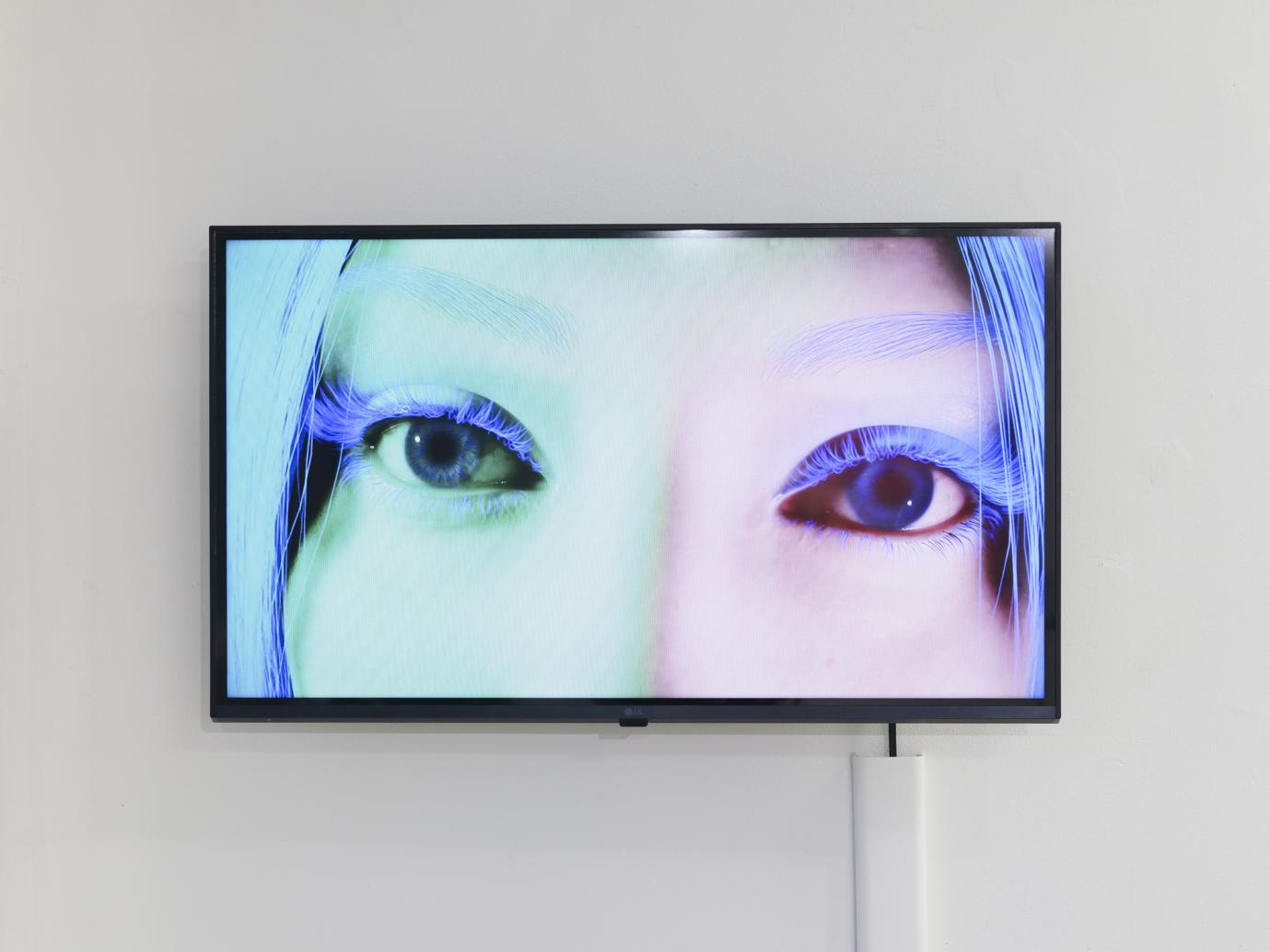
In our digital society, we struggle to grasp the meaning of our present moment. Instead, we experience the instance of carpe diem as the unnatural, predictable, calculated construction of the computational processes, algorithms, and data systems that pervade our contemporary lives. Do we still autonomously organise our time, construct our behaviour, or select and produce knowledge? Or is there a surveillance and authoritarian regime that influences and shapes us through the ubiquitous use of AI?
Synchronous Illusion (2025) seems to suggest that humans are merely a node in a web of material and non-material beings, and that we have technologised our lifestyle to the extent of, imperceptibly, departing from an unconstrained and purely humanist subjectivity. Even if it is pervaded by a serene soundtrack, the video’s opening scene — with its central female bionic character — reminds us that biotech intervenes in the human body and cognition through computational processes, implants, and cryonics.
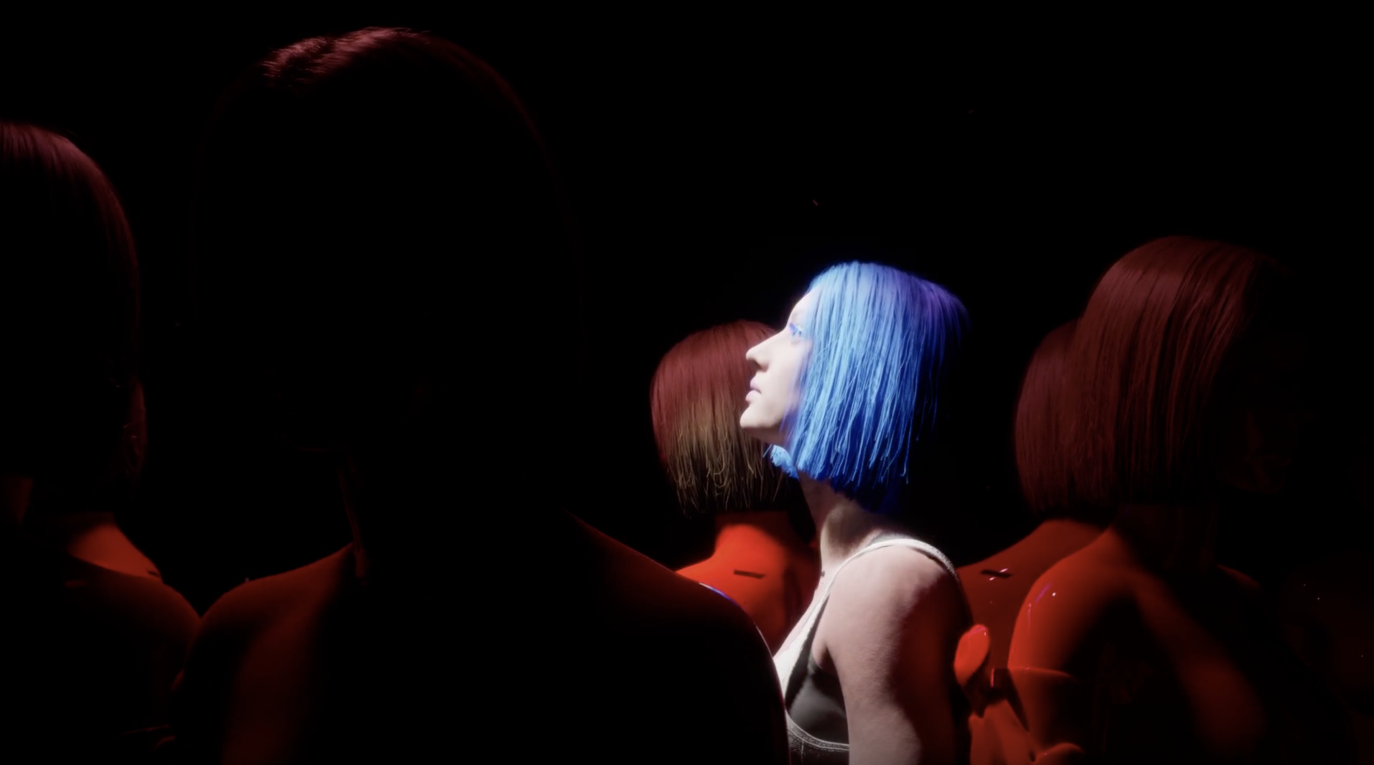
Engin Demir here deals with power and subjectivity in algorithmic society, where a techno-oligarchy controls the infrastructure and humanity becomes the subject — making his intentions clear with a visual strategy that foregrounds contrast and scale. Demir conjures a complex interplay in this hyper-programmed visual environment: a contrasting cold and warm colour palette, the fantasmagoric as opposed to the urban, and the notion of difference between male and female explicitly conveyed through each gender’s signifiers — such as stereotyped siren-like bodies and fast cars. The strategy clearly points to the divergence between the machinic and the human, yet Demir does so by neither flattening opposites into one nor avoiding the possibility of fusion. Moreover, Synchronous Illusion is interested in finding modalities of resistance: the ability to move between these contending domains by incorporating fluidity, metamorphosis, and non-fixity as a way of civilisational endurance.
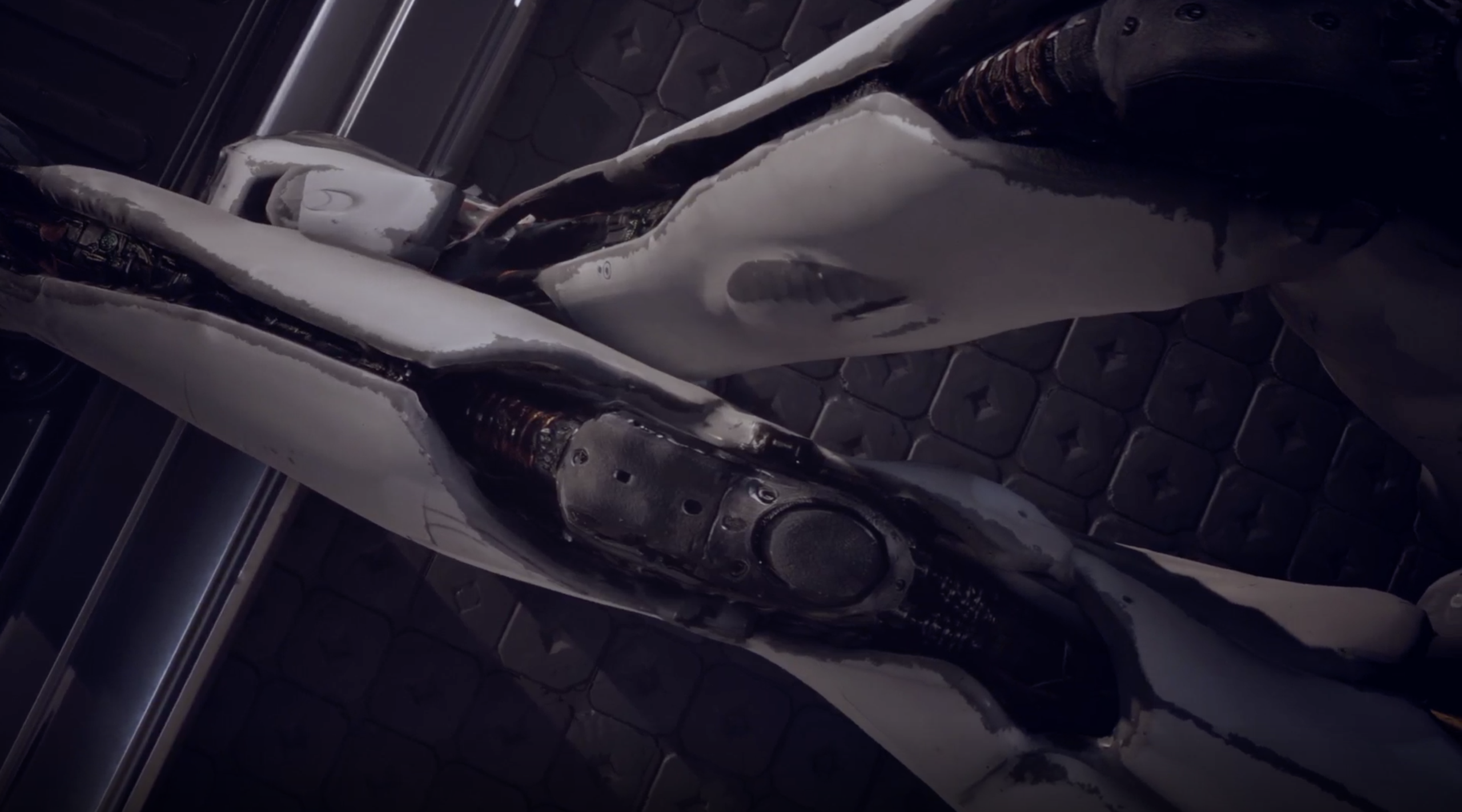
Intersecting the domains of technological advancement, shifting social order, and the current process of reconfiguration of human perception, this video interprets existence as perspectival, plural, interchangeable, adjustable, and unstable. The interaction of personas in Synchronous Illusion — at times contextualised in a surreal manner within a cityscape, at others as if they were in a temple or a dark cave — instils in the viewer a multi-positional awareness of the coexistence of wide range of principles of being, knowing, and world-making capable of countering platform capitalism. Therefore, it explicitly states that there is hope, despite human vulnerability inside technological systems.
Ultimately, Demir’s fragmented and robotic bodies suggest that we should envision the fight ahead: a battle in which, even if humanity is becoming a universe of data fragments, we shall not lose our unified subjectivity. His art enunciates that — no matter how much identity is distributed across digital networks and surveillance cameras, or if our behaviours are predicted before they happen and our decisions are automated in advance — we shall consciously and proactively adjust to the system and challenge the superstructure in order to survive.

