

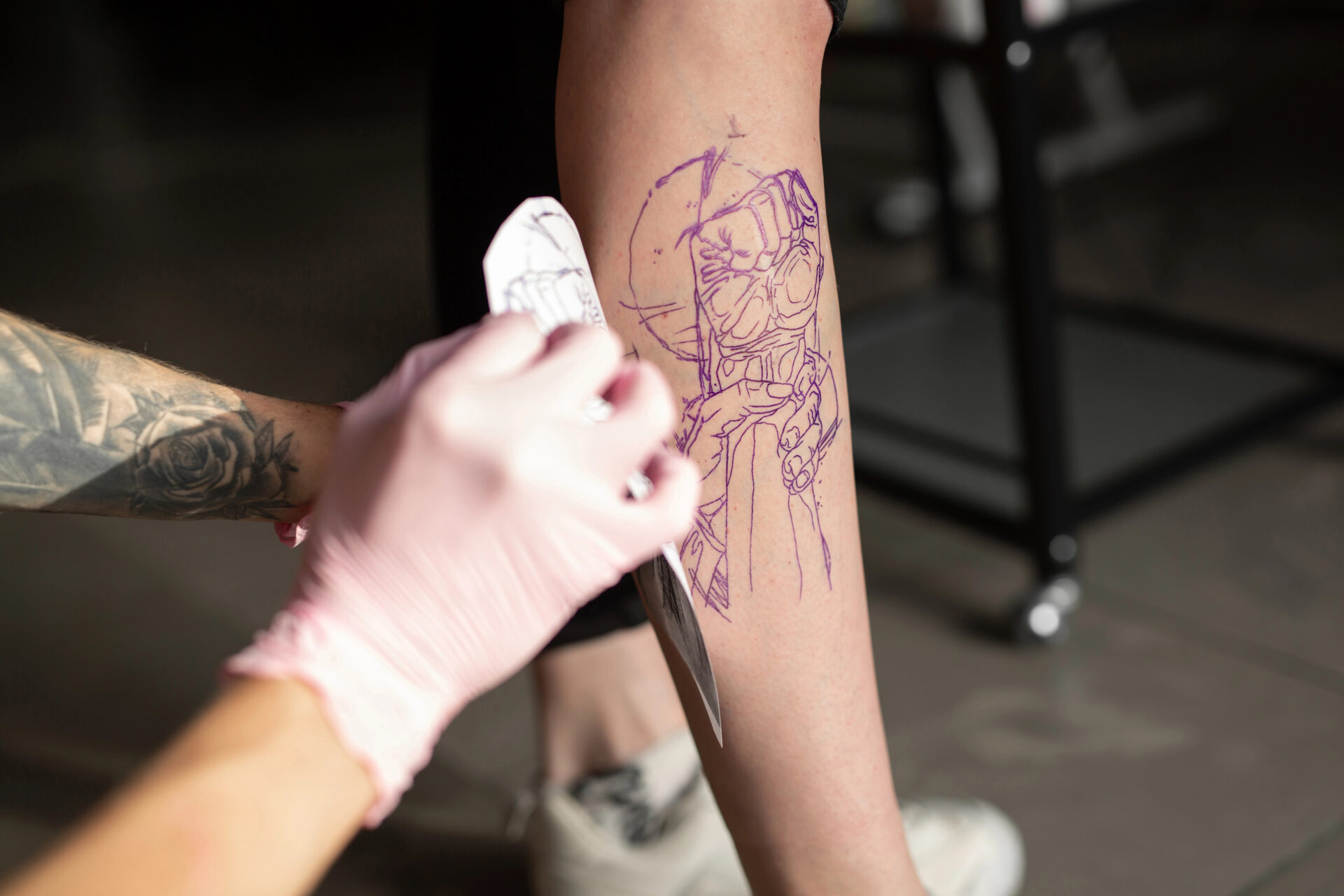
Tattooing has never been more widespread. In the US alone, 32% of adults now have at least one tattoo, up from 21% in 2012 and just 16% in 2006. What was once considered a mark of counterculture has become one of the most common forms of personal and artistic expression. But behind the modern tattoo studio lies a complex and often surprising history. Here are some lesser-known facts about tattooing, including the practice’s history and cultural weight.
1. The practice of holystoning
When European missionaries arrived in the Cook Islands in the 19th century, they viewed traditional tattooing as a heathen practice incompatible with Christianity. So determined were they to erase it that, according to archival evidence, some tattoos were physically scraped off people’s bodies. The practice of doing so with sandstone became known as “holystoning”. The result, across much of Polynesia, was a form of cultural amnesia: traditional tattooing virtually died out, and many once-revered designs were lost entirely.
2. Pain as rite of passage
For many Polynesian societies, pain was not incidental to the tattooing process but central to it. In Tahiti, the chief’s son was observed closely during tattooing for any signs of pain, while in Samoa, the experience was said to be the male equivalent of the pain of childbirth. For Samoan men in particular, tattooing was considered the crucial event of a lifetime, the moment from which “all other happenings were dated”.
View this post on Instagram
3. Longest tattoo session
The longest recorded tattoo session lasted more than 64 hours, completed by tattoo artist Darren “Sraw” Arellano in Denver in 2025.
4. Tattooed Egyptian mummies were mostly women
Of the 13 tattooed mummies discovered at the ancient Egyptian site of Deir el-Medina, 12 were women. For a long time, archaeologists assumed this meant tattooed women were of low social status. More recent scholarship has overturned that theory entirely, suggesting that many of these women held important religious roles, with their tattoos serving as permanent markers of their connection to healing and worship. One mummy bore 30 individual tattoos, many invisible to the naked eye, including hieroglyphic symbols and the Eye of Horus, pointing to a woman of significant spiritual standing.
5. Ötzi the Iceman
Ötzi the Iceman, who died around 3250 BC in the Tyrolean Alps, is the oldest tattooed human ever found, with 61 tattoos across his body. Many of his tattoos appear directly over areas where he suffered from arthritis and joint pain – his lower back, knees and ankles – leading researchers to believe they may have functioned as a form of therapeutic treatment, not unlike early acupuncture.
View this post on Instagram

