

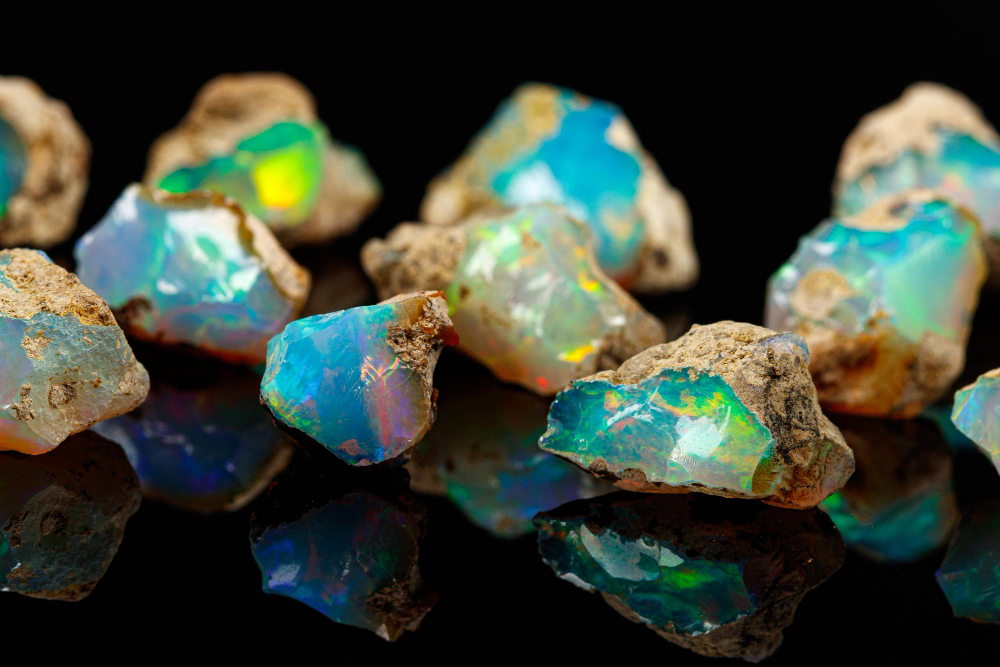
Opals feel almost cinematic; one doesn’t just look at them but watches them. Colours shift, light flickers, and suddenly what seems like a simple stone becomes a view unfolding in the palm. And as opals begin appearing more often in rings, pendants, and everyday earrings, their presence feels less coincidental and more like a quiet return.
But long before opals found their way into modern jewellery collections, they already had a rich, layered presence. Not just globally, but in ways that connect subtly with Indian history, symbolism, and long-held ideas of beauty and meaning. For those who see jewellery as more than just adornment, who value the story behind what they wear, opals offer a depth that rewards curiosity.
A Stone That Feels Almost Alive
Most gemstones behave predictably. Diamonds sparkle, emeralds glow, rubies burn bright, but opals; Opals on the other hand, don’t follow rules, they shift. That shifting colour phenomenon known as “play-of-colour” is what makes opals so fascinating. No two opals look the same, and even the same piece can appear different depending on how the light hits it.
Perhaps that is why opals feel so personal. It is not just about wearing a gemstone; it is about wearing something that responds to its surroundings, almost as if it carries a presence of its own. Experts often note that this very unpredictability is what draws modern wearers to opals. It reflects a shift in how jewellery is chosen today, less about occasion and more about individuality and self-expression.
Tracing Opal Through Indian Contexts
Opals aren’t native to India in the way some gemstones are, but their symbolism aligns closely with Indian cultural ideas. In Indian philosophy, colour is never incidental. It carries energy, emotion, and symbolism. White, in particular, is associated with purity, calm, and clarity. Blue is calm and divine, green is growth and renewal, red is passion and auspiciousness, and gold represents prosperity. Ethiopian opals, with their milky base and flashes of colour, naturally align with this idea. They feel serene at first glance, but look closer, and there’s complexity underneath.
There is also an interesting parallel between opals and the concept of “rasa” in Indian art and literature. Just as rasa captures layered emotional experiences, opals reflect layered visual experiences. No single glance reveals everything. The beauty unfolds gradually, depending on light, movement, and perspective. That sense of discovery feels deeply connected to how Indian culture has always appreciated beauty, not as something immediate, but as something that reveals itself over time.
A Natural Alignment with Indian Symbolism
While opals are often associated with countries like Ethiopia and Australia today, their story finds a natural resonance within India’s long-standing relationship with colour, symbolism, and sacred adornment. Indian jewellery has never been only about ornamentation; it has always been about meaning. From Navratna arrangements to temple jewellery, every stone has traditionally carried an emotional, spiritual, or cosmic significance. In this landscape, opals feel almost instinctive.
Interestingly, opals are also associated with Venus (Shukra) in Vedic astrology, a planet linked to love, beauty, creativity, and harmony. That connection alone explains why opals have quietly found their way into modern Indian jewellery preferences, especially among those who value both meaning and aesthetics.
Royal Aesthetics and Opulent Craft Traditions
Although opals were not traditionally part of classical Indian gemstone hierarchies like rubies, emeralds, or diamonds, their visual character aligns effortlessly with royal Indian aesthetics. The Mughal era, known for its love of intricate craftsmanship and colourful stones, celebrated gems that created visual depth and richness. Opals, with their internal play of colour, naturally complement that sensibility.
Modern Indian jewellery designers are increasingly recognising this connection. Opals are now being set alongside uncut diamonds, paired with enamel detailing, or framed in intricate gold work that draws inspiration from heritage techniques. This result in jewellery feels both rooted and contemporary, bridging traditional artistry with modern design preferences.
Opals and the Modern Indian Woman – Why Are They Finding Their Way Back Now
Jewellery trends don’t always repeat; rather, they evolve. And opals are a perfect example of that shift. They offer something that aligns with the modern Indian woman’s sensibility: individuality without excess, and traditional without feeling restrictive. Today, opals are not just seen in statement pieces, but in designs meant for daily wear like delicate rings, minimal pendants, or subtle earrings that work just as well at brunch as they do at work.
Here is where the material itself matters. When opals are set in lighter, more wearable formats like 14 KT or 18 KT gold, they become more approachable. They don’t feel like being saved for a “special day.” Instead, they expand the vocabulary of what meaningful jewellery can look like in an Indian context. They become part of your everyday style, quietly precious, every day, without feeling excessive. And that’s really the point. Jewellery today is less about waiting for occasions and more about living in them.
A Modern Gem with Cultural Echoes
What makes opals particularly interesting today is how they bridge timelines. On one hand, they carry historical and symbolic weight, from ancient beliefs to astrological associations. On the other hand, they fit perfectly into contemporary design language. Their symbolism aligns with long-held beliefs around balance and individuality. And their aesthetic fits seamlessly into both heritage-inspired and contemporary jewellery design.
You’ll see them interpreted in clean, minimal forms such as rings that sit lightly on your hand, pendants that rest close to your collarbone, and earrings that move with you without demanding attention. And that balance, between meaning and wearability, is exactly what defines how jewellery is evolving today. Pieces are no longer locked into categories like “everyday” or “occasion.” They’re fluid. Just like the lives we lead.
It’s also why modern collections that focus on lightweight gold, whether 9 KT, 14 KT, or 18 KT, feel particularly relevant here. They allow gemstones like opals to shine without feeling heavy or overwhelming, making them easier to wear more often.

