

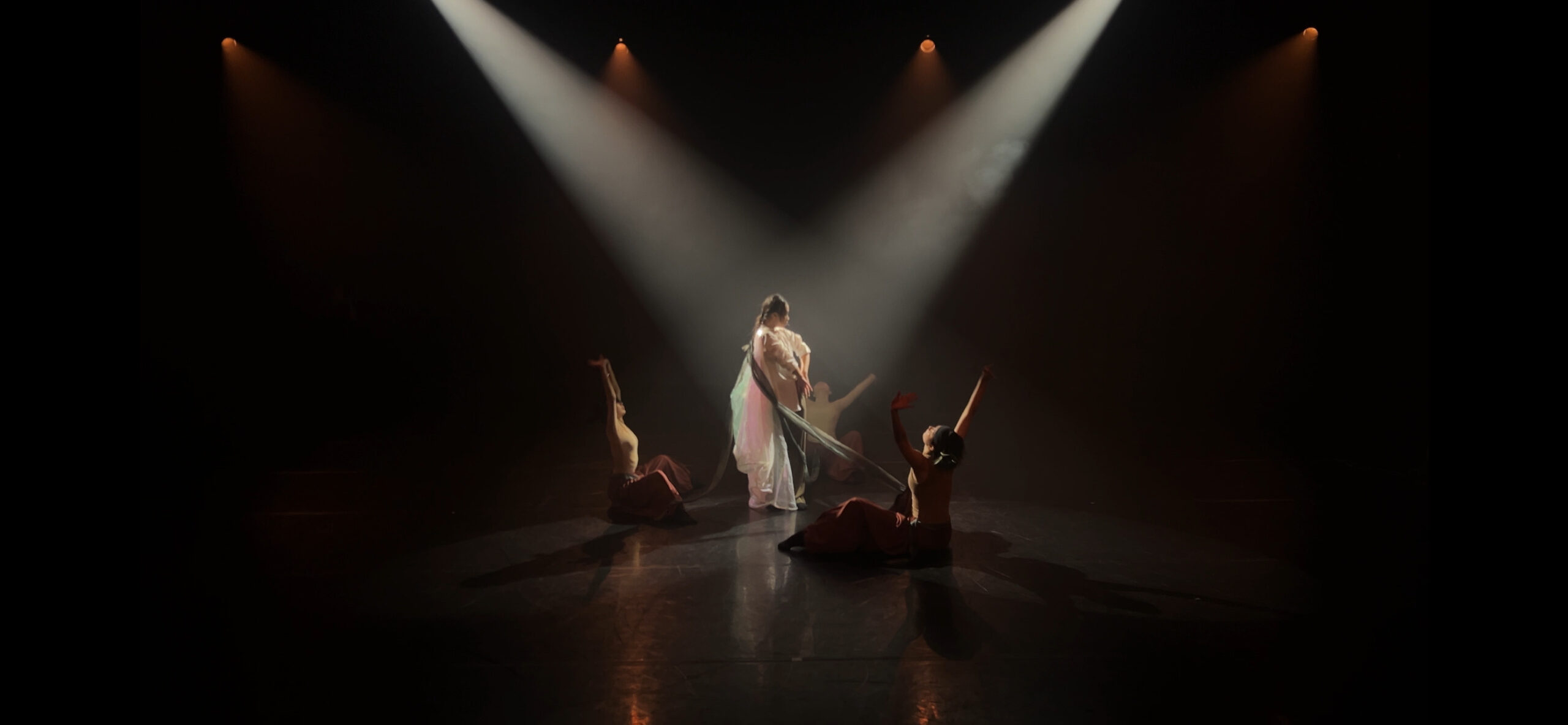
In the hushed, sacred stillness of a British church on, London‑based interdisciplinary artist Yu Ai unfolds a work of cosmic fusion in Chronos. First presented at the Edinburgh Festival Fringe 2025 and later refined for Resolution Festival 2026 in London, this piece goes far beyond a superficial East‑West crossover. Yu Ai channels her rigorous cinematic training and interdisciplinary performance practice to craft a visually immersive, conceptually layered narrative centred on time, cultural belonging, and self‑realisation. Drawing from her dual background in stage and screen, Yu Ai merges Dunhuang’s ancient celestial divinity with the Greek myth of Chronos, guiding the audience through a cyclical journey of the Five Elements (Wu Xing, 五行). In this cosmology, every gesture, fabric ripple, and shift in light becomes a language of spiritual awakening and embodied identity, turning abstract ideas into a visceral, sensory experience.
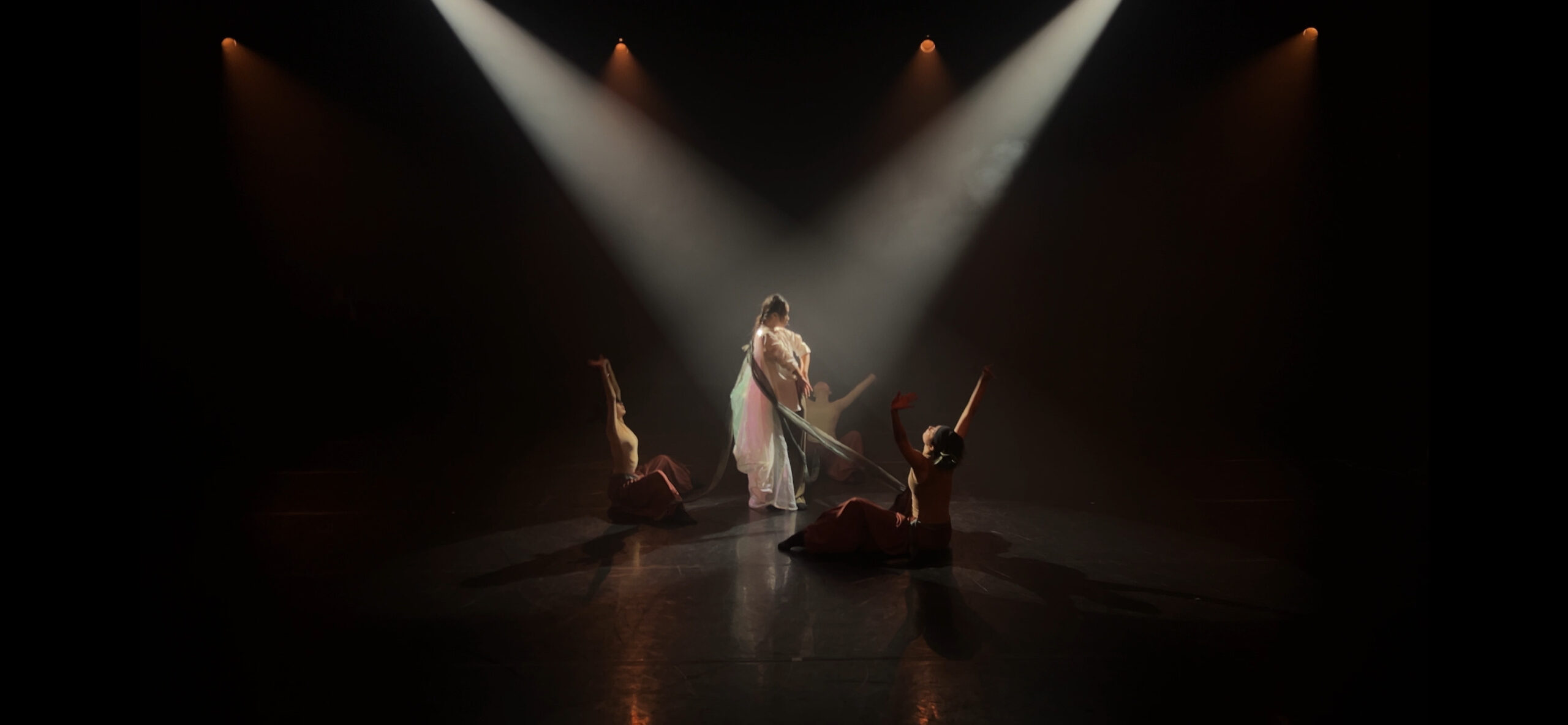
Anchored in Earth (土), the performance carries the weight of origin, memory, and rootedness. The visual palette—rich with mineral pigments of azurite, ochre, and earthy yellows—evokes the caves of Dunhuang, while the dancers’ grounded movement echoes the sacred “three‑curve” postures of Buddhist devas. Yet this is not mere replication: Yu Ai infuses the vocabulary with the quiet gravity of the Earth Mother, presenting a form of sacred femininity that is substantial, unflinching, and deeply connected to history. This is beauty with gravity, not abstraction; it speaks to identity as something carried, not just displayed. Through this terrestrial foundation, Water (水) flows in billowing translucent fabrics and a tidal, meditative soundtrack. Time is framed not as a linear line, but as a living current that links the ancient Silk Road to the digital present. For Yu Ai, time becomes both medium and metaphor: a force through which culture and self are continuously remade, crossed, and reborn.
From this flow emerges Wood (木), the energy of growth, compassion, and quiet resilience. Within the rigid, vertical architecture of the church—a space steeped in Western spiritual tradition—the dancers’ gestures feel like saplings breaking through stone. It is a visual metaphor for Eastern spirituality taking root in foreign soil, and for the self-opening to new forms of belonging. Igniting this entire cycle is Fire (火): the spark of transformation. It burns in the friction between flowing Dunhuang robes and sharp, tailored Western suiting, and in the sudden, explosive bursts of street dance that pierce the meditative stillness. This fire is the heat of hybridity, the energy required to forge new identities from cultural migration. As tension mounts, the divine is no longer a relic of the past, but a living, burning presence. Finally, the cycle culminates in Metal (金), sharp, precise, and unbroken. In the philosophy of Wu Xing, Earth gives birth to Metal; here, the grounded body yields a refined, enduring spirit—one that symbolises the indestructible core of culture and self that transcends borders, centuries, and displacement. Chronos is not juxtaposition, but deep fusion: celestial alchemy made flesh.
If Chronos reaches toward heaven, Red Veil (Fù Miàn) sinks into the earth—a raw, psychological dreamscape rooted in soil, shadow, and the unspoken language of the subconscious. Created for London’s Drifting Selves Exhibition in 2025, this experimental dance‑film leans fully into Yu Ai’s cinematic strengths to explore entrapment, internalisation, and the fractured modern self. The red veil is no mere prop: it acts as a permeable, shifting membrane between self and system, interior and exterior, protection and imprisonment. It is a visual motif that distills Yu Ai’s long‑standing inquiry into identity: how we are bound, how we resist, and how we eventually carry our bonds within us.
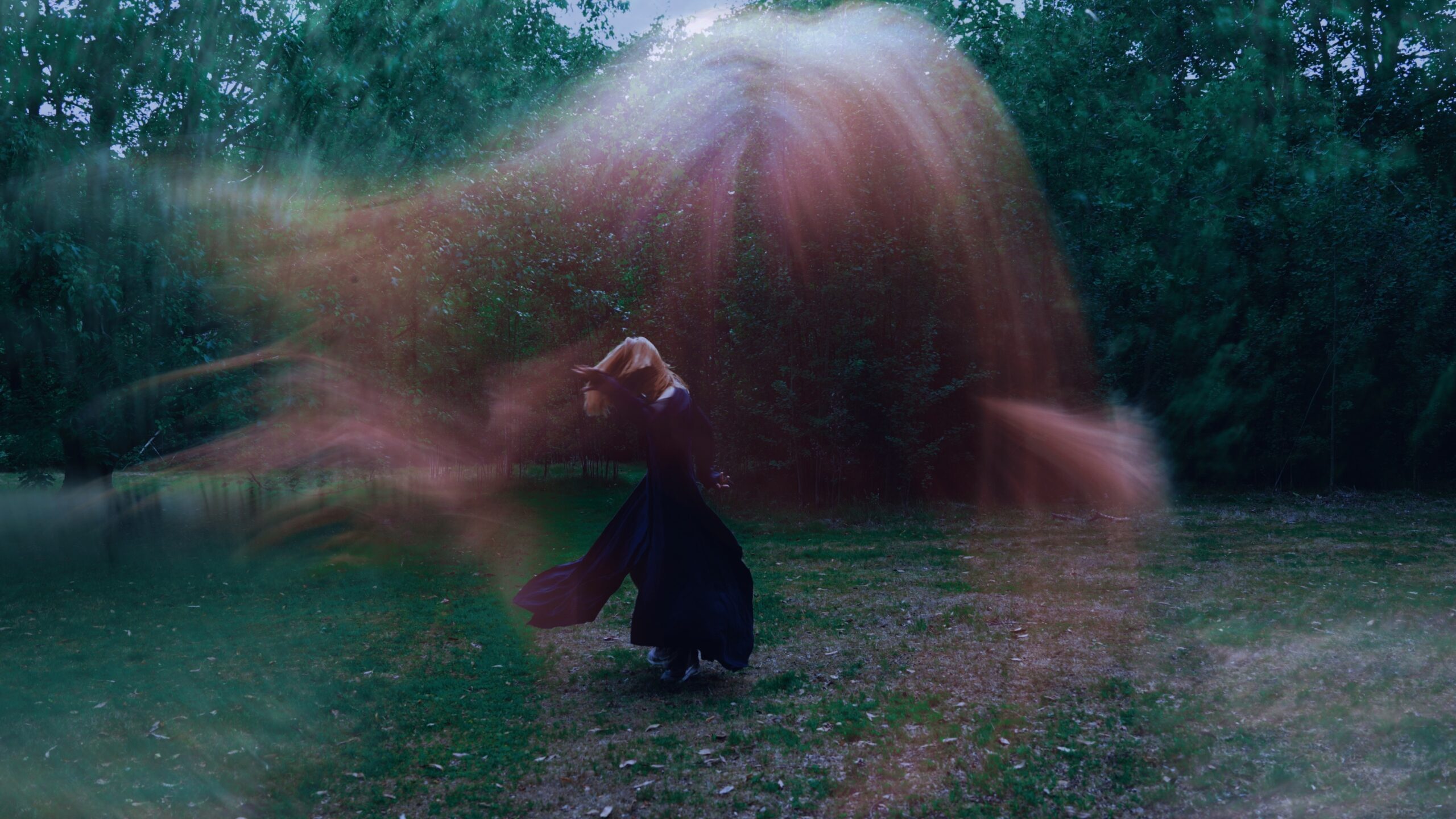
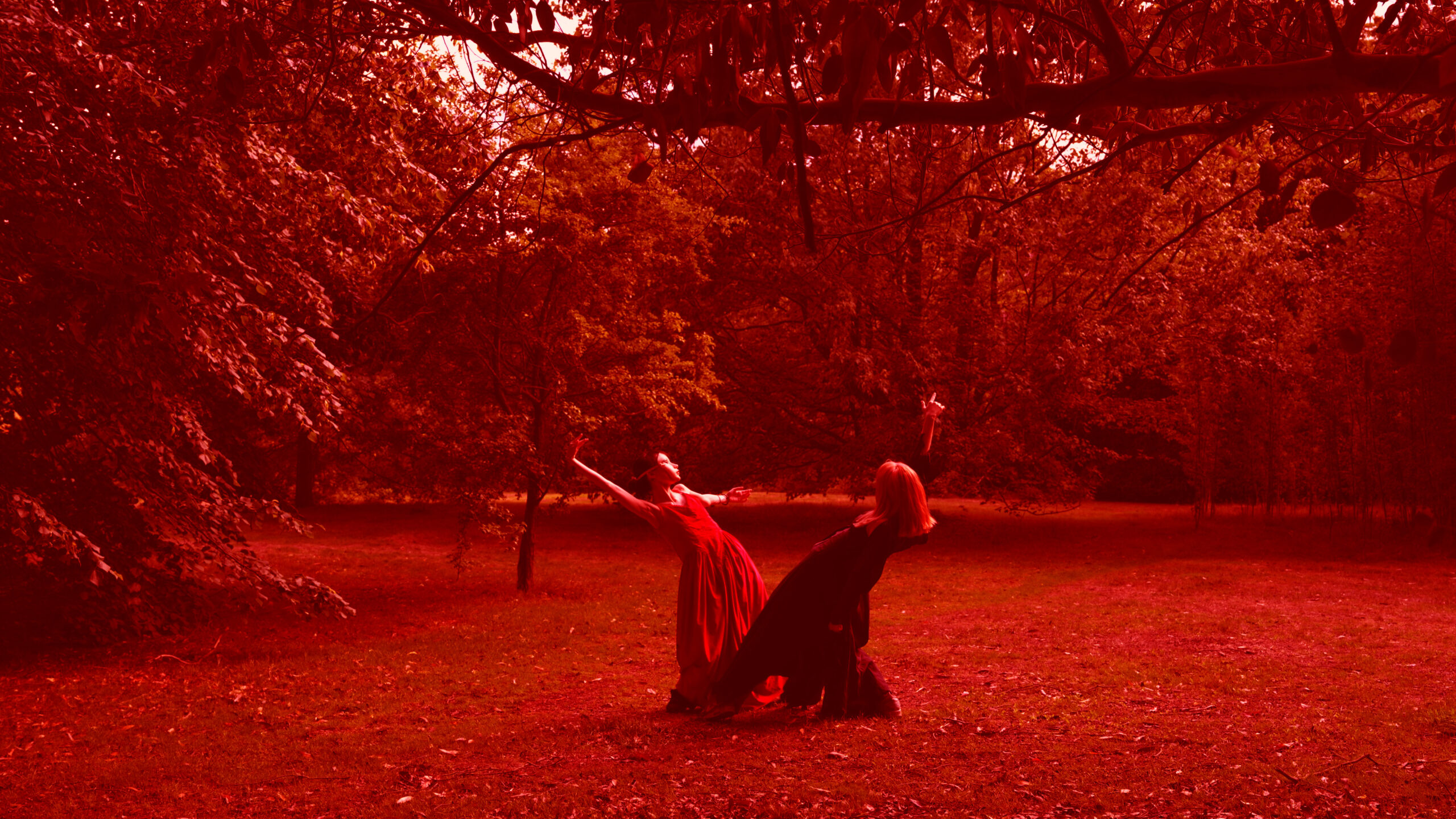
Set in a misty, primal forest, Red Veil channels Lynchian unease and psychological tension to blur the line between ritual and nightmare. The choreography traces a haunting arc: clarity dissolves into entanglement, and red ropes and textiles become ligatures that bind, define, and slowly consume the dancer. The work’s most chilling revelation is that liberation is not escape, but integration. The external pressures, systems, and histories we resist seep into the body; the self becomes the very space it once sought to flee. This cycle of absorption is mirrored in the layered soundscape, which shifts from meditative singing bowls to urgent Japanese strings laced with the visceral pulse of Spanish Flamenco. The score mirrors the fight for autonomy—quiet, desperate, and unresolvable. Red Veil is earthly somniloquence: intimate, unpolished, and deeply human, a whispered confession from the soil of the psyche.
Across both works, Yu Ai establishes herself as a distinctive director‑choreographer whose practice revolves around self‑awareness, female identity, and cross‑cultural dialogue. Her film background infuses every piece with narrative tension, compositional precision, and psychological depth, allowing her to translate ideas seamlessly across stage, screen, and exhibition. Chronos lifts the body toward the divine, mapping identity onto a cosmic timeline; Red Veil grounds it in the fragility, messiness, and truth of the human condition.
Together, they form a complete and cohesive artistic vision: celestial alchemy and earthly somniloquence, sky and soil, myth and subconscious. In Yu Ai’s hands, dance becomes cinema made flesh—a space where the self is not fixed, but continuously becoming. Rooted yet restless, ancient yet contemporary, her work reminds us that identity is not a destination, but a journey: sacred, searching, and unforgettably alive.

