

For Kathryn Huang, photography can begin with something as simple as walking outside with a camera and a roll of film. It can also involve an elaborate production, a room full of collaborators, styling, movement, video, and the careful construction of an entire visual environment. Her practice has grown to accommodate both. Yet whether she is working within a large production or photographing someone she loves, Huang keeps returning to a deceptively simple question: what can an image allow us to see differently?
Born and raised in Thailand and now based in New York, Huang works across photography, video, art direction, and styling. At the center of this multidisciplinary practice is an interest in the relationship that forms around an image: between photographer and subject, between a person and a place, and between the present and something that may be changing or disappearing. It is an idea that becomes particularly personal when Huang turns her camera toward her home country.
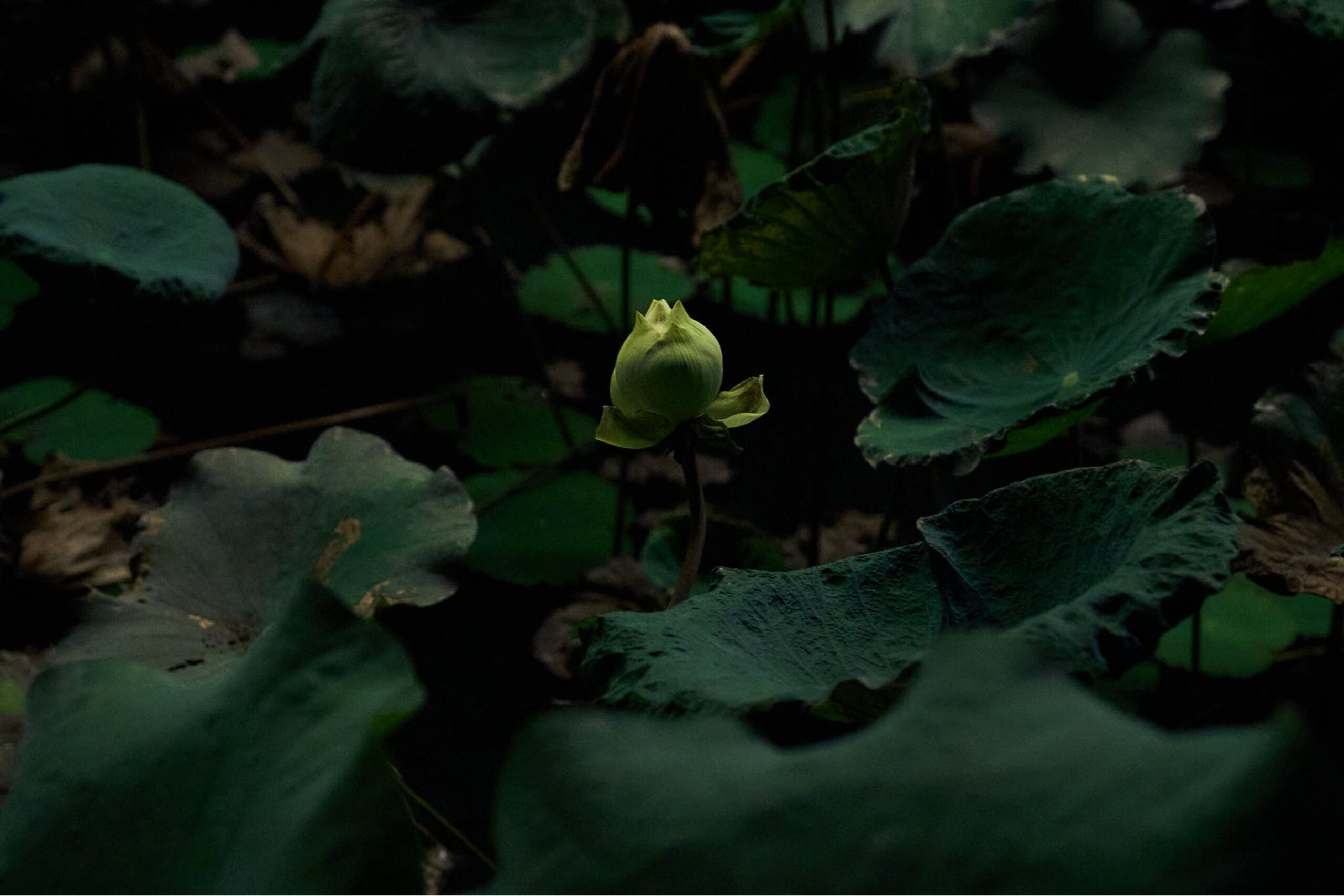
Her ongoing project To and From looks at her attachment to her home country and the strange emotional distance that can develop from a place that remains home even after one has left it. Huang describes watching things she loves about Thailand change under the pressures of globalization and overtourism, a feeling that parallels her own experience of living abroad.
“A lot of the project centers around how the things I love most about Thailand can feel like they are slipping away,” she explains. “That mirrors how I sometimes feel about my own Thai identity, like parts of it can feel further away the longer I live abroad.”
Photography becomes one way of negotiating that distance. Huang traces her attraction to color back to the landscapes and environments she grew up around, from nature to the density of urban life. The influence extends beyond the visual. The customs, traditions, and people around her also shaped what she describes as her spiritual way of seeing the world. “Thailand looks incredible on film,” she says. “Growing up there gave me so much beauty to observe.”
Film remains particularly important to Huang, partly because of how physical the experience is. At a moment when photographs can be produced, viewed, edited, and distributed almost instantaneously, she is drawn to a process that makes her wait.
“There is the sound of the analog shutter, the weight of the camera in your hand, the energy of the environment around you, and then the fact that you do not even see the images until days later,” she says. “There is something thrilling and creatively liberating about the entire process.”
For Huang, however, photography is not only about the image that eventually emerges. It is also about what happens between people while making it. She particularly enjoys photographing friends and people she loves, where familiarity can transform the act of taking a picture into something more intimate.
“Helping someone see themselves in a way that makes them feel beautiful, empowered, or simply seen is very meaningful to me,” she says. “Photography can become an intimate bonding experience between the person making the image and the person being photographed.”
That closeness is particularly important in Huang’s work within artistic and queer communities she is herself part of. She is conscious of the difference between observing a community from outside and making photographs from within relationships and experiences she already shares. “I do not want to be an outsider shooting in,” she says. “I want my images to come from my own eye and lived experiences, from a perspective shaped by the people and places I come from.”
The same impulse connects these photographs back to To and From. For Huang, photographing Thailand is not simply an exercise in documenting a place. It is part of an ongoing relationship with it. “Photography preserves things, but it also makes people think and feel almost instantly,” she says. “I want to help people and places feel seen, particularly when they are misunderstood or misrepresented.”
Huang did not initially imagine that photography would become her profession. Before moving to New York, she says, she had little understanding of what the creative industry actually looked like or what kinds of careers could develop around photography. She was taking pictures because she enjoyed doing it and trusted her eye.
“I honestly do not even remember the exact moment when I started calling myself a professional photographer,” she says. “New York also forces you to get active if you want to build a creative life for yourself, so I would say New York really sparked that decision.”
New York also widened the possibilities of what making an image could mean. Photography gradually expanded into video, styling, and art direction, disciplines Huang sees as connected rather than separate. Photography taught her how she looks at people, environments, color, movement, and emotion. As her practice developed, she became increasingly interested in the entire visual experience surrounding an image, including what happens when that image begins to move.
Her professional experiences have allowed her to explore those ideas on increasingly ambitious scales. Through New York creative agency MATTE Projects, Huang has contributed to productions across entertainment, music, fashion, and experiential culture, including Netflix’s Squid Game Season 3 campaign, Apple Music and Cardi B’s Am I the Drama? album launch, the Marc Jacobs Autumn/Winter 2025 runway show, and the acclaimed multisensory exhibition reSOUND at Rockefeller Center. Moving between projects with very different audiences and visual demands has also given her a close view of the collaborative machinery behind contemporary image-making.
“Being exposed to different kinds of visual projects has helped me understand how many moving parts go into building an image or an experience,” Huang says. “The scale can change dramatically, but there is always a visual language being developed. That has been valuable as I continue growing as a multimedia artist.”
Her independent work has developed alongside these larger productions. Huang has created imagery for Thistle and Spire, Laurel Blue, Vinn Patararin, Fords Gin, and Genesis House. Her camera has also brought her into contact with figures across music and performance, including rapper TiaCorine, New York and Beyoncé Renaissance tour dancer Honey Balenciaga.
Photographing TiaCorine was an impactful moment for Huang, as remembers how she used to listen to Tia’s music long before she imagined that she would eventually be trusted to photograph one of her single covers. “Being trusted to photograph her single cover felt very full circle,” she says.
Yet when Huang talks about the work that makes her proudest, she quickly returns to the projects that begin with an idea of her own. “There is this moment when you realize, ‘Wow, this really started with an ambitious idea I had, and I actually made it happen,’” she says. “Having people believe in that vision and become just as excited about helping execute it is something I really cherish.”
Those personal projects have increasingly found recognition beyond New York’s immediate creative circle. Her analog photography has earned honors at the Berlin Photo Awards and 1839 Awards. Huang values that recognition, particularly when it comes from work that feels personally significant but remains cautious about allowing external validation to dictate what she makes. “I try not to let external validation become the reason I create,” she says. “I want to keep making art that reminds me to feel the process more than care about the result. I want to keep remaining curious about what to create next”
Curiosity, however, is only part of what has sustained her. Community appears repeatedly when Huang talks about her development in New York. She is resistant to the idea of networking simply for professional advantage and instead describes finding a chosen family of artists, filmmakers, dancers, and other creative people who have grown alongside one another.
“I have never been someone who networks for the sake of networking. I believe in finding community,” she says. “I got really lucky that the chosen family and friends I found were like minded and extremely creative, and we have been able to build our creative careers together.”
That support matters because the practical realities of sustaining a creative practice remain difficult. Huang is candid about financial limitations and the self-doubt that can accompany ambitious ideas. Her response has been to resist waiting for perfect circumstances.
“An idea does not always need to be grand,” she says. “Beauty can come from incredibly simple places. It is better to work with what you have than to dwell on what you do not have.”
Some of her most meaningful work, after all, has come from simply walking around with the camera she already owns and a roll of film. It is the same modest act with which Huang’s creative world can begin, even as that world now encompasses major productions, exhibitions, award recognition, and an expanding interest in directing.
Several projects directed by Huang are currently in the works, although she is deliberately keeping their details quiet. “I think they are going to surprise people because they show how much I have grown as a visual artist,” she says. “I am not going to say too much because I would rather show you than tell you.”
That instinct feels appropriate for an artist whose relationship with the world is so closely tied to looking. Huang’s practice may now stretch across photography, video, styling, and direction, but growth has not displaced the intimacy that drew her to photography in the first place. A camera can take her onto a major production set, but it can also bring her back to Thailand, closer to a friend, or onto the streets with a roll of film and no elaborate plan. As Huang puts it, “Build your community and find your people.” For her, making images has become part of doing exactly that.

