

What do we see when we look at abstract art? In works of Op Art, like those by Bridget Riley, the clean lines blur and shimmer as we struggle to focus on what, at first glance, appear to be simple dots or stripes. If it’s a work by Jackson Pollock, we imagine the energy he used in creating it, throwing paint across a canvas on the floor.
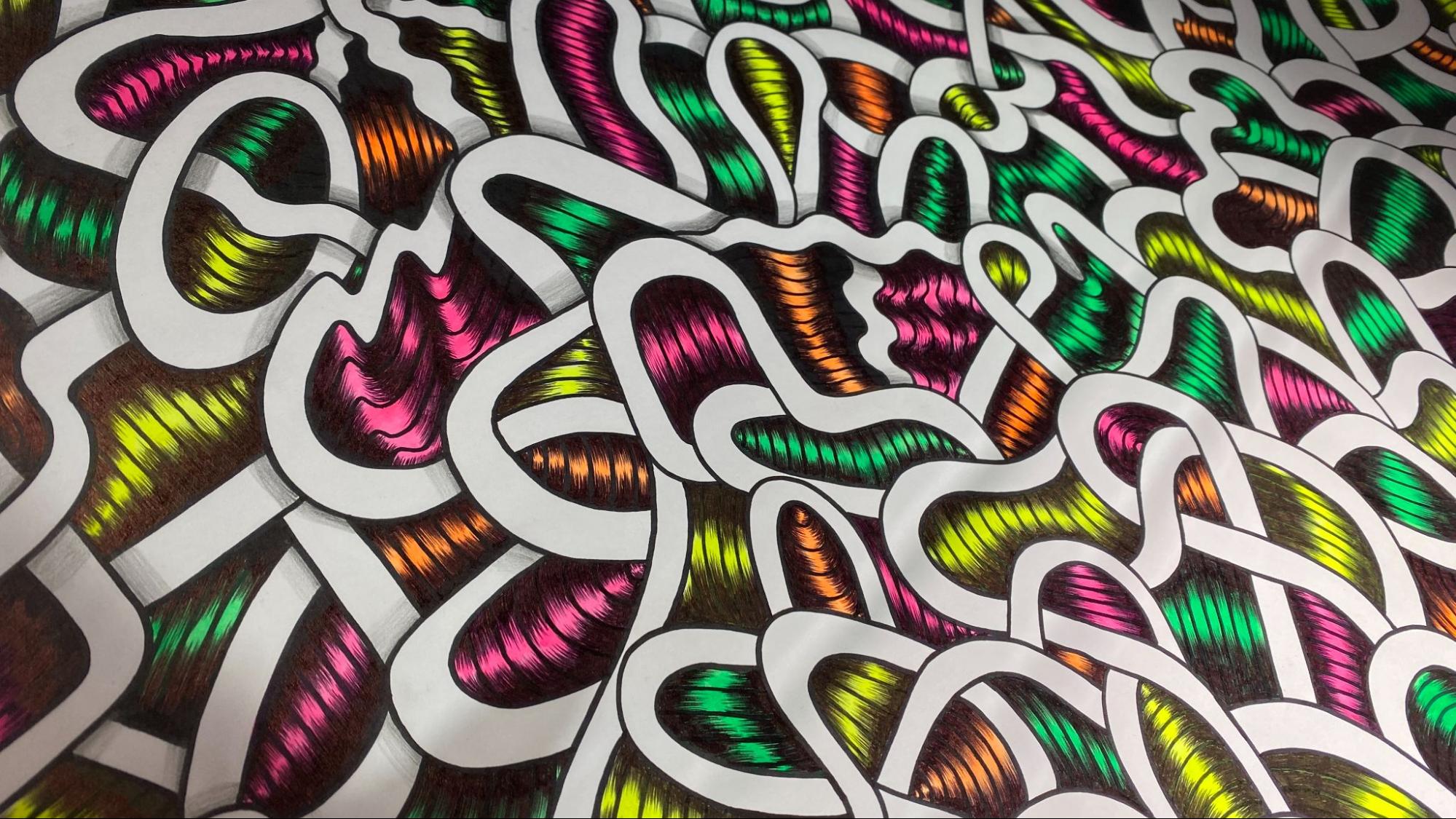
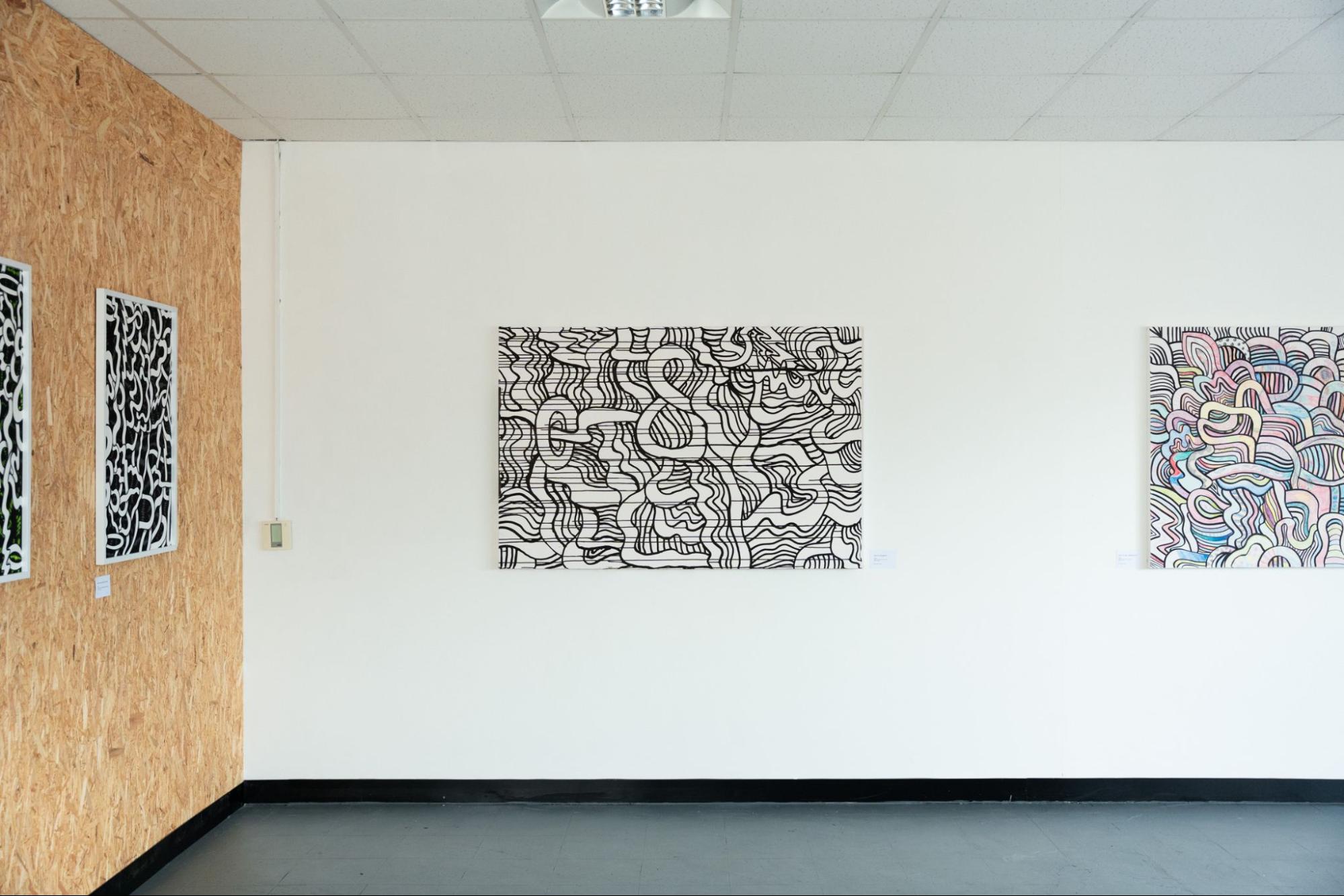
Adetunji Onigbanjo, known by his artist name ‘Lawyartist’, brings his own twist to abstraction through his Neon series. White ribbon-like structures curve, bend, and wave across the canvas, covering a brighter background that varies throughout the series – sometimes dominated by metallic blues and reds, other times by a more vibrant palette.
They are graceful and controlled in their execution, far more than in the works of the Abstract Expressionists, but they also appear to have a chaotic nature to them, and maybe the ‘ribbons’ are all that’s holding them back. They also remind me of the work of street artist Otto Schade, who uses ribbons to create more figurative works dotted around the East End of London.
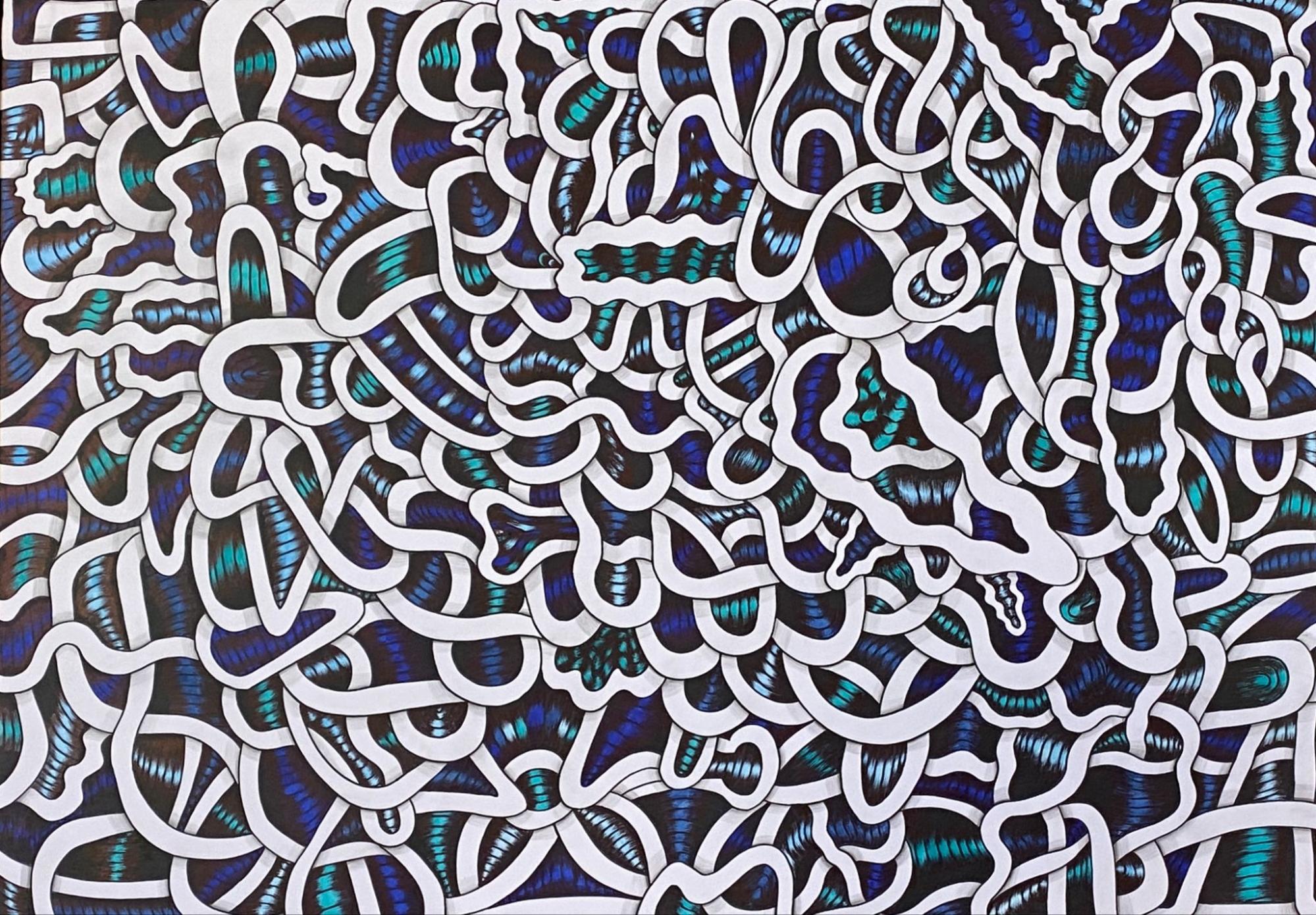
It also suggests a natural evolution of the representative works he’s arguably better known for. While those works feel much closer to pop art and look very different from his Neon series, there is a thread that connects them. In every piece that Onigbanjo created in this series, there is a sense of unbridled joy that takes over each work as motifs compete to grab your attention. This sense of the artist trying to get all his thoughts into a single artwork and to control the composition, so it remains contained within it, features across all his series.
The nature of this repetitive and meditative practice is that it can create a disconnect between the hand and brain, so the hand operates on muscle memory led by intuition. Some days it will take him in figurative directions; other times, in abstract directions. The great Paul Klee once described drawing as taking a line for a walk, and that’s what Onigbanjo appears to be doing.
Returning to the Neon series, most UK writers would view these works through the lens of Western art history. However, it’s important to note that abstraction has a long history in the Global South as well. We see this in works by Aboriginal artists such as Emily Kam Kngwarray, as well as in the work of the Nigerian Modernists, who were influenced by Western Art but created their own versions of the movements that define 20th-century art.
It’s within this context that we should view Onigbanjo’s art. He is an artist of Nigerian heritage living in the UK. Therefore, he is influenced by both his roots and the socio-political issues in West Africa and Europe. He sits across both worlds, while not being tied to either. It’s within these dual spheres of influence that we’re seeing his art evolve, and in his diversity of styles, we can see it’s still growing.
More information on Adetunji Onigbanjo may be found on his website and Instagram. His latest solo exhibition, Neon II, was at Stone Yard Studio, (41, Biggin Street) Loughborough, Leicestershire, UK, from November 7 – 9.

