

Is it the year of the man?
I still remember seeing, last year, the front page of The New York Times after Donald Trump’s election: “AMERICA HIRES A STRONGMAN.” Since then, it feels like the country has increasingly adopted power, strength and stubbornness as virtues, neglecting empathy, logic and sensitivity. It’s been distilled into the literary world, as writers bemoan the loss of the ‘male author,’ while other writers argue that’s not the case, or that male writers need to step it up anyway. I traveled to New York, then Philadelphia, to interview two authors whose books investigated a more relaxed methodology of manhood, and it was fun, in both instances, to be two men chatting about literary men. “Two men talking about masculinity—you instinctively laugh at that,” Andrew Lipstein told me.
Nevertheless, I was surprised that most of the books I put together for 2025’s best list were written by men; the rest are deeply concerned with masculinity in some form. There was cross-gender exploration in Jeff Weiss’s madcap tale that tracked the rise of early-aughts Britney Spears and E.Y. Zhao’s novel about Ryan Lo, her mysterious protagonist dissected through the eyes of others. In more straightforward forms, Kyle Seibel’s collection of short stories, Hey You Assholes, centers a rather pathetic maleness over a violent one; the father-son duo of Harris Lahti’s Foreclosure Gothic is fractured by their different visions of their legacies. In stories like C. Mallon’s Dogs, teenage angst muscles up against adult violence as Hal, a high school wrestler, pummels others in spite of his emotional vulnerability. The mosquito monster of Michel Nieva’s shapeshifting Dengue Boy could be seen as a transgender icon of body horror, ripping apart white-collared workers who consider themselves untouchable. There are, of course, many different ways to write about the myth of man.
“Let’s hear it for the man of the year,” Lorde sang on her new album, Virgin, both a taunt and a moment of self-actualization. Masculinity might be in crisis, a constantly evolving concept and legend, both problem and solution, but at least we got some good literature out of this reckoning to understand it better.
10. Mỹ Documents, Kevin Nguyen
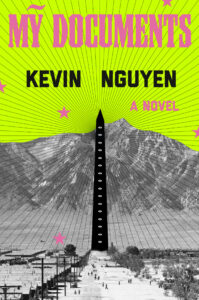 Political fiction is always a hard sell. Most of it is didactic, unsubtle, or woefully out of date, which is why I was pleasantly surprised with Mỹ Documents, the second novel from The Verge editor Kevin Nguyen, an astute and thrilling tale of plausible horror. In the near-distant future, a string of domestic terror attacks all perpetrated by Vietnamese people leads the government to enact internment camps for them, but broader American politics are not the centerpiece of the novel (thank goodness)—Nguyen’s characters are. A family falls askew as Jen is interned, but her older sister Ursula is not, and she relies on Jen’s documentation of the camps to advance her journalism career and keep breaking stories. Meanwhile, the Viets in the camp find their own ways—magazines, uprisings—to have their own fun. Fast-paced and, against all odds, enjoyable, Mỹ Documents is a parable for our times without being too entrenched in its madness.
Read our interview with Kevin Nguyen here.
9. Seduction Theory, Emily Adrian
 Sexy and enigmatic, Simone and Ethan are the stars of Edwards University’s creative writing program—incoming students pine after them, reading their books that are probably about each other. But one, a cheeky student named Robbie who narrates the novel, attempts to join in on the fun and potentially disrupt their picture-perfect marriage, becoming entwined with Simone. Emily Adrian’s sly metafiction sees a relationship strengthening, determined to last through stellar conversations and genuine chemistry. It’s filled with the desperation of anyone who’s ever had a crush on their English teacher. Seduction Theory is a daring, enormously fun ride.
8. Dengue Boy, Michel Nieva
 Horrific and disgusting, Michel Nieva’s story of a scorned, transgender humanoid mosquito who’s activated during a circlejerk at a boy’s camp might not be for everyone. But for all its graphic insanity, Dengue Boy spears technocapitalism, ecoterrorism, climate change and gender roles in its absurd, spiraling premise, ending with a showstopping diatribe on cosmic terror and fatalism. Dizzyingly quick and bizarrely propulsive, Dengue Boy is a fresh, freaky and often perverted novel, just how they should be.
7. Hey You Assholes, Kyle Seibel
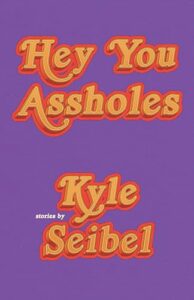 Kyle Seibel roots for the loser. “Fucked by life” might be a crude descriptor, but many of the characters in his debut collection Hey You Assholes certainly seem to be—discharged soldiers, pushover husbands, Baghdadi restauranteurs, someone called “Fish Man.” Humanly observed by his time in the military and ability to conjure up quite the absurdity, Seibel’s clean characters turn from depressing to funny to melancholic very, almost astoundingly quickly. Make no mistake that Hey You Assholes is mostly about sad men in their sad stories, but it is astonishingly real. Forget the girl next door—it’s about the divorced neighbor guzzling beer in his garage. And isn’t he sort of a hero in his own right?
Read our interview with Kyle Seibel here.
6. Something Rotten, Andrew Lipstein
 Andrew Lipstein’s freewheeling novel—loosely autofictional, as always—sees Reuben and Cecilie, married journalists, abroad in Copenhagen with their toddler, reconnecting with Cecilie’s old friend group and imagining a life divorced from America and all its humiliations (Reuben was recently caught giving his wife head on a work Zoom call). But wherever you go, there you are, and as he awkwardly integrates himself within her friends, he finds himself thinking about masculinity, spurned by a bawdy reporter named Mikkel, whom Reuben decides to interview. Not for any journalistic reason, just request to how to be more relaxed in a male body, something that is up in the air these days. In its exploration of how to live morally and manly, Lipstein’s witty and provocative Something Rotten is a rollicking, entertaining read—and always with a finger on the pulse.
5. Waiting for Britney Spears, Jeff Weiss
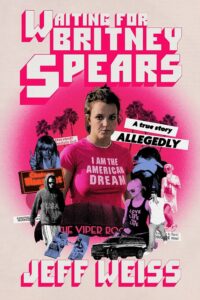 Journalistic powerhouse Jeff Weiss’ first book could have been about anything, but he chose Britney Spears. It’s apt—she’s how he began his career, sneaking into the shoot for “…Baby One More Time,” Spears’ debut single; he never seems to shake her charm. Joining the hoards of tabloid reporters, Waiting for Britney Spears sums up his early writing career, shaking hands, standing in the VIP area, bumping into Timbaland in order to get the perfect shot—or mishap—from the teen icon. The boundary between Jeff the writer and Jeff the fan begins to blur; same with the one between reporter and harasser. Reasonably, he never gets too close, or maybe, he omits some of the facts—it’s “allegedly” a true story, anyway. But like the newspapers he published his Britney scoops in, Waiting for Britney Spears is pure entertainment. Are we no better than the industry that distorted itself around her, abusing and disrupting her life, squeezing out any last bit of gossip? Maybe it’s best not to ask.
4. Open Wide, Jessica Gross
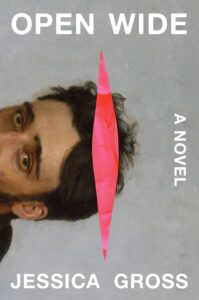 I was hooked on whatever’s happening within Jessica Gross’ mind after devouring Hysteria, her 2020 debut novel where an unnamed narrator hallucinates her bartender to be the reincarnation of Sigmund Freud, then fucks him. Who wouldn’t be? Open Wide, her newest book, streamlines her eccentricities into a more accessible plot, but never skimps on the depravity; after falling madly in love, a podcaster splits her boyfriend down the middle via a gap in his teeth, crawling into him and sleeping there. But it gets better—and more titillating—that after he gets over the initial privacy shock, he seems to enjoy it too. Open Wide mixes sex and disgust so seamlessly you’re unable to separate them, and romance has never been so stomach-churning.
3. Foreclosure Gothic, Harris Lahti
 Deliciously plotted and shiveringly eerie, Harris Lahti throws you into the dusty, dark atmosphere of Hudson Valley house renovation. The father and son duo of Vic and Junior tackle dwellings that spook them; they quit and come back, even if it kills them. Foreclosure Gothic’s vignettes, by turn poignant and tense, show Vic’s love of the game and reluctance to bow out for fear of letting his family down. Some, like when Junior decamps to Costa Rica to become a novelist, can stand their own as glimpses into their life, but thankfully Lahti expands on the pair choppily and distinctively. Foreclosure Gothic, with its unending dread, feels like doing manual labor on a haunted house during the horrors of 3pm. A bizarre, surreal, and sometimes disturbing look at legacy, labor and family.
Read our interview with Harris Lahti here.
2. Underspin, E.Y. Zhao
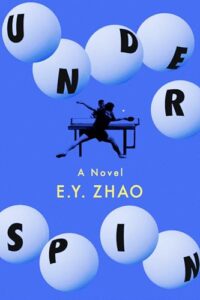 Kaleidoscopic and wildly inventive, E.Y. Zhao’s debut Underspin is the sort of constantly shifting novel that keeps you on your toes and commands attention through its winding, beautiful prose. Ryan Lo, a teenage table tennis star who dies young, is glimpsed through the eyes of those who try—and usually fail—to understand him. Coaches, crushes, childhood friends, camp counselors and therapists all offer their insight into his psyche, but it’s still not enough to complete a full vision; Lo is at the heart of these stories, but Zhao’s dazzling Lazy Susan of ulterior characters make up the heart of this vibrant and dextrous novel. Every so often you come across someone who was born to write fiction; Underspin adds Zhao to the list.
1. Dogs, C. Mallon
“Misery,” Andrea Long Chu writes about Hanya Yanigihara’s novels, “has become airborne, passing aerosol-like from person to person while retaining its essential purpose—to allow the author to insert herself as a sinister kind of caretaker, poisoning her characters in order to nurse them lovingly back to health.”
A Little Life, Yanigihara’s most famous but not only novel about gay male suffering, is curiously no longer fashionable. Celebrated upon its publication in 2015 as a fearless chronicler of queer New York-based lives marked by trauma, her most recent novel, 2022’s To Paradise was received lukewarmly. Not only was it about similar themes, but the repetition of work suggested something other than authorial imagination—what Chu mentions as “sinister”—that paints Yanigihara as a sadist abuser.
I disagree with this read for multiple reasons; I find fault in A Little Life because it so desperately wants me to cry. Yanigihara, in concocting a blatantly helpless and pitiable character in Jude, oversteps her invisible hand in the writing process to the point of uncomfortability. I no longer feel this story is real, because it’s clear from the cavalcade of abuse and beatings that Jude is the hero and Yanigihara will abuse him until I feel sympathy. It’s all very simple.
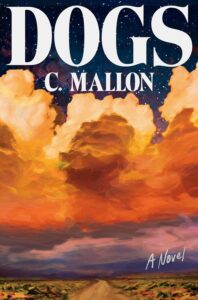
On its surface, Dogs, the debut novel from C. Mallon, seems to follow the same theory. The five teen wrestlers at its center are broken, battered and bruised—and they’re as violent with each other as they are with themselves. One loses his hands, one dies, one crushes glass in his hand so that his mother will bandage the bleeding. They are, in a sense, tormented. But even though Mallon is successful in generating empathy for these characters, it never feels heavy-handed or deliberate to the point of parody; instead, it feels like she captured the unluckiest night of one teen boy’s life.
Hal, the stern but sensitive narrator, is descriptive and provocative while describing the inner turmoil that taunts any teen boy; his desire for Cody John, the group’s ringleader, keeps him both afloat and bewildered. “He was a cardinal bird,” Hal thinks, “I was a canyon.” Hal is desperately, madly in love with him while also harboring a self-hate for thinking—or being— this way in the first place. He’s nothing more than a “horsefly lassoed on a thread of gold,” desperate to keep hanging on until Cody John inevitably drops him.
The delicate balance of trauma and gut in Dogs, which focuses on the aftermath of one terrible night, makes it readable, but not overindulgent. These aren’t puppets to punch, but rather real people, and Mallon makes the use out of her book’s slim pagecount to flesh them out, make them human, then constantly knife them. In other words, Mallon makes you feel, which is not easy to do when there’s only words on a page. It’s not a display of torture but a devastating act of heart and skill. Nearly every page is astounding, intense, and ferocious; it’s got a whole lot of bark and even more bite.
Read our review of Dogs here.

