

We carry out so many everyday activities without thinking about them, getting out of bed, taking a shower, and even more complicated activities like walking to a nearby train station or driving a car without remembering the journey. We are on autopilot a lot of the time, but we never stop to think deeply about these mundane activities.
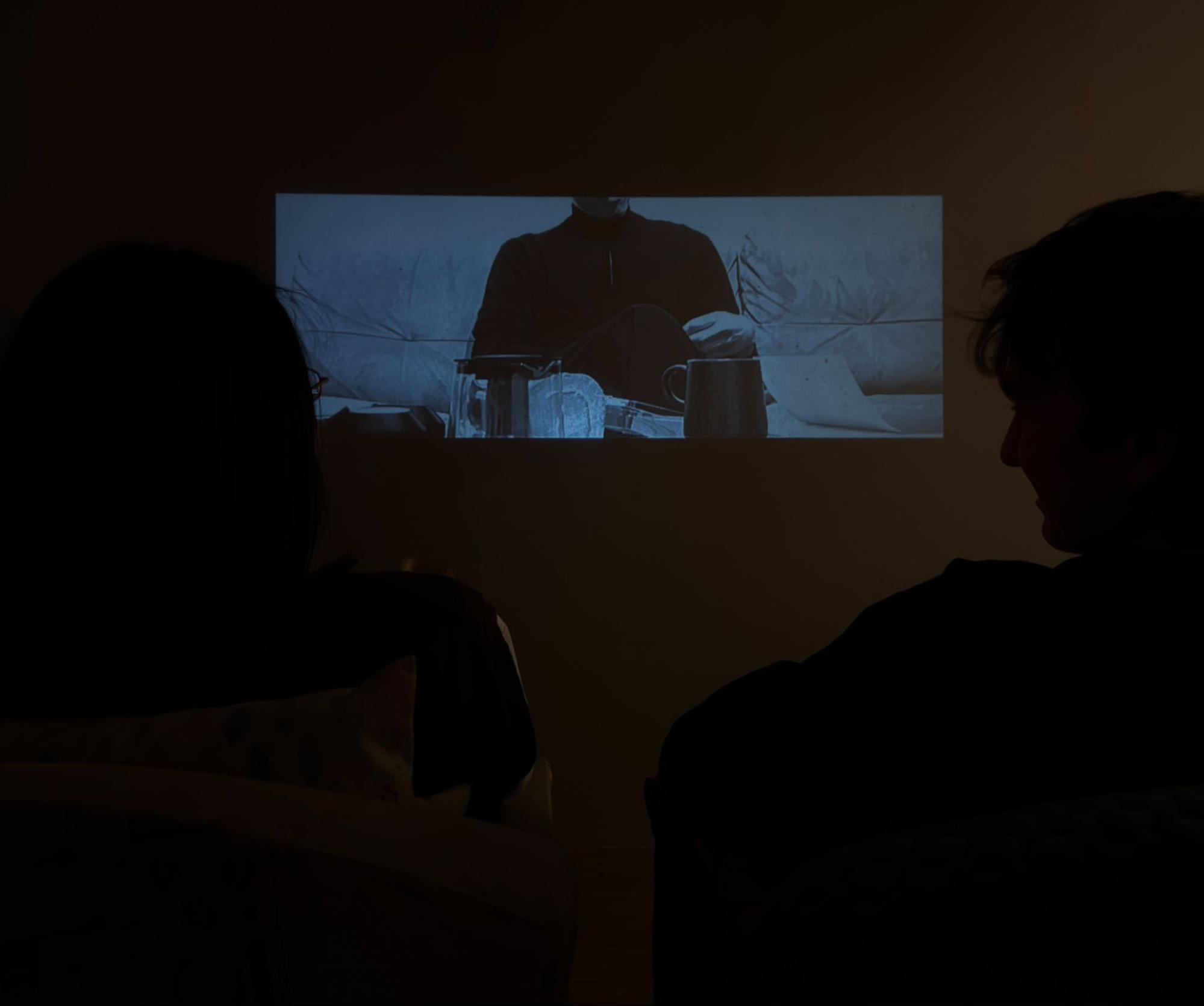
Artist Khine Mye Kyaw, known as Kai, challenges this idea by filming themselves eating a piece of cake. It’s an activity we’d do without thinking. Even when around others, we’re talking between mouthfuls, we never believe anyone is studiously observing us eating a slice. However, that all changes once the camera turns on, and now eating becomes performative, feeling unnatural.
We become self-conscious when the lens is upon us, just as we would when dancing or exercising in front of others. In this age of social media, Jeremy Bentham’s concept of the panopticon has become part of everyday life, and everyone has a phone that can capture a moment. Does that mean we must be self-conscious all the time, and is this a significant cause of anxiety in society today? It’s particularly relevant to the generation that has grown up in the age of smartphones.
Yet there’s also humour and a sense of the absurd in this film, which recognises that it’s highlighting the mundane, much as you would see in the conceptual video works of Bruce Nauman.
The use of cake as a simple item to convey a deeper concept is prevalent in 20th-century art history. American painter Wayne Thiebaud used cakes to capture the colour and vibrancy of the USA in the 1960s, when the country was moving toward mass marketing and billboards filled with bright colours. His cake paintings are aesthetically beautiful and capture the sense of the USA as a land of plenty, success, and glamour.
Claes Oldenburg also sculpted cakes, taking the mundane to create surreal artworks that resembled both regular and oversized cakes – constructing them out of enamel, latex, canvases and other everyday art materials.
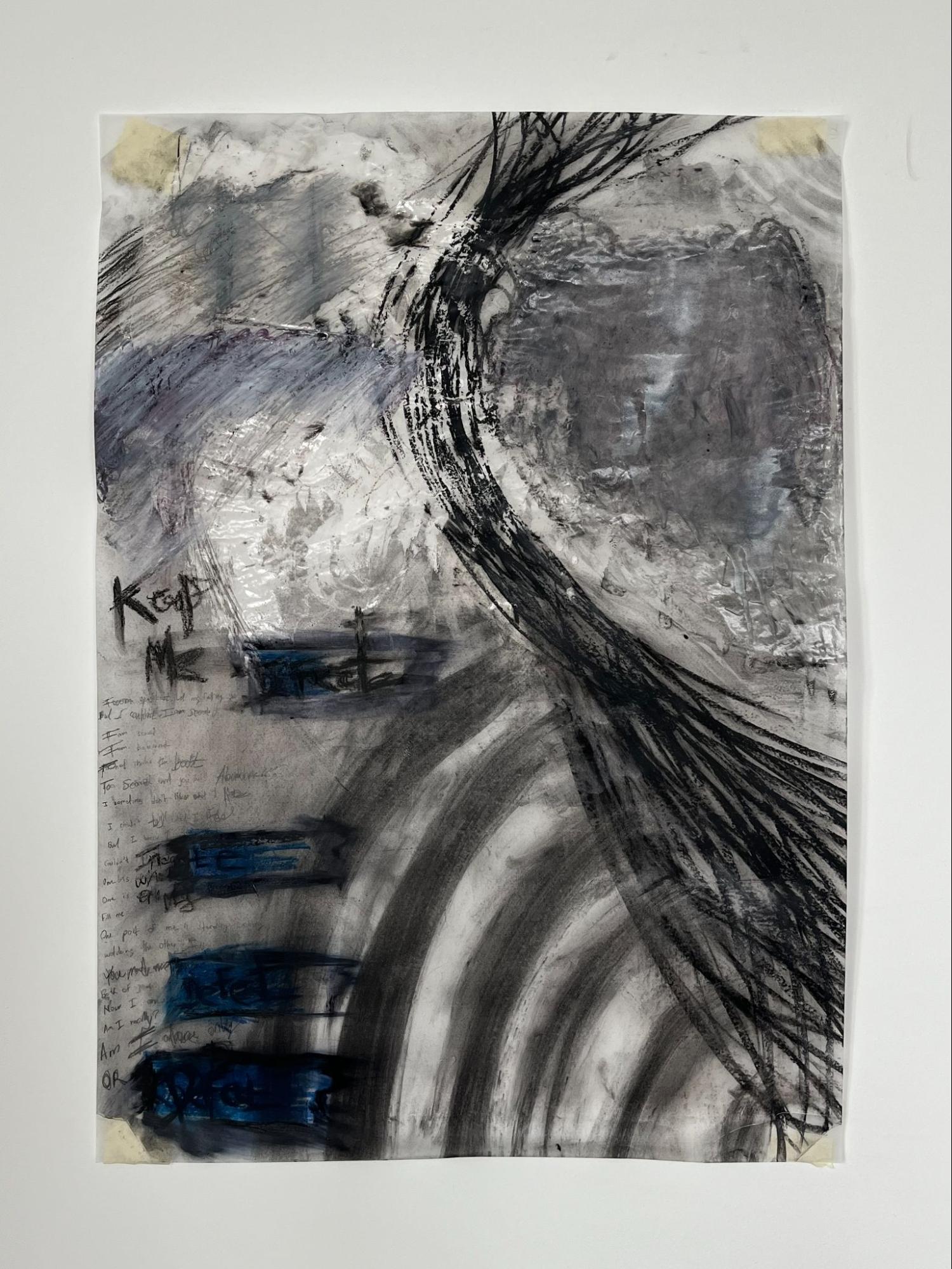
While his film work explores how we’re seen externally, his paintings explore the internal tensions we must overcome. The work To Cassandra is abstract, but there is a chaotic energy that reflects the story of the prophetess Cassandra, who was condemned by the god Apollo to speak the truth but never to be believed. It symbolises the internal struggles we all face when we want to talk about the truth but hold back, whether to avoid repercussions or to avoid hurting others. Yet we often look back and wonder whether telling the truth would have been the right choice at the time, or whether mis-speaking has led us down the wrong path.
The more we look at the works, the more figurative elements we see. It’s a similar experience when looking at past abstract painters such as Willem de Kooning or Helen Frankenthaler. However, these works have an intensity that’s close to that of Jackson Pollock’s.
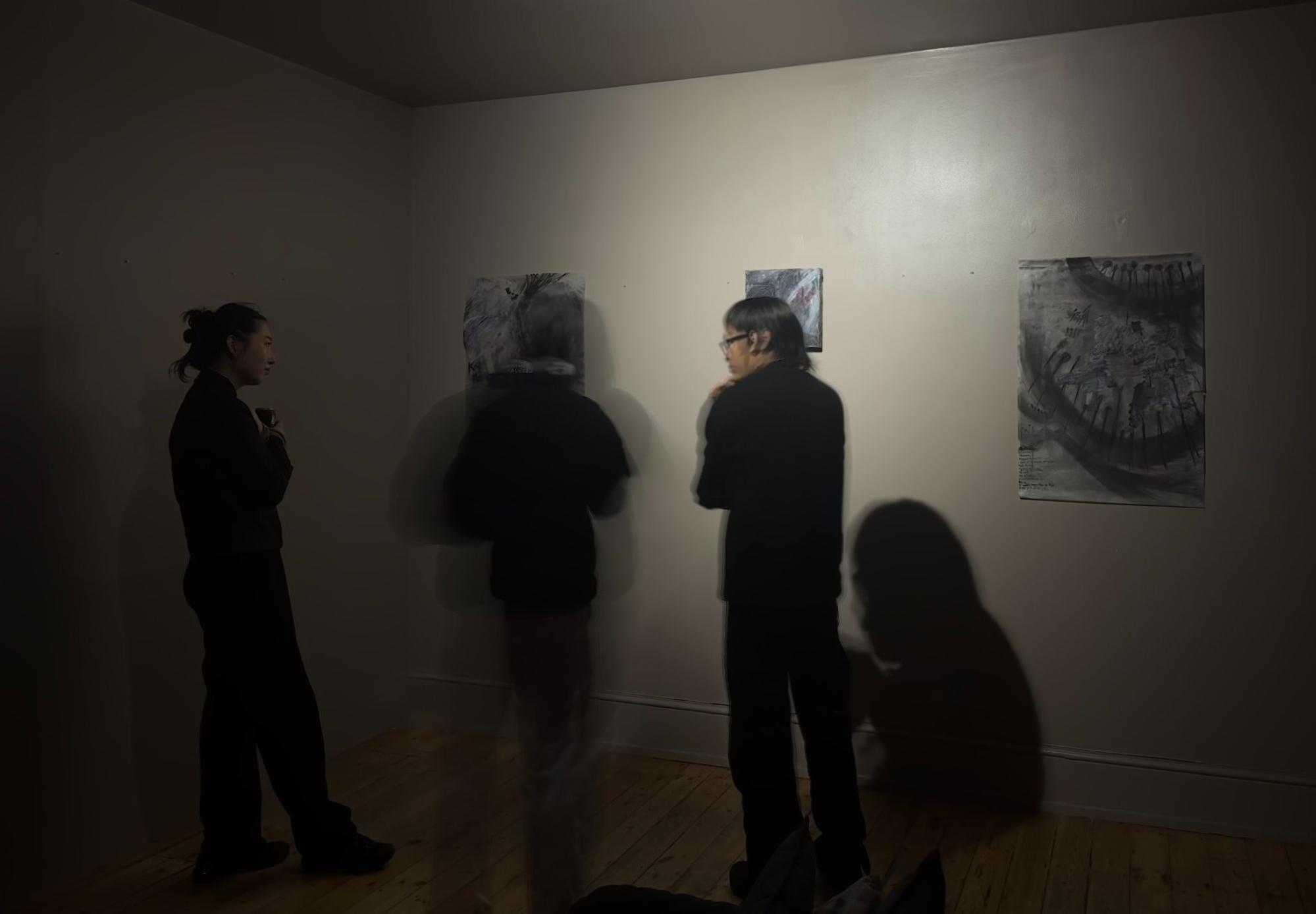
Whether we are considering the world outside us or our inner emotions, Kai’s work asks us to slow down to consider them all. We live in a fast-paced world where it seems we have endless tasks to complete, but it’s only when we slow down and sit with our thoughts and our actions that we appreciate their gravity. While at the same time, it’s asking us to question our position as the voyeur, watching someone eat, reading their innermost thoughts, and asking how that makes us feel.
More information on Kai may be found on his Instagram.

