

Exhibition Review – Glasgow, UK | 25–28 November 2025
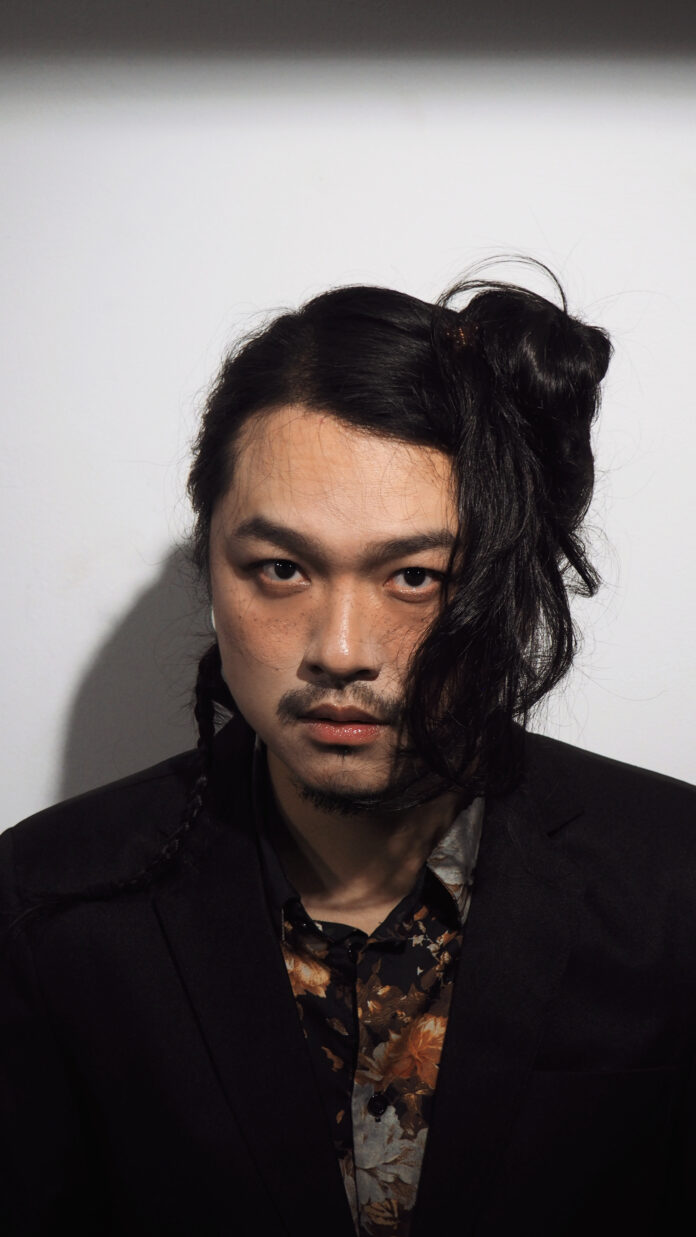
The Fluid Self, a solo exhibition by artist and composer Wu Bowen, recently concluded in Glasgow, drawing attention from the city’s art community, students, and educators. Through spatial experimentation and cross-media practice, the exhibition examines the shifting nature of identity, perception, and space within contemporary contexts of migration, offering an experience that is both immersive and critically reflective.
Bringing together sound, moving image, installation, newly designed digital instruments, and performative elements, the exhibition unfolds as a continuously transforming spatial environment. The oscillation between the stage and the white cube functions not simply as a display strategy, but as a conceptual device—pointing to changing conditions of visibility, spectatorship, and self-positioning. Space is treated as a fluid interface, one in which memory, emotion, and consciousness are constantly forming and dissolving.
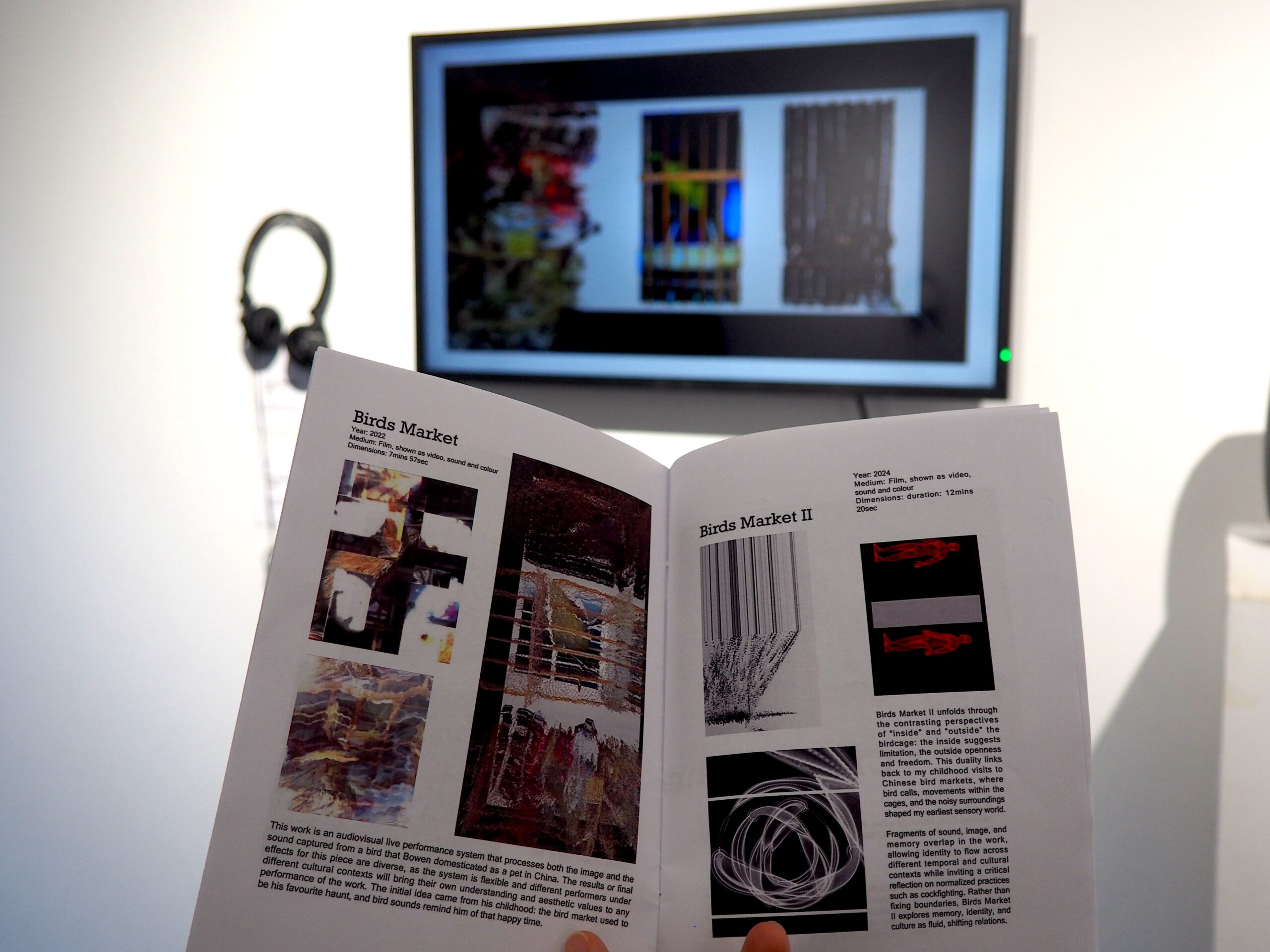
At the heart of The Fluid Self lies an exploration of identity under cross-cultural displacement. Rather than presenting cultural hybridity as a smooth fusion between East and West, the exhibition foregrounds the tensions, uncertainties, and ongoing negotiations that shape lived experiences of migration. When familiar languages and cultural frameworks lose their grounding power, identity becomes a process of continual recalibration.
This concern is articulated most clearly in Mixobloodify, one of the works presented in the exhibition. Drawing on Homi K. Bhabha’s notion of the “Third Space,” Wu approaches cultural hybridity as an ongoing process of mixing, adaptation, and reorganization. Identity here is not fixed but repeatedly repositioned, shaped by emotional fluctuation and the search for stability between differences. Across the exhibition, this perspective frames identity as open-ended, provisional, and perpetually in formation.
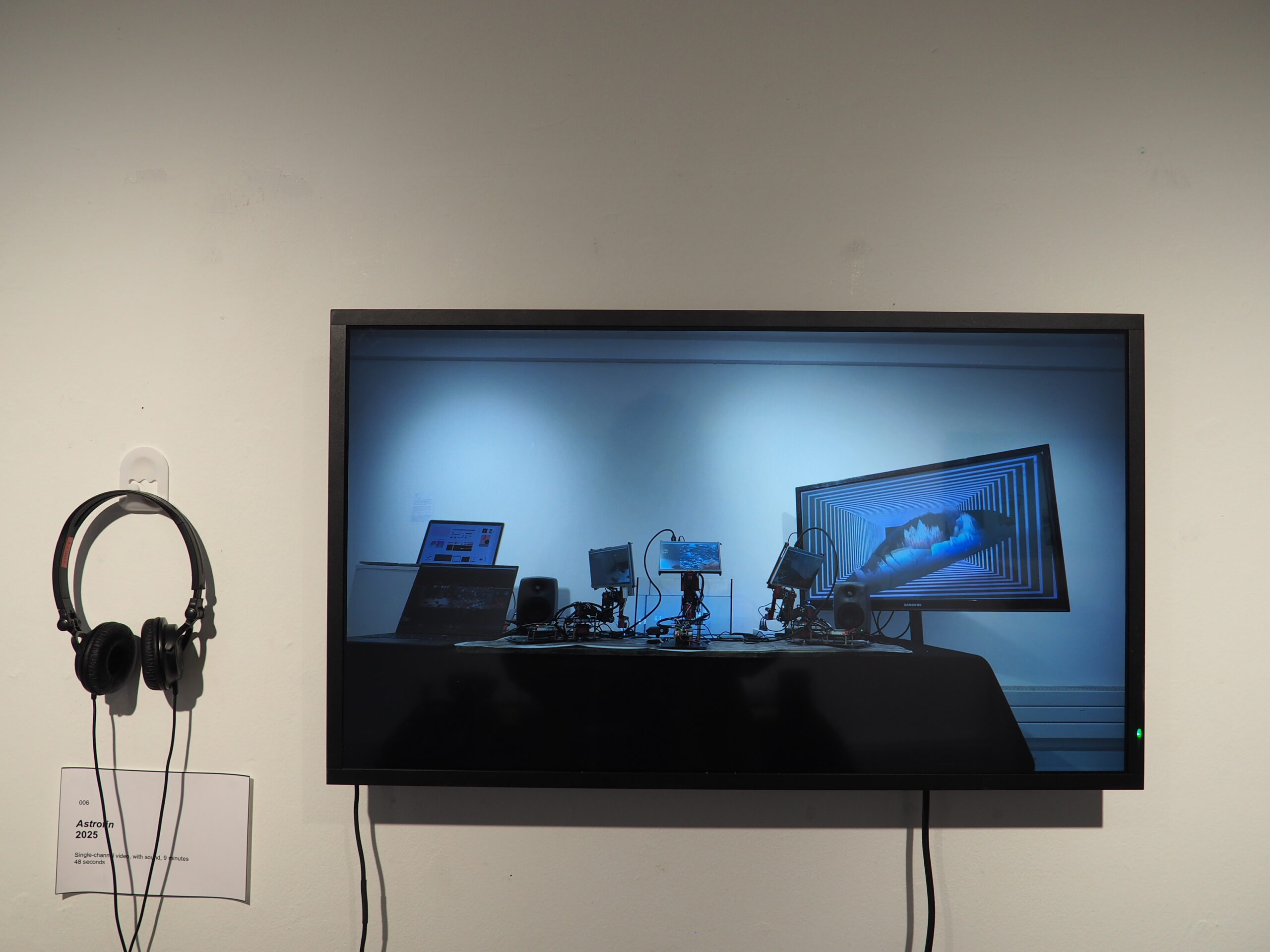
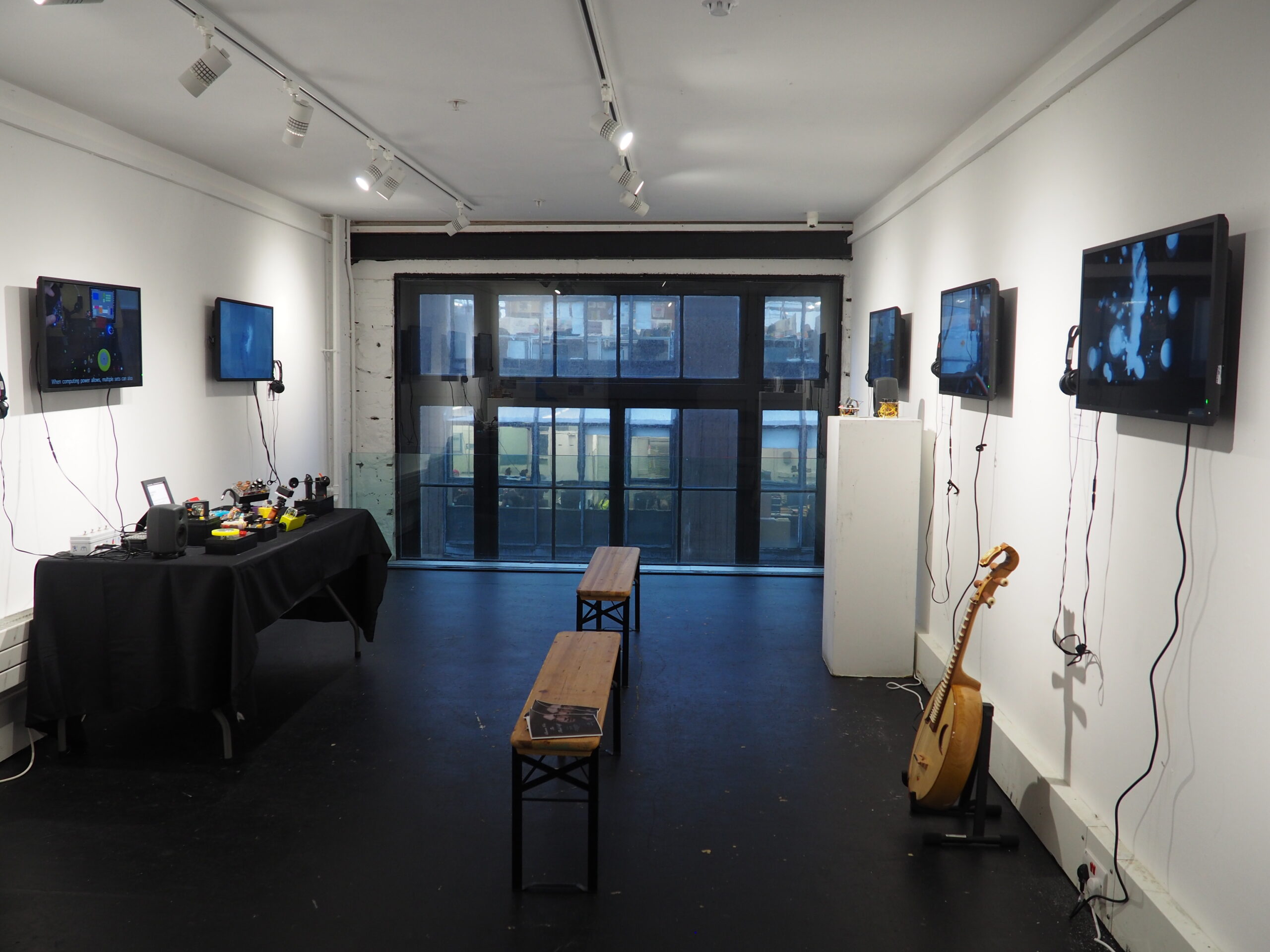
Wu’s cross-disciplinary background—spanning sound art, film scoring, experimental music, new instrument design, and audiovisual practice—comes to the fore throughout the exhibition. Electronic sound, interactive installations, spatialised audio, and post-digital visuals interlock to create a multi-layered perceptual field that moves between reality, dream, and illusion.
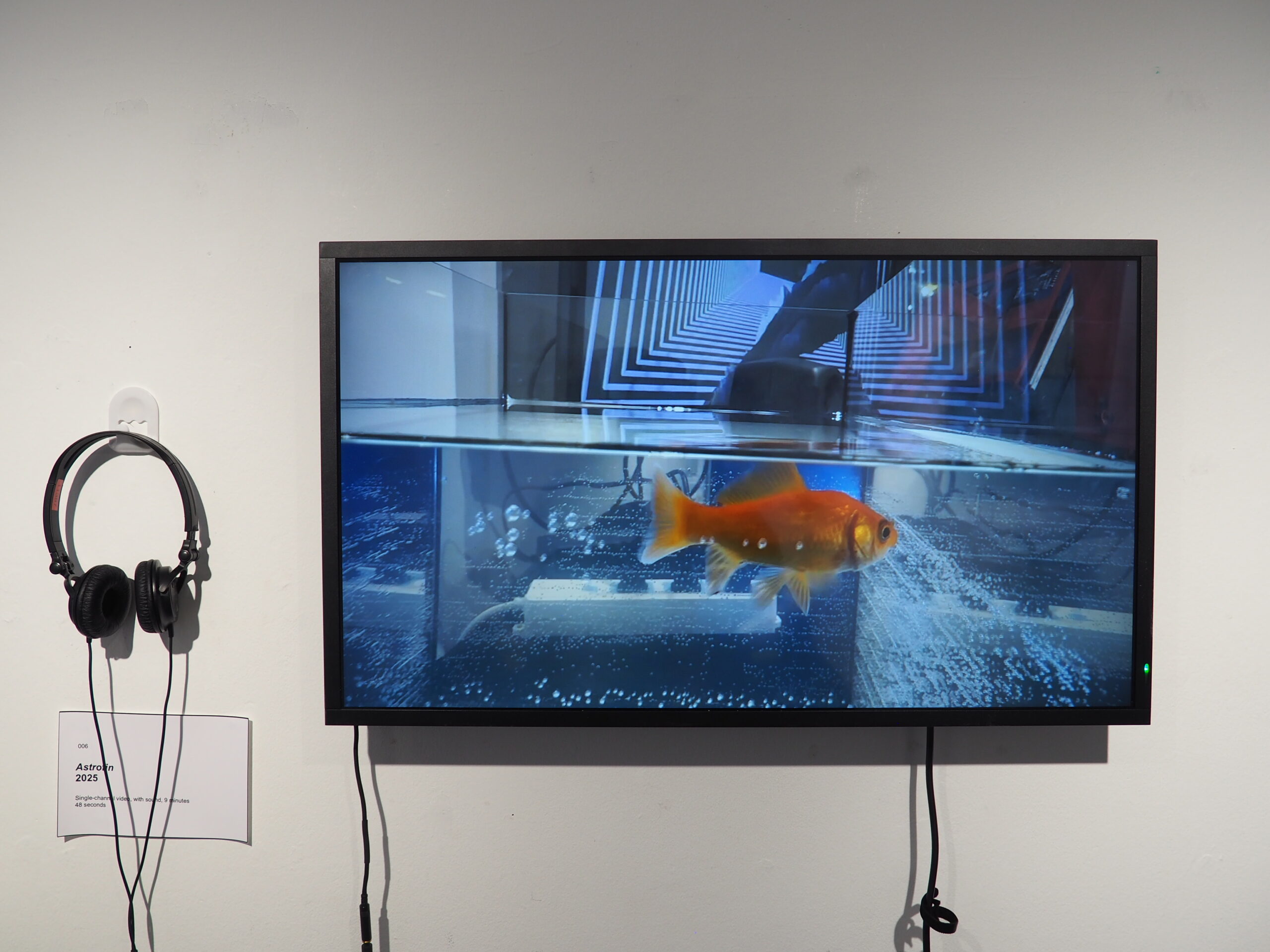
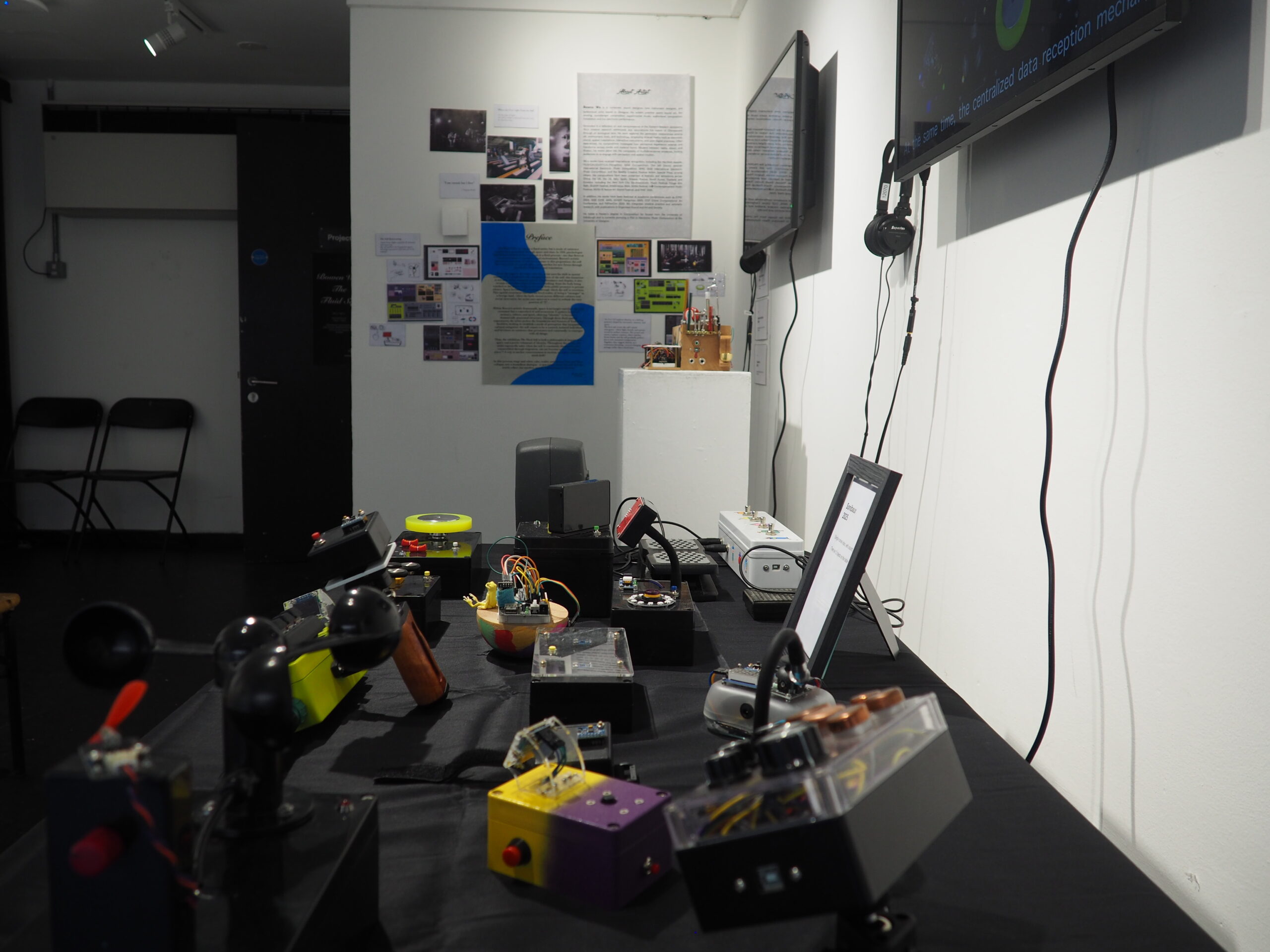
A key component of the exhibition is Sonibaux, a series of digital instruments designed by the artist. Presented as installations and accompanied by video documentation, the instruments demonstrate how sound can be generated through movement, spatial interaction, and algorithmic logic. These works draw attention to the act of sound-making itself, foregrounding the “affordances” of the instruments—the possibilities they open up for action, perception, and creative engagement. For viewers, sound becomes not only something to hear, but something visible, traceable, and spatially situated.
As audiences move through the exhibition, attention shifts constantly between sound, image, and space. Many visitors are prompted to pause, observe, and retrace how sounds are produced and activated, forming individual perceptual pathways through the interplay of media. In this way, the exhibition resists linear interpretation, encouraging exploratory modes of viewing and listening.
During the exhibition, John Thorne, Sustainability Coordinator at the Glasgow School of Art, reflected on the work’s relevance to contemporary relationships between humans, nature, and digital technology. He wrote:
“Wu’s work seeks to connect us back, to ourselves, each other and to question our interactions and our lives with nature and technological life. Can we make use of digital interactions to help us connect back to nature, to see it through different eyes, to find a role and friend in AI; can digital interventions and can data be put to new and better uses?”
He also emphasised the importance of emotional connection and critical imagination at a time when digital systems increasingly mediate human relationships:
“We need this emotional connection, that joy and serious conversation that comes from these works; humans are disconnecting fast, with digital systems fitting between us and wider nature. It feels like this important work is giving these assumptions and ways of living a lively mix, asking us to challenge assumptions and culture life, to consider what might be possible in the future, and to start working with each other, with AI, within the analogue and digital Worlds, to find that future vision and thought.”
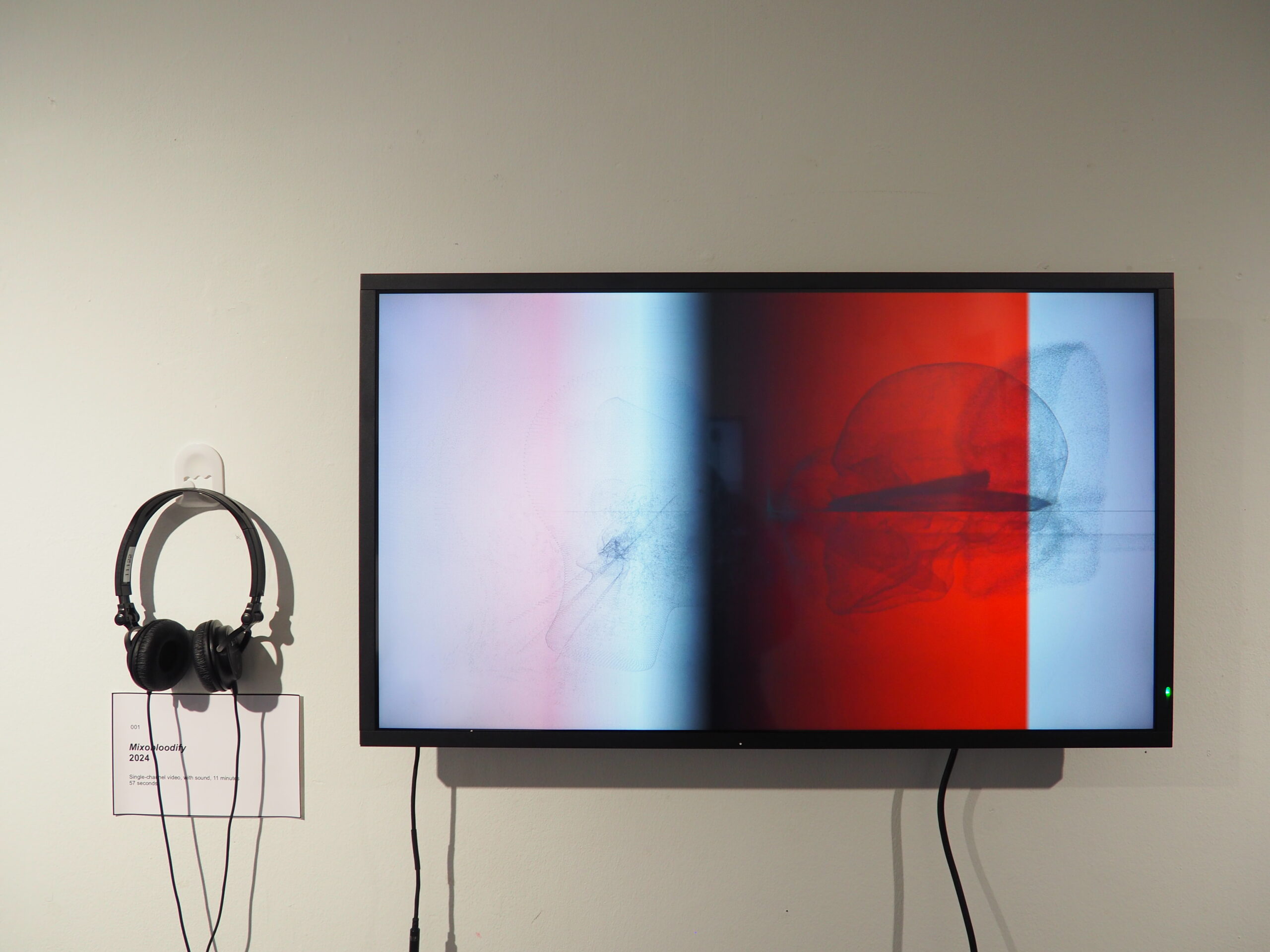
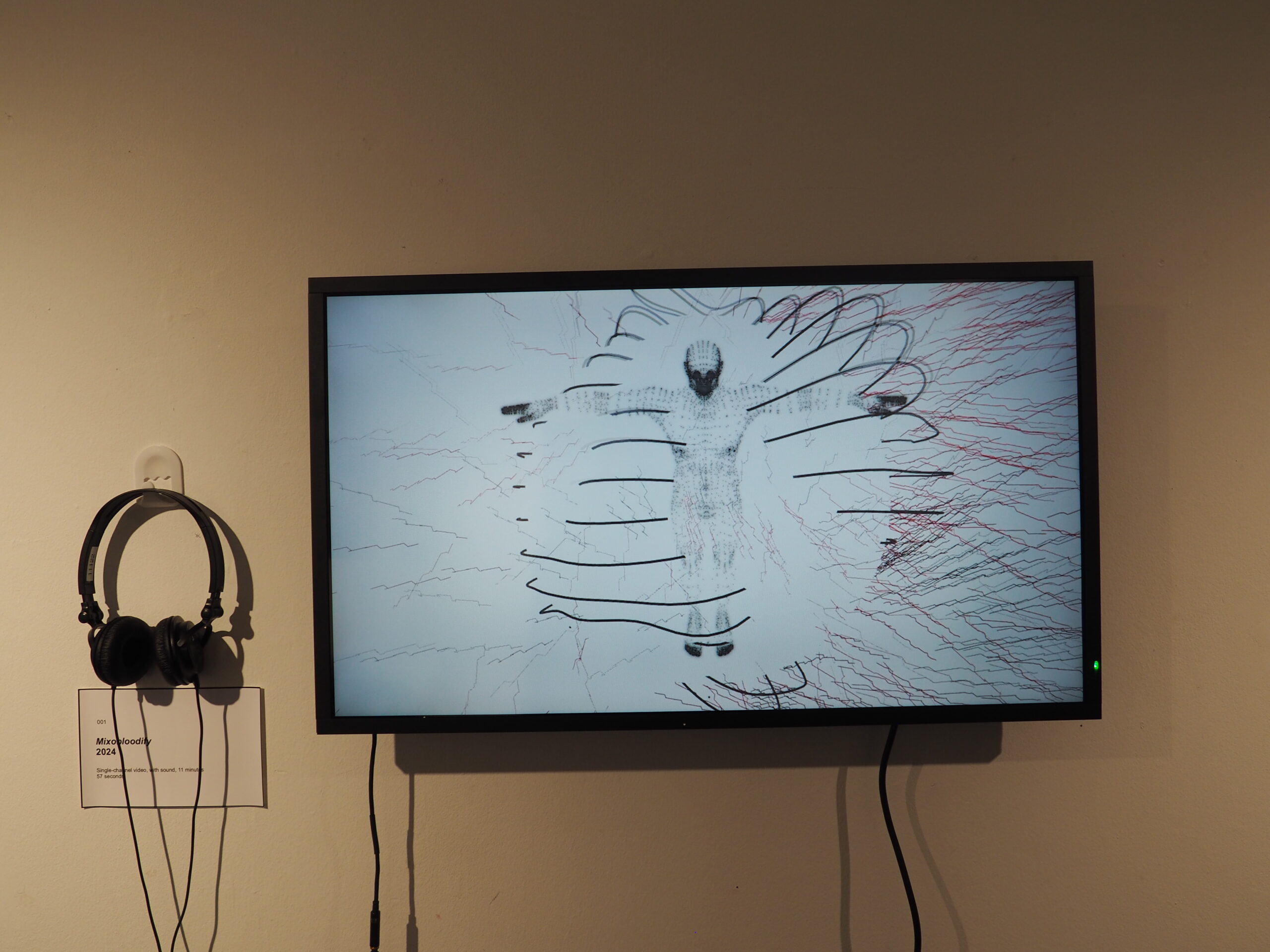
The exhibition was met with positive responses within Glasgow’s art scene, with many viewers highlighting its immersive spatial design, nuanced sound structures, and thoughtful engagement with cross-cultural experience. Some commentators pointed to the exhibition’s deliberate ambiguity as a key strength: rather than offering fixed narratives, the works allow questions of identity, migration, and perception to emerge through constantly shifting spatial conditions. While this openness may challenge less experienced viewers, it is precisely this indeterminacy that gives The Fluid Self its critical and poetic force.
Ultimately, The Fluid Self presents a meditation on identity as movement—on how connections might be re-established in a world defined by transition and displacement. By creating a space in flux, Wu Bowen positions art as a temporary dwelling for consciousness in motion, offering a resonant contribution to contemporary discussions of migration, hybridity, and the evolving relationship between humans, technology, and space.

