

In the perennial arms race for Super Bowl ad supremacy, where brands typically rely on Hollywood A-listers to move the needle, Taco Bell took a decidedly different approach for its 2025 Big Game return.
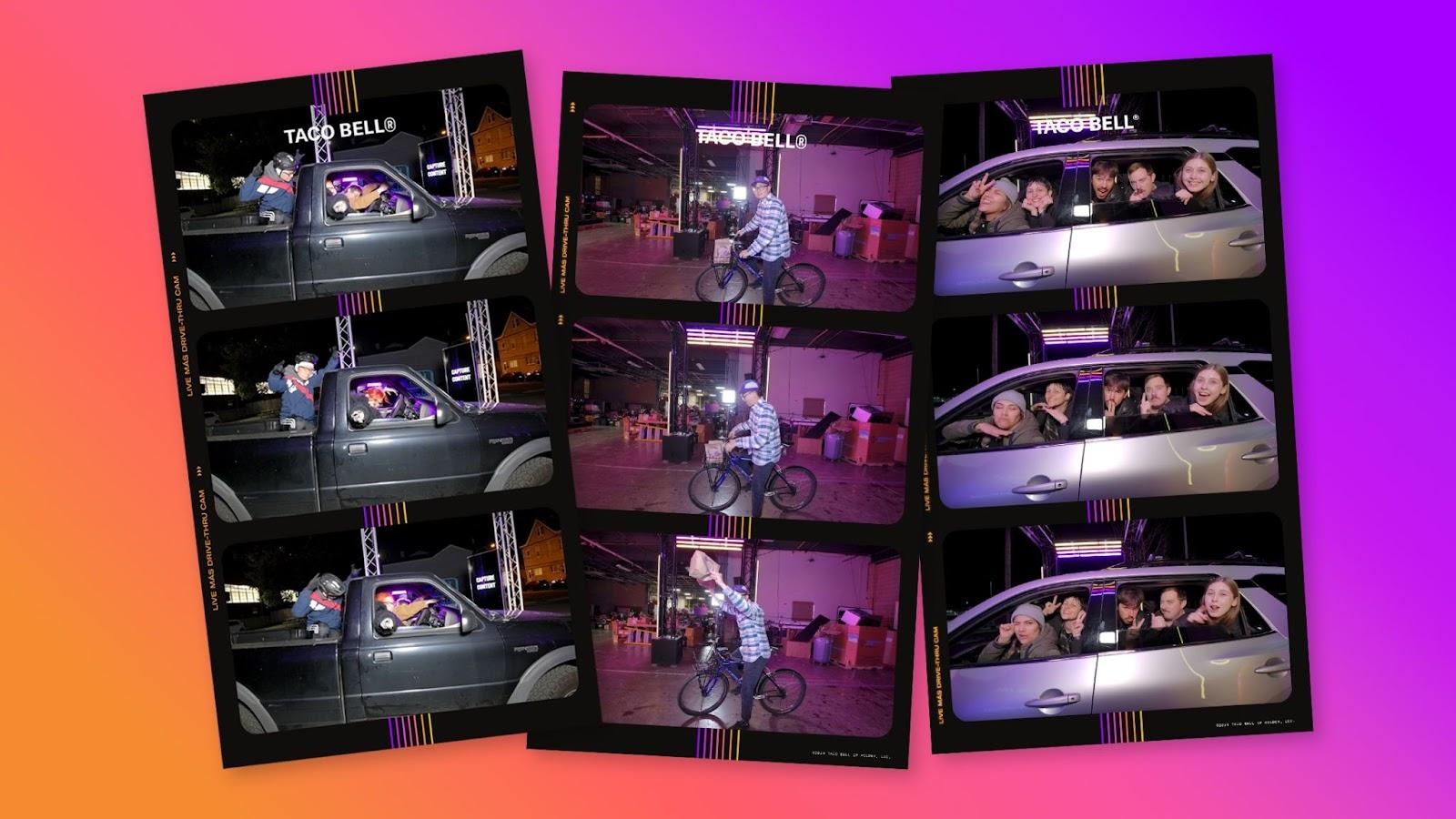
Rather than leaning on its history of celebrity-filled spots (they’ve previously worked with Doja Cat), the fast-food giant put its “Live Más” philosophy to the test by featuring several hundred die-hard fans—derisively termed “a bunch of randos”—in a 30-second commercial airing during the third quarter of Super Bowl LIX.
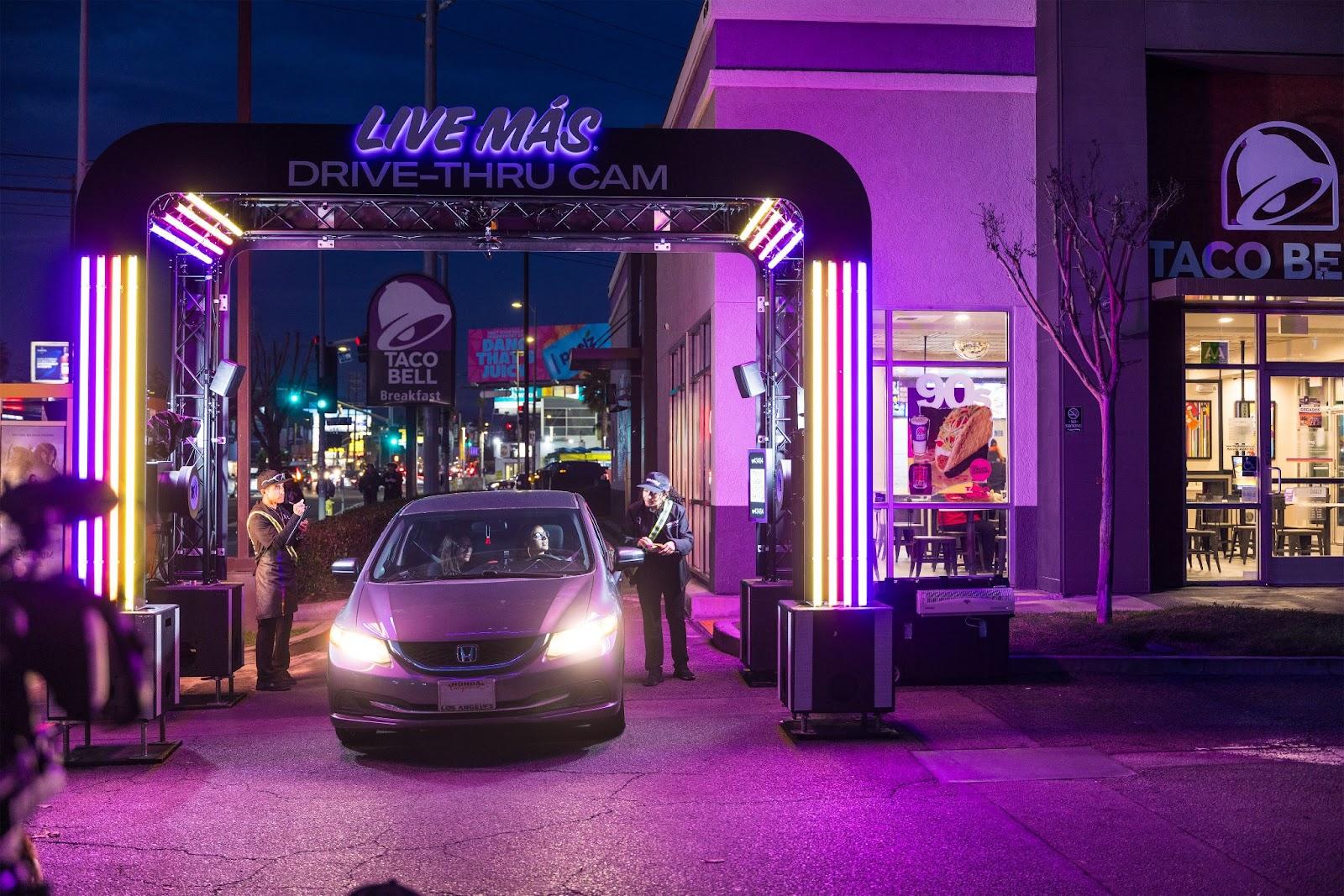
But these aren’t just stock photos. These customers earned their screen time by pulling through the drive-thru. The campaign, which leveraged a custom-built, roaming photo booth called the “Live Más Drive-Thru Cam,” combined large-scale logistics, experiential design, and artificial intelligence to turn a routine fast-food run into a broadcast-quality production set.
From Drive-Thru to the Big Game
The concept was rooted in authenticity. According to Taylor Montgomery, Taco Bell’s Chief Marketing Officer, the brand wanted to spotlight the “incredible Live Más spirit” fans bring to the restaurant every day.
“So we’re putting them in the spotlight as a reminder that the most authentic representation of our brand isn’t staged—it’s lived,” Montgomery said in a statement.
To execute this, Taco Bell partnered with Deeplocal, an experience design and creative technology agency based in Pittsburgh, to build a tech-enabled installation that integrated directly into drive-thru lanes. Over the course of the activation, more than 3,000 customers across five states opted in simply by pulling through designated drive-thru locations, transforming routine food runs into spontaneous casting calls for one of the most-watched broadcasts in the world.
The initiative wasn’t entirely devoid of star power, however. In a meta-twist, longtime collaborators LeBron James and Doja Cat make brief cameos in the final spot. Their role, however, is to stand off to the side and complain about being relegated to the background, serving as a punchline that reinforces the campaign’s focus on the everyday fans.
Engineering the “Live Más” Experience
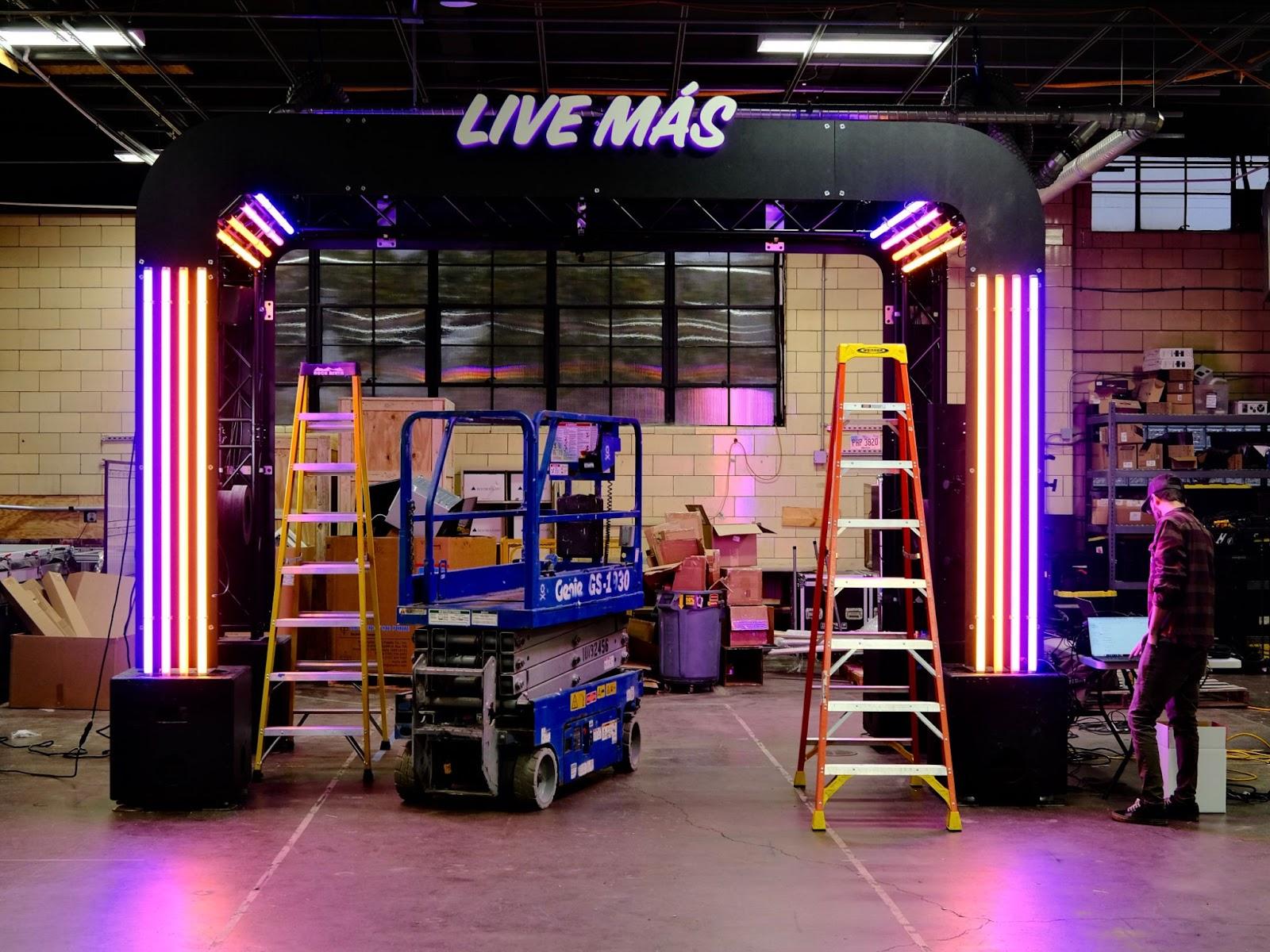
Hong Hua, an experience designer at Deeplocal, led the physical and experiential design of the Live Más Drive-Thru Cam. His challenge was to reimagine the drive-thru as a scalable, repeatable capture environment capable of delivering footage suitable for national broadcast.
“The core strategy was to replace celebrities with real Taco Bell fans as the stars of its Super Bowl commercial,” Hua explained. “That required designing a system that could integrate seamlessly into existing drive-thru infrastructure while operating at broadcast standards.”
The system was designed to be frictionless. After receiving their orders, customers drove into the arch, where they were met with two giant cameras and guided prompts. The structure needed to be visually iconic, adaptable to different vehicle sizes, fast enough to avoid disrupting operations, and robust enough to withstand a multi-state tour across locations in Los Angeles, Middleburg Heights (Ohio), Cookeville (Tennessee), Houston, and Wauchula (Florida).
The activation’s success was later recognized by industry peers, earning an Adweek Experiential Award for Best Use of Drive-Up Experience, a Silver at the Event Marketer Ex Awards, and a Silver at The Drum Awards.
The Role of AI in Interactive Design
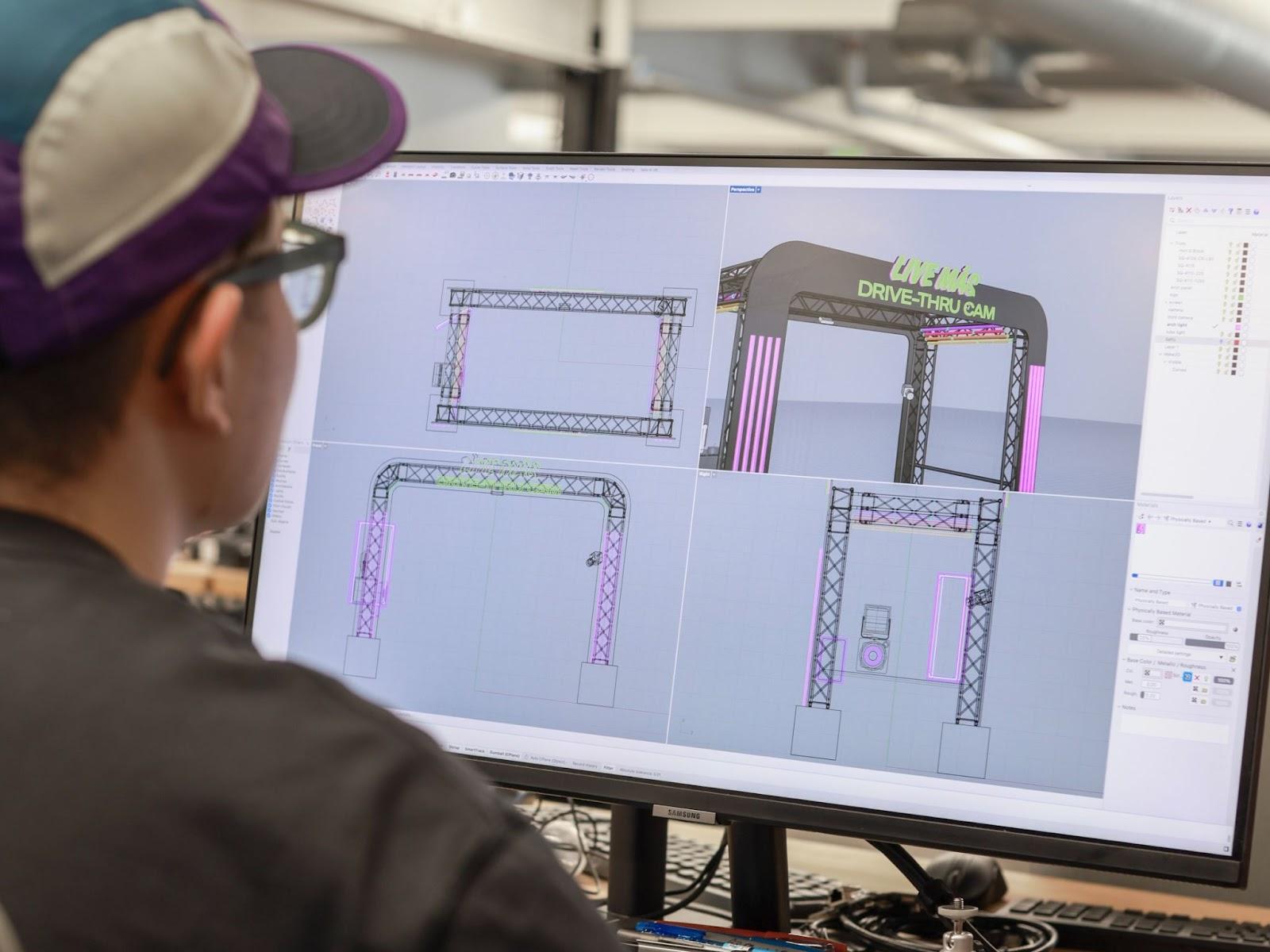
While the concept was analog, the execution relied heavily on modern technology. Hua noted that AI played a pivotal role in both the user-facing experience and the internal workflow. From a user perspective, the installation utilized AI-driven technologies, including vehicle detection to automatically trigger the experience and facial recognition to intelligently crop wide-angle images into optimal compositions. These technologies eliminated interaction hurdles, allowing customers to remain fully present in the moment rather than navigating instructions or interfaces.
On the backend, AI tools accelerated the concepting phase in the design process. “An AI-generated reference from our agency partner provided an initial visualization of scale, structure, and intent, which helped accelerate alignment across teams,” Hua said.
However, Hua emphasizes that AI remains a tool for augmentation rather than a replacement for the designer. “My value as a multidisciplinary designer lies in integrating physical design, interaction design, technology, and storytelling into cohesive systems—an approach that remains fundamentally human-driven,” he said.
A Record-Breaking Moment
The stakes for the campaign are high. Super Bowl LIX, airing in February 2025, is expected to draw a record average of 127.7 million viewers in the U.S.—roughly one-third of the country.
By swapping out scripts for spontaneity and celebrities for everyday fans, Taco Bell is making a high-stakes bet: that the most compelling story on television could emerge from a drive-thru lane—where technology, design, and cultural insight align.
Image Credits: Taco Bell, Biite, and Deeplocal

