In the past, cultural consumption often had clear physical settings. People visited cinemas to watch films, browsed bookstores for new novels, or spent time in record shops searching for music. These activities were not just purchases but part of a broader lifestyle connected to creativity and discovery. Over time, however, the internet has significantly changed how people access cultural content. Music, films, visual art, photography books, and independent creative projects are now widely distributed through digital platforms. As a result, cultural discovery increasingly happens online, where readers, listeners, and collectors encounter new works through articles, social media, and digital publications. At the same time, the way people purchase cultural products has also evolved. Many enthusiasts now buy vinyl records, art books, independent magazines, and creative merchandise through online retailers rather than physical stores. These items often represent more than simple products; they reflect personal interests and creative identity. Because of this, many cultural consumers today try to approach these purchases more thoughtfully, balancing their enthusiasm for art and creativity with practical considerations such as pricing and availability.
As online marketplaces expand, comparing options has become a natural step in the process of buying cultural goods. Collectors and enthusiasts frequently check different platforms before placing an order, especially when buying limited editions or niche items such as independent music releases, photography books, or design publications. Prices can vary depending on the retailer, shipping costs, or temporary promotions. For individuals who regularly purchase creative products, this small habit can make a noticeable difference over time. Instead of purchasing immediately, some people spend a few minutes reviewing where the item might be available at a better price. In certain cases, they may also look at discount platforms that gather promotional offers across different retailers. For example, PromoPro UK often lists deals from various online stores, allowing consumers to see if there are currently lower prices for the items they plan to buy. This may not necessarily change the purchase decision, but it can make the buying process feel more deliberate and financially balanced.
I personally noticed this shift while building a small vinyl record collection over the past few years. What began as an occasional purchase gradually turned into a regular hobby. Independent labels often release special pressings with unique cover artwork or limited quantities, which makes the experience of collecting both exciting and unpredictable. One time I was preparing to order a newly released record from an online store that specialized in independent music. The price seemed reasonable, and I was ready to complete the order immediately. Before checking out, however, I decided to quickly see whether the same record might be available elsewhere. After a short search, I found that another retailer was offering a temporary promotion that lowered the overall cost slightly. The difference was not dramatic, but it was enough to make the purchase feel more considered. That moment made me realize that collecting cultural items does not have to mean ignoring practical decisions. Since then, I have made it a habit to quickly compare options before buying records, books, or other creative products.
From my perspective, cultural consumption becomes more meaningful when it is sustained over time. Many people who enjoy music, literature, photography, or film eventually develop collections that reflect their personal taste. These collections grow gradually, piece by piece, and each item carries a small story about when and why it was chosen. Because of this, maintaining a thoughtful approach to purchasing can actually support the longevity of the hobby. The digital environment offers more access to cultural products than ever before, but it also encourages people to make quicker purchasing decisions. By slowing down slightly—comparing options, checking availability, and occasionally looking for promotions—enthusiasts can continue supporting artists and creators while also managing their budgets responsibly. Over time, these small habits help transform cultural consumption from a series of spontaneous purchases into a more sustainable and enjoyable long-term practice.
Keith Haring’s early subway drawings are the focus of a new exhibition opening at Moco Museum London this spring. Voice of the Street – Keith Haring’s Subway Drawings runs from 18 March for three months and presents around 30 chalk drawings created in New York between 1980 and 1985. The show places these works within a recreated 1980s subway setting, reflecting the environment where Haring first began making art directly in public spaces.
Before achieving international recognition, Haring used empty advertising panels in New York’s subway stations as a site for drawing with white chalk on black paper. The works were made quickly and without permission, often disappearing within hours as panels were replaced or cleaned. What remains is a record of a practice shaped by immediacy and public interaction. Figures including radiant babies, crawling figures and barking dogs appear across the drawings, forming the distinctive visual language that would come to define Haring’s work.
By presenting these pieces together, the exhibition looks at how the subway became an important setting for Haring’s early career and his belief that art should be accessible to everyone. The drawings capture a moment when the artist’s work moved beyond studios and galleries into everyday urban life, connecting with people as they passed through the city.
The exhibition will be on view 18 March-18 June at Moco Musuem, 1-4 Marble Arch, London, W2 2UH.
There’s so much music coming out all the time that it’s hard to keep track. On those days when the influx of new tracks is particularly overwhelming, we sift through the noise to bring you a curated list of the most interesting new releases (the best of which will be added to our Best New Songs playlist). Below, check out our track roundup for Wednesday, March 11, 2026.
Kacey Musgraves – ‘Dry Spell’
Kacey Musgraves has announced a new album, Middle of Nowhere, with the single ‘Dry Spell’. Made alongside her Same Trailer, Different Park collaborators Shane McAnally, Luke Laird, and Josh Osbourne, it’s a hooky tune about being “lonely with a capital H,” if you know what she means. Musgraves co-directed the accompanying video with Hannah Lux Davis.
Robyn – ‘Blow My Mind’
Robyn has offered another glimpse of her upcoming LP Sexistential with the pounding, fleshy ‘Blow My Mind’, which follows previous entries ‘Sexistential’, ‘Talk to Me’, and ‘Dopamine’.
Croz Boyce – ‘Hanging Out With a Blueberry Pop’
The Animal Collective extended universe keeps expanding. After a string of solo albums, Brian Weitz (Geologist) and Dave Portner (Avey Tare) have launched a new instrumental project, Croz Boyce, whose self-titled album arrives on May 8. It’s previewed today with the languorous opener ‘Hanging Out With a Blueberry Pop’, which comes with a Joseph Ricketts-directed video.
Iceage – ‘Star’
Iceage are back. The Danish band’s first new single in five years is the wiry, soaring ‘Star’, which is accompanied by a video from Thinh T. Petrus Nguyen.
Violet Grohl – ‘595’
Violet Grohl has announced her debut album. Produced by Justin Raisen, Be Sweet to Me will arrive on May 29. Lead single ‘595’, equal parts sultry and grungy, is accompanied by a Nikki Milan Houston-directed video. Alternative music from the late ‘80s and early ‘90s naturally was an influence. “There’s something so powerful about that period of music,” Grohl said in a statement. “From the messaging to the visuals, it’s authentic and raw.”
Olof Dreijer – ‘Echoed Dafino’
Olof Dreijer, once half of the Swedish duo the Knife, has announced his long-awaited debut album, Loud Bloom, with the wonky, Maman-assisted new single ‘Echoed Dafino’. “I was so moved the first time I heard the original version of ‘Dafnino,’” Dreijer said in a statement. “Maman’s voice is so beautiful. I wanted to make it work in my DJ sets, so I made my own version that I felt became more than just a remix so I thought it could be nice to include it on the album. The additional vocals he recorded made it feel very special too.”
The Lemon Twigs – ‘I Just Can’t Get Over Losing You’
The Lemon Twigs are prepping a new album, Look For Your Mind!, arriving May 8. If you’ve heard anything from this band, you already know lead single ‘I Just Can’t Get Over Losing You’ is nostalgically hooky – but also sneakily unconventional. “Every time we try to write something that’s completely straightforward, we can’t help adding an element which comes out of left field. We always want to write a song we’ve never heard before,” Brian D’Addario remarked.
Kevin Morby – ‘Die Young’
Kevin Morby has previewed his forthcoming album Little Wide Open with a contemplative new song, ‘Die Young’. “A lot of this album is me reflecting on my time spent on the road as an adult,” he reflected. “Being a touring musician as a career has made for a sometimes complicated lifestyle and in so many ways has proven to be pretty dangerous. I started doing this professionally when I was 19 and sometimes I can’t believe that 20 years later I’m still here. This song acts as a love letter not only to the road and all of my travel companions over the past two decades, but also to Katie, who I met playing shows when we were very young. Sometimes it’s amazing to zoom out and remember where we began compared to where we’re at today – both as romantic partners and songwriters.”
CFCF – ‘Let’s Kill Ourselves’
CFCF has announced a new LP, L.U.V., set for release on June 12. “The overall vibe of L.U.V. is meant to be sort of eurodance with a sophisticated edge,” Mike Silver said of the Memoryland follow-up. “It’s music for an adult lifestyle.” Sometimes, according to the lead single ‘Let’s Kill Ourselves’, that means getting together to kill ourselves. Vibes! The track comes paired with a music video directed by Aaron Garcia Peret.
Wendy Eisenberg – ‘Vanity Paradox’
Wendy Eisenberg has unveiled ‘Vanity Paradox’, the final single off their upcoming self-titled album. “These lyrics came out in one wild, puzzling chunk I’m still deciphering,” the artist reflected. “Mari [Rubio] told me it sounds like how anxiety feels, which shocked me — but is ultimately just true. From what I can tell, it’s about the ways we cope with existing among others, and how it feels to want to be perceived as a good person by your friends, because your curiosity about yourself has, paradoxically, obscured you to yourself. It’s also about healing from trauma — specifically how the healing process brings you so close to yourself that you can’t see anything clearly, and you are so dazzled by the life surrounding you that you are stunned when you remember that you are the same person who experienced the trauma that got you here.”
ELUCID & Sebb Bash – ‘The Lorax’ [feat. billy woods]
New York rapper ELUCID and Swiss-born producer Sebb Bash are releasing a joint LP, I Guess U Had To Be There, on Friday. ELUCID’s Armand Hammer bandmate billy woods features on the latest single ‘The Lorax’, which is haunting.
Mei Semones – ‘Tooth Fairy’ [feat. John Roseboro]
Mei Semones has tapped John Roseboro for ‘Tooth Fairy’, the entrancing second single from her upcoming EP, Kurage. “This song is about a day I was meeting John Roseboro at his friends’ bookstore,” the singer-songwriter recalled. “I got off the train in Greenpoint and we happened to have been on the same train, and we ran into each other on the platform. He smiled and told me his tooth had just fallen out, and held out his hand to show me. So I was inspired to write a song about that and our friendship. Thanks to John for being down to join me on the song and always being a good friend and inspiration to me 🙂 Musically, one of my favorite parts is the arpeggiated guitar chords, inspired by a Guinga tune I learned.”
Lip Critic – ‘Jackpot’
Lip Critic’s frantic, eruptive new single, ‘Jackpot’, is the latest preview of their forthcoming album Theft World. “‘Jackpot’ is a song about risking it all, and winning it all, betting the house, and ending up with two houses, then waking up with nothing at all,” the band said.
Real Lies – ‘A Land Beyond’
Real Lies have dropped a shimmering new track called ‘A Land Beyond’. It’s the latest in a series of tracks following the release of last year’s We Will Annihilate Our Enemies.
Hyd – ‘Angel’
Hyd has announced a new album, Hold Onto Me Infinity, dropping May 22 on Cascine. Recorded with producer Hudson Mohawke, ‘Angel’ is the former PC Music affiliate’s radiant ode to SOPHIE.
Koyo – ‘What I’m Worth’
Koyo have unleashed a new song, ‘What I’m Worth’. The ferocious track arrives with a video from director Eric Richter.
Gouge Away – ‘Figurine’
Gouge Away have signed to Run for Cover, marking the news with a fantastic song called ‘Figurine’. It was tracked by Larry Crane at the legendary Jackpot! Recording Studio in Portland, WA, and vocalist Christina Michelle had this to say about it: “’Figurine’ is the first song we finished with Theo Hartlett (Ovlov, Pet Fox), a friend of ours who has been touring with us on guitar. We wrote this song while on tour last fall and it came together so easily. I went into writing the lyrics with an entirely different idea in mind, but these spilled out of me on one of the drives. Before the tour, I was digitizing home videos, having to see myself as a kid from an outside perspective. I knew I was shy, a people-pleaser, and all these things, but it was different to watch it on film. I was always afraid of disappointing people so I made myself small and rarely acted outside of this little box I found myself in. Instead of getting into trouble like most kids, I didn’t really break out of my comfort zone until much more recently. I thought I had to work really hard to be loved. I stretch myself so thin to please everyone else that it winds up being the expectation. I found people who love me, even when I am a messy trainwreck, and that toppled my entire reality. And yet, there’s still this little kid inside of me who is afraid of upsetting her parents. We recorded this song live to tape in Portland at Jackpot! It was our first time working with Larry Crane and it was so much fun.”
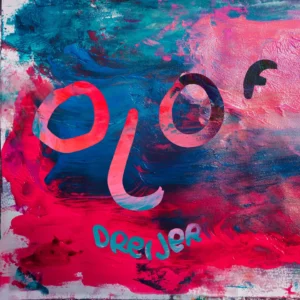
Olof Dreijer, formerly half of the Swedish duo the Knife, has signed to Dirty Hit, marking the news with the announcement of his debut solo album. Loud Bloom will be released on May 8 via the label’s electronic imprint, dh2. The playful new single ‘Echoed Dafnino’ features Sudanese singer Maman. Check it out below, and scroll down for the album artwork and tracklist.
“I was so moved the first time I heard the original version of ‘Dafnino,’” Dreijer said in a statement. “Maman’s voice is so beautiful. I wanted to make it work in my DJ sets, so I made my own version that I felt became more than just a remix so I thought it could be nice to include it on the album. The additional vocals he recorded made it feel very special too.”
Loud Bloom contains the previously unveiled singles ‘Rosa Rugosa’, ‘Cassia’, ‘Coral’, ‘Acuyuye’, ‘Blood Lily’, ‘Iris’, and a new version of ‘Camelia’ from 2023’s Rosa Rugosa EP. Contributors on the record include South African artist Toya DeLazy and Colombian musician collaborator Diva Cruz. “I’m very grateful to be able to work with music and through music connect with these different collaborators from different parts of the world,” Dreijer commented.
Music runs in waterbaby‘s family: the Stockholm-born singer-songwriter’s mother sang in gospel choirs while she was growing up, her great-grandad was a jazz pianist, and her uncle was a concert promoter who brought acts from Latin America and Africa to Sweden. Her brother, who’s had his own musical project for years, appears on waterbaby’s debut album for Sub Pop, Memory Be a Blade, which follows the 2023 EP Foam. Working with her primary collaborator Marcus White – who also arranged the lush contributions from violinist Oliva Lundberg, cellists Filip Lundberg and Kristina Winiarski, saxophonist Sebastian Mattebo, trombonist Hannes Falk Junestav, and flutist Pelle Westlin – waterbaby retains a preciously intimate and intuitive approach, even going as far as to improvise a lot of the lyrics on the record. “Steady waters asking me to leave again” are the first words that come out of her mouth as she embraces this flow, illustrating that steadiness is an illusion, a trick of lonely shadows and lights. Still, we’re left with no choice but to paddle on.
We caught up with waterbaby for the latest edition of our Artist Spotlight series to talk about early music discoveries, freestyling, making Memory Be a Blade, and more.
I read that one gateway to indie music for you was Pro Evolution Soccer, which your brother was playing growing up. I relate to that – that’s where I first heard, like, Vampire Weekend and the xx – so I wanted to start from there, and I’m curious how your journeys of musical discovery intersected more broadly.
That’s Theo, who’s the feature on ‘Beck n Call’ and ‘Clay’. He would just be playing all the time, and we would always have the same favorite songs. I don’t know if it’s PES or FIFA, but you could highlight your favorites so that they would come more often. I remember there was Passion Pit, Metric. I would not have known to go look for that music at that point, it was truly just because it was playing all day in our household. It just went on for so many years, and he’s still my music plug. When it comes to finding new or more underground artists, he’s way more tapped in than I am, so it’s really nice having that. The other stuff that was playing at home was neo-soul and hip-hop, but also Ghanaian folk music, and a lot of garage in Dad’s car – always garage.
Do you feel like that incentivized you to form your own musical identity early on, one that was maybe distinct from those influences?
I didn’t think of it in that way, and when it comes to music, I very rarely think about things in terms of good and bad. If I like it, I like it. If I don’t, I don’t. The quality can vary so much when it comes to what I like. To me, it was just a golden pot of, like, “Oh my god, there’s more music.” And that means that there’s more where this came from as well, so it was just widening my range when it came to listening. I also didn’t have any plans on writing music when I was younger. I always knew I wanted to be an artist and a singer, and I was into theater, so thinking about creating my own music in that way was not something that I ever took into the equation. I think it’s just been something that’s stuck with me, and subconsciously, of course, informed my sound.
Did your relationship to music listening change when you started making music as you were entering adulthood?
It’s hard to tell, because I went to a songwriting school a couple years ago, and people were like, “Oh, watch out so you don’t get pop death,” because that’s what it was a lot of. They would have classes, and they would talk about really famous songwriters, and I would be like, “Who’s that?” And my classmate was like, “Shut up, never say that again.” And they were talking about Shellback and Max Martin. I just didn’t know and think of things in that way, and in some ways, I’m still like that, because I don’t really analyze music or songwriting that much. Of course, I listen to stuff in a different way now. But if I was a producer, I can just see it being even harder to be able to enjoy and appreciate music when you listen to it, instead of hearing all the things that you would do differently, just hearing the technicalities of it. I listen to music very much just for pure enjoyment, not for anything else, and I want to keep it that way for as long as possible.
Do you think it prevents you from overthinking your own music, or do you still do that sometimes?
I probably still do that, but then imagine if I was to try to listen to it with outside ears. [laughs] I don’t want to find out.
I know you went to choir school, where you learned a lot about singing and harmonizing. But I’m curious if you have strong memories of the first times you sang into a mic, whether in a room by yourself or to an audience.
Yeah, I remember, because I was just reminded of it. I sang ‘I Just Called to Say I Love’ to my grandma on her 50th birthday 20 years ago, so I must have been 8. It was at this Chinese restaurant, and they had a karaoke thing, and the microphone was one of those microphones. I don’t think it was even plugged in, it was just an echo built into the microphone, but it also worked really so it filled the room. I was just so scared and nervous, because it was a big party, with all the adults and the grown-ups. But I also really wanted to do it, and I really wanted to sing to her, because I had never done that before. When you’re in a choir, obviously, it’s not as jarring, because there’s so many of you on stage, and the goal is to melt into each other. But that’s my first memory of doing it by myself.
Are you a fan of karaoke now?
No, I hate it. One of those things that keeps me up at night is when I was celebrating my best friend’s friend’s birthday, and it was at a karaoke bar, and I did three songs. Like, why? I just see it happen, I replay it. I don’t like it. But I like it when other people do it.
On your debut album, a lot of the songs begin with you clearing your throat or muttering into the mic, in a way that feels very authentic and natural. What other tactics or rituals have you developed to make yourself comfortable in a studio?
That is definitely one of those things – making sure that I have a voice. It’s like a tick, I do it every single time. If I don’t, it feels like I’m floating out around in outer space, and I have no idea what’s gonna happen when I do try, so I just need to make sure. I think it’s just those little things that I do – at least that I know of, because I did not know that I did them until I’m sitting there and listening, playing back the takes. It also obviously becomes extremely clear when Marcus leaves them in. It’s funny, but I’m sure I have other stuff I do that I don’t even know about.
How intentional were you about leaving them in? Did you feel strongly about it?
Marcus, the executive producer, left some in, and he did that with Foam as well. I think at first, I was like, “Oh, you missed one.” He was like, “No, I didn’t. It’s fine, just leave it.” What I did know, and that was intentional, was that I wanted it to feel intimate, and the vocals to feel like I’m singing them and you’re in the same room as me. But sometimes it also adds something rhythmically, the way Marcus has used them in this one, and it makes sense sonically. I really do do that all the time, so might as well let some of it through.
Another thing he kind of encouraged you to do was to improvise, especially when it came to lyrics. How much of what came out of that surprised you?
I’m always a little scared to be like, “Yeah, I freestyled this,” because I’m like, what if I didn’t? Because very rarely do I write alone, but I do have some specifics I remember. Like ‘Clay’, the first verse was freestyled in one go very early on and just stayed with us. “Pain in the morning, comfortable bed/ I’m like clay how you mold me/ I twist and I bend.” That’s the cool thing about freestyling, you don’t have time to evaluate or put it through any kind of process. When I was listening back, I was like, “Period. I said that, and I meant it, too, so let’s use that.” That was one of the first times as well. I’m so bad with time, but I think it’s the oldest song out of all the songs on the album. That’s the one we’ve carried with us the longest.
Was there a song where all the lyrics were entirely set in stone?
No, I don’t think so. What was new for making a lot of these songs was the freestyling of the lyrical part. I always do freestyle, or we do melodies, and then you pick up on stuff that sounds good or sings well. It might be three words, and then the rest is gibberish, or it might be just the vowels, and then we try to work with that.
You mentioned ‘Clay’ being the oldest song. At what point during the process did you feel like you were working toward a full-length record rather than an EP?
If you would have asked me two years ago, I would not have thought that the next thing would be my debut album. So I fought the idea of that a little bit, when we realized that we had more music than we thought, and so many songs that we felt like belonged in the same body of work. I struggled with accepting that, but when listening to it as a whole, I was like, “Maybe this is my debut album, because it kind of sounds like my debut album.” And now, it’s as clear as day, that that’s what it’s supposed to be. Walking into the studio, when writing ‘Clay’, an album was not on the table.
You recorded it in Stockholm, the south of Sweden, and even Los Angeles. I don’t know how long you spent in LA, but I wonder if there was something different about being there.
We didn’t do a lot there. It was mostly here in Stockholm. But first, we were in an amazing house, and then we moved to an awful, awful Airbnb. I just hated it, it was so low vibrational and disgusting. Marcus was playing piano, and he shouted for me to come do something. I walked there, and that’s when we started ‘Srs Ice’. We finished it back at home, but the feeling I was in carried on, because I just wanted to go. I didn’t want to do anything, because I hated coming back home, and everything was just subpar. I was just rambling things. I don’t know if you can hear an LA vibe in the music, I don’t think, but being away and traveling definitely leaves some marks here and there.
Going back to ‘Clay’, I think it’s one of the songs where the additional instrumentation, the cello and the flute, do a lot of the emotional heavy lifting. What effect did that have on you, either when you were hearing them being recorded or later on in the process?
I had lived with it as this pitched-up guitar, and even banjo for a while, so I had done my bits when the flute and the cello came on. When I got to hear it, I was just floating, and I was like, “That flute is just singing. It’s so soulful.” Marcus arranged all that, and he just did such a good job, because it’s so illustrative. Specifically in that song, and same with ‘Amiss’, it just adds so much and widens the world even more to me.
‘Amiss’ is another song I wanted to bring up. You’ve described yourself as “extremely nostalgic,” and that song is interesting because it’s less about being stuck in the past than missing a version of it that never really existed, or a place you’ve never visited, which is a very specific brand of nostalgia. When you think of the “simpler life” that you sing about in the song, does it live in the past tense, or is it about the future that you dream of?
I think it’s more that “ignorance is bliss” kind of thing. The simpler time, it never truly was, but I didn’t know any better at that point. But I’m also not yet ready to let go of it, so then the hope is still there. It’s the futuristic part, but it doesn’t have to be real in any sense at all. It doesn’t have to be anchored in reality, but purely in hoping and wishing.
I don’t know if that part was freestyled or not, but one phrase that struck me in the opening of the album is “steady waters.” Do you have a memory of coming up with that?
When we started writing it, I think it was the first line. Did not, however, know that it was going to be the opener of the whole project. I didn’t have that in mind. I try not to chase too clear of an idea and keep it open as much as I can, but I do think that was one of the first lines that came out on the mic.
Why do you think that is?
I don’t know. Again, knowing that you’ve been there before, but still – thinking for one second that steady waters is actually steady waters, even though I’ve been there several times. Like, I should know by now that it doesn’t mean anything and that it’s just for now. It does say something, I just don’t know what yet, I think, to me, personally. That one means a lot to me, because it’s also one of the more abstract songs. I remember when we wrote it, I was like, “I’m writing about this,” and halfway through the song, they were like, “What?” [laughs] Because they were hearing something else. Which I like — I like having it open.
‘Clay’ and ‘Beck n Call’ feature your brother, ttoh, and one song that doesn’t but mentions him is the closer that you mentioned, ‘Srs Ice’. Assuming he’s heard it, what was his reaction?
Yeah, I played it while we were waiting on this train. He just said, “Aww,” and hugged me and said that he loved me. That was it. And that was before he had added his verses, I think. He was not part of the album in any other way at that point.
Did you have an idea of him being involved?
I don’t think so, because ‘Srs Ice’ was also one of the earlier songs that we had written, so not at that point. We were working on both ‘Clay’ and ‘Beck n Call’, but something was missing, especially for ‘Beck n Call’, and we had been working on it for a really long time, tried so many different things. Marcus was like, “What about your brother?” I was like, “Oh, of course.” Then he came in and just lifted it, and I was like, “Why not check out ‘Clay’ as well?” And we did that, and he ate again. It’s also the first time we’ve worked together in that way. He’s had a music project for longer than I have, but I’ve only ever added some harmonies to his music. That was the first time we were sitting in the studio together so watching him work and write was really fun and sweet.
Given how much of the record is improvised and orchestrated, how has it been preparing the live show?
First of all, I’m so excited to get to play live and sing these songs live, but also know that I’m not at a place where I will be able to replicate the instrumentation that’s on the actual album. Economically, it doesn’t make sense for me yet. But I want to do the music justice and find a nice way to still channel the feel as well as I think we’ve been able to do on the record, fill the rooms with that, even if it’s not the same setup or anything. It’s a fun challenge to figure out how to do it the best way with what I’ve got.
This interview has been edited and condensed for clarity and length.
Iceage are back with their first new music since 2021’s Seek Shelter. The Danish band’s wiry, soaring new single ‘Star’ arrives alongside a video from Thinh T. Petrus Nguyen. Check it out below.
Last year, Iceage vocalist Elias Rønnenfelt released the solo record Speak Daggers, following 2024’s Heavy Glory. He also contributed to Dean Blunt’s Lucre EP.
HR looks simple from the outside. People assume it’s just hiring, contracts, and maybe planning the Christmas party. Then you actually work in HR and realise you’re dealing with humans at their best and worst, sometimes in the same day. The truth is, HR is a proper career. It takes skill, confidence, and a good mix of people smarts and business thinking. If you’re working in HR already, or trying to break in, these are the skills that matter most.
Clear communication (without sounding like a robot)
This is the big one. HR is basically communication all day, every day. You’re explaining policies, handling questions, writing emails, and dealing with sensitive conversations. You also have to adjust how you speak depending on who you’re talking to.
A casual chat with an employee is very different to briefing a manager. And both are different again in reporting to executives. Good HR people don’t just talk well. They make people feel heard, even when the answer is “no.”
Strong admin skills (because details matter)
Admin might not sound exciting, but it’s what keeps HR running. Leave, payroll, onboarding, contracts, performance records, and compliance paperwork all sit in this space. If your admin is sloppy, you end up with mistakes that can cost money, or worse, mistakes that turn into legal problems. The best HR people are organised, consistent, and good with systems. They don’t “wing it” with documentation.
Knowing the basics of HR and employment law
You don’t need to be a lawyer, but you do need to know the rules. Especially in Australia, where Fair Work and workplace obligations can get complicated fast. HR staff need a solid understanding of things like workplace rights, awards, leave entitlements, termination processes, and how to handle complaints properly. Even if you’re not the final decision-maker, you’re often the person making sure decisions don’t create risk.
Being able to handle conflict without making it worse
Conflict is unavoidable in workplaces. People get stressed. Managers make mistakes. Employees misread situations. Sometimes it’s serious, and sometimes it’s just poor communication. HR needs to stay calm, neutral, and practical.
You have to gather facts, listen properly, and guide people toward solutions. If you can’t manage conflict, HR will burn you out fast. But if you can, you become one of the most valuable people in the business.
Coaching and advising managers
A huge part of HR isn’t dealing with employees. It’s dealing with managers. Managers come to HR when they’re unsure what to do, or when they’ve left things too late. They might need help with performance issues, difficult conversations, or how to support a team properly.
Recruitment and selection skills
Hiring is one of the biggest ways HR shapes a business. Bad hiring decisions create stress, high turnover, and team culture issues. Good hiring builds a workplace that runs more smoothly. HR needs to know how to write job ads, screen applicants, run interviews, and spot red flags.
You also need to hire fairly, without bias or dodgy shortcuts. And once someone is hired, onboarding matters just as much. A bad onboarding process can lose a good employee quickly.
Employee experience and culture awareness
This is where HR has changed a lot in recent years. HR isn’t just policies and paperwork anymore. It’s also the experience people have at work. That includes how they’re treated, how they’re developed, how they’re recognised, and whether they feel safe speaking up. If you want to work in modern HR, you need to understand culture. You also need to know how to improve it in practical ways, not just with posters and buzzwords.
Why these skills matter more than ever
HR is changing. Workplaces are more flexible, teams are more spread out, and people are more vocal about what they expect from employers. That means HR needs to keep up. The job is no longer just about compliance. It’s about building workplaces people actually want to stay in. If you build these skills, you become the kind of HR professional businesses rely on. Not just when something goes wrong, but when they want to grow.
Study HR and culture skills here
If you want to work in modern HR, you need more than the basics; you need the skills that help you shape culture, support leaders, and create better employee experiences. Build modern HR and culture skills through studying HR at Edith Cowan University. Their postgraduate course will cover all the fundamentals of HR, equipping you with what you need to make a difference in your company.
Final thoughts
HR isn’t a “soft” job. It’s one of the most demanding roles in any organisation, because you’re dealing with people, pressure, and risk all at once. If you can communicate well, stay organised, understand the business, and handle people fairly, you’ll do well in HR. And you’ll be the kind of professional every workplace needs.
Anyone who’s done real touring knows how the night ends. The show’s over, you’re breaking down gear, someone’s hunting for a drive-through that’s still open, and by the time the van actually pulls out it’s past 2 a.m. and you’ve got four hours to the next city. Sound familiar?
That’s just how it goes. Has been for decades. But “that’s just how it goes” has also put a lot of musicians in bad situations on the road — and more touring artists are starting to treat safety like something worth actually planning for, not just hoping it works out.
Small changes make a real difference.
The Van Itself
Before anything else, the vehicle.
Most independent touring acts are still in a passenger van or a small cargo van packed with gear. Which is fine — but those vehicles need to be checked before the tour leaves, not after something goes wrong on I-40 at midnight.
Tires, brakes, fluids, lights. Basic stuff that’s easy to skip when you’re scrambling to get out of town. Don’t skip it.
The inside of the van matters too, and this one catches people off guard. Loose gear — cases, amps, lighting equipment, a random bag of merch someone tossed in last minute — can turn into a projectile during a sudden stop.
Strap things down. Pack tightly. Nothing should be sliding around the floor while you’re moving.
Problems from crashes like this can become legally complicated later, especially when touring vans share the road with large commercial trucks on busy routes like I-5 or I-10. In those cases, some people end up consulting a truck accident lawyer in Los Angeles County to understand liability and insurance issues.
Fatigue Is the Actual Enemy
This is the big one. Bigger than weather, bigger than route choices, bigger than almost anything else on this list.
Late shows mean late departures. You finish at 11, load out until 1, and now you’ve got a five-hour drive with one person behind the wheel who’s already been up since 9 a.m.
That’s not a minor inconvenience. That’s genuinely dangerous.
Rotating drivers helps enormously. Even in a three-piece band, you can set up a schedule where no one drives more than two or three hours at a stretch. It takes coordination but it’s not complicated.
Coffee works for about an hour. Movement works better.
For bands trying to keep up with touring schedules and promote new songs out today, staying alert on the road matters just as much as everything happening on stage.
Route Planning Has Gotten Smarter
For a long time, tour routing was just: what’s the shortest drive? That’s still part of it. But more tour managers now build in weather checks, look at construction zones, think about whether a slightly longer drive earlier in the day beats a faster drive at 3 a.m. through a mountain pass.
Apps help. Real-time navigation has made it genuinely easier to route around problems that didn’t exist when you were planning two weeks ago. Use them.
Sometimes the right call is just taking the slower road. That’s not a failure of planning. That’s planning.
Insurance — The Part Everyone Ignores Until They Need It
Independent artists especially tend to skip past this stuff. It’s not glamorous. It doesn’t come up in conversations about the set list or the merch design.
But tour insurance is worth understanding before you leave, not after something goes wrong. Basic coverage usually includes the vehicle, equipment, and some liability protection tied to performances.
Know what your policy actually says. Know what it doesn’t cover.
Keep the physical documents in the van — registration, insurance cards, emergency contacts. Somewhere you can actually find them at 2 a.m. in an unfamiliar state.
If You’re Actually in a Crash
Nobody wants to walk through this. Do it anyway.
Get out of traffic if you can. Check everyone for injuries. Call emergency services if needed — don’t try to assess that yourself and get it wrong.
Once the immediate situation is handled, document everything: photos of both vehicles, the road, any relevant surroundings. Get contact info from witnesses.
Contact the next venue as soon as you’re able. Promoters and talent buyers can usually work with delays if they know early. Silence is harder to work with than bad news.
If the crash happens somewhere like Los Angeles, local rules and insurance dynamics can get complicated fast. Some musicians in those situations are advised to hold off on detailed conversations with insurers until they’ve actually talked to someone who knows the landscape there. It’s worth knowing that’s an option before you’re in the middle of it.
What Actually Keeps Tours Safer
Touring is always going to mean long drives and weird hours and situations you didn’t plan for. That part doesn’t change.
But a van that’s actually been checked, gear that’s strapped down, drivers who aren’t running on four hours of sleep and adrenaline — it all adds up. The road gets a lot less risky when the people on it have thought about it in advance.
Take care of each other out there.
For more insights on music culture, touring life, and creative careers, check out more articles on our site.
Three hours under hot lights is not just a gig. It is an athletic event. If you would not run a half marathon without training, you should not play a full set without preparing your body the same way.
Touring musicians deal with cramped vans, late nights, and whatever gym happens to be near the venue. Staying fit on the road is less about perfection and more about smart, repeatable habits that travel well.
The Real Physical Demands Of Touring Musicians
According to research highlighted by Johns Hopkins Medicine, musicians experience injury rates ranging from 36% to 92% during their careers. That is not a small niche issue. If you are on tour, those odds are sitting in the van with you.
Guitarists battle shoulder and wrist strain. Drummers absorb repeated impact through elbows and lower backs. Vocalists push respiratory muscles and neck posture night after night.
The key shift is simple. Stop thinking like an artist who occasionally moves and start thinking like a performing athlete who happens to play music.
Compact Routines That Fit In A Backpack
You do not need racks and barbells to stay strong on tour. You need consistency and the right tools.
Bands, a mini massage ball, and your own bodyweight can cover most of what you need. A 20 minute hotel room session can reset your posture and protect your joints before load-in.
Focus on these three movement pillars:
Pulling work with resistance bands for upper back strength
Core stability drills like dead bugs and side planks
Hip mobility flows to counter hours of sitting
For guitarists, prioritize scapular control and wrist mobility. For drummers, add glute activation and thoracic rotation. Vocalists should include breath-control drills paired with gentle neck stability work.
This is not about crushing yourself. It is about preparing tissues for the stress they are about to handle.
Smart Pre-Show Warmups And Energy Strategy
A warmup should raise your heart rate, activate key muscle groups, and also rehearse the movements you are about to perform. Five minutes of brisk walking, band rows, and light dynamic stretches can make a noticeable difference in how your first song feels.
Energy is another piece musicians often mishandle. High dose stimulants can spike focus, then leave you flat mid set.
Many performers have found that adding a nootropic-enhanced pre-workout formula with low dose caffeine, L-theanine, beetroot, and electrolytes supports smoother focus and endurance compared to relying on coffee alone. When paired with hydration and proper fueling, balanced formulations can help sustain clarity without the jittery crash that shows up halfway through the encore.
The goal is steady output, not a nervous system rollercoaster.
Sleep Hygiene When The Show Ends At Midnight
Late shows shift your entire rhythm. Research summarized in 2024 sleep findings shows that consistently staying up late reduces deep sleep and increases the time it takes to fall asleep. If you are stacking shows back to back, that sleep debt compounds quickly.
You cannot always control call times, but you can control wind down habits. Dim lights after the show. Limit screens in the bunk. Keep caffeine earlier in the day when possible.
Even adding 30 extra minutes of quality sleep per night across a weeklong run can change how your body feels by the final city.
Injury Prevention For Guitarists Drummers And Vocalists
Prevention is less dramatic than rehab, but far more effective. Small adjustments made early keep you from missing dates later.
Here is what I tell touring players:
Rotate set lists to vary repetitive strain when possible
Use lighter sticks or optimized strap height to reduce joint load
Schedule brief mobility breaks during long travel days
Pain that lingers longer than a few days is information, not something to push through. Address it early with mobility, load reduction, and targeted strength work.
Your instrument should challenge your creativity, not your connective tissue.
Staying Tour-Ready Without Burning Out
Touring musicians can stay fit by stacking small, repeatable habits. Brief workouts, intentional fueling, steady energy support, and consistent sleep build durability across an entire tour, not just one night on stage.
Perfection is not required, preparation is. Share your strategies in the Our Culture Mag comments and keep the conversation moving.
In the landscape of mobile-based entertainment, vertical dramas have emerged as a global phenomenon, captivating audiences with their bite-sized narratives and engaging emotional arcs. Leading the charge at GoodShort, one of the industry’s frontrunners, is Executive Producer Hao Chen, who recently shed light on the unique production challenges and strategic insights behind delivering these high-performing series at breakneck speed.
With a decade of experience spanning production and post-production, Chen now serves as GoodShort’s Head of Studio and Executive Producer, overseeing the English-language content slate across key international territories including the US, Canada, UK, Turkey, and Ukraine. His journey into vertical storytelling was uniquely shaped by early work in influencer marketing and a keen observation of the microdrama industry’s explosive growth in China, which surged from $500 million in 2021 to over $7 billion by 2024. This background instilled in him an innate understanding of mobile-first content engagement and performance-driven storytelling.
Under Chen’s leadership, GoodShort has rapidly scaled its production ecosystem, rising to become the #3 vertical drama app in the U.S. by 2025 and generating approximately $220 million in annual revenue globally, according to company data and industry estimates. The series he has overseen have collectively garnered hundreds of millions of views worldwide. As vertical drama continues expanding globally, producers developing scalable production systems, including Chen, are increasingly viewed as helping define the operational blueprint for the format.
Blockbuster Vertical Hits and the Power of Emotion
“What these series have in common is strong emotional payoff, clear character stakes, and narratives where good ultimately prevails,” Chen explained. “These elements resonate particularly well with mobile audiences and helped set early benchmarks for viewer engagement, influencing pacing, cliffhanger construction, and character development across our slate.”
The Showrunner’s Vision: Blending Leadership and Storytelling
Having worn many hats across writing, production, and post-production, Chen identifies his favorite role as that of a showrunner and executive producer. “That position sits at the center of everything; creative vision, production execution, and audience impact,” he stated. “As a showrunner/EP in the vertical space, I’m not just overseeing logistics; I’m shaping the tone, pacing, and emotional arc of the series from the very beginning.”
He particularly enjoys owning the full journey of a project, from defining the “emotional engine” in development to ensuring creative intent survives budget realities, and finally shaping the rhythm and cliffhangers in post-production. “Ultimately, I like the showrunner/EP role because it combines leadership and storytelling. You’re responsible for the vision, the system, and the outcome,” Chen added.
Precision Under Compression: Budgeting for Speed
One of the biggest hurdles in vertical drama production, according to Chen, is achieving “precision under compression” when budgeting. GoodShort operates on an incredibly tight turnaround, with the entire process from development to release typically spanning just three months. Within this window, pre-production takes three to five weeks, and shooting is completed in a mere seven to ten days, covering 70-100 script pages – comparable to a feature-length screenplay – on a budget ranging from $160,000 to $200,000 per series.
“The key challenge is allocating resources where emotional impact matters most,” Chen emphasized. “In vertical drama, pacing and performance carry enormous weight. If a critical emotional beat feels underproduced, the audience disengages quickly. So budgeting isn’t about minimizing cost — it’s about strategic concentration. We prioritize casting, key emotional scenes, efficient location planning, and strong post-production pacing.”
An Efficient Model: Designed for Speed and Impact
GoodShort’s ability to maintain this pace is rooted in a meticulously designed system. “Efficiency starts in development. We lock core emotional arcs, major turning points, and structural cliffhangers early. That prevents expensive rewrites during production,” Chen explained.
In pre-production, intelligent consolidation is key. Locations are clustered, schedules are built around performance-heavy days, and departments align on a clear visual and tonal language suited for vertical framing. “Because vertical drama prioritizes emotional payoff over spectacle, we design coverage to support performance rather than over-shooting for safety,” he noted.
The “Secret” to Global Performance
Chen believes the “secret” to delivering high-performing series for global audiences lies in the fundamentals: “a good story, good performances, and good visual presentation.” Given the format’s reliance on close framing and intimate moments, actors shoulder much of the emotional weight. “Casting and performance direction often have a greater impact than scale or spectacle,” he said.
Crucially, execution must align with mobile behavior. “Audiences decide within seconds whether to continue watching, so pacing, cliffhangers, and emotional beats must land quickly and clearly,” Chen stressed. “High-performing series are designed with retention in mind from the script stage, not adjusted afterward.”
Advice for Aspiring Vertical Drama Producers
For those looking to enter this dynamic space, Chen offers three pieces of advice: First, understand the medium’s grammar: “Vertical drama is not shortened television. It has its own storytelling grammar — faster emotional beats, earlier hooks, and clear structural payoffs. Study how audiences engage on mobile,” he advised. He also says to Build Strong Fundamentals: “No matter the format, good story, good performance, and good visual presentation still matter most. Vertical budgets and timelines are compressed, but that doesn’t mean standards should be lower. Precision becomes even more important.” Chen also says to Think Operationally: Producers must be comfortable balancing creative ambition with logistical discipline to navigate the rapid development-to-release cycles, feature-length scripts, and tight shooting schedules.
Chen’s motivation remains deeply rooted in the unique audience connection fostered by vertical dramas. The emotionally affirming structures — where good triumphs over evil — resonate deeply, providing viewers with comfort and escape. His work reflects an ongoing commitment to shaping vertical drama into a sustainable global storytelling ecosystem, balancing scale with creative integrity while meeting audiences precisely where they are.