The accusation of sexual assault is a serious matter with deep legal, social, and personal implications. Because these charges have far-reaching consequences, they must be treated with the utmost seriousness. Individuals who have been accused have the right to be considered as innocent under the law unless proven to be guilty beyond a shadow of doubt. It is the defence lawyer’s duty to critically scrutinize the prosecution’s case while working to develop defences to sexual assault allegations, uphold the accused’s rights, and dispense justice.
One of the most fundamental and frequently argued Key Defences Used by Lawyers in Sexual Assault Cases is that of consent. In Canadian law, consent is the voluntary agreement of the complainant to engage in the sexual activity. It must be enthusiastic, freely given, and must be capable of being withdrawn at any time throughout a sexual encounter. The prosecution has to prove beyond a reasonable doubt that in fact there was no consent. A defence lawyer will rigorously examine the entirety of the available evidence to find arguments that the accused may have truly believed consent was present, or that the complainant’s conduct, by way of words or actions, gave a reasonable basis to infer that consent existed. This can include looking at communications between the parties, witness testimony, and the particular circumstances surrounding the alleged offence. However, it is important to bear in mind that the law makes certain determinations as to what qualifies as consent; for instance, one cannot consent if unconscious, if intoxicated to the extent of being incapacitated, or if under some form of coercion.
Beyond consent, the other major line of defence is to attack the credibility of the evidence as well as its reliability. The defence lawyer goes over every inch of disclosure the Crown puts before them: the police reports, the witness statements, all forensic evidence, and electronic communications. Contradictions in the complainant’s statements, delays in reporting, and a dearth of corroborative proof could be all reasons for discredit. They may go on to challenge the evidence gathering methods applied by the police, perhaps violations of Charter rights during the arrest or interview of the accused or questioning the chain of custody of physical evidence, DNA evidence for instance. If the evidence was gathered or handled improperly, an application for exclusion of evidence can be made by the defence, thus practically destroying the prosecution’s case.
Alibi and mistaken identity are powerful defences. An alibi, if believed by the court, will shed significant doubt on the assertion of the prosecution if the accused can satisfy the court with credible proof that he or she was in another place at the time of the alleged assault. This witness testimony, surveillance footage, electronic data (e.g., telephone records or GPS), or receipts may be given as evidence. In the event that the accused was previously unknown to the complainant, counsel might argue the defence of mistaken identity. This may arise from sorely flawed eyewitness identification procedures, scarcely sufficient lighting, or just about the outright unreliability of memory while under stressful conditions. To bolster this defence, expert testimony on eyewitness identification may sometimes be introduced.
Less frequently, another course of defence would be to assert that the allegation is false. This does not imply that most allegations are false; rather, it accepts that in rare instances allegations may be introduced by way of fabrication for a multitude of reasons for instance, revenge, attention-seeking, or as a way of gaining advantage somewhere else in legal matters such as a separate child-custody dispute. Proving a false allegation is exceedingly difficult and requires incontrovertible evidence that will directly contradict the complainant’s version of events or demonstrate a clear motive for fabrication. Defence counsel handle such an approach with utmost sensitivity.
Ultimately, the skills of an experienced criminal defence lawyer will be necessary to navigate the complexities surrounding a sexual assault charge. They are equipped to identify the most viable defences against sexual assault based on the specific facts of each case, from meticulously dissecting evidence and presenting arguments around consent to challenging identification or raising concerns about procedural fairness. Ultimately, they make sure that the accused has a fair trial and justice is served irrespective of the gravity of the allegations.
Millions of people worldwide suffer from the rather common condition of teeth grinding, medically termed bruxism. It is an involuntary habit, often occurring subconsciously while the affected is asleep, in which immense repetitive forces are exerted on the teeth and jaw. Many regard the occasional clenching of teeth as nothing serious, but in the course of chronic bruxism, there is a direct onset of catastrophic effects on oral health, with severe damage warranting the application of high-level restorative procedures like dental implants. Awareness about this critical interrelationship is vital for the conservation of long-term dental health.
The effects from chronic teeth grinding are multifaceted and have a consecutive nature. At the start, bruxism may appear in the form of worn-down enamel, chipping of the canines, or increased tooth sensitivity. The force exerted during grinding can be tenfold when compared with normal chewing. This inexhaustible grinding starts chipping away at the protective outer layer of enamel on the teeth. With the erosion of enamel, the underlying dentin is left exposed, heightening the sensitivity to hot, cold, afnd sweet stimuli. Not just limited to damaging the surface of the tooth, bruxism can fracture teeth, also compromising dental fillings, crowns, and even bridges, which are not meant to stand under such stress. When this condition perpetuates for a long time without any treatment, the immense continuous pressure will loosen the teeth, alarming their mobility level to an extreme, or even render them fractured from the root and accept their death. This cumulative damage paves a direct road to replacement options.
It subjects the entire masticatory system, including jaw muscles, and temporomandibular joints (TMJ) to onerous pressure. This may manifest as chronic jaw pain, soreness, headaches (particularly just after waking), or a disorder of the TMJ, where the jaw clicks, pops, stops, or locks. The constant muscle tension could also grow into a source of facial pain or discomfort. With time, undesirable changes set in the structural integrity of the jawbone itself. Such sustained, weird forces carry the additional consequence of bone loss around the roots of natural teeth, weakening support even further, and hastening extraction. When natural teeth succumb to the incessant pressure of bruxism, it has become a noble mission to provide durable and stable replacement.
According to Dr. Thomas Dobie, an orthodontist in Madison, Connecticut, and founder of Dobie Revolution Orthodontics, long-term teeth grinding is more than just a bad habit. “It is a destructive force that gradually wears down the bite,” he says. “The repeated stress from bruxism can compromise both natural teeth and restorations, eventually leading to the need for solutions like dental implants. Without addressing the grinding itself, even the best dental work is at risk of failure.”
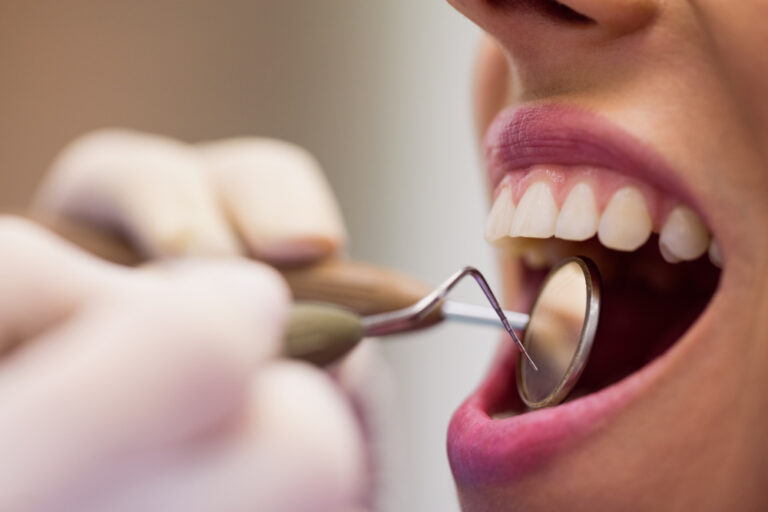
The dental implant is often considered a highly satisfying yet extremely necessary resolution from here. Having a dental implant before and after comparison will exemplify the dramatic makeover, rejuvenating a smile with an esthetic and full chewing function, as well as preserving jawbone health. Dental implants are artificial tooth roots, most often titanium, that are surgically inserted into the jawbone. They then integrate with the bony structure via a process known as osseointegration, creating a solid and stable foundation for a custom-made crown, bridge, or denture. For those individuals who have lost teeth due to extreme bruxism, implants produce a strong, long-lasting solution that closely approximates the feel and function of natural teeth.
Nevertheless, it’s important to bear in mind that although dental implants successfully substitute for teeth lost to bruxism, if the actual grinding is left untreated, it could very well jeopardize the implant’s function and survivability. The same excessive forces capable of wrecking natural teeth can bring harm to the osseointegration or trigger issues in the implant and restoration after the implant has been fitted. High degrees of clenching and grinding induced micro-movements to the screw at the least or could cause fractures to the implant or to the crown of the implant. So, in cases with bruxism, alleviating the bruxism itself has to be implemented as part of protocol and management strategy, in order to achieve ongoing success of the implant. A dentist would really recommend a custom night guard to be used in protecting the implants and natural teeth from the night grinding force, coupled with stress management, bite adjustments, and regular checkups on the implants to ensure their good health and stability into the future.
In conclusion, it is happening to be licitly concluded that grinding of teeth is far from being a benign habit. Its incessant pressure systematically diminishes natural dentition and supporting bone structures, most often leading to tooth loss. For those who reach this stage, dental implants offer a transformation with durable and esthetic restoration. “Dealing with bruxism is critical not just in the protection of natural teeth but in the success of dental implant treatment, and that speaks to the devastating potential of bruxism.” Early diagnosis and intervention are keys to preventing the progression of damage by bruxism and preserving a healthy, functional smile.
True beauty is deep. Although pale complexions and soft tresses are usually the manifestation of attraction, there exists one glow that is historically the most enchanting: the one that glitters from without-a reflection of health and all-around well-being, coupled with deep-rooted confidence. Thus, caring for the skin, hair, or self-confidence is not about fleeting trends or unattainable ideals: rather, it is to work on self-care from all fronts that may produce a quality of resilience and vibrancy from within.
The very basics of the fundamentals of glowing skin and perfect hair start with what you feed yourself. A balanced diet and nourishment lay the bedrock. Raw materials needed for such processes like regeneration of skin, collagen formation, and maintenance of hair follicle health made more available by vitamins, minerals, and antioxidants have an important role to play. For instance, Vitamin C is vital for collagen synthesis, keeping the skin firm and elastic, while Omega-3 fatty acids present in fatty fish and flaxseeds keep the skin hydrated and reduce inflammation. Biotin and other B vitamins help greatly in enhancing hair growth and strengthening it. On the flip side, eating a lot of processed food, sugars, and unhealthy fats may bring inflammation to the skin and breakouts to hair.
Alongside eating proper food and nutrition, one’s beauty is also highly contributed to by lifestyle factors. Sleep is often coined as “beauty sleep”. During deep sleep, the body repairs and regenerates itself, including the skin getting more blood flow, collagen reconstruction, and regulation of hormones. When a person does not get enough sleep, skin appears dull and empty, and that sleeplessness may also contribute to hair thinning. Exercise, considered a great thing, should never be neglected. It increases the circulation, bringing more oxygen and nutrients to the skin cells and hair follicles for a glow that indicates health. It also helps counteract stress, which could otherwise set off skin disorders such as acne and exacerbate hair loss. Stress is a major beauty killer since it increases cortisol levels, which break down collagen, interfere with skin barrier function, and alter hair growth cycles. Introducing mindfulness, meditation, or simply carving out time for hobbies and relaxation could have an incredible impact on your skin and hair’s resilience.
While much internal nurturing remains paramount, external care emphasizes another spectrum of maintaining skin and hair health. Keeping the skin barrier intact, addressing concerns, and boosting the skin’s natural glow can be achieved through a consistent and well-considered skincare routine suited to skin type. Gentle hair care, utilizing nourishing products and avoiding excessive heat styling, is good for protecting the hair shaft and supporting healthy growth. Some may feel self-conscious about various attributes and consider cosmetic alterations. It is interesting that a great number of female plastic surgeons embrace a more sophisticated view of beauty; they usually strive for enhancements that look entirely natural and give the patient confidence to stand on their own rather than embracing drastic changes. The clinicians are often on the same page philosophically, endorsing that aesthetic interventions should encompass and enhance an individual’s overall well-being so that they get help in feeling comfortable and confident in their own skin.
This said, deepest and truly long-lasting beauty comes from a holistic treatment that accounts for physical fitness, emotional health, and acceptance of self. When you regard your skin and hair as mere reflections of that raging vitality inside you, by focusing on providing nutrition for your body with whole foods, enough sleep, handling stress well, and methods of physical activity, you give the inner well-being release. Layered with those fine layers of conscious self-care and self-confidence will surely bear that true glow-rightfully recognized as pretty-the good kind of feeling of good, living well, the glisten of confidence-onset beauty that is indelible, and truly yours.
Transforming your smile can significantly impact your confidence and overall appearance. Understanding the range of available dental treatments is key to achieving the perfect smile makeover. By consulting with a dentist City of London, you can create a personalized plan that meets your unique needs.
In today’s fast-paced world, having a confident smile can be your best asset. Smile makeovers encompass various treatments designed to enhance both the function and aesthetics of your teeth. From teeth whitening to orthodontic treatments, these procedures aim to address individual concerns, ensuring you achieve the desired results. Consulting with an experienced dentist City of London is crucial to tailor a plan that suits your specific goals and lifestyle needs.
Teeth whitening for a brighter smile
Teeth whitening is one of the most popular cosmetic dental procedures. It offers a quick and effective solution for enhancing the brightness of your smile. Unlike over-the-counter products, professional teeth whitening provides more dramatic results in less time. Dentists use safe bleaching agents to break down stains and discoloration on the enamel, resulting in a visibly whiter smile. The process is straightforward, typically involving a single session or multiple applications depending on the severity of staining.
Besides improving aesthetics, whiter teeth can boost your self-esteem and make you feel more youthful. It’s essential to follow the dentist’s advice post-treatment to maintain the results for as long as possible. They might recommend avoiding certain foods and beverages that can cause staining, such as coffee or red wine. Overall, professional teeth whitening is a fantastic starting point for those looking to enhance their smile quickly and effectively.
However, it’s vital to have realistic expectations and understand that results may vary based on individual circumstances. While some may achieve the perfect shade in one session, others might need additional treatments for optimal results. This personalized approach ensures that each patient receives care tailored to their specific needs.
Dental bonding to fix minor imperfections
Dental bonding is another valuable tool in the realm of cosmetic dentistry, particularly for minor imperfections. This procedure involves applying a tooth-colored resin material to chipped, cracked, or discolored teeth. The material is sculpted into shape by the dentist before being hardened with a special light, which bonds it securely to the tooth.
The benefits of dental bonding are numerous—it’s minimally invasive, cost-effective, and typically completed in one visit. This makes it an attractive option for those seeking quick fixes for aesthetic concerns without undergoing extensive dental work. Additionally, dental bonding can be an excellent way to protect exposed roots or fill small cavities.
One of the primary advantages of this technique is its versatility in addressing various issues while blending seamlessly with natural teeth. As with any dental treatment, maintenance is essential; regular check-ups with your dentist will help ensure the longevity of bonded teeth.
Veneers and implants for lasting results
Veneers and implants offer more permanent solutions for those seeking dramatic improvements in their smiles. Veneers are thin shells crafted from porcelain or composite materials that cover the front surface of teeth. They are ideal for individuals looking to correct severe discoloration, uneven spacing, or worn enamel.
The process involves customizing each veneer to match the patient’s natural tooth color and shape perfectly. While veneers are primarily cosmetic, they also offer functional benefits by providing added strength and resilience to natural teeth.
On the other hand, dental implants serve as replacements for missing teeth by anchoring artificial roots into the jawbone. Implants provide exceptional stability and mimic natural tooth function, making them an excellent choice for restoring both aesthetics and oral health.
Orthodontic treatments for alignment
Orthodontic treatments play a crucial role in achieving well-aligned smiles through methods like braces or clear aligners. These techniques address misalignments such as crookedness or overcrowding that can affect not only appearance but also oral health. In some cases, unresolved orthodontic issues can lead to dental emergencies, highlighting the importance of timely care and consultation with specialists, including an emergency dentist if urgent problems arise.
Traditional metal braces remain highly effective; however, modern advancements have introduced more discreet options like ceramic braces or Invisalign aligners—a popular choice among adults seeking subtlety during treatment.
The success of orthodontic interventions largely depends on patient compliance; adhering strictly to guidelines provided by orthodontists ensures optimal results within expected timelines while minimizing potential setbacks along the way.
The ultimate goal remains consistent across all approaches—achieving an aligned bite that enhances both form and function while boosting overall self-confidence through improved aesthetics combined with better oral hygiene practices encouraged throughout treatment periods!
Fifteen years may have passed since Stereolab’s last album, but no amount of time – or retro-futurist aesthetics – can keep the Groop’s music from feeling pertinent. Instant Holograms on Metal Film, the follow-up to Not Music, airs out the despondent mood that record left fans with in all its tight propulsion, and even some of the headiness that has marked their whole career. Intuitive as it always feels, their approach seems to react first to the identification of a structural issue: “The goal is to manipulate/ Heavy hands to intimidate/ Snuff out the very idea of clarity/ Strangle your longing for truth and trust,” Laetitia Sadier sings. So Instant Holograms, as unmistakably and engagingly Stereolab as its predecessor, leans into more humanist impulses, resulting in one of their most open-hearted, forward-looking, and essential collections to date.
1. Mystical Plosives
A bubbling synth is sequenced over a slightly nervier one in this brief instrumental, signalling an ascent before the groove is locked in.
2. Aerial Troubles
“The numbing is not working any more, an unfillable hole,” Laetitia Sadier proclaims in the first lines of the album. So the possibilities start spinning out, with her bandmates helping to articulate the existential dead end. Undefined as the future may seem, the band has fully kicked into gear, marching towards it.
3. Melodie Is a Wound
The song is curiously titled given that Sadier carries the melodic weight of the song, singing alone this time; yet every element of the song strings it along, mesmerizing all the way through its nearly 7-minute runtime. Just when you think the whole thing’s about to disintegrate, the band picks itself back up, complicating the arrangement as a means of sustaining it. It ponders whether “truthfulness has fallen in desuetude,” which is a mouthful, but the group stretches the question mark more than anything.
4. Immortal Hands
Airier and more open-hearted, ‘Immortal Hands’ fashions a satisfying funk groove around the halfway point, landing somewhere between futurism and retro.
5. Vermona F Transistor
The narrator seems to stick to the role of cultural observer, but ultimately takes matters into her own hands: “I’m the creator of this reality – not the joker who pretends a god to be.” The song lights up with Rob Frye’s saxophone and flute, while Australian-British songwriter and producer Molly Read, the late Mary Hansen’s niece, colours it with “special guest backing vocals.”
6. Le Coeur Et La Force
The rhythm section is kept minimal, letting the enchanting, carefully structured multi-part harmonies breathe. Frye’s saxophones one again act as a foil, climbing up for a stunning view.
7. Electrified Teenybop!
Now’s the time for Andy Ramsay’s to get forceful; the synths to squiggle; distortion and phaser applied all over the guitar. Exclamation mark warranted!
8. Transmuted Matter
Over twinkling mallet and graceful bass, Sadler splits the difference between steady resolve and heavenly transcendence; or, in her words, “fully human fully divine, entwined.” “What do you see through the eye of the heart?” she asks, giving us a taste of the answer through melody alone.
9. Esemplastic Creeping Eruption
The title points to one of the album’s most cerebral and knotty tracks, which rings true, yet it’s also one of the most cathartic. While Sadler’s diction has hardened, spiritually it’s in the same wavelength as the more direct ‘Tansmuted Matter’, speaking of the “exploration of inner world.” Another line, “Not perfection but wholeness,” seems to align with Stereolab’s MO. To the “dark immanence” she recognizes early on, Sadler resolves, “I will abide,” her male counterparts reminding her of the light at the other end. It’s enough to prompt the listener to stick around for a few more tracks.
10. If You Remember I Forgot How to Dream Pt.1
Sadler sings of “dissolv[ing] into longing,” yet the track is tight and poppy, far from the album’s more ethereal wanderings. “It’s because I am you, it’s because you are me,” she repeats, and naturally the song is split in two; halfway between embodying and breaking the “mirage of separateness.”
11. Flashes From Everyone
The synergy between the musician’s is most palpable on ‘Flashes From Everyone’, which is fitting, given how it drives home the point of unity – a historic theme, blurred, it seems with the more personal “longing to reunite.” The track is rich and kaleidoscopic, a journey that feels, if not exactly complete, then wholly true.
12. Colour Television
A song called ‘Colour Television’ on a Stereolab record titled Instant Holograms on Metal Film – you bet there’s no commentary on social media, AI, or the internet at large here. Yet the imposition of “universal narrative of progress and development and of civilisation,” naturally, still feels pertinent. But the group jams for long enough to arrive at a less dour conclusion: “Open are the possibilities!”
13. If You Remember I Forgot How to Dream Pt.1
If you had to describe the intent behind Stereolab’s reunion, you might go with “explore without fear the rhizomic maze,” the opening line of the final track on their new album. This part is about remembering, affirmation, embodiment, and “the power to CHOOSE.” The phrase “soften into longing” feels truly at home here, the instruments rippling out and voices joining together.
Walking into Designing the Gesture of Power doesn’t feel like entering a typical gallery. It’s quieter than you expect — not in volume, but in tone. Nothing shouts. There are no flashing signs or didactic panels commanding your attention. Instead, there’s a kind of poised restraint — surfaces gleaming, objects placed with an almost eerie exactness. Curated by Purva Kundaje, the space is laid out with surgical precision, more like a laboratory than a lounge. At first, it feels familiar, domestic even. But that comfort doesn’t last long. The deeper you move into the overall space, the more your body begins to notice itself—like a specimen under observation. You become hyper-aware of how you’re standing. How you’re holding your arms. Whether your hands are doing the “right” thing.
There’s a controlled choreography at work here — not one you perform, but one you recall. From childhood maybe, or dinner tables where the rules weren’t written but always enforced. That’s the uncanny current running beneath everything: gestures you didn’t realize you learned, now mirrored back at you through steel and form.
One of the first works that lingered with me didn’t shout for attention — it just sat there, composed and clinical. A stainless-steel surface held pieces of raw meat and fruit, positioned with a precision that made them feel less like food and more like offerings. Or evidence. The materials are fleshy, bright, and oddly static. You expect them to feel organic, but instead, they register as inert, frozen mid-gesture. There’s no rot, no mess — only containment. You realise this isn’t a still life; it’s a freeze-frame of ritual. And in that pause, something disquieting begins to take root.
Elsewhere, hands are the main actors — or perhaps the subjects. In a triptych of photographs, a series of hand positions unfold with quiet intensity. At first glance, it seems almost instructional: how to hold, how to receive, how to behave. The lighting is soft, the images muted, but there’s a tension lurking in the grips, the finger placements. You begin to recognise the script. Not written, but rehearsed in dinner manners, in etiquette lessons, in the way you were told to pass the salt without reaching across the table. What’s unsettling isn’t that these poses are unfamiliar — it’s that they’re too familiar. You’ve done this before. You still do.
The materials across the show share a certain sheen — polished metal, tight compositions, clean lines. There’s a sterility that recalls design studios or surgical theatres, and yet these are spaces of intimacy: kitchens, dining rooms, the quiet rituals of domestic life. Kundaje’s architectural training comes through here — not just in structure, but in how the body is positioned in relation to objects. Everything seems designed to be touched, but hesitantly. The way a scalpel invites the hand, but with a warning.
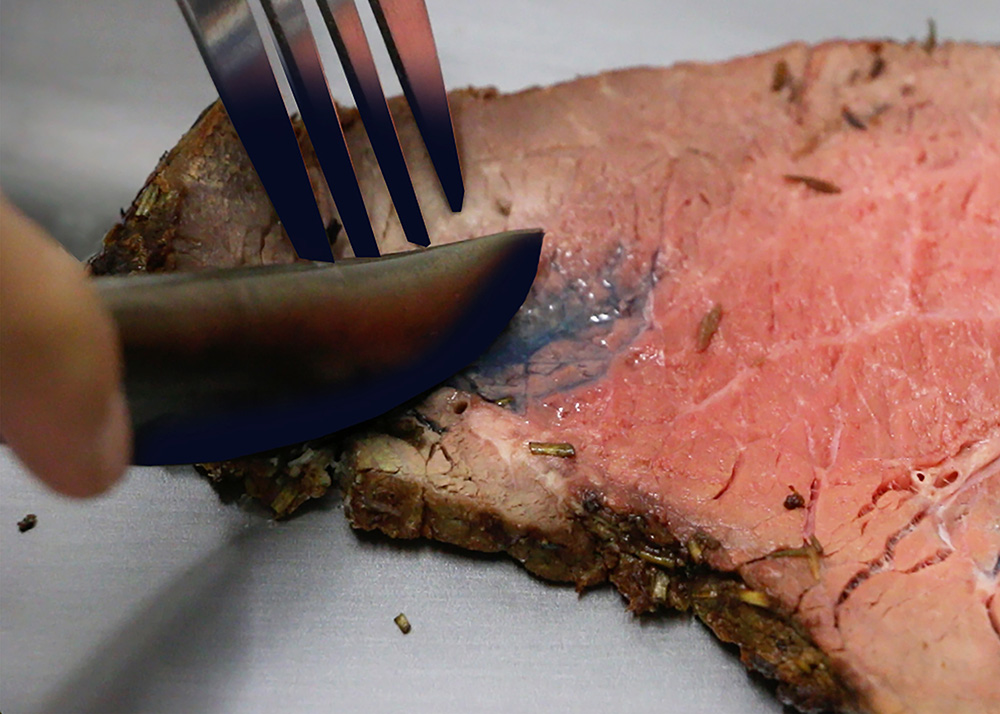
It was a small gesture that stayed with me the longest. A cold-handled knife resting against a slice of meat — not cutting, just touching. From the point of contact, a slow seep of pigment blooms outward, like a wound that has decided not to close. It’s restrained and almost tender, but also heavy with implication. Violence here isn’t loud or bloody. It’s slow, polite, and entirely procedural. You begin to think: maybe that’s what makes it so effective.
What Kundaje manages is a kind of whispered authority — the kind that governs not with commands but with calibration. A slight change in weight. A curvature that suggests, not enforces. It’s a choreography you’ve absorbed without realizing. You follow without protest because it never asked you outright.
By the end, you’re not just observing these pieces. You’re implicated in them. You leave the space not disturbed, exactly, but more alert. To posture. To muscle memory. To the quiet power of objects that claim to be neutral. And when you sit down to dinner next, fork in hand, you might find yourself pausing — not out of doubt, but out of recognition.
Buying art isn’t just for collectors with deep pockets or encyclopedic knowledge. With platforms like Artsper, discovering and owning your first piece of contemporary art is easier—and more exciting—than ever. But how do you navigate the sea of options and find the artwork that’s truly right for you?
Here’s a smart, not-so-obvious guide to help you make a choice you’ll love.
Takashi Murakami, Multicolor Double Face White, 2020 available on Artsper
Start With the Categories That Matter
Artsper’s homepage gives you curated sections to start your journey—these aren’t just marketing labels, they’re actually strategic entry points:
Special Offers: Great if you’re on a budget, especially for those looking to start with smaller pieces.
Young Talents: Discover the stars of tomorrow at more accessible prices.
Artworks by Best-Selling Artists: These are tried-and-tested names—perfect if you want something with strong resale potential.
New & Remarkable Artists: For collectors who like to be a step ahead.
Master Artists: Think of these as the blue-chip stocks of the art world—more expensive, but a safer long-term investment.
Go for a Print — Great Value, Big Impact
If it’s your first purchase, consider starting with a limited edition print. They’re signed, numbered, and collectible.
Our recommendations:
JonOne – JonOne, born in 1963 in Harlem, New York, is a self-taught artist of Dominican heritage. He began tagging subway trains under the name Jon156 at age 17, viewing the subway as “a museum that runs through the city.” In his artworks urban energy meets abstract expressionism. Highly collectible and dynamic.
Miss.Tic – Miss.Tic, born in 1956, in Montmartre, Paris, was a pioneering French poet and visual artist, renowned for her stenciled street art that graced the walls of Paris for decades. Her art uses language as both a tool of rebellion and a means to interpret the world: “I said to myself: first I will write poems. Then: we need images with the poems. I started with self-portraits, then I continued to other women”.
C215 – C215 is a mysterious title which may refer to a Pantone color or a chemical formula. But behind this coded name is an influential street artist Christian Guémy, aka C215, who was born in France in 1973.A master of the stencil, his portraits add personality to any wall—and his pieces are seeing rising demand.
JonOne, The stories of kings and queens, 2022 available on Artsper
Watch the Trends (and Be Quick!)
Some artists, movements and mediums have been seeing a spike in collector interest recently. If you’re looking for a savvy purchase, these are ones to watch:
Artist of the moment: Matthieu Delfini, a self-taught French painter, originally from southeastern France and now based in Paris. He began painting in 2019 after an accident left him immobilized, turning to art as a form of healing. Inspired by the landscapes of his youth, his work blends vibrant colors and dreamlike horizons, exploring freedom and emotion. He says, “My art is a window to how I feel, a way to reconnect with what’s essential.”
A must-see art movement: Pop Art, derived from “popular art,” is a movement that emerged in the UK in the 1950s before gaining global recognition. This influential artistic movement has shaped visual arts, music, and fashion, with Pop Art painting standing out as one of the most recognizable and sought-after styles in contemporary art. Characterized by bold colors, mass-produced imagery, and references to consumer culture, Pop Art remains a defining force in modern artistic expression.
Sculpture on the rise: Bronze is one of the oldest materials used in art, dating back to around 2800 BC, when it was first used to create tools and sculptures in ancient civilizations such as Mesopotamia, Egypt, and China. Today it continues to captivate with its enduring appeal, blending tradition and innovation in the modern art world. On Artsper, you can find bronze works by renowned contemporary artists, from Giacometti’s surreal, elongated figures to the whimsical butterflies and still-life sculptures of Philippe Pasqua.
Nando Kallweit, König, 2021 available on Artsper
Crush of the Month: What Our Team Loves Right Now
Each month, the Artsper team shares its latest love-at-first-sight. Here’s our favorite for May:
“I’m obsessed with the textured canvases of Antoine Gaussin—they bring depth to any room.”
“Sephora Venites is one to watch; her floral inspired works are creative and humoristic.”
“For photography, you can’t go wrong with Jan Waanders.”
Sephora Venites, The Floral Paradox, Circa 2018 available on Artsper
Final Tip: Trust Your Instincts, But Don’t Be Afraid to Ask
Buying art is personal. If something makes you stop scrolling, it’s probably worth a closer look. You can also contact the Artsper team directly for guidance—they’ll help with framing, shipping, and even recommendations tailored to your taste.
Pulp have shared a video for ‘Got to Have Love’, the second preview of their comeback LP, More. The sweeping, disco-inflected track follows ‘Spike Island’, which made our list of the best songs of April. Check out the Jarvis Cocker-directed clip below.
Cocker described ‘Got to Have Love’ as “a slightly hysterical song that tries to talk about love as I see it now,” continuing:
Love is a word I was unable to say until I was approaching 40. I listened to love songs all the time but couldn’t use the word in real life. The words to this song are me having a word with myself about this state of affairs. I gave myself a real talking-to.
I have now learnt how to say it whilst keeping a straight face.
You’ve got to have love.
Oh yes you have.
More is set for release on June 6 via Rough Trade.
Wednesday made their television debut on The Late Show With Stephen Colbert last night, performing their brand new single ‘Elderberry Wine’. It’s a particularly wistful rendition of the track, which came out on Wednesday and marks the Asheville, North Carolina band’s first new music since Rat Saw God. Watch it go down below.
Last September, Wednesday singer-guitarist Karly Hartzman joined guitarist and vocalist MJ Lenderman on his late-night TV debut, playing ‘Wristwatch’ on The Tonight Show Starring Jimmy Fallon. Though Lenderman recently revealed that he will no longer be touring with Wednesday, he’s still part of the band as far as recording goes.
There’s so much music coming out all the time that it’s hard to keep track. On those days when the influx of new tracks is particularly overwhelming, we sift through the noise to bring you a curated list of the most interesting new releases (the best of which will be added to our Best New Songs playlist). Below, check out our track roundup for Wednesday, May 21, 2025.
Wednesday – ‘Elderberry Wine’
This is a special kind of Wednesday for those of us who have been anticipating new music from the North Carolina band since 2023’s Rat Saw God; ‘Elderberry Wine’ is their first original track since then/ It sounds way more easygoing than ‘Bull Believer’, the chaotic introduction to that LP, but of course, there’s more to the twangy, gorgeous arrangement than meets the eye. “Elderberry is known as a healing fruit, and is an ingredient in many tonics and syrups to aid the immune system. One time, however, my sister consumed them raw, and it immediately induced vomiting,” bandleader Karly Hartzman explained. “So ‘Elderberry Wine’ is ultimately a love song about creating just the right environment for fulfillment. There’s a delicate balance that needs to be created, especially in love, for two lives to intersect without poisoning each other.”
The Armed – ‘Well Made Play’
A new album rollout from the Armed, a new mystery to unpack. According to lead singer Tony Wolski, The Future Is Here and Everything Needs to Be Destroyed is “music for a statistically wealthy population that somehow can’t afford food or medicine — endlessly scrolling past vacation photos, gym selfies, and images of child amputees in the same feed. It reflects the dissociation required just to exist in that reality.” Lead single ‘Well Made Play’ is a free jazz-inspired freakout that ends before you have a chance to digest it.
They Are Gutting a Body of Water – ‘AMERICAN FOOD’
TAGABOW, the highly influential shoegaze band newly signed to ATO Records, have shared the hazy, hypnotic new single ‘AMERICAN FOOD’. “All them atrocities is far from our minds, when the vices help us thru,” Douglas Dulgarian remarked.
Fazerdaze – ‘Motorway’
New Zealand artist Fazerdaze is back with a new song called ‘Motorway’, which is pretty gritty and, of course, driving. It rose out of “a feeling of being trapped between a city and a relationship, searching for home in both, but finding it in neither,” Amelia Murray shared. “It explores an enmeshment with familiarity; and the motorway becoming a symbol of that for me; repetitive, a loop to break out of, a false sense of freedom.”
Kieran Hebden and William Tyler – ‘If I Had a Boat’ (Lyle Lovett Cover)
Four Tet’s Kieran Hebden and Nashville guitarist William Tyler have announced a new collaborative album, 41 Longfield Street Late ‘80s. Leading the LP is a patient, gorgeously pristine 11-minute cover of Lyle Lovett’s ‘If I Had a Boat’.
Alaska Reid – ‘Big Drops’
Avery Tucker, formerly half of Girlpool, has unveiled his debut solo single. ‘Big Drops’ was co-written and co-produced with Alaska Reid. It’s “a story about loving and losing someone who is finding themselves time and time again overtaken by the big drop,” according to Tucker, and the way he uses the word “big” reminds me of Reid’s own Big Bunny. It’s tender and affecting.
Yaya Bey – ‘raisins’
Yaya Bey has shared another preview of her forthcoming record do it afraid, and it’s quietly inspiring.“It’s hard to sum up ‘raisins’ in a small burb but it’s the pursuit of love, joy and freedom with the full knowing that there will also be pain,” Bey said. “It’s a surrender. It’s me giving myself permission to dream. It might not happen. But maybe the real joy is not in the materialization but in the dreaming itself. The name is inspired by a Langston Hughes poem called Harlem where he says ‘What happens to a dream deferred? Does it dry up like a raisin in the sun?’”
Madeline Kenney – ‘Scoop’
Madeline Kenney has shared ‘Scoop’, the latest single from her forthcoming LP Kiss from the Balcony. It’s a mesmerizing track, and I love the way the electric guitar and synth scrape against the melody. “The original title was ‘Guitar Scoop Heart Flip’ because of the guitar melodies and lyrical themes; I was thinking a lot about what is expected of a “cool girl”, how detachment is admired in modern relationships, and how the bathroom in a bar is a sacred space for girls (strangers!) to hold each other in their shared, odd, conditioned realities,” Kenney reflected.
Alison Goldfrapp – ‘Reverberotic’
Alison Goldfrapp has teased her new LP Flux with a playful new track, ‘Reverberotic’. It’s out via her own imprint, A.G. Records. “If you’re lucky enough to have the option, owning your own masters feels like a no-brainer these days,” she commented. “While being a solo independent artist comes with its own set of challenges, it truly suits me and has given myself and the people I work with a sense of empowerment and invigoration for this album…”
Jacques Greene and Nosaj Thing – ‘Unknown’
Jacques Greene and Nosaj Thing have teamed up for the latest in a string of collaborations, the alluring ‘Unknown’. It’s accompanied by a remix from Audion. “I think this is a song that sets us on a path, a clear destination,” Jacques Greene explained. “It’s so interesting how this is one of those tracks that just happened. It’s one of those weird things where we took a walk around your neighbourhood, and when we got back to the studio we just started playing. Then we just looked up an hour later and 85% of the track was there.” Nosaj Thing added: “I would say this is the first track that we were both locked in on what our intentions were. We were both in flow state.”
Robbie Williams – ‘Rocket’ [feat. Black Sabbath’s Tony Iommi]
Robbie Williams isn’t exactly associated with the genre known as “Britpop,” but hey, neither is A.G. Cook. Nevertheless, Britpop is the title of his just-announced LP, which is led by the Tony Iommi-featuring ‘Rocket’. Interesting move! “I set out to create the album that I wanted to write and release after I left Take That in 1995,” Williams said. “It was the peak of Britpop and a golden age for British Music. I’ve worked with some of my heroes on this album; it’s raw, there are more guitars and it’s an album that’s even more upbeat and anthemic than usual. There’s some ‘Brit’ in there and there’s certainly some ‘pop’ too – I’m immensely proud of this as a body of work and I’m excited for fans to hear this album. I also can’t wait to perform a song or two from it on my upcoming ‘BRITPOP’ tour, which I’m opening in the UK, naturally.”
Night Tapes – ‘pacifico’
Night Tapes have signed to Nettwerk and announced their debut LP, portals // polarities, arriving September 26. It’s led by the transportive trip-hop cut ‘pacifico’,” which “was written after our friend returned from Mexico (San Jose del Pacifico) and told us stories about how beautiful it was,” according to Iiris Vesik. “It’s about our idea of Pacifico — like a state of mind you can reach, as we still haven’t been there.”
Mal Blum – ‘Killer’
Mal Blum has shared a new single from The Villain, their first LP in five years. “I want to be very clear about what this song is about,” they said. “The song ‘Killer’ is specifically about internalized transphobia and unconsciously absorbing the belief that you are bad. It is a response to the villainization of trans people, the propaganda and messaging we constantly receive that we are inherently devious and immoral. It also specifically refers to a particular flavor of transphobia that refuses to see transmasculine people as we are, instead considering us only as dangerous would-be assassins and butchers of our own supposed girlhoods. ‘Killer’ is a conscious attempt to reclaim and play with that narrative.”
mark william lewis – ‘Tomorrow Is Perfect’
bar italia’s former drummer mark william lewis has signed to A24’s record label A24 Music, marking the announcement with the entrancing new song ‘Tomorrow Is Perfect’. “I wrote Tomorrow is Perfect at home in London,” lewis shared. “I wanted to capture and describe all of the images and places that meant something to me at the time and collage them together in one song.”
Surusinghe – ‘Kinda Like That’ [feat. Kassie Krut]
London-via-Melbourne electronic producer Surusinghe has enlisted Kassie Krut for a new club track, ‘Kinda Like That’. Co-produced by Cameo Blush, it’s the second single off the forthcoming EP i can’t remember the name of this, but that’s ok.
Perennial – ‘Baby, Are You Abstract?’
Perennial have announced an expanded edition of last year’s Art History 11 additional tracks, including the just-released rager ‘Baby, Are You Abstract?’. You’ll find yourself shouting along the titular chorus before you know it.
White Lies – ‘Nothing on Me’
White Lies have returned with their first new music in three years, the propulsive and surprisingly frenetic ‘Nothing on Me’. “This track welcomes you into the collaborative present mind of White Lies. It’s somewhat reckless, unhinged, full of competing ideas,” the band explained. “There is a disregard for any external influences, pressures, or expectations. We’re driving with no brakes or seat-belts. Lyrically and conceptually it’s a rebirth, and an introduction.”
“The initial musical ideas came from having a synth sequence that is in a different time signature to the rest of the band,” they added. “This is something I borrowed a lot from the 70’s prog that I love and listened to a lot during the making of this record. I listened to records by Genesis, Chris Squier, Yes, Utopia and Gong who all extensively make use of this in their music. The rhythm is a classic motorik beat borrowed from the krautrock that we all love and is a motif we’ve used a lot across our careers in White Lies. The guitar melody is almost jolly and absurdist like the nursery rhyme or something you’d hear an ice cream van playing. It clashes, I think, to the feel of the music. This is inspired by Steve Hillage and his album Motivation Radio where he often utilizes similar melodies. All of this feeds a cacophony and an overload of information that disorients and confuses. The lyrics reflect the difficulties we can all have in relating to people even when they are close to us, especially in the heat of an argument or disagreement and how overwhelming that can be. This is probably the fastest most intense song we’ve ever written and was further developed in rehearsals, with Seth Evans (formerly of Black Midi) on keys, and then performed in the studio. The foundations of this track are one take played live.”
Guedra Guedra – ‘Drift of Drummer’
Moroccan producer Abdellah M. Hassak, who records as Guedra Guedra, has signed to the Domino imprint Smugglers Way, which will release his new album MUTANT on August 29. Lead single ‘Drift of Drummer’ comes paired with a video from director Romain Cherbonnier. “In African traditions, rhythm especially in its polyrhythmic form is not merely a pulse or a measure: it is a cartography of life,” Hassak shared. “It expresses social complexity, layers of oral history, community dynamics, and the spiritual dimensions of existence. Transmitting this richness from generation to generation through practice and listening is also an act of resistance, a way of preserving knowledge and sensibilities that dominant narratives have long tried to marginalize or simplify.”