Every woman deserves clothing that fits beautifully, feels amazing, and gives her confidence from the inside out. SPANX has become a household name for doing exactly that. For years, the brand has been revolutionizing how women dress, blending comfort, shaping technology, and modern design to create pieces that empower confidence in every curve.
From shapewear to denim and activewear, SPANX has mastered the art of creating styles that move with your body and highlight your natural shape. Their best sellers are not just popular because they look good; they are loved because they make women feel incredible.
Below, we explore five SPANX best sellers that have won over customers worldwide. These are pieces that perfectly combine function, comfort, and fashion, giving you wardrobe staples that fit seamlessly into every part of your life.
1. SPANX Booty Boost Side Pocket Leggings – $110
The Booty Boost Side Pocket Leggings are one of SPANX’s most beloved items, and it is easy to see why. Priced at $110, these leggings are engineered for both performance and everyday style. They offer the perfect balance of shaping and comfort, making them an essential piece for anyone who wants to look sleek and feel supported.
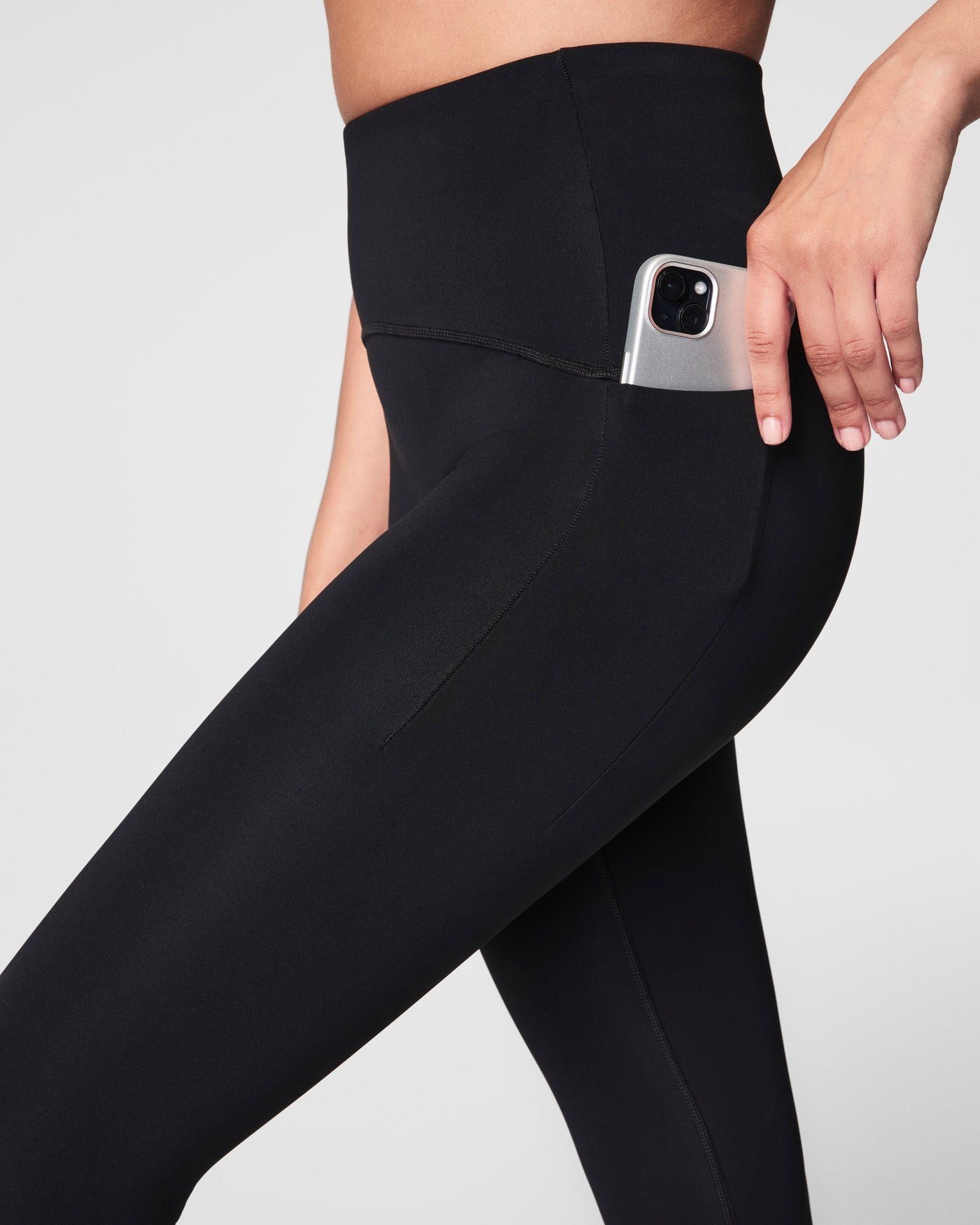
Made with the brand’s signature performance fabric, these leggings provide medium compression that gently sculpts your figure. The high contoured waistband smooths the midsection while offering a secure, stay-put fit. What makes them truly special is their built-in booty lift, which subtly enhances your curves and creates a flattering silhouette.
Practicality is also a big part of the design. The side drop-in pockets are super discreet, giving you a place to keep your phone, keys, or card without disrupting the sleek profile. These leggings are available in sizes XS through 3X and come in multiple colors, including the classic Very Black.
The fabric composition is 64% nylon and 36% elastane, giving them a smooth, second-skin feel that moves with you through any activity. Whether you are working out, running errands, or dressing up a casual look, these leggings are designed to keep up with your busy lifestyle.
Thousands of women swear by these leggings because they do what few others can: they make you look polished, feel supported, and stay comfortable all day long.
2. SPANX Get Moving Cropped Square Neck Shelf Tank – $68
The Get Moving Cropped Square Neck Shelf Tank is a perfect blend of performance and sophistication. Retailing for $68, it proves that activewear can be both functional and fashionable.
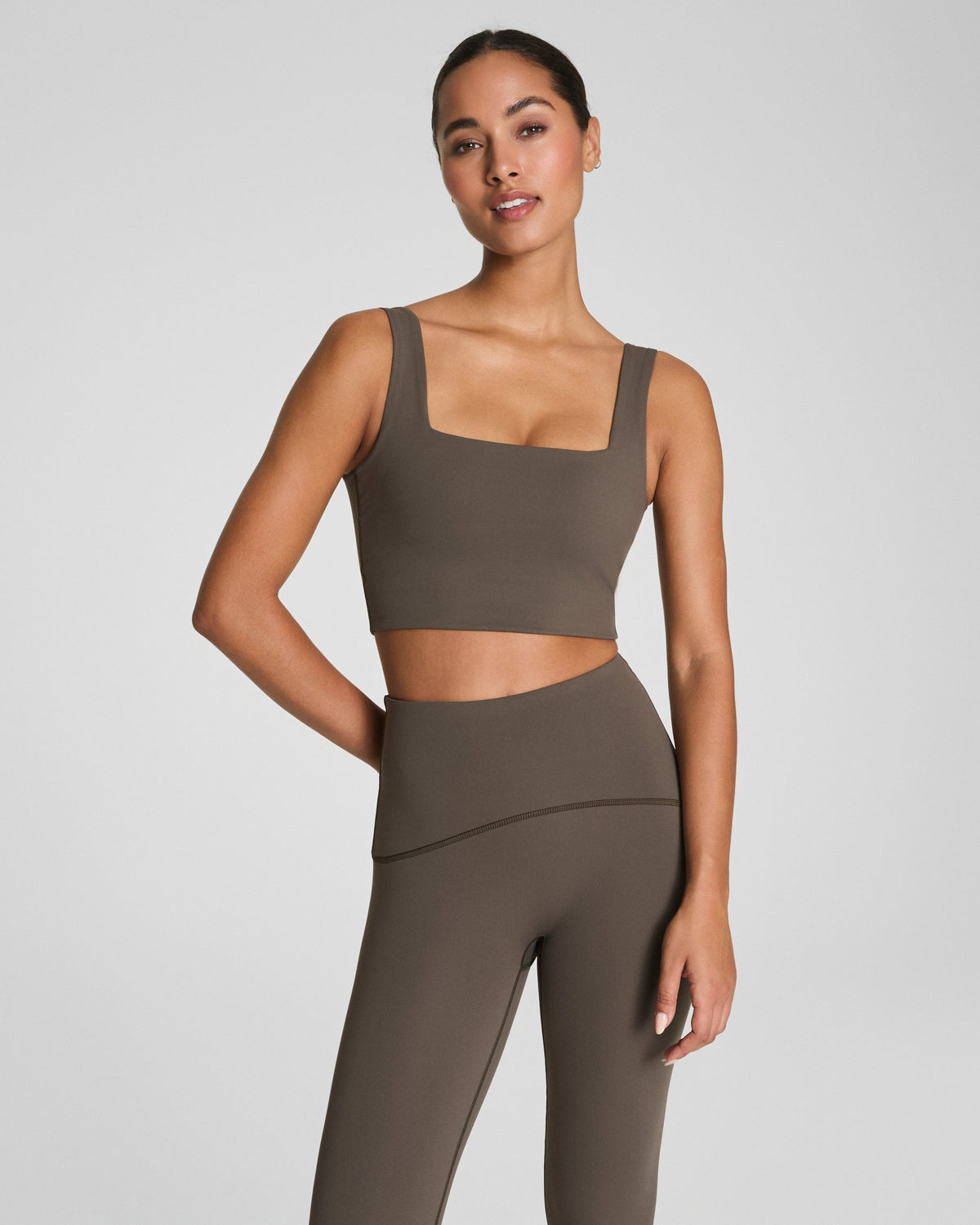
This tank is made from breathable, sweat-wicking, and quick-drying performance fabric, which keeps you cool and comfortable through your toughest workouts or longest days. The four-way stretch material allows total freedom of movement, so it adapts perfectly to your body without feeling restrictive.
The built-in shelf bra with removable pads adds practical support, eliminating the need for layering. Its square neckline gives it a modern, structured look that feels more like a chic top than typical activewear. The cropped silhouette makes it ideal for pairing with high-waisted leggings, shorts, or even jeans for a casual yet elevated outfit.
Available in several colors, including the beautifully neutral Mineral, this top is crafted from 64% nylon and 36% elastane, ensuring durability and stretch. It is soft against the skin and designed to retain its shape even after multiple washes.
The Get Moving Cropped Tank is perfect for those who like their workout clothes to multitask. It transitions effortlessly from the gym to brunch or even a relaxed evening out. It is proof that feeling strong and looking stylish can go hand in hand.
3. SPANX Booty Boost 7/8 Leggings – $98
If you love leggings that shape, support, and move with you, the Booty Boost 7/8 Leggings are a must-have. Priced at $98, these leggings are a slightly cropped version of SPANX’s iconic design, offering the same sculpting power with a modern twist.
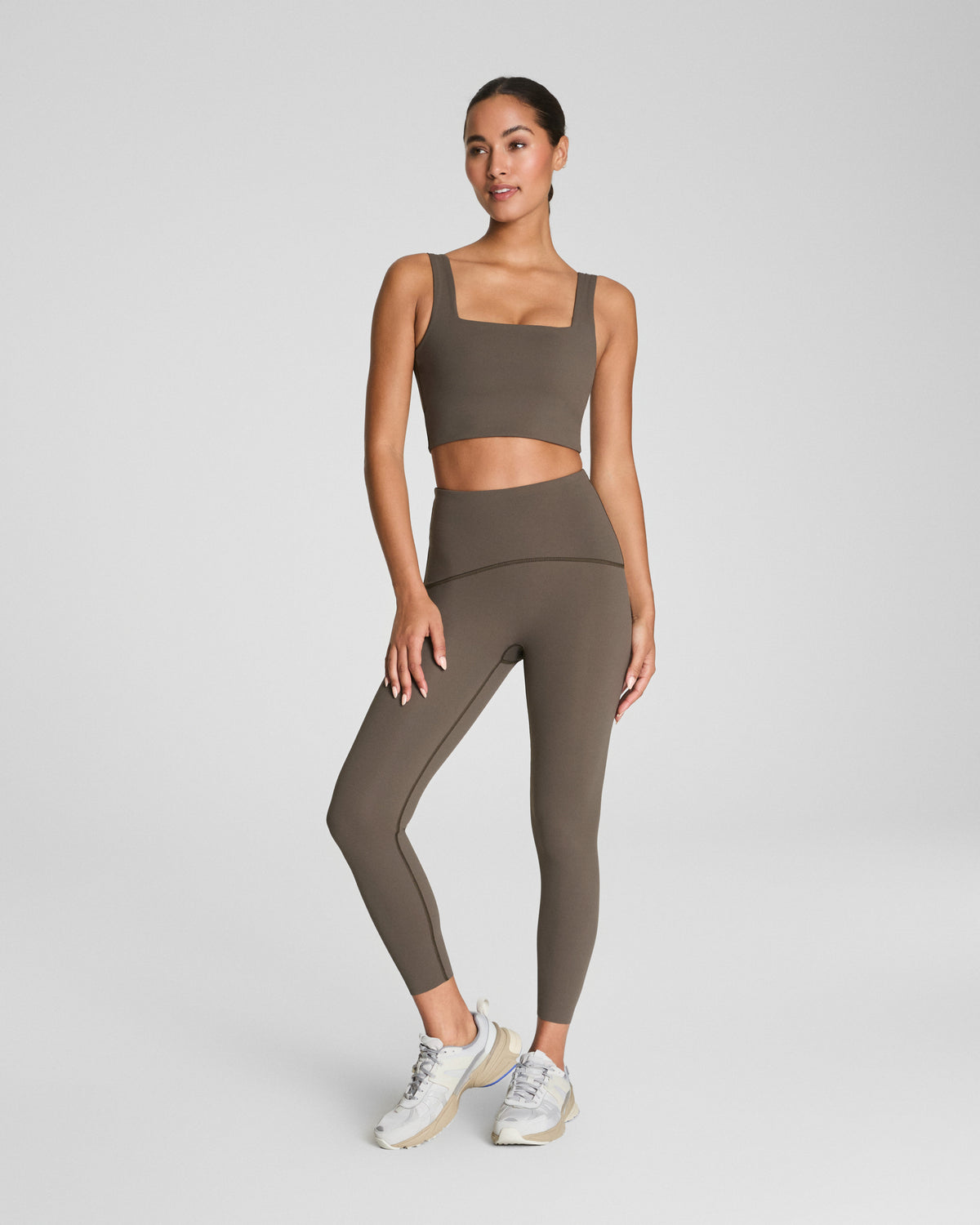
The Booty Boost 7/8 Leggings are made with SPANX’s premium performance fabric that provides medium compression for a smooth, flattering fit. The high-rise contoured waistband is engineered to stay in place while creating a sleek, hourglass shape. The built-in booty lift enhances your natural curves, helping you look toned and confident from every angle.
The 7/8 length hits just above the ankle, making it ideal for all seasons. It pairs perfectly with sneakers, slides, or even boots for an athleisure-inspired look. The fabric is breathable, sweat-wicking, and quick-drying, keeping you comfortable no matter where your day takes you.
Crafted from 64% nylon and 36% elastane, these leggings retain their softness and structure over time. They are available in inclusive sizing from XS to 3X, and the Mineral color adds an earthy, modern touch that complements any wardrobe.
These leggings are versatile enough for workouts, errands, or lounging at home. They prove that performance wear can be flattering, stylish, and endlessly comfortable.
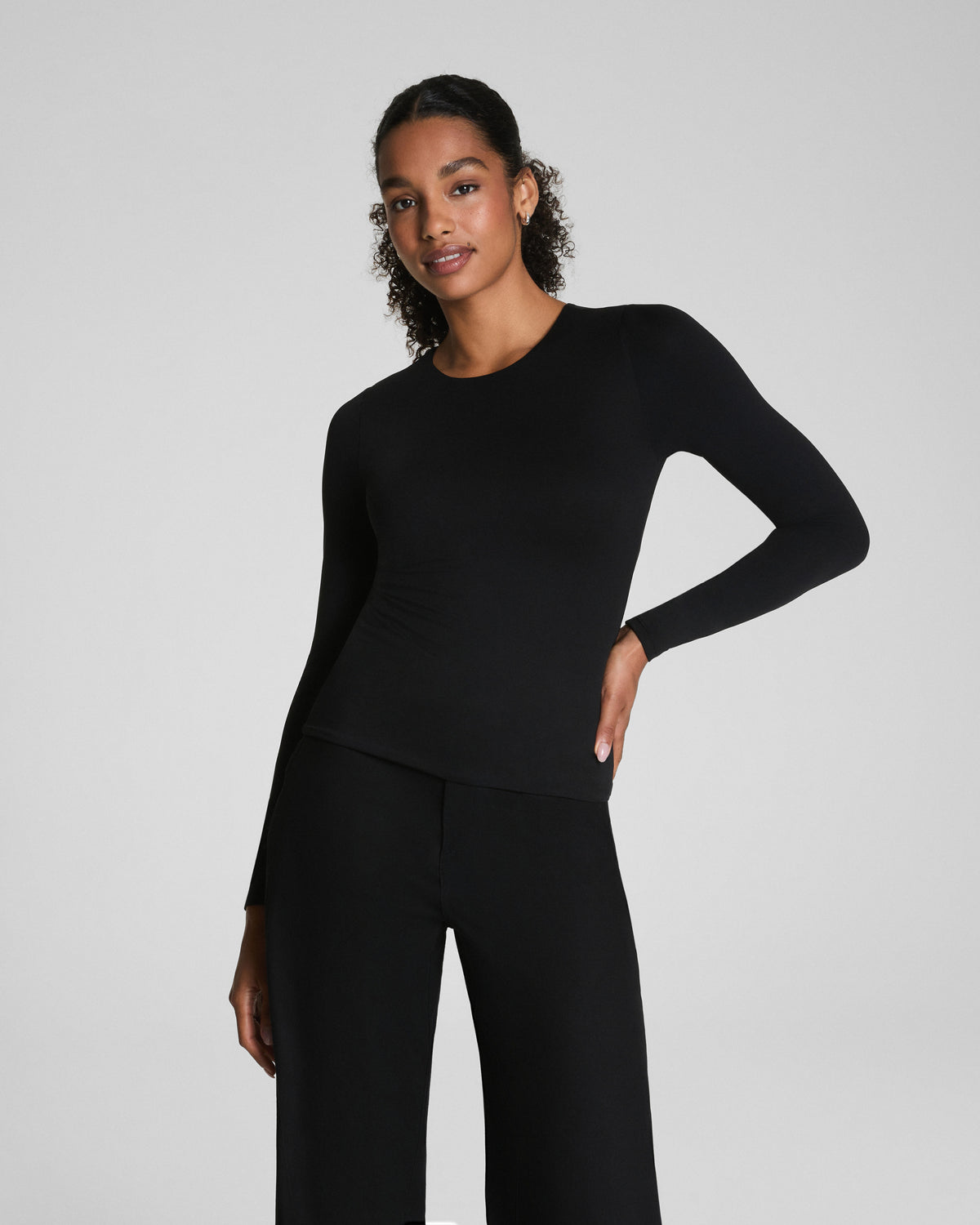
4. SPANX Smooth Jersey Crewneck Long Sleeve Top – $68
The Smooth Jersey Crewneck Long Sleeve Top takes the idea of a wardrobe basic and makes it extraordinary. Priced at $68, this top is an everyday essential that looks polished and feels incredibly soft.
Made from a double-layer jersey fabric, it offers light compression that smooths your figure while maintaining maximum comfort. The result is a fit that gently hugs your curves without feeling tight. The four-way stretch ensures total flexibility, while the quick-drying material keeps you cool and comfortable throughout the day.
The fabric blend of 67% nylon and 33% elastane gives this top a luxurious texture and durability. Its body-skimming fit provides a sleek, flattering silhouette that works beautifully on its own or layered under jackets and blazers.
Available in Classic Black and Sandstone, the Smooth Jersey Top is easy to style for any occasion. Pair it with leggings for a streamlined athleisure look or tuck it into jeans or tailored pants for a more polished outfit.
What sets this top apart is its simplicity. It looks effortless but feels elevated, making it a piece you can wear again and again. It is the kind of staple that quietly ties your wardrobe together, offering comfort, versatility, and timeless appeal.
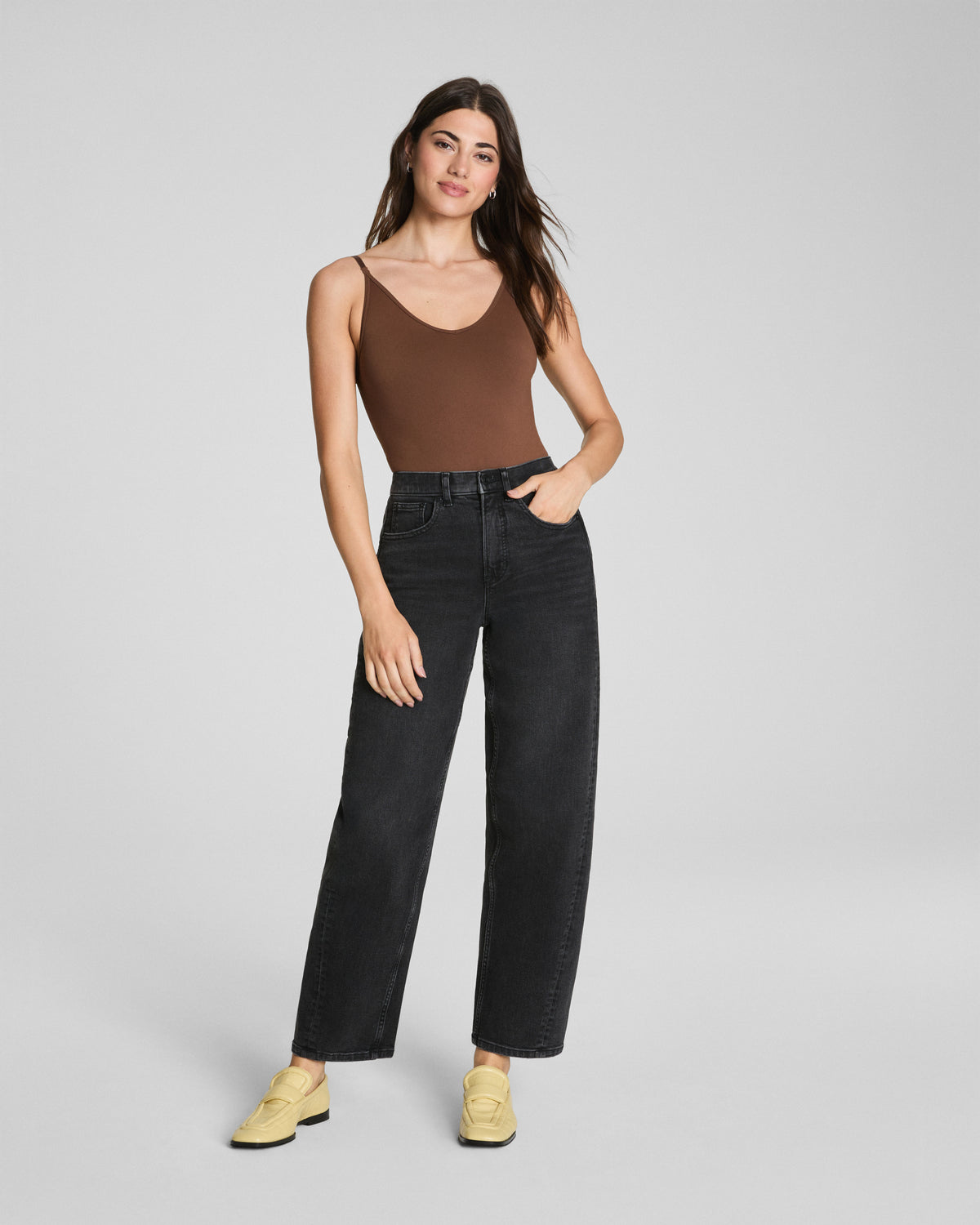
5. SPANX Authentic 360™ Barrel Leg Jeans – $158
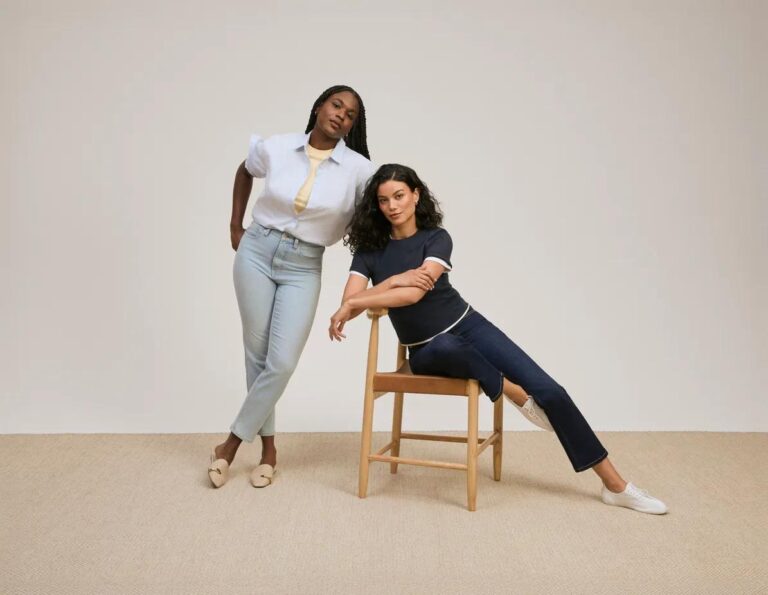
If there is one piece that perfectly showcases SPANX’s mastery of both comfort and design, it is the Authentic 360™ Barrel Leg Jeans. Priced at $158, these jeans are a complete game changer in denim.
Made from premium four-way stretch denim, these jeans provide 360-degree shaping that targets your tummy, waist, and back. The built-in shaping panel smooths and supports, giving you that effortless, put-together look from every angle. Despite their structured appearance, the jeans feel soft and flexible, allowing you to move comfortably all day long.
The barrel leg silhouette is modern and fashion-forward, offering a relaxed fit through the thighs that tapers gently at the ankle. This shape flatters every body type while offering a refreshing alternative to traditional skinny or straight-leg jeans.
Every detail has been thoughtfully designed, from the classic five-pocket layout to the zip and button closure and premium SPANX branding. The jeans are available in a versatile Carbon color and come in Petite (26” inseam), Regular (28”), and Tall (31”) options, ensuring the perfect fit for every height.
Sizes range from XS to 3X, continuing SPANX’s commitment to inclusivity. The Authentic 360™ Barrel Leg Jeans are the definition of confidence in denim. Pair them with a simple tee for a laid-back vibe or with a blouse and heels for a more dressed-up look. Either way, they make you look effortlessly polished and completely comfortable.
Why SPANX Best Sellers Are Worth It
What makes SPANX so special is its dedication to quality, innovation, and inclusivity. Every item is thoughtfully designed to complement the female form without compromising on comfort. These pieces are created using high-performance fabrics that deliver durability, stretch, and support while maintaining a soft, luxurious feel.
The price points reflect the craftsmanship behind every piece. The tanks and tops start at $68, the leggings range between $98 and $110, and the premium denim reaches $158. Each item is a long-term investment in both comfort and confidence.
Beyond the price tag, what you are truly getting is the feeling of being supported and secure in your clothing. SPANX garments are made to move with you, flatter your shape, and last for years, making them a smart addition to any wardrobe.
The SPANX Experience: Confidence in Motion
From their earliest shapewear innovations to their modern best-selling apparel, SPANX has never lost sight of its mission. Every design is made to empower women, helping them feel strong, confident, and beautiful in their own skin.
These best-selling pieces are not just fashion items. They represent a lifestyle that values comfort, movement, and self-assurance. Whether you are heading to a workout, a meeting, or a night out, SPANX makes sure you feel ready for anything.
When you slip into the Booty Boost Leggings, you feel supported. When you wear the Authentic 360™ Jeans, you feel put together. When you layer the Smooth Jersey Top, you feel effortlessly elegant. That is the true power of SPANX.
Final Thoughts
The SPANX best sellers prove that style and function can live side by side. Each piece is crafted with precision toenhance your natural shape while offering comfort you can rely on. From leggings that sculpt and lift to jeans that fit like a dream, every item reflects SPANX’s dedication to innovation and inclusivity.
If you are ready to refresh your wardrobe with pieces that look good, feel incredible, and last beautifully, SPANX is the name you can trust. These designs are not about changing your body; they are about celebrating it.
Because when you feel confident in what you wear, you shine brighter, move freely, and take on the day with power and grace.
That is the SPANX difference.
Disclaimer: This article may contain affiliate links, and we may earn a commission if you make a purchase through these links.
The first film David Exequiel Ferreira ever shot wasn’t for an audience. It was a no-budget music video for his brother’s band, shot in the windswept quiet of Patagonia, Argentina. The gear was borrowed. The lighting was borrowed. The confidence? That had to be built.
“There was no one telling us how to do it,” he remembers. “We just figured it out, frame by frame.”
That first act of creation, raw and imperfect, yet necessary, sparked a lifelong love for filmmaking rooted in purpose over perfection.
Patagonia: Where the Story Begins
Ferreira grew up as a filmmaker in Patagonia, a region often romanticized for its jagged mountains and endless skies. But for him, it wasn’t about the postcard views. It was about stories. Community. The things people passed down over meals and late-night conversations.
There were no film schools nearby. No structured path into cinema. What he had was curiosity, a borrowed camera, and a hunger to connect. With each DIY video project, he wasn’t just learning cinematography; he was learning how to listen.
That early environment shaped more than his visual style. It rooted him in a kind of creative responsibility: tell stories that matter, and tell them well.
A Campaign with Purpose: Gin Comunal
In 2020, as the world locked down and uncertainty stretched thin, Ferreira found himself at the heart of a campaign that felt deeply personal.
Gin Comunal wasn’t a typical brand spot. Created in partnership with AB InBev and R/GA, the campaign celebrated local distilleries that pivoted to produce sanitizer during the pandemic, a blend of environmental responsibility, community action, and cultural pride.
As Director of Photography and Editor, Ferreira worked with a skeleton crew under strict pandemic limits. “We shot with masks, minimal setups, no room for mistakes,” he recalls. “But there was this electricity, like we were capturing something that mattered.”
That urgency translated into a piece that helped establish Ferreira as an award-winning filmmaker with global resonance. Gin Comunal was recognized by the Clio Awards, ADC, Webby, Effie, Diente, and El Ojo de Iberoamérica, but more importantly, it resonated with people navigating fear and fragmentation. It was storytelling as solidarity.
Stories Without Borders
Ferreira’s approach to filmmaking has since traveled far from Patagonia. Over the last several years, he has built a deep collaboration with RightNow Media, a leading force in faith-based media and one of the world’s largest streaming platforms for spiritual content. Together, they’ve created over ten original series, part of a growing portfolio of global productions distributed across Latin America, the U.S., and Europe.
But these aren’t generic faith stories. Each series is anchored by voices rooted in culture and the arts, faith, and lived experience, as well as the beliefs of musicians, painters, and local leaders. Ferreira’s job isn’t just to film them. It’s to hold space for them.
“You’re not just showing a place or a person,” he says. “You’re holding space for their story.”
In that space, something shifts. It’s not just media. It’s memory.
Bridging Faith and Film at Saddleback Church
Today, Ferreira leads cinematic storytelling as Creative Producer at Saddleback Church in California, one of the most influential faith-based communities in the U.S.
His work includes the Dream Now campaign, which helped raise over $77 million, as well as immersive Christmas and Easter films. But for Ferreira, it’s not about scale, it’s about connection.
These aren’t just event videos. They’re cinematic experiences designed to move hearts, whether you’re watching in person or streaming from anywhere in the world.
A Style That Speaks Across Cultures
Ferreira’s films don’t shout. They listen. His scenes often breathe with space, quiet edits, lingering frames, and a rhythm that lets the story settle.
His aesthetic avoids overused tropes or stylized excess. Instead, he trusts emotion to carry the frame. “There’s always a moment in every project,” he says, “where you have to ask: what’s the heart of this? What are we really trying to say?”
That clarity, visual and emotional, is why his work connects with audiences from Buenos Aires to Berlin.
He’s not trying to impress. He’s trying to invite.
Navigating Change, Staying Grounded
The move from Argentina to the U.S. was anything but simple. Ferreira stepped into a creative industry that was faster, bigger, and often less forgiving.
He had to learn new tools, manage larger crews, and juggle multiple stakeholders. However, the biggest challenge wasn’t technical; it was staying true to the reason he had begun.
“It made me sharper,” he reflects. “But also more aware of what I needed to protect: that spark that started with a borrowed camera and a busted tripod.”
If you’ve ever tried to hold onto your creative voice in a room full of noise, you know exactly what he means.
What’s Next: Culture, Craft, and Connection
Ferreira isn’t chasing spectacle. He’s chasing stories that leave a mark.
Looking ahead, he hopes to direct more long-form documentaries and cultural projects that linger, not just filling time, but expanding it. He’s particularly drawn to work that bridges local authenticity with global reach.
The mission is clear: use cinema to connect, not distract.
As more platforms chase content that feels personal and universal, Ferreira is already there. Listening. Collaborating. And framing every shot with a question: Who is this for, and what will they feel?
Why It Matters
In a world that often feels like it’s moving too fast to mean anything, Ferreira’s work reminds us of what film can still be:
A conversation. A memory. A bridge across culture, faith, and identity.
If you’re a filmmaker, artist, or creative trying to figure out how to do something that matters, Ferreira’s path doesn’t offer shortcuts. But it does offer this:
You don’t need to start with much. Just start with honesty.
What You Can Take Away
Image by RightNow Media
Maybe you’re there now, figuring things out as you go. No budget. No roadmap. Just an idea that won’t let go.
Ferreira’s story shows what can happen when you follow that idea with discipline and heart:
Start where you are. Don’t wait for perfect gear or permission.
Listen first. Every great story begins with trust.
Prioritize impact over image. The best films don’t just look good. They connect.
To explore more of David Exequiel Ferreira’s visual storytelling, visit hisInstagram or view selected works onVimeo.
For more stories like this, visit the Culture & Arts section of Our Culture Magazine.
About the Author
Lucía Ortega is a writer and cultural editor based in Barcelona. She covers global storytelling, independent film, and the intersections of art, faith, and identity. When she’s not chasing interviews or deadlines, she’s probably in a dark cinema with a notebook, searching for the next story that lingers.
There’s so much music coming out all the time that it’s hard to keep track. On those days when the influx of new tracks is particularly overwhelming, we sift through the noise to bring you a curated list of the most interesting new releases (the best of which will be added to our Best New Songs playlist). Below, check out our track roundup for Tuesday, October 14, 2025.
Peaches, ‘Not In Your Mouth None Of Your Business’
Peaches is back with the announcement of her first album in over a decade. No Lube So Rude is led by the vivifying protest anthem ‘Not In Your Mouth None Of Your Business’, which was recorded with producer the Squirt Deluxe. “When the world is friction, lube isn’t a luxury,” Peaches said in a press release. “It’s a necessity. It’s how you turn that friction into pleasure, into power, into pride. I want people to understand that they can still have a voice no matter who they are or what the world says about them. Now more than ever, there are so many forces that just want you to give up and be quiet. If this album can help you resist that, then that’s what it’s for.”
Darkside – ‘One Last Nothing’
Darkside have unveiled one more track from the sessions behind their latest LP, Nothing, aptly titled ‘One Last Nothing’. Its off-kilter percussion is eerily accented by falsetto vocals and bubbly bass, fusing krautrock, dub, and Fillmore-era psychedelia.
Steve Gunn – ‘Morning on K Road’
That Darkside track not chill enough for you? Maybe start with Steve Gunn’s latest, the impeccably delicate ‘Morning on K Road’, and work your way up from there. “I was in the city one morning, out early, and I had a chance encounter with a friend who I hadn’t seen in a long time,” Gunn said in a statement about the song, which is lifted from his upcoming LP Daylight Daylight. Someone who I would regularly see in New York. The song was born from that brief, almost surreal moment of reconnection. It’s a bit of a dedication to him, capturing the feeling of that encounter. I love New Zealand, and I wanted to stick a metal pin in the map of that spot, with that memory.”
Julianna Barwick and Mary Lattimore – ‘Melted Moon’
After releasing their collaborative single ‘Perpetual Adoration’ last month, Julianna Barwick and Mary Lattimore have announced a new album, Tragic Magic, and unveiled another lustrous single from it called ‘Melted Moon’. “Under the melted moon/ The lights are all out/ A strange taste in my mouth/ You may never go home again/ At least not the home you know,” Lattimore sings on the track, which is particularly resonant given the context: the pair recorded the LP in Paris after leaving Los Angeles shortly after the 2025 wildfires.
Glyders – ‘Moon Eyes’
‘Melted Moon’ pairs sweetly with the new single by Glyders, the twangy, pensive ‘Moon Eyes. “Think I’m gonna go back home/ Hold some hands and bring my favorite songs,” they sing. The band’s upcoming album Forever arrives November 21 on Drag City.
sunn O))) – ‘Eternity’s Pillars’, ‘Raise The Chalice’, and ‘Reverential’
Sunn O))) are back. The drone metal outift has signed to Sub Pop, marking the news with a maxi 12″ featuring three new tracks. ‘Eternity’s Pillars’ clocks in at a punishing 14 minutes, while side B, which includes ‘Raise The Chalice’ and ‘Reverential’, is just a couple minutes longer. According to Stephen O’Malley and Greg Anderson themselves, it’s “the first official Sunn O))) studio recordings to feature only the original core duo on heavily saturated electric guitars and synthesis.” They added: “‘Eternity’s Pillars’ is named for the mid-1980s television program created and hosted by jazz visionary and spiritual guru Alice Coltrane Turiyasangitananda, focusing on her incessant belief in music’s capacity to attain spiritual transcendence. ‘Raise The Chalice’ is named for a rallying cry often uttered by Northwest legend Ron Guardipee throughout the mid-1990s. ‘Reverential’ equally pays respect and sends loud praise to those who came before us with the heaviest burdens, expressions with music and art being the materials of an antiphon.”
Armand Hammer & The Alchemist – ‘Super Nintendo’
Armand Hammer and he Alchemist have dropped ‘Super Nintendo’, the latest single from their upcoming project Mercy. Anchoring in a vintage synth line that matches its title, the track is more contemplative than you might expect, with ELUCID and billy woods trading evocative imagery.
Wyldest – ‘Wax Museum’
Wyldest has released ‘Wax Museum’, the radiant final single off her forthcoming album The Universe Is Loading. “To be a ‘Wax Museum,’ as Philip Guston said, is to be stagnant, lacking honesty and mimicking what already exists – and at times I find myself moving through days like that, choosing the easy road rather than the ones that require thought and action,” the singer-songwriter explained. “Familiarity is comforting, but we risk becoming caricatures of ourselves, plucking the flower before it can thrive, too impatient to let it reach its potential. With so much noise and automation in the world, I wanted this song to set a precedent of being honest and present, un-numbing myself to injustice and making music I was 100% excited by.”
Knumears – ‘Breaking Ground’
Knumears – the Southern California screamo trio of vocalist Matthew Cole, bassist Dante Garcia II, and drummer Frankie Lopez – have signed to Run For Cover Records and Summer Shade, the RFC imprint spearheaded by Fury’s Madison Woodward). Accompanying the announcement is the new single ‘Breaking Ground’, which showcases the group’s blistering dynamics in just under three minutes.
Caution – ‘Mind Like a Tool’
Caution have announced a new LP called Peripheral Vision, which not an album-length re-imagining of Turnover’s 2025 classic. Judging by the lead single ‘Mind Like a Tool’, it doesn’t particularly sound like it, either, boasting a bluesy, galvanizing guitar riff and only slightly dreamy vocals. The record comes out December 5 via Dust’s Delight.
Paris Fashion Week SS26 reaffirmed why the French capital remains fashion’s tone-setter. Across the city, designers balanced nostalgia with a quiet refresh – from expressive patterns and sculptural volumes to textured experimentation. This season felt both grounded and forward-thinking, merging craftsmanship with concept. Below, six standout trends that captured the essence of what’s next.
Feathers took center stage this season. Designers layered plumes over dramatic maxi skirts and voluminous silhouettes, or used them as bold accents on sleeves and collars. The result was playful yet commanding – a nod to classic embellishment transformed into modern statement-making.
The Parisian runways came alive with fringes, as layered lengths and textures, created cascading effects that energized every frame. Classic detailing felt modern again, turning movement into a revitalized kinetic feeling. From sleek hair-like threads to free-flowing dresses, creatives proved that fringe can be both polished and untamed.
Gossamer layers drifted through the latest collections, blurring the line between structure and fluidity. Sheer fabrics captured light and shadow, adding subtle depth to every ensemble. Through delicate transparency, fashion houses transformed airy materials into bold expressions of new-world poise.
Towering collars and sculpted necklines lead these catwalks, outlining each outfit with crisp
precision. Textured knitted materials and delicate chiffons highlighted contrast and dimension, turning constructions into a study of refinement. Fashion houses demonstrated that elevated collars command attention, making tradition feel contemporary.
Playful patterns strutted down the runway this season, with polka dots appearing in unexpected scales and contrasts. From oversized prints on flowing dresses to subtle speckles on tailored suits, visionaries explored rhythm and repetition with visual flair, proving that a classic motif can feel entirely new.
Leather was a visual assertion, appearing in structured jackets, skirts in all lengths, sets and oversized capes. Runway talents experimented with finishes, from matte softness to glossy polish, giving each piece texture and presence. Labels confirmed that leather is a timeless force, sculpted for up-to-date presence. From feathers to leather, Paris Fashion Week SS26 proved that tradition and innovation can coexist seamlessly. These six trends captured the season’s bold spirit, offering a glimpse into fashion’s next chapter – audacious, refined, and inherently Parisian.
Online casinos have become a major part of the UK’s gambling scene, transforming how players interact with games and each other. Digital platforms offer new ways to experience gambling, combining convenience, variety, and social interaction. The rise of online casinos has reshaped the habits of seasoned players and attracted new audiences, creating a dynamic and evolving gaming culture across the country.
Convenience at the Heart of the Experience
One of the main drivers of online casino culture in the UK is convenience. Players can access games anytime, anywhere, without needing to travel to a venue. Whether it’s a quick slot session during a commute or a longer poker game from the comfort of home, the flexibility of online play is unmatched. This accessibility allows users to fit gaming into their schedules, making it easier to engage regularly and form habits around their favourite platforms.
In addition, online bettors are able to access a wide range of platforms as well, finding sites that match their play style. Some Brits choose to play on local platforms that are regulated by the UKGC, complying with domestic rules like the GamStop self-exclusion scheme, while other bettors choose offshore options that function outside of these rules. Interestingly, a growing number of bettors are choosing the most trusted non GamStop casinos 2025 has to offer because these sites usually offer niche titles, unique bonuses and engaging experiences that may not be found on local sites.
With a wide range of games and platforms available from the comfort of home, playing casino games has never been easier or more convenient for bettors in the UK.
Social Interaction in a Digital World
While online casinos are often associated with solitary play, social features have become central to the experience. Chat functions, multiplayer tables, and online tournaments foster interaction between players, creating communities within platforms. Friendly competition, shared victories, and collaborative gameplay give a sense of connection similar to visiting a physical casino with friends.
The social dimension of online gambling in the UK is also shaped by broader digital habits. Many players use social media to share tips, achievements, and favourite games, blending online casino culture with everyday digital life. This integration reinforces a sense of belonging and encourages repeat engagement, as players enjoy both the games themselves and the social aspects surrounding them.
A Wide Variety of Games
Another key aspect of UK online casino culture is the sheer diversity of games available. Traditional table games like roulette, blackjack, and classics like poker coexist with a vast selection of slot machines and modern interactive experiences. Many platforms also offer live dealer games, which simulate the atmosphere of a physical casino while retaining the comfort of digital play.
The availability of different game types caters to a wide audience. Casual players can enjoy quick, low-stakes sessions, while more dedicated gamers can explore strategy-based or competitive games. This variety allows users to experiment, find favourites, and maintain engagement over time. The culture that emerges from this diversity is one of exploration, where players continually discover new experiences and develop unique preferences.
Technology Driving Engagement
Technological advancements have had a major influence on the evolution of UK online casino culture. High-speed internet, mobile compatibility, and immersive graphics have elevated digital gambling to levels once reserved for physical venues. Players can now enjoy rich, interactive environments with real-time feedback, live video streams, and dynamic sound design.
Mobile gaming, in particular, has expanded access significantly. With a growing number of UK residents using smartphones as their primary devices for digital entertainment, the ability to play on the move has become a cornerstone of the culture. Mobile-friendly platforms allow for seamless transitions between devices, ensuring that players can remain engaged whether at home, commuting, or on a break.
Bonuses and Incentives Shaping Player Habits
Bonuses and incentives are another defining feature of online casino culture in the UK. Welcome offers, free spins, and loyalty rewards give away something of value for free, which most people appreciate, encouraging players to explore more games and return frequently.
Over time, these incentives influence patterns of play, as users learn which platforms provide the best benefits and adjust their habits accordingly. Promotions also foster a sense of excitement and anticipation. Limited-time offers or tournament rewards give players reasons to log in regularly, contributing to the formation of a dedicated player base. The culture that emerges from this environment is one where strategy, enjoyment, and opportunity intersect, shaping how users experience gambling online.
Changing Attitudes and Accessibility
The rise of online casinos has also influenced societal attitudes toward gambling in the UK. Digital platforms have made gambling more accessible and visible, attracting a broader demographic. Players of different ages, backgrounds, and gaming preferences are discovering online casinos, which has contributed to a culture that is increasingly inclusive and diverse.
At the same time, platforms are implementing responsible gaming features, such as deposit limits and self-exclusion tools. These measures have become an expected part of the culture, reflecting a balance between enjoyment and safety. UK players are learning to navigate these features as part of their engagement, creating a responsible yet dynamic environment for digital gambling.
The Future of UK Online Casino Culture
As technology continues to evolve, online casino culture in the UK is likely to expand further. Virtual reality, augmented reality, and AI-driven experiences promise to make gameplay even more immersive and personalised. Social interaction will remain a central aspect, with communities continuing to grow around shared interests and competitive play.
The convenience, variety, and innovation offered by online platforms ensure that digital gambling will remain a prominent part of the UK’s entertainment landscape. Players are no longer confined to physical venues and can engage with casino culture on their own terms, creating a flexible, vibrant, and evolving digital community.
Becoming an adult comes with responsibilities that affect your financial security, health, and personal growth.
Decisions you make now shape your future. Understanding key areas of focus helps you navigate adulthood effectively.
Financial Planning and Budgeting
Managing money is one of the most critical skills for adults. Without a clear plan, expenses can pile up and lead to stress.
Start by tracking your income and spending. Use a simple spreadsheet or budgeting app to categorize your expenses. Prioritize essential costs like rent, utilities, and groceries.
Save a portion of your income consistently. Experts recommend at least 20 percent, but even 5 percent improves your financial position over time. Build an emergency fund to cover three to six months of expenses. This fund protects you from unexpected job loss, medical bills, or car repairs.
Investing is another important step. Even small amounts grow over time through compound interest. Learn the basics of retirement accounts such as 401(k)s and IRAs. Diversify investments to reduce risk. Avoid relying solely on cash savings for long-term growth.
Avoid unnecessary debt. Credit cards and personal loans are tools, not solutions. Pay off balances each month to avoid interest charges. Track credit scores to maintain borrowing power for mortgages, car loans, or other major purchases.
Health and Wellness
Your physical and mental health affect every area of life. Establish regular checkups with a doctor, dentist, and eye specialist.
Preventive care identifies issues before they become serious. Exercise regularly and maintain a balanced diet. Even 30 minutes of activity five times a week improves heart health, muscle strength, and mental clarity.
Mental health requires attention as well. Manage stress through meditation, journaling, or therapy. Establish routines that balance work, social life, and rest. Avoid habits that harm sleep, nutrition, or emotional well-being.
Insurance protects you from major health expenses. Health insurance coverage ensures access to necessary care without financial strain.
Life insurance also matters if you have dependents. Research the best term life insurance options to protect your family in case of unforeseen events. Compare policies by coverage, cost, and flexibility to choose a plan that fits your needs.
Career Development
Your career defines your income and personal growth. Set clear goals for advancement. Identify skills that increase employability and productivity.
Attend workshops, online courses, or certifications to stay competitive. Networking helps you find opportunities and build professional relationships.
Track performance and request feedback regularly. Performance reviews highlight areas for improvement and promotion readiness.
Consider multiple income streams to diversify financial security. Freelancing, side businesses, or investments supplement your main income.
Understanding workplace benefits is essential. Health insurance, retirement contributions, and paid leave affect long-term stability. Negotiate salaries and benefits where possible. Informed choices improve financial and personal outcomes.
Relationships and Social Support
Building strong personal relationships impacts emotional and social health. Surround yourself with people who encourage growth and accountability. Nurture family ties and friendships. Learn conflict resolution and communication skills to maintain healthy relationships.
Romantic partnerships require shared goals and financial transparency. Discuss expectations around money, living arrangements, and career ambitions. Clear communication prevents misunderstandings and builds trust.
Support networks matter. Friends, mentors, and professional groups provide advice, encouragement, and opportunities. Engage in communities aligned with your values and interests. Social connections improve mental resilience and overall well-being.
Personal Growth and Life Skills
Continuous learning improves life quality. Develop skills in time management, problem-solving, and decision-making. These abilities reduce stress and increase efficiency. Set short-term and long-term goals. Track progress to stay accountable and motivated.
Legal and practical knowledge is crucial. Understand contracts, taxes, and basic financial regulations. Keep important documents organized and up to date. Being prepared avoids unnecessary complications in emergencies or major decisions.
Travel, hobbies, and volunteering expand perspectives. These experiences teach empathy, adaptability, and cultural awareness. They contribute to personal satisfaction and work-life balance.
Housing and Long-Term Planning
Decide whether to rent or buy based on your financial situation and future goals. Renting offers flexibility but does not build equity. Homeownership builds assets but requires maintenance and upfront costs. Factor in location, cost, and lifestyle when choosing housing.
Plan for retirement early. Contribute consistently to retirement accounts. Understand social security benefits and pension options. Long-term planning ensures financial independence and peace of mind.
Estate planning matters. Draft a will and consider trusts if you have significant assets. Appoint beneficiaries and powers of attorney. These actions protect your family and assets.
Conclusion
Adulthood requires intentional decisions in finances, health, career, relationships, and personal growth.
Each choice affects stability and future opportunities. Prioritize savings, insurance, and investments.
Maintain physical and mental health. Develop skills and relationships that support long-term success. Planning ahead reduces risk and strengthens your independence. Approach adulthood with discipline and focus to create a secure and balanced life.
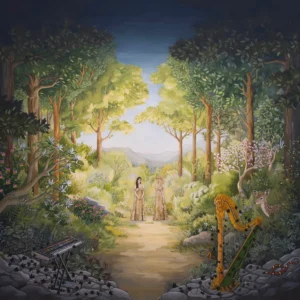
Last month, Julianna Barwick and Mary Lattimore released a collaborative single called ‘Perpetual Adoration’. Turns out the celebrated composers have a whole album on the way: Tragic Magic will be released on January 16 via InFiné. Today, they’ve released a lustrous single from it, ‘Melted Moon’. Check it out and find the album cover and tracklist below.
Co-produced by Trevor Spencer (Fleet Foxes, Beach House), Tragic Magic took shape in just nine days, a result of what Barwick calls “musical telepathy” between her and Lattimore. They recorded the album in Paris, leaving Los Angeles shortly after the 2025 wildfires, with access to the instrument collection of the Philharmonie de Paris’ Musée de la Musique. Lattimore chose three harps tracing the evolution of the instrument from 1728 to 1873, and Barwick chose several analog synthesizers, including the Roland JUPITER and Sequential Circuits PROPHET-5.
“We were so lucky to have access to this experience. There was a lot of reverence, working with people with such warmth and enthusiasm, bringing these instruments into a modern context, literally taken off the shelves of the museum,” Lattimore said. Barwick added, “We wanted to honor the past while making music that we feel is a true expression of ourselves. People ask, how was Paris? I’m like, it was perfect. It was like everything just aligned.”
Tragic Magic Cover Artwork:
Tragic Magic Tracklist:
1. Perpetual Adoration
2. The Four Sleeping Princesses
3. Rachel’s Song
4. Haze with no Haze
5. Temple of the Winds
6. Stardust
7. Melted Moon
Julianna Barwick and Mary Lattimore 2025/2026 Tour Dates:
Fri Oct 17 – Tulsa, OK – LIT: A Concert by Candlelight
Fri Nov 7 – Utrecht, NL – Le Guess Who?
Mon Nov 10 – Istanbul, TR – Salon iSKV
Sat Feb 14 – Los Angeles, CA – Sid The Cat Auditorium
Sun Feb 15 – San Francisco, CA – Great American Music Hall
Tue Feb 17 – Seattle, WA – Crocodile
Wed Feb 18 – Portland, OR – Mississippi Studios
Thu Mar 12 – Chicago, IL – Thalia Hall
Sat Mar 14 – Kalamazoo, MI – Bell’s Eccentric Cafe
Sun Mar 15 – Ann Arbor, MI – The Ark
Tue Mar 17 – Toronto, ON – Great Hall
Wed Mar 18 – Montreal, QC – Gesu
Fri Mar 20 – Philadelphia, PA – First Unitarian Church
Tue Mar 24 – Washington, DC – Miracle Theater
Wed Mar 25 – Raleigh, NY – Rialto Theatre
Thu Mar 26 – Sun. March 29 – Knoxville, TN – Big Ears Festival
Fr Apr 10 – Paris, FR – Philharmonie de Paris (Musée de la Musique)
Sat Apr 11 – London, UK – EartH Theatre
Sun Apr 12 – Copenhagen, DK – DR Koncerthuset, Studie 2
Mon Apr 13 – Stockholm, SE – Fasching
Tue Apr 14 – Helsinki, FI – G Live Lab
Thu Apr 16 – Oslo, NO – HIMMEL
Fri Apr 17 – Brussels, BE – Église Notre Dame de Laeken
Sat Apr 18 – Amsterdam, NL – BIMHUIS (Tickets on sale November)
Sun Apr 19 – Berlin, DE – Silent Green-Kuppelhalle
Tue Apr 21 – Düdingen, CH – Bad Bonn
Drone metal legends sunn O))) have signed to Sub Pop. Today’s announcement is accompanied by the release of a maxi 12″ featuring the tracks ‘Eternity’s Pillars’, ‘Raise the Chalice’, ‘Reverential’. Out now digitially, it will also be available in two limited vinyl variants: gold vinyl via Sub Pop and clear vinyl on their website and current European tour. Take a listen below.
In a rare statement, sunn O))) said:
Eternity’s Pillars b/w Raise the Chalice & Reverential is sunn O)))’s premier work on the maxi 12” medium for Sub Pop.
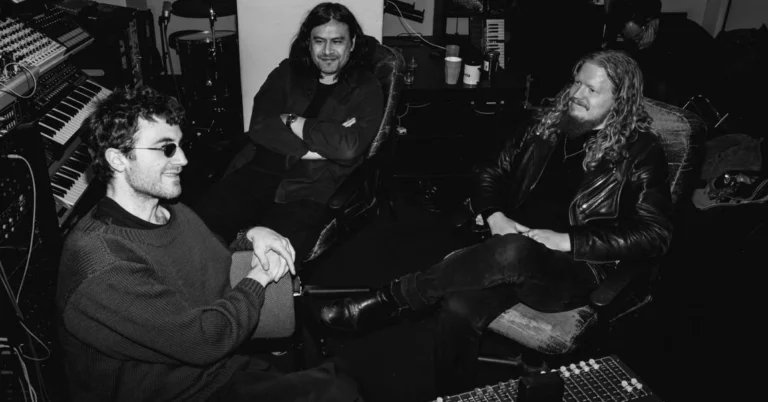
It consists of three brand new tracks created and performed by the iconic duo of Stephen O’Malley and Greg Anderson and co-produced by sunn O))) and Brad Wood. Brad Wood recorded the material at Bear Creek Studios in Woodinville and Sea Grass in Los Angeles in 2025. The tracks on this maxi 12” are the first official sunn O))) studio recordings to feature only the original core duo on heavily saturated electric guitars and synthesis.
sunn O))) gave extreme focus and care to each step and aspect of the recording, each tone and level of saturation, each gain stage and speaker, each arrangement and harmonic. The Pacific Northwest forest is our guide.
‘Eternity’s Pillars’ is named for the mid-1980s television program created and hosted by jazz visionary and spiritual guru Alice Coltrane Turiyasangitananda, focusing on her incessant belief in music’s capacity to attain spiritual transcendence. ‘Raise the Chalice’ is named for a rallying cry often uttered by Northwest legend Ron Guardipee throughout the mid-1990s. ‘Reverential’ equally pays respect and sends loud praise to those who came before us with the heaviest burdens, expressions with music and art being the materials of an antiphon.
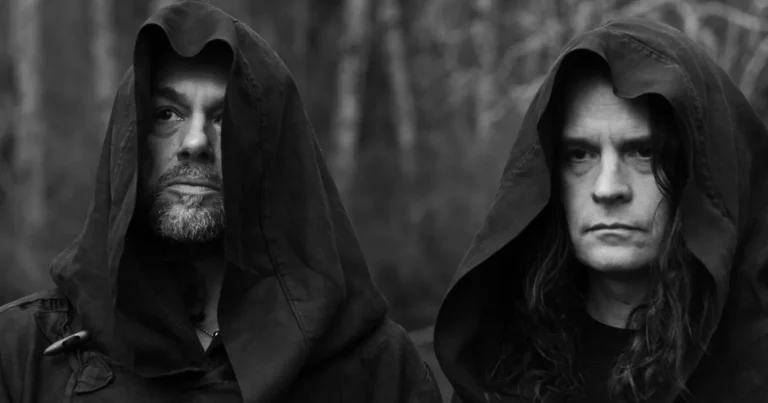
The front cover of the maxi 12” depicts the duo in the woods northeast of Seattle, through the lens of Charles Peterson.
Back in 2021, sunn O))) released Metta, Benevolence, a recording of their session for Mary Anne Hobbs’ BBC Radio 6 Music show at BBC’s historic Maida Vale Studios. The gig took place at the end long tour supporting the band’s Life Metal and Pyroclasts albums.
Peaches has announced her first album in over a decade. The follow-up to 2015’s Rub is titled No Lube So Rude, and it’s set to arrive early next year. It’s led by by the pulsating and anthemic ‘Not In Your Mouth None Of Your Business’, which was recorded with producer the Squirt Deluxe. Check it out below, along with Peaches’ upcoming tour dates.
“When the world is friction, lube isn’t a luxury,” Peaches said in a press release. “It’s a necessity. It’s how you turn that friction into pleasure, into power, into pride. I want people to understand that they can still have a voice no matter who they are or what the world says about them. Now more than ever, there are so many forces that just want you to give up and be quiet. If this album can help you resist that, then that’s what it’s for.”
Feb 20 – Miami, FL – ZeyZey *
Feb 21 – Orlando, FL – Beacham Theater *
Feb 24 – Atlanta, GA – Buckhead Theatre *
Feb 25 – Norfolk, VA – NorVa *
Feb 27 – Washington D.C. – 9:30 Club
Feb 28 – NYC, NY – Knockdown Center *
Mar 01 – Philadelphia, PA – Union Transfer *
Mar 03 – Montreal, QC – Rialto Theatre *
Mar 04 – Toronto, ON – Danforth Music Hall *
Mar 06 – Detroit, MI – Lincoln Factory ~
Mar 07 – Chicago, IL – The Vic Theatre ~
Mar 08 – Minneapolis, MN – Varsity Theater ~
Mar 10 – Denver, CO – Summit ~
Mar 11 – Salt Lake City, UT – The Grand at The Complex ~
Mar 13 – Vancouver, BC – Commodore Ballroom
Mar 14 – Seattle, WA – The Showbox
Mar 15 – Portland, OR – Crystal Ballroom
Mar 17 – Eugene, OR – Wow Hall
Mar 19 – San Francisco, CA – Midway SF
Mar 20 – Los Angeles, CA – The Bellwether
Mar 21 – Los Angeles, CA – The Bellwether
Mar 23 – San Diego, CA – The Sound
Mar 24 – Phoenix, AZ – Walter Studios
Mar 25 – Tucson, AZ – La Rosa
Mar 27 – Austin, TX – Central Machine Works
Mar 28 – Dallas, TX – The Studio at The Factory
Mar 29 – New Orleans, LA – Republic NOLA
Jenn Wasner is painstakingly aware of the ways we ensconce ourselves in difficult positions. Cycles of shame and hurt can feel strangely homely because of how familiar they are even as we move forward in our lives. The most uncomfortable part is often not the hurt but the sudden recognition of our role in them; for Wasner, that was over 10 years ago, when she came to identify with the Enneagram type known as the Helper, who center themselves around empathy, kindness, and a strong desire to nurture others – coupled, of course, with an equally strong fear of being unloved and uneasiness to accept help. These patterns bear out on The Life You Save, her radiant new album under the Flock of Dimes moniker, which creates a warmly inviting, deceptively straightforward environment to accommodate its complex ideas around addiction and co-dependency. Two decades into her career – with several solo records under her belt aside from her work in Wye Oak and collaborations with Bon Iver, Sylvan Esso, and many others – the simplicity of its songs can feel subversive, and, more importantly, the only way to really sit with and wrench the truth out of them, paradoxical as it may seem. As she reminds herself on ‘Defeat’, “I’m inside it, after all.”
We caught up with Flock of Dimes to talk about the Yamaha FG75, Björk’s Vespertine, Altadena, and other inspirations behind her new album The Life You Save.
Yamaha FG75 acoustic guitar
I feel like I’ve really shied away from acoustic guitar specifically, and there’s a couple reasons for that. Coming of age in the music industry as a woman who sings songs, I was very fearful of being boxed into the female singer-songwriter trope, and I felt this deep desire to sort of prove to the world all the ways in which I was more than that. And also, purely from a sensory perspective, I never found an acoustic guitar that I enjoyed playing. Just the feel always was off for me. With acoustic guitars specifically, it’s either the most beautiful instrument you’ve ever played, or it’s kind of garbage. For me, there’s very little middle ground. I find the experience of playing electric guitar is so much smoother, and there are so many more sonic possibilities there.
I was on tour, and my partner, who’s a guitar player and is much more knowledgeable about guitars than I am, found this guitar at Maine Drag Music in Brooklyn. He was like, “These Yamahas are actually really great, and they’re relatively affordable. I feel like you might like it.” I picked it up, and instantly I connected with it in a way that I had not connected with an acoustic guitar before. There’s just this ramshackle charm. They’re very small-scale, more of a parlor guitar, and there’s a lot of character – I love the way it looks, the way it feels, the way it sounds. It was one of those moments where I was like, “There are a lot of songs here.” Since then, I’ve acquired a second guitar, a similar ‘70s Yamaha acoustic that I also love.
In parallel to that experience, I’m 20 years into my career – I’ve made a lot of music, I’ve made a lot of records, and I feel like I’m at this place where I have less to prove about who I am and what I’m about and what I’m capable of. And for that reason, it felt like a door was opened to this other world that I had consciously or unconsciously avoided. I fixated on acoustic instruments in the context of a world that is very of the moment. There’s a lot of humanity and imperfection in an acoustic instrument, it’s so temperamental. And of course, the context is shifting, right? When I was starting out, I was very pulled to these different technologies, but now I feel like my relationship to technology is more one of fear and trepidation, and in many ways, especially with things like AI beginning to take over the world, I intuitively felt that it was the most radical thing that I could do right now at this moment, to lean into things that are very human. In general, but also in the context of this record and what it’s about. There’s a ton of acoustic guitar on the record, mandolin, tenor guitar, cello – a lot of stringed instruments that have that warmth and humanity to them.
When did your shifting feelings around the instrument begin to overlap with what this record was shaping up to be thematically?
I think it was all sort of happening simultaneously. It’s interesting because my experience of making records is that while it’s happening. I’m working from a very intuitive place. All of this sort of theorizing about the context and the choices made is something that I’m able to do after the fact, and it all feels very true, but I don’t really necessarily go into it with all of those pieces in place. It’s more like I’m following an intuitive thread, and I’m also sort of following where the songs are coming from. I really struggle to not think too hard or apply too much theory or concept too early, because I think that can kind of shape the direction of the record in a way that’s not entirely authentic, or that it’s not quite ready to hold. I think it was more subconscious, and then after the record starts to shape up and you start to see the thing as a whole, it’s easier to figure out those conceptual threads.
You’re able to achieve a lot of atmospheric effects with the pedals that you use on the album, but a lot of the dynamic range comes from just the way you play the acoustic, like the urgent strumming of ‘The Enemy’ juxtaposed with the patient finger-picking of ‘Not Yet Free’. How often were you changing your approach to certain chord patterns as you were feeling out a song?
Here’s a great example of electroacoustic tactics in a way that might not necessarily be obvious to the listener: the song ‘Defeat’ took a lot of different forms before it turned into what it is on the record. It almost had a Fleetwood Mac ‘Dreams’ kind of strummy acoustic guitar pattern – it’s still in the track, but it is actually audible as a percussive, almost shakery thing. If you listen to this song from the beginning, that’s an acoustic guitar — it’s actually run through a vocoder that doesn’t have a carrier signal on it, so it turns into this brushy thing. There’s a repeating note, and it’s very clipped – that’s a ukulele note, but we used Ableton to clip it really hard on the attack, so it just sounds very abrupt. There’s all these little moments of acoustic instruments being used in unexpected, sort of non-traditional ways. I think it can be tempting when you’re using these instruments that have so much history and context around them, to use them in really traditional ways, and I was more excited to apply the same possibility for experimentation that I’ve always had within my music to these new instruments.
Björk’s Vespertine
I’m jumping to this inspiration because I feel it has the most direct influence on ‘Defeat’. I saw it in a list of your all-time favorite records, but are there any specific ways it came up on this record?
You’re quite correct to jump to that one, because ‘Defeat’ is really the song that’s the most indicative of my obsession with that record. I had talked a lot with Nick, who produced that song with me, about what makes that record so special, and for ‘Defeat’ in particular, we were very intentionally using Vespertine as a reference. Obviously, the drum programming that he did that enters in the chorus is heavily inspired and beautifully executed by Nick, who is a brilliant genius. There’s the idea of drums that are very fragile but still hit hard – there’s this tininess, this thin fragility to those drums. There’s no big, booming kick drum, there’s nothing that’s taking up a lot of space in the low end. It’s almost like the complexity and the fragility is the thing that drives it. Vespertine is a great example of a record where there’s tiny drums that slap. That was what we were going for with the production of that song.
Did toying with the production end up illuminating the lyrics in a way that is clearer now?
Yeah. I almost cut that song, honestly. That song was about to be on the cutting room floor before Nick and I were able to find a version of it that made sense. The really straightforward way in which I wrote it almost made the lyrics feel a little bit too trite, whereas the context that we found with the track as it exists on the record I think creates a space in which the directness of the lyrics makes sense and doesn’t feel too on the nose. I do think thematically it’s a really important track for the record to have, so I’m really grateful that we were able to find a way to make it work.
The Enneagram
Some people really have a hard time with personality frameworks, and I get that. Also, I think people get really caught up and fixated on this idea of, is it real or is it not real? For me, I just don’t really care as much as I feel like it’s very helpful for me to use have a framework, use a framework, and observe my reaction to it. That’s really useful as far as understanding more about myself. But the Enneagram is essentially – this is a gross oversimplification, but there’s nine personality types, and each type basically has certain motivations and tendencies, and it also exists on a spectrum. I’m a type 2, which is commonly kind of referred to as the Helper.
I discovered the Enneagram back when I was still living in Baltimore, which was over 10 years ago at this point. I was going around creative circles in Baltimore and reading about it, just being struck, in not necessarily a good way, by some of the descriptions in my type. Sort of an undeniable feeling of recognition, but in a way that I wouldn’t necessarily have even wanted to admit to myself – uncomfortable. And since then, it’s become a really useful framework for me to become aware of my patterns. I don’t think I would have been able to make this record and progress in my life, personally and in my relationships, without this particular framework. It laid the groundwork in many ways for the things that I needed to discover and uncover about myself and the decisions I was making in all of my relationships . It was a really integral part of the growth and self-exploration that needed to happen before I would have ever been able to make a record like this.
The song ‘Pride’ is a really direct reference to my type, because pride is the passion of the two, and the passion is essentially your primary vice. Something that’s really holding you back, something that needs to be confronted. And that song is an exploration of what that means. The duality of that word is really interesting, too, because it’s one thing to be like, “I’m very proud of what I’ve done, I’m proud of what I’ve accomplished.” But the definition of pride that I’m speaking from in that song is from the place of being too proud – too proud to ask for help, too proud to admit that you don’t have it all under control, to show that you’re hurting.
There’s a certain amount of pride involved in believing that you have what it takes to solve other people’s problems for them, or that you know better, or that you don’t need others to help you. ‘Pride’ and ‘I Think I’m God’, the last track, are basically about confronting that shadow side of the Helper archetype. There’s an ugliness to thinking that you are somehow good enough and strong enough and smart enough to fix everyone’s life. That was a key for me to understand how to let some of that go.
Altadena, California
You wrote a bit about Altadena in your newsletter back in January. How did living in Altadena intersect with the process of making The Life You Save?
My partner and I were living in Altadena a couple separate times while we were exploring the possibility of making a more permanent move. This record is very much equally a product of my previous home in North Carolina, and my community there at a recording studio called Betty’s, and everyone that surrounds that place, and being here in LA, working with my friend Adrian Olsen at his studio, Montrose. The first time we tried to finish the record, which didn’t quite stick, we were living in Altadena, and I actually wrote, just before we were about to go into the studio, very rapidly, two of what I would say are the most important songs on this record. I wrote ‘Long After Midnight’, and then two days later, I wrote ‘River in My Arms’. I can’t imagine the record without those songs.
Sometimes when you leave, you arrive at a new place, and something gets sort of shaken loose. All of a sudden, you’re in touch with some part of your creativity that was missing or harder to access in the older place. I really associate this record and this process very heavily with living in Altadena. Ultimately, we did decide to move here, and sadly, as soon as we got here, the Eden Fire happened – the week we moved. We’re in Pasadena now, so we’re very close, but we still go almost every day to the businesses that have survived. It’s been truly heartbreaking, because that was a place that I think we both felt, for the first time, like we could live here, we could do this. We fell in love with the place. Obviously, our hearts are broken for the people who had homes that they lost and lived there for much longer than we did. It’s been a strange experience, but I’m so grateful to have had the time that we had. I really treasure that time, and there’s something about the magic of that place that absolutely unlocked the remaining pieces of the record.
You’ve said it’s the first place in LA that felt like home, which is an idea you turn over on the album. One of my favorite lines is, “I keep going till I’m slowing/ ‘Cause the going feels like home.”
Yeah, the going is one of the only homes I feel like I have, honestly. It’s a strange feeling, but it’s true – it really does feel familiar. There’s a familiarity to it, even as it exhausts you. I’m still drawn to that tactic. Having left my home in Baltimore and then found a new home in North Carolina, and now I’ve left that place – not entirely, obviously I’ll still be there – but there’s a built-in sort of itinerant feeling when so much of my work has to do with travel. There’s a part of me that really loves it, and there’s a part of me that feels very adrift.
Live vocal takes
This is a kind of a classic thing people say, where they’re like, “I really want my vocals to feel really real and flawed and live.” It’s a very easy thing to say, very difficult thing to actually do. I have a really good ear, so I know when something is off, I experience it as a mistake. I also know that if I’m going to allow myself to do the thing I set out to do, I’m going to have to almost trick myself into letting it happen by creating a set of rules for myself to inhabit. I don’t believe that mistakes are bad and to be avoided. I’m certainly guilty of over-perfecting some of my music, or attempting to over-perfect it, and losing something in the process. It’s something I’m really learning, still, how not to do. Because when I listen to other people’s music, many of the imperfections and the flaws are the things that I’m the most connected to and feel really moved by. It’s just that when it comes from you, it’s almost impossible for your brain not to internalize it as a mistake.
Not all takes are live, but a good portion of the record, they are fully live. I think setting that rule in place kind of subverts my natural inclination to want to over-fix, because it happens so quickly – you fix one little thing, you redo one little thing, and next thing you know you’ve completely railroaded it into something else entirely. When I listen to the record, I still hear things that part of me wants to fix, but I’m glad I didn’t. I think one of the things I’ve gotten better at as a producer of my own music is learning how to subvert myself and learning how to trick myself into not wanting to over-perfect.
Were there any moments of recording vocals that stick out in your memory?
Absolutely. ‘Long After Midnight’, for sure. That’s a full live vocal take. ‘Not Yet Free’. ‘I Think I’m God’ was maybe the craziest recording experience of my life. That song is fully live, and it’s me and Alan [Good Parker]. Alan’s playing cello; the bass in that song is actually cello. This was in North Carolina at Betty’s. My friend Ali [Rogers] was engineering. We set everything up, and I wanted to get in a headspace, so I’d brought along this letter. It’s a letter from someone I love who has struggled, something that every time I read it, it just hit me right in the heart. I read this letter, and as I took it out, out of nowhere, one of those North Carolina summer rainstorms just came through. The skies just opened up, it started pouring. I’m close to tears, there’s this crazy rainstorm, we sit down, and we do the take. And then the rain stopped, and that was the take. [laughs] It was wild. It felt spooky. I had turned all the lights off and lit all these candles, and the whole thing almost felt like a weird spell. I’ve never had a recording experience like that before. I almost couldn’t believe it worked. Magic is real, I guess.
Playing house shows
You’ve been doing these tours where you play in people’s living rooms. How has that experience affected you or your perspective on songwriting?
Honestly, it has been such a gift to discover this method of performing and moving through the world. I love it so much. I’ve been hearing about it for years, but I sort of resisted trying, because there’s so much in this industry on the business side that nobody sees. There’s all these weird gatekeepers to success, and there’s all these rules about what you do and don’t do if you’re trying to grow and build. I’ve always been a little bit of a weirdo with that stuff. I’m ambivalent at best about attention. I don’t have the kind of ambition that I feel like a lot of my peers have. I’ve experienced what it feels like to grow a band and enjoy performing less and less and less, so I’ve learned over the years the extent to which the one-size-fits-all proposition of the music industry really doesn’t feel comfortable. I’ve made a lot of choices to try to stay afloat in this world without compromising too much.
I think there’s this idea that if you start doing these house shows, you’re washed up, your career’s over, and it’s just what you do on your way out the door. But I honestly couldn’t feel less like that’s true. For me, for my personality, I feel like I feel the best when I’m able to interact directly with people. I’m a very social, relational person, so it just means so much to me – these small, intimate spaces that always sound really good. You get to talk to people, you get to hear their stories about how your music has affected them and touched their lives. You get to feel like a normal human being moving through the world. It just feels safe and connective and authentic. It’s all of the things I love about making and performing music, and very few of the things I hate. It just feels very aligned with who I am and how I like to do this.
Feeling as impacted by this experience as I have, I feel like it’s going to be the primary way that I tour moving forward. Knowing that does influence the kind of songs that you write, because of course you want to be able to perform, and I feel like it’s naturally trickled down to the way that I’m writing. This record is very much a representation of how I am in this world, where it’s assured and ambitious in some ways, but it’s not super flashy. I think it’s probably a grower, and it takes time and attention to unlock. That’s very much an embodiment of where I’m at with my career and how I want to play music for others.
Cass McCombs’ Catacombs
This record is one of my all-time favorite records. It’s had so much growth and staying power in my life. The first time I heard it, my reaction was that this is beautiful, but it’s also what I was saying about what I hope is true about my record, where the songs are so thematically and lyrically complex. There’s so many wild and thorny ideas and concepts, yet it all exists in this very warm and straightforward space. It’s a record that I’ve come back to many times because it feels good to listen to, and I feel like Cass and his band on that record really succeeded in creating a space in which some of these ideas could really thrive in this way that I am amazed by. It was very much an inspiration from the beginning. It’s rare that I do this, but there was a part of me, before I even really had the songs for this record, that was like, “I think the most radical thing that I could do in my career right now would be to make my version of this record.”
I think it’s such a flex. It shows such confidence in your words. I think Cass, like me, is a very lyric-based songwriter, for the heads. I’ve always admired his lyricism, and that was really where I wanted the focus of my record to be. I like the idea, given the subject matter of my record, of intentionally creating a space that was warm and inviting and not alienating. For me and for the listener, because I feel like a lot of this stuff is heavy and difficult to hold, to stay with, and there’s a part of me that just wanted to make sure it was as sonically accessible as possible. Also, there’s a lot of pedal steel on that Cass record, and I love the pedal steel. My partner, Alan, who plays all over this record, is a great pedal steel player, so that instrument has become such a part of my daily life, even just casually hearing it in the house.
I think there’s an assuredness in not being like, “Look what I can do.” I feel like there’s so much music like that out there now, and I have no issue with it – it just feels like it’s coming from a very different space. I certainly had my phase of my career where I was way more in a look-what-I-can-do kind of moment. But I’m not really there at this moment. I’m thinking more about how I want to feel when I’m having to engage with some of these uncomfortable, painful truths.
This interview has been edited and condensed for clarity and length.