Home Blog Page 31

Is Innovation in Gaming Always About Technology?

0

Most of the time, innovation in gaming is depicted as a race for better hardware: faster processors, better graphics, more intelligent algorithms. However, the most significant changes across the modern casino ecosystem have often been driven by design philosophy and player psychology rather than pure technology. Of course, infrastructure is important. But mindset often matters more.

Essentially, technology provides the means while culture brings about the change. The difference is more than semantics.

Gaming has indeed advanced through infrastructure: mobile optimisation, live streaming engines, cross-platform integration. However, if we remove the technical components, what is left is something more human: design philosophy, community identity, storytelling structure, and behavioural insight. This is where change usually begins.

The Technology Bias in Gaming Discourse

People often take it for granted that innovation equals technology.

New console generation? Innovation. AI-powered features? Innovation. Immersive 3D environments? Innovation.

However, the story of the past is quite different. Some of the most successful games in the last decade were not technically the most advanced ones. They changed the way people interacted with the games, how the narratives were paced, or how the reward systems worked. The change was more at the idea level than in terms of the equipment used.

Take the example of online entertainment platforms in general. As explained in How Online Casinos Became a Global Entertainment Trend, their growth was not only a result of infrastructure upgrades. Factors such as accessibility, mobile culture, and changing leisure habits also had a great influence. To put it succinctly, technology opened the door, culture walked through it.

Innovation Through Design Thinking

Genuine innovation often begins before coding altogether. It comes from studying players’ behaviours, their doubts, their misunderstandings, and the things that keep them hooked. Design thinking centres on those insights, replacing feature addition with experience refinement.

Player-Centric Architecture

Redesigning game progression or altering the reward schedule does not necessarily mean adding new technologies. It means that developers are fine-tuning behavioural mechanics.

This change, we believe, is very much the manifestation of the evolution of online gambling. Instead of the addition of feature after feature, the changes have been aimed at making the process more fluid and easier for the player. Micro-interactions matter. Loading time matters. Interface hierarchy matters.

If it were just a matter of uttering the phrase, then it would be quite a simple thing. It is not.

When carried out successfully, user experience design has the power to influence human actions unconsciously. Shorter pathways to core gameplay. Transparent bonus mechanics. Adaptive layouts for mobile-first audiences. All these are things which don’t need any major hardware innovations but can totally change how people see and use digital platforms.

Behavioural Economics at Play

Behavioural science in recent times has been one of the most used sources of inspiration by game designers. The world of technology has not seen amazing revolutions due to reward loops, variable reinforcement, or social validation mechanics; rather, these are revolutions of mind and perception.

Just changing a little bit the way the payout is displayed can make people perceive the distribution of the winnings as more fair. Changing the time of a notification by a few seconds can increase player retention. Our platform reviews across various markets have shown us that these small and subtle changes can have a bigger impact than the introduction of new graphics.

Technology supports. Psychology directs.

Storytelling as a Competitive Edge

Today, gaming is competing with streaming platforms, social media, and short-form content. To differentiate the products, developers re-focus on the elements of narrative coherence and emotional pacing.

Storytelling games change the time spent on and frequency of visits to the products. Players do not follow ray tracing or rendering speed, but rather their favourite stories. Characters, emotion arcs, and setting are the features that attract players to the games.

Actually, if you line up the sequences of development in both the gaming and movie industries, you will spot a pattern. For the film industry, the biggest transformation was not just a technical advancement but an alteration in storytelling. The integration of sound brought new ways of telling stories. Streaming changed the way films were distributed. Similarly, innovation in gaming frequently goes hand in hand with a new storytelling approach.

On the other hand, even the most data-driven industries like online betting have their share of this change. When promoters create seasonal campaigns, decorate the interfaces with new themes**, and narrate live dealer sessions, they bring a narrative aspect to the mechanics. It is not loud. But it is effective.

Culture as the Invisible Driver

Very often, there is a perception change that occurs silently in the background, even before an interface is redesigned or any feature is rolled out. Gaming is a mirror that reflects the values, habits, and expectations of its audience, and these change faster than hardware cycles. Most of the time, what we see as innovation is simply the industry adjusting to a cultural change that has already happened.

Globalisation and Localisation

Gaming is now a global phenomenon. Titles are released simultaneously worldwide but are also visually and linguistically adapted to local audiences. That localisation effort is a form of strategic innovation, not technical novelty, but cultural awareness.

Payment methods evolve according to local customs. Interface language follows social norms. Event-based promotions are aligned with the regional calendars. These changes require an understanding of local people and communities rather than simply writing new code.

Based on the reports released by Newzoo, the global games market is witnessing growth every year, predominantly thanks to mobile accessibility and cross-cultural adoption. The phenomenon is solid proof that technology can scale, but culture is the one that sustains.

Community-Led Evolution

There is a whole other factor that many forget about: community influence. Player forums, streaming feedback, and social content all shape product development cycles. Studios monitor discourse carefully.

Now the feedback loops between players and developers are operating almost in real time. Interestingly, this iterative dynamic demonstrates a shift in mindset. It is no longer about building the perfect product before launch, but more about continuously refining it based on behaviour and commentary.

The reality is that this method requires flexibility and humility. These attributes do not shine, but they are capable of transforming the game.

The Role of Trust and Transparency

Trust may not sound innovative, but in digital entertainment, it is critical. Clear terms, transparent mechanics, and visible RTP disclosures, these features stabilise long-term engagement. Operators who disclose fairness indicators in regulated markets and communicate openly are more likely to establish more durable relationships with users.

We have seen platforms lose traction not because of technical limitations, but because of communication gaps. Thus, transparency becomes a strategic differentiator.

In a nutshell, credibility can be as powerful as innovation.

When Technology Truly Leads

This does not mean technology is secondary. Certain developments, such as cloud gaming infrastructure, real-time streaming optimisation, and AI-assisted moderation, genuinely expand what is possible.

Nevertheless, technology hardly ever acts as the sole factor to sustain engagement. Without a solid design and cultural alignment, even the futuristic systems tend to be empty.

Examples of such platforms can be found in our tests. They can be described as technically sound but lacking in narrative and intuitive structure. Users notice. And they move on.

Innovation as Mindset

Looking at the matter from a distance, a trend is evident. In fact, innovation in the gaming industry is frequently linked more to human behaviour than bandwidth. For instance, how do gamers prefer to engage with the product? What obstacles slow them down? What emotional stimuli keep them coming back? The answers to these questions must come before programming.

Developers who see beyond the machine to the human spirit usually end up creating longer-lasting ecosystems. They have an understanding of the players’ goals, they tweak the onboarding processes, and they regulate the flow of the sessions. Although technology is the enabler of these changes, it is not the source.

Sometimes, the biggest change goes unnoticed. A more legible dashboard. A clearer explanation of payouts. An event that culturally fits and thus makes the game theme more attractive. Yes, incrementally, but the impact is there.

Final Takeaway

The public narrative of the industry is all about celebrating the upgrades of hardware and the breakthroughs in algorithms. But when we look at the long-term growth and the retention of players, we see that softer variables like psychology, storytelling, cultural relevance, and transparency keep coming up.

Innovation in gaming is not exclusively technological. It is behavioural. It is structural. And above all, it is human.

Technology may accelerate change. Culture defines its direction.

And that difference, as subtle as it may be, determines the future of digital entertainment even more than any new gadget ever could.

Navigating the Rise of Crypto‑Gaming Culture and the Realities Behind “Scam” Platforms

0

Understanding how blockchain entertainment intersects with gaming trends—and how to approach it with cultural savvy and caution.

In recent years, gaming culture has expanded far beyond purely entertainment‑driven experiences into realms that include betting, digital economies, and crypto‑native platforms. From esports to online casinos that leverage blockchain, these hybrid ecosystems are reshaping how culture, risk, and technology intersect. As we follow these trends, it’s worth exploring both the excitement and the pitfalls inherent in the latest crypto‑gaming attractions.

In this conversation, we also look closely at how platforms like a review on Winna Scam figure into the discussion—why they generate buzz, why they attract controversy, and what cultural signals creators and players should read when approaching them.

Why This Topic Matters Now

Gaming isn’t just pastime entertainment anymore—it’s a global cultural force worth billions and influencing music, fashion, and lifestyle narratives worldwide. From the integration of cryptocurrency in online roulette guides to reporting on how betting blends into esports culture, our platform has covered how gaming continually reshapes social and creative landscapes.

At a glance, here’s why this topic resonates with our readers:

  • Who this is for: Gamers, culture enthusiasts, creative professionals curious about how technology and play intersect with broader cultural trends.
  • Expected outcomes: Better understanding of how crypto‑gaming blends with arts and entertainment culture—and how to spot hype vs. substance.
  • How we help: We explore these developments in context, drawing from broader cultural patterns and our ongoing coverage of gaming’s impacts.

The Cultural Impact and Practical Effects

Crypto‑integrated gaming and online casino ecosystems create interesting opportunities and pitfalls alike. These developments matter because they reflect a broader cultural convergence—where digital entertainment, financial technology, and social experience blur into new forms of engagement.

Key outcomes for culturally savvy gamers and creators include:

  • New forms of creative engagement: Crypto and gaming enable expressive communities and economic participation.
  • Blended entertainment experiences: Betting, blockchain games, and digital collectibles now show up in spaces once reserved for traditional gaming culture.
  • Audience participation economies: Whether through NFTs, tokens, or novel dApp experiences, audiences aren’t just consuming—they’re interacting financially and socially.
  • Spotlight on responsibility: These arenas also spotlight risk awareness and responsible participation, especially as platforms vary widely in legitimacy.

From Signals to Insight

A major part of culturally literate engagement is discerning meaningful trends from noise. In gaming and crypto, signals often appear in patterns of community dialogue, regulatory momentum, and shared experiences among users.

For example:

  • Discussion about crypto‑related casino experiences pops up not just in niche tech forums but also in broader cultural gaming discussions and guides.
  • Conversations on Reddit show both enthusiastic and critical personal experiences with certain platforms—reminding us that community sentiment is a rich source of real‑world insight.

These qualitative signals help shape a grounded view—not just hype.

The Reality of High‑Risk Platforms

Platforms like Winna draw attention precisely because they sit at the intersection of culture, thrill, risk, and finance. On one hand, some users report smooth experiences, quick crypto transactions, and engaging game offerings.On the other hand, there’s a significant volume of reports and analyses expressing concerns about withdrawal disputes, regulatory opacity, and potential bad‑faith practices that have led some to label such platforms as scams or unsafe environments.

Understanding these contrasting voices—and why they both exist—is crucial for culturally literate participants. It’s not about fear‑mongering; it’s about contextual awareness.

Applying These Ideas Across Your Journey

Planning / Preparation

  • Educate yourself on how blockchain and crypto mechanics integrate into gaming culture.
  • Evaluate platform legitimacy by checking community discussions, regulatory status, and independent reviews.
  • Set clear intentions for your engagement—are you exploring cultural interaction, entertainment value, or speculative play?

Active / Experiencing

  • Stay critical of what’s being promised versus what’s delivered—especially on platforms with mixed reputations.
  • Use wallets, tools, and security safeguards that respect privacy and data integrity.
  • Prioritize experiences that align with your culture and creative interests rather than pure financial risk.

Review / Improvement

  • Reflect on what went well and what didn’t; cultural participation evolves with time and context.
  • Revisit discussions in gaming communities to assess how experiences and patterns change.

Expert Validation from a Credible Source

Research highlighted by the International Data Corporation shows that blockchain technology and digital ecosystems are rapidly influencing entertainment and interactive media, offering new ways to experience games, ownership, and community engagement. This supports the broader view that these trends aren’t fads—but participants still need to navigate them with discernment and cultural literacy. 

Best Practices for Smart Cultural Engagement

  • Start with clear goals about why you’re exploring this space—creative engagement or entertainment first, speculation second.
  • Keep things manageable; don’t let fear or hype override thoughtful participation.
  • Look for platforms with transparent governance, community accountability, and clear user protections.
  • Use reliable tools and wallets that offer security without compromising your identity or assets.
  • Be mindful of time, emotional investment, and personal boundaries in both gaming and financial engagements.
  • Regularly reflect on your experiences and adjust your approach based on evolving culture and dialogue.

Looking Ahead: The Future of Crypto and Gaming Culture

Going forward, we expect:

  • More seamless cultural integration between blockchain experiences and mainstream gaming.
  • Greater innovation in digital participation economies—from collectibles to community rewards.
  • Increasing emphasis on safety and trust, as regulators and communities push for clearer standards.

We’re excited about these developments and remain committed to helping our readers understand them—not just as technological novelties but as meaningful parts of modern cultural life.

As these worlds continue to intersect, our focus will stay on thoughtful interpretation and responsible participation. Whether you’re here for culture, creativity, or community, approaching these spaces with awareness and curiosity will always serve you best.

Lead Children Season 2: Cast, Rumours & Release Date

0

A new Polish historical drama available on Netflix has been quietly captivating audiences since debuting on the platform earlier in February. Directed by Maciej Pieprzyca and inspired by true events, it’s the kind of series that stays with you for a long time.

Lead Children was the #1 show in three countries last week, while also making the Top 10 in 37 countries where the service is available. Does that mean a second season might be on the way?

Lead Children Season 2 Release Date

At the time of writing, there’s no official news about a potential Lead Children season 2. Additionally, the title is listed as a limited series on Netflix, and the fact that it’s inspired by true events makes a sequel unlikely.

That said, the show tells a complete story, so you don’t have to worry about cliffhangers. Here’s to the little things.

Lead Children Cast

  • Joanna Kulig as Dr. Jolanta Wadowska-Król
  • Kinga Preis as Wiesia Wilczek
  • Michał Żurawski as Hubert Niedziela
  • Agata Kulesza as Profesor Berger
  • Marian Dziędziel as Jerzy Ziętek
  • Zbigniew Zamachowski as Zdzisław Grudzień

What Is Lead Children About?

Set in 1970s Upper Silesia under Communist rule, Lead Children follows Dr. Jolanta Wadowska-Król, a pediatrician who arrives in the industrial district of Szopienice and notices disturbing patterns in her patients. They’re exhibiting unexplained symptoms like anemia, stunted growth, and chronic illness.

As Jolanta investigates, she uncovers a shocking truth. Turns out, the nearby smelting plant is releasing toxic lead into the environment. That contamination is poisoning the town’s youngest residents, triggering a public health crisis. Facing bureaucratic resistance and political pressure throughout, Jolanta risks her career to expose the crisis.

The series is inspired by events from the 1970s, when industrial pollution in parts of Silesia led to widespread lead poisoning. While it fictionalises some interactions and characters, the broad outline reflects what happened in real life.

The result is a revealing look at an ugly chapter in Polish history, as well as a touching portrait of a medic willing to move mountains to protect her community. While Lead Children season 2 probably won’t happen, the six episodes currently streaming deliver a narrative you won’t forget anytime soon.

Are There Other Shows Like Lead Children?

If you found Lead Children engaging, we recommend checking out some of the other international series trending on Netflix. The list includes Salvador, Cash Queens, Unfamiliar, and Undercover Miss Hong.

As for similar subject matter, you might enjoy Toxic Town or HBO series Chernobyl.

Macy Grimshaw Made Central Saint Martins MA the Best Show at London Fashion Week AW26

0

Every season, London Fashion Week rolls around and the same ritual unfolds. Established brands march their collections down the runway, press scribbles notes they’ll forget, influencers angle for the perfect street style shot, and the rest of the world scrolls Instagram. Nestled in the chaos is the Master of Arts graduate show from Central Saint Martins.

Naturally, when a fashion school shows up on the schedule, there’s a collective sniff, “cute students.” Seems like we sometimes forget that those students once became Alexander McQueen, John Galliano, Stella McCartney, Phoebe Philo, Grace Wales Bonner, and I can’t help but think of my own professor back in the day, whose sketches still stick in my head. CSM arguably breeds some of the most creative designers around. Unlike brands obsessed with sales forecasts, this is where actual experimentation happens, and each year, we get lucky enough to see it raw.

Macy Grimshaw at Central Saint Martins MA show during London Fashion Week
@macy.grimshaw via Instagram

Days later, I’m still haunted by one emerging designer, Macy Grimshaw. But years before her work haunted me, it had already won over Harry Lambert, and he was backing her again. The stylist jumped in to assist a collection of 9 looks, my favorite being the “Blown-Away” dress. Denim and paper on grid-cut leather that feels like a gate left to rot, which looked like a canvas had floated down and landed on it.

Macy Grimshaw at Central Saint Martins MA show during London Fashion Week
@macy.grimshaw via Instagram

Another leather moulded bodice included her class’s cigarette butts, multi-faceted girl. “The best way to make friends at CSM is via smoke break, whether you smoke or not,” she told Harper’s Bazaar. So what does one do? Patiently wait for the chatter to die down, collect the debris, coat it in resin so it doesn’t get that ‘been in the sun too long’ stench, and fuse it onto the outfit. Rusty gates, old locks, pencil shavings, fences, graffiti, petaled denim, and dresses printed with photos of other dresses, were all part of Grimshaw’s universe, in which honestly, I’m trapped. And I like it here.

Tolu Coker’s London Fashion Week AW26 Show Was So Good Even King Charles Showed Up

0

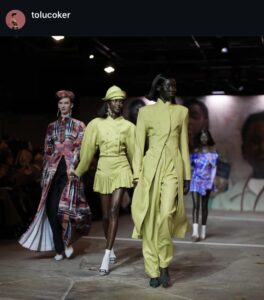
Tolu Coker didn’t exactly stage a quiet Fall 2026 show at London Fashion Week, nor did she ask to be validated. Though, validation arrived anyway, wearing a crown and sitting front row, three seats from a live mic rapping on a block walked by voluminous plaid. Drawing from family archives, West London memory, and the awkward reality of social mobility, Coker just made clothes with a position, not the kind sculptural stitching gives you.

Come Thursday afternoon, February 19, the Rolls-Royce Phantom IV state car is navigating the city’s streets heading for the NewGen Space at 180 Strand. King Charles III, front-row-bound, is about to make fashion week’s first day a little more official than usual. Way to go, London. Coker got her start with a little help from the Prince’s Trust in 2018. Today, the same man has a special seat assigned for him, observing the result in real time.

The King front row at Tolu Coker Fall 2026 show at London Fashion Week
@tolucoker via Instagram

That seat was front and center of a mini turquoise stage hosting The Compozers and Ife Ogunjobi, right in the middle of a set surrounded by paintings pointing to the country’s deep-rooted Black diaspora. Traffic cones, tube signs, bins, leaves, and a very specific ‘Mozart Street W10, City of Westminster’ sign dotted the scene. “With this, I just want people to hang out on the block—to see what it was like to just be in that space,” Coker told Vogue, and boy, did she take us there.

“London is a melting pot, you can’t put a picture to London. I think that’s what makes it special, everyone is from everywhere, everyone comes with their different cultures, their different values, it’s the melting pot that makes London what it is,” the designer clued the organization in backstage. After quickly taking everything in, a spotlight hit one face, and for a beat, you could have sworn it was the King. Nope, it was rapper Little Simz, about to perform ‘Free,’ just inches from Skepta and Stella McCartney.

Tolu Coker Fall 2026 show at London Fashion Week
@tolucoker via Instagram

And then, it was finally all about the clothes, 28 looks in total. Picture structural, preppy tailoring, Clueless-inspired plaid and pied-de-poule, matching hats, beautiful volumes, strong colorways, all titled ‘Survivor’s Remorse’. Some outfits made me think of the clothes my Bratz dolls wore that I used to stare at and plot owning. Behind all that, Coker was riffing on her own memory box. Home has more than one address for many people, hers was Mozart Street in West London and Lagos in Nigeria. Her inspiration was stitched together from snapshots, streets, stories, the houses she grew up in, the neighborhoods she knew, the push-and-pull of getting ahead, and luxury fashion at arm’s length.

“For AW26, I wanted the clothes to hold softness and protection alongside discipline and structure. It’s a wardrobe that moves between worlds, because that’s what social mobility asks of you and the pieces have to be strong enough to carry that story,” the press release read. Vulnerability has always been a creative’s sharpest weapon.

Four Crafty Hobbies to Try Instead of Doomscrolling

It’s been a long, screenful day. All you’re craving is a way to unwind – and almost automatically, your hand reaches for that social media app you know, deep down, you’d be better off without.

Pause right there. What we’re often actually seeking in those moments is nervous system regulation, a way to relax and get out of our heads and into our bodies. A 2024 study published in Frontiers in Public Health found that people who regularly engage in arts and crafts report higher levels of happiness, life satisfaction and a greater sense that life is worthwhile. Here are four to try the next time the urge to doomscroll hits.


Bead flowers

Bead flowers are quietly satisfying and therapeutic, and they can seriously upgrade your living space. Bonus points for the concept of a forever bouquet. The most popular method is French beading, a practice involving stringing beads onto wire and shaping them into petals and leaves. Follow a YouTube tutorial or a guide book to get started.


View this post on Instagram


A post shared by henri (@henripurnell)

Paint by numbers

No time or creative energy to paint from scratch, or simply craving more structure? Painting by numbers is a great way to improve cognitive function and foster a sense of accomplishment, while the repetitive, mindful nature of the activity does wonders for relaxation.


View this post on Instagram


A post shared by michelle (@holddear)

Craft a greeting card

A card is too often a last-minute consideration. Why not make a few in advance and build your own stash to choose from? You can buy DIY card sets or cut your own from thicker paper for a more hands-on experience, then draw, paint or collage to your heart’s content. Your loved ones are bound to appreciate the personal touch.

Make a zine

If other activities on this list offer structure, a zine is the opposite, offering the chance to go completely off-script. Fashion collages, personal storytelling, advocating for a cause or simply celebrating your friends… The subject matter is entirely up to you. So is the aesthetic! All you need to get started is some paper and scissors.


View this post on Instagram


A post shared by Grrrl Zine Fair (@grrrlzinefair)

Nothing Share New Single ‘never come never morning’

0

Ahead of the release of their new album A Short History of Decay on Friday (February 27), Nothing have shared one more single, ‘never come never morning’. It follows previous cuts ‘cannibal world’, ‘purple strings’, and ‘toothless coal’. Listen to it below.

070 Shake Returns With New Song ‘If You’re Free’

070 Shake has released a new song, the starkly emotional ‘If You’re Free’. Check out Bennett Watanabe’s video for it below.

Shake recently updated her official website, which now reads “IN A MATTER OF TIME.” Her last album was 2024’s Petrichor, so it’s about time.

Album Review: Mitski, ‘Nothing’s About to Happen to Me’

At first, the title of Mitski’s new album seems as declarative as her last, The Land Is Inhospitable and So Are We. But it leaves a bit more room for interpretation. Take it one way, and Nothing’s About to Happen to Me is ominous, portending the darkness that’s always impending in the singer-songwriter’s music. Or perhaps it’s an affirmation, mirroring the illusory warmth of her post-Laurel Hell material. Or, if you’ve listened to enough of its songs, it’s downright misleading: whoever the protagonist is, billed simply as a “reclusive woman” in press materials, she’s far from passive in her pursuit of Nothing. As beautifully pastoral as her last record, with live instrumentation by the band that accompanied her on The Land tour, Mitski’s startling eighth album gestures at a cohesive narrative rather than breathing life into a series of interconnected vignettes. Still, there’s more than one way to connect the dots: from one song to the next, from new to old, nothing to everything. Just listen, though, and you might find her longest album (at 35 minutes) to also be her boldest statement to date.


1. In a Lake

“I should move to a brand new city and teach myself how to die,” Mitski sang 14 years ago on ‘Brand New City’, a sort of precursor to the opening track on Nothing’s About to Happen to Me. ‘In a Lake’ carries none of the fatalistic angst that powered one of the grungiest songs on Lush; it swims in the tangy sense of nostalgia that makes your heart ache wherever you go. Over the past few years, Mitski has been recontextualizing old songs to suit the pastoral sound of The Land Is Inhospitable, but the accordion, banjo, and strings beaming up the new album seem to serve a more overt narrative purpose. Our protagonist begins by declaring that she’d never live in a small town, clearly having lived in one long enough to have found a single place of refuge from its narrow people: “In a lake you can backstroke forever/ The sky before you, the dark right behind.” That spurs the thought of starting over in a big city, as if the feeling of infinite possibilities is comparable, a chance to belong to the dark. As drums crash and strings swirl towards the finale, it couldn’t sound more like coming alive. 

2. Where’s My Phone?

As the lead single from the album, ‘Where’s My Phone?’ signalled a return to the fuzzed-out guitars of Bury Me at Makeout Creek, spinning familiar themes of dissociation and claustrophobia before descending into gothic horror. But oh, how it decimates the pastoral veneer of ‘In a Lake’ like a jump-cut to the chaos of a city that shoves you deeper into the recesses of your own mind. The dark she romanticized as being “safe inside”? It’s suddenly taken on a twisted dimension: “If night is like you punched a hole into tomorrow/ I would fuck the hole all night long.” There’s no pursuit of a safer tomorrow, only a frenzied cycle of erasure – starting over, over and over again.

3. Cats

Mitski regains her wistful composure as a doomed relationship enters the picture – one whose fate is entirely up to the other person. The stillness of ‘Cats’ is almost as devastating as its solitude, the protagonist’s sole consolation being the titular companions: “Our two cats,” she tragically clarifies, sleeping by her side, “Making sure I’ll be alright.” They’re embodied gorgeously by Fats Kaplin’s pedal steel and Ty Bailie’s keys; unlike the first two songs, though, the instrumentation hardly crescendos, lying helplessly dormant. 

4. If I Leave

The narrator is granted a choice, after all, but is certainly no happier for it. If Jeni Magaña and Bruno Esrubilsky’s sturdier rhythm section is a sign of newfound agency, they also mirror her mounting anxiety: painstakingly, she lists every place in the city where the flurry of people only reminds her of the one who could truly see her. “I’ve let only you know/ How I ride through a tunnel and it’s dark the whole way,” she sings, dialing the distortion back up. Mitski has illuminated it several times before, but there’s more to this story. 

5. Dead Women

Who gets to tell it, though? Here, the reclusive woman – women, in the title, underlining the song’s allegorical power – imagines herself dead, her story to be exploited by anyone who pleases. The end is chilling – “She gave her life/ So we could fuck her as we please” – its violent dreaminess punctuated by the first deployment of synths on the album.

6. Instead of Here

Mitski has transformed her live concerts into striking one-woman shows, for which ‘Instead of Here’ provides excellent material. You can imagine her acting out – slowly, to match the song’s ambling pace – the first line, “Right as I dip/ A toe in the abyss,” then opening the door to Death and lying down beside her. The lush instrumentation isn’t meant to contradict the quietly morbid drama – in her solitude, the protagonist has reached an almost blissful level of untouchability. Almost humorously, death plays more of a therapist’s role, saying “she wished I’d known that I’m still just a kid” before clocking out. In flirting with Death, turns out, she may actually teach herself how to live. Old friend misery would never bother with such lessons.

7. I’ll Change for You

On ‘If I Leave’, Mitski’s protagonist wandered from “this street” to “this mall” to “this bar,” stressing how nobody knows about her predicament. The order is hardly accidental, as she finds herself in that last stop again on ‘Instead of Here’: “Bars/ Such magic places/ You can be with other people/ Without having anyone at all.” If the song’s arrangement is any indication, it could be a jazz bar, where the music is playing with her ambivalence about the death of a relationship. As she watches all the cars passing by, she compares herself to “a kid waiting for my ride,” Death’s insight ringing out. By the final refrain, her desperation turns to conviction as she belts out one more “I’ll do anything.” Magic places make it seem possible; then it’s closing time. 

8. Rules

“I’m slow to learn all the rules,” Mitski sings on the opening track, and eight albums into her career, we’re treated to her relationship rulebook, which starts with her coming over and (spoiler) ends with her “crying ‘cause it feels good.” Good how? you might be wondering, a question she and her collaborators answer with old-timey orchestration – at this point, less of a new haircut for Mitski than a full-on body suit, so sparkly you can’t help but see (and dance) through the disguise.

9. That White Cat

‘Working for the Knife’? More like working for that white cat – not the two cats that the earlier song was about, but a new one in the neighbourhood marking out its territory. The Rid of Me-esque aggression and wordless additional vocals of ‘Where’s My Phone?’ return – I guess if you don’t find those things worthy of an existential spiral, Nothing’s About to Happen to Me is not the album for you. But you gotta make something out of nothing to figure out what that something is all about, and Mitski’s breathtaking performance pierces right through it.

10. Charon’s Obol

On ‘I’m Your Man’, an unsettling highlight off The Land Is Inhospitable, Mitski pictured throwing herself to the hounds as punishment for faking her way through being loved. How poetic, then, that on the penultimate track of the new album – and most complete, story-wise, as she switches to the third person – the protagonist is the one feeding the dogs circling her new house, reclaiming ground haunted by death as she restarts her own life. When she goes out to feed them, Mitski sings, “Her memories bathe in the moonlight for a while” – the only other keeper of her memories is not a lover, but the outside world, driving her into that emotional lane for a brief moment. No matter how cut off from humanity we can pretend to be, the things we consider less animate than us might still hold the key to our fragile hearts.

11. Lightning

One of my most cherished live memories is hearing Mitski sing “Every drop of rain singing ‘I love you, I love you, I love you’” to a crowd that’d been standing for hours through a storm at Primavera Sound 2024. I’d go through it all again to hear the repeated line “All hail the rain” on the final track of Nothing’s About to Happen to Me. The setting, of course, isn’t a festival stage but that same house, the rain drops hitting like “ghosts on the roof/ Running like they’re feeling alive again.” There’s no doubt the song – poised, but as thunderously climactic as it should sound – is hurtling towards death, but not without flirting with the idea of rebirth, of reflecting the moonlight that might stir another’s empty soul. I won’t spoil its punchline of an ending, but your tomorrow won’t be the same after hearing it. More than glowing praise, that’s just the record’s truth: hole up in your house, hollow out your heart, believe it’s dark the whole way – no matter what you do, nothing’s going to be the same as yesterday taught you. And Mitski could try to make the same record and end up with another masterpiece.

Kim Shui Floats Into NYFW Fall 2026

0

Motion sickness pills were discreetly stashed in guests’ handbags for Kim Shui’s 10-year anniversary. This season, New York fashion week set sail, literally. The designer decided to trade the usual venues for a boat on the Hudson, the Eternity Yacht at Pier 17, to be exact. What’s more New York than fashion wobbling past skyscrapers on a river?

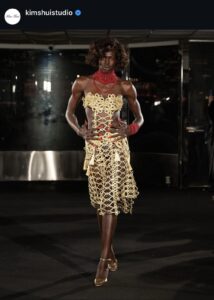
Kim Shui Fall 2026 show at New York Fashion Week
@kimshuistudio & @kimshui via Instagram

Per the collection notes, “Set against New York City’s surrounding waterways, the show repositions the city as a modern terrain of migration and transformation. Presented aboard a moving vessel, the runway becomes a living metaphor, the boat acting as a contemporary counterpart to the horse, an instrument of mobility, while the skyline shifts with the evolving landscape.”

Kim Shui Fall 2026 show at New York Fashion Week
@kimshuistudio via Instagram

Shui looked to Mongolia’s nomadic past, where movement wasn’t a choice but a way of life, from vast landscapes to the era of Genghis Khan. So, after a brief struggle with gravity and balance, the runway came to life, and it had it all. Greens, reds, and sunburnt tones were all part of it. Just like animal print, faux fur, thick velvet, suede, and leather. But what actually stood out were the knots. Not as decoration, but as the thing holding everything together. Shui pushed traditional Chinese knotting into structural territory, cords under tension and handwork doing the job fabric usually does. In several looks, the clothes relied almost entirely on this system. Oversized pankou closures kept showing up, working at once as fastenings, details, and the logic behind the whole garment.

Kim Shui Fall 2026 show at New York Fashion Week
@kimshuistudio via Instagram

The first knotted looks took me straight to China. Somewhere in the middle, I drifted into 80s Italy. Then suddenly, it all felt aggressively New York, before circling back again. Not a single look invited quiet thoughts or passive viewing. From oversized hair bows to complex construction, it all read very Kim Shui, even when it wobbled.