Halsey’s debut album, Badlands, was a Tumblr-core classic, which makes it hard to believe it was released 10 years ago today. In celebration, the singer-songwriter has announced an international Back to the Badlands Tour, which will take her across North America, Europe, and Australia beginning October 14. Tickets go on sale to the general public next Friday (September 5) at 10:00 am local time. Check out the list of dates below.
On social media, Halsey wrote: “A Badlands club tour. Tiny venues. GA floors. 10 years later. I’ve been waiting a decade to re-live it all over again with you.”
Tomorrow, Halsey will also release Badlands: Anthology, a reissue of the album featuring previously unreleased demos, a 2015 concert recording, and other rarities. She only just wrapped up her For My Last Trick tour.
Halsey 2025-2026 Tour Dates:
Oct 14 — Los Angeles, CA – Hollywood Forever
Oct 22 — Mexico City, MX – Pabellon Oeste
Oct 24 — Dallas, TX – South Side Ballroom
Oct 26 — Atlanta, GA – Coca-Cola Roxy
Oct 29 — Philadelphia, PA – The Fillmore Philadelphia
Nov 2 — Boston, MA – MGM Music Hall At Fenway
Nov 4 — Washington, DC – The Anthem
Nov 6 — Minneapolis, MN – Armory
Nov 8 — Chicago, IL – Byline Bank Aragon Ballroom
Nov 12 — Denver, CO – Fillmore Auditorium
Jan 9 — Toronto, ON – History
Jan 13 — New York, NY – Hammerstein Ballroom
Jan 17 — Detroit, MI – The Fillmore Detroit
Jan 22 — Amsterdam, NI – Afas Live
Jan 23 — Berlin, DE – Velodrome
Jan 24 — Dusseldorf, DE – Mitsubishi Electric Halle
Jan 26 — Paris, FR – L’olympia
Jan 29 — Manchester, UK – the Hall, Avviva Studios
Feb 3 — London UK – 02 Academy Brixton
Feb 13 — Sydney, AU – the Hordern Pavilion
Feb 17 — Sydney, AU – Riverstage
Feb 19 — Melbourne, AU – Festival Hall
In this segment, we round up the best albums released each month. From Amaarae to Water From Your Eyes, here are, in alphabetical order, the best albums of August 2025.
Ada Lea, when i paint my masterpiece
Following 2021’s kaleidoscopic one hand on the steering wheel the other sewing a garden, relentless touring forced Ada Lea to restructure her life and priorities as a musician, which is not to say she stopped writing songs – in fact, she wrote over 200 over a period of three years, 16 of which made it onto the new album, and most of which originated in the Songwriting Method, a community-based group she kept up that required submitting songs with a deadline. On songs like ‘it isn’t enough’, you can almost hear her rushing to get a song down before midnight, singing, “Today I lost/ Today is gone/ Today I really fought.” Far from impatient or forced, however, when i paint my masterpiece sounds unhurried and precious, glad not to have slipped into past tense. Read our inspirations interview with Ada Lea.
“I’m a material bitch,” Amaarae declares on ‘100DRUM’, “but I know the worth of a mind.” On ‘B2B’, she repeats the word “heart” more times than probably any body part mentioned on her new album. And yes, it’s called Black Star and Naomi Campbell appears on one song, but its best track is probably the PinkPantheress duet, which says a lot about its yearning emotionality. Black Star is as exuberant, reckless, and lavish as the Ghanaian American visionary’s major label debut, Fountain Baby, but it’s also mindful and sensitive as it expands on her globalist, Afrodiasporic vision of club music. The more time she spends in the club, the softer – yet no less inventive – her music becomes. You can get off a dozen different drugs, she knows, but no high can match that of a love that outlasts the rush.
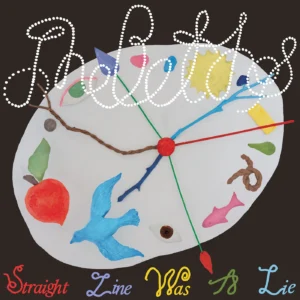
Linear progression is generally a myth, yet one often projected onto artists, who must continually level up their sound without straying from their original vision. The Beths have indeed tightened, coloured, and expanded their approach since their 2018 breakout Future Me Hates Me, and while they’re not quite making a statement about their own trajectory with Straight Line Was a Lie, the titular realization extends to the way they handle both lyrics and instrumentation: careening between the immediacy, anxiety, and tenderness of their previous albums, but leaving space for different shades of weariness and anhedonia, a void that doesn’t dull so much as activate a new side of New Zealand quartet’s sound. “Let me be weak/ With a sad tear drying on my cheek,” Liz Stokes sings on ‘Best Laid Plans’, closing out an album all about gathering the strength to let it roll down. Read the full review.
Case Oats recorded their debut album, Last Missouri Exit, after months of playing its songs on the road, which is evident in their buoyant, easygoing confidence. It’s named after a sign on the freeway to Chicago from Casey Gomez Walker’s hometown that, one day, signalled the end of childhood for her. So Last Missouri Exit is a record of early adulthood, but a uniquely incisive and generous one at that, harbouring tenderness for the roughest parts of ourselves that surface in those transitional moments. Seeing it in her friends and bandmates first, Gomez Walker sings with the warmth of knowing the rest of the world will relate. Read our Artist Spotlight interview with Case Oats.
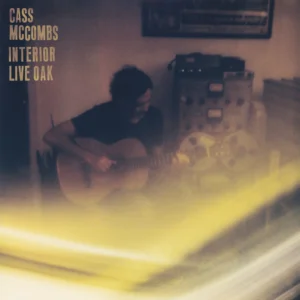
“I never lie in my songs,” Cass McCombs repeats on ‘I Never Dream About Trains’, a highlight from Interior Live Oak, his 11th album, which means he has certainly released over a hundred. Lest you take his words at face value, the odd specificity of the ensuing lyrics should elicit some skepticism (“I never dream about holding you tight/ On the sand in Pescadero”). What he sings on the previous song, though, is much closer to the truth: “I mean everything I say, or something quite like it.” The meaning of Interior Live Oak, a 12-song double album that follows 2022’s excellent but much more concise Heartmind, remains elusive, but McCombs manages to weave it all together, singing through a cast of unreliable narrators that only cement his own musical consistency and earnestness. They are dancers and cynics, real and imagined, brutally honest and spiritually truth-bearing. If they all, at times, seem buried in sleep, that’s because dreams, they say, have no lies to hide. Read the full review.
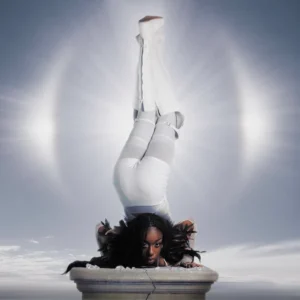
Debby Friday likes to craft music that seeps into the subconscious while being intensely physical. “Are you aware of my body? Do you like the way I dance?” she sings on ‘Arcadia’, from her recently released album The Starr of the Queen of Life, immediately following it with: “Could you cut to the core of my matter?” For the Nigerian-Canadian artist, the dancefloor not just a vessel for escapism but a sacred place, teeming with symbolic and actual possibilities, in the vein of FKA twigs’ latest album EUSEXUA. On the dizzying, starry-eyed follow-up to her Polaris Prize-winning debut, GOOD LUCK, Friday steps into the spotlight as a means of interrogating its very performativity, delivering sweaty dance cuts before urging you to see things in a different light. Read our inspirations interview with Debby Friday.
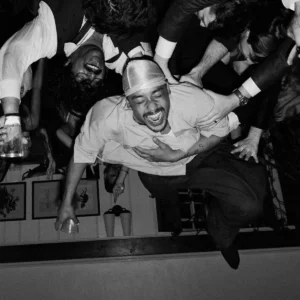
When Dijon sings that he’s on fire, you believe him. But it’s different from any other artist trying to sell the idea that lasting love has the power to obliterate all your insecurities. It’s chaotic, Dijon Duenas affirms, making swooning, infectious, dazzling R&B music that can sound on the verge of a breakdown even – or especially – at its most ecstatic. With help from Andrew Sarlo, Henry Kwapis, and Michael Gordon, the Los Angeles-based musician and producer has no issue fragmenting his most immediate hooks or rendering his voice unrecognizable when he’s most breathlessly trying to express himself. Whatever inspiration it owes to the past, Baby suggests you can no longer make beautiful, revelatory pop music without sounding at least a bit precarious or unwieldy.
Ethel Cain, Willoughby Tucker, I’ll Always Love You
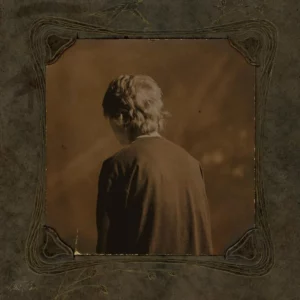
Ethel Cain‘s latest album is billed as the prequel to her 2022 breakthrough Preacher’s Daughter, a debut album that served as the beginning of a trilogy following three generations of women. If Willoughby Tucker “closes the chapter” on Anhedönia’s alter ego, as she has claimed, it’s an unwaveringly tender and astounding portrait, caught between nostalgia and dreams of violence, tangled yet steadfast in its romantic beliefs. And while she has framed the ambient-leaning Perverts as a standalone project, it also acts as a musical bridge to the new album, which balances her atmospheric and narrative world-building. Cain can’t help but draw a line from love straight to death, but not without submerging herself in it. Read the full review.
Sophie Payten keeps an endless note on her phone where she jots down lines or words as they come to her. During the eighteen months that she couldn’t bear to write songs, while working as doctor through the pandemic (having just quit to focus on music), those ideas were reasonably scattered. But when she sat in Phoenix Central Park in an early attempt to start piecing together Like Plasticine, it was clear she had absorbed enough accumulating emotion – grief felt and observed, love gained and lost – to mould it into shape. Like both her writing and recording process, the songs on the album aren’t as linear as 2020’s Our Two Skin, but they are revelatory in its softness and malleability, asserting that we are as open to transformation in life as we are in death. Read our inspirations interview with Gordi.
The title of Humour‘s debut album is taken from a line from discarded songabout Andrea Christodoulidis’ decision to start learning the language as a second generation Greek, and though he spends most of the album screaming in an American accent that bears out the characters he’s inhabiting, you can hear him speaking it a bit in conversation with his father on the eponymous track, where they read Andreas Embirikos’ poem On Philhellenes Street. “This searing heat is necessary to produce such light,” he writes of the overwhelming weather in Athens, not unlike how Humour’s alluring, dreamlike hooks and tender revelations radiate through their blistering post-hardcore. Christodoulidis amalgamates personal, familial, and mythological stories much in the same way the group bridges styles, resulting in a record that is as fiercely heartfelt as it is surrealist, and, well, humorously absurd. Read our Artist Spotlight interview with Humour.
With a title like Bugland, it feels lazy to call No Joy’s new album playful. It’s really the way Jasamine White-Gluz’s work registers as a playground that’s so thrilling: a place that triggers fuzzy memories, a fantastical portal, a wild abstraction with no equivalent in the real world. Beyond their shared musical interests and boundless genre-hopping – having the most fun in the islands of nu metal, shoegaze, and pop music – it’s where her approach intersects with Fire-Toolz’s Angel Marcloid, who co-produced the Motherhood follow-up not just with wide-eyed maximalism but true enthusiasm. It’s a wonder to hear them play and burst into a swirl of emotions mostly antithetical to the project’s name, to linger and rush out of them – maybe cutting the word in half does it more justice – fully.
Effortless – that word has been used to describe Superchunk’s steady delivery of punchy hooks and anthemic choruses for over three decades. But even going by instinct requires not just the wherewithal but the inspiration to follow through with the original idea. ‘Care Less’, a highlight from the indie veterans’ new album Songs in the Key of Yikes, is all about trying to. “Whatever you do don’t waste your life/ Searching for a song,” Mac McCaughan quips, a line that, like many things about the record at first glance, can seem fatalistic. But McCaughan and his bandmates’ workmanlike dedication remains indisputable. Instead, he suggests, let the songs come to you. Try to make magic out of words and sounds, but if you find yourself digging or thinking too hard, let a single question – the one that gives the record’s opener its title – be your axis: ‘Is It Making You Feel Something?’ Read our inspirations interview with Superchunk.
For their mesmerizing second album, Magic of the Sale, Teethe’s recording process, split between their current home bases across Dallas and Austin, stayed virtually unchanged: tracking demos and uploading them to a shared folder. This time, though, the group of trusted contributors that helped bring to life their tender-hearted melancholy and warm existentialism widened: Charlie Martin of Hovvdy, performing additional piano; Wednesday/MJ Lenderman’s Xandy Chelmis on pedal steel, producer Logan Hornyak of Melaina Kol, and Emily Elkin on cello. “Hear your words like photos felt in sound,” a muffled voice sings on ‘Iron Wine’, stirring a wave of distortion. “Holding what our eyes can’t make up now.” Magic of the Sale sounds like slowing down the blink of an eye, where the smallest, most precious emotions seep into view. Read our Artist Spotlight interview with Teethe.
In an interview promoting his new albumGuitar, which was released on the same day as Water From Your Eyes’ It’s a Beautiful Place, Mac DeMarco – the archetypal indie rock prankster, a label also applied to the NYC duo of Rachel Brown and Nate Amos – talked about “the Robin Williams effect.” He explained, “Robin Williams is all fun and games, and then you watch Good Will Hunting and you’re like—fuck. It’s good.” Funnily enough, Amos joked that Williams is “a silent member of Water From Your Eyes” in press materials because a poster from the Mork & Mindy era hangs in his bedroom, where he still makes all the music for WFYE, which now sounds bigger than ever. But the Robin Williams effect is also not a bad way of describing It’s a Beautiful Place, which is characteristically silly, freaky, and clunky – because what’s more awkward than making sci-fi indie rock about cosmic existentialism – until its vast emotional range hits you. Read the full review.
BENEE has announced her sophomore album, Ur An Angel I’m Just Particles, which is set for release on November 7 via Republic Records. It’s led by the vibrant, infectious new single ‘Cinnamon’, which comes paired with a Keith Herron-directed video. Check it out below.
“I’ve been working on this for about three years now, and I’m so happy to finally be releasing my second album!” BENEE shared in a statement. “I worked so hard on this and had a really clear story for the album. Over time, it really started to make sense, and I’m so proud of it—it means the world to me!”
She continued: “I wrote ‘Cinnamon’ with my friend Ryan Raines, who is an incredible producer. We made it about a year ago, and I have loved the song from the start. I’m so stoked to be sharing it with the world, it means a lot to me. I wrote it about moving to LA and feeling a little bit lost in the chaos, like everything was falling apart. It felt like nothing was working. The chorus is quite ethereal and a nice let go for me. I thought, ‘Well even if everything around me has turned to shit, I’m going to stay sweet, still be kind, and attract the right kind of people.’ I got my friend Sora to play the cello in the bridge, which I LOVE. I cry sometimes when I listen to that part. And it’s such a fun song to perform live!”
There’s so much music coming out all the time that it’s hard to keep track. On those days when the influx of new tracks is particularly overwhelming, we sift through the noise to bring you a curated list of the most interesting new releases (the best of which will be added to our Best New Songs playlist). Below, check out our track roundup for Wednesday, August 27, 2025.
Chat Pile and Hayden Pedigo – ‘Radioactive Dreams’
Noise rockers Chat Pile and fingerstyle guitarist Hayden Pedigo have offered the first taste of their unlikely collaborative LP, In the Earth Again. “We all wanted to avoid the downfall you see in a lot of collab records,” Pedigo said. “We didn’t want this record to either end up primarily sounding like one of us more than the other.” You can hear their styles gracefully coalescing on the striking new single ‘Radioactive Dreams’.
Bright Eyes have announced a new EP, Kids Table, with a swaying, hypnotic track featuring Hurry for the Riff Raff’s Alynda Segarra. “Alynda Segarra is one of the most soulful people I have ever encountered,” Conor Oberst said in a statement. “Everything that passes through them is haunted by the weary ghost of American music past. I have had the good fortune of recording and performing with them on many occasions and I am always blown away by Alynda’s ability to channel what is both intangible and universal. Seemingly walking along in a second line of skeletons. Blowing on a valiant horn. I know it sounds crazy but, yet, there Alynda is. Always so very present but with one foot on the other side.”
Elias Rønnenfelt – ‘USA Baby’
Elias Rønnenfelt will showcase the idiosyncratic music he’s been making outside of Iceage with a new album, Speak Daggers, set for release on October 17 via Escho. The follow-up to year’s Heavy Glory will feature Copenhagen artists Erika de Casier and Fine, as well as the Congos. The slinky, shadowy lead single ‘USA Baby’ is out now.
Oliver Sim – ‘Obsession’
The xx’s Oliver Sim is back with his first song in three years, ‘Obsession’. Produced by Bullion and Jockstrap’s Taylor Skye, the track is full of vibrant and eclectic flourishes, and Sharna Osbourne directed its music video.
Hannah Jadagu – ‘Doing Now’
Hannah Jadagu has announced a new album, Describe, sharing ‘Doing Now’, which is as self-aware as it is catchy. The follow-up to her 2023 debut Aperture also features the early single ‘My Love’.
Sharp Pins – ‘(I Wanna) Be Your Girl’
Lifeguard’s Kai Slater has announced a new album under the Sharp Pins moniker. Balloon Balloon Balloon comes out November 21, and the charming, slightly haunted ‘(I Wanna) Be Your Girl’ is out now.
fanclubwallet – ‘New Distraction’
fanclubwallet, the project of Hannah Judge, has announced their sophomore album Living While Dying, arriving October 24 via Lauren Records. The lead single ‘New Distraction’ is a hooky indie pop track about pushing through a kind of anhedonia. “‘Cmon, I’m waiting, for some kind of new distraction’ was a mantra circling my brain these last couple years,” Judge shared. “This song came out of nowhere for me, though. I was too anxious to write a solo guitar lick for this but the band encouraged me, and it became one of my favourite parts. It reminds me of a Coldplay B-Side.”
Joyer – Spell
East Coast indie rock duo Joyer, the project of brothers Nick and Shane Sullivan, have shared ‘Spell’, the latest offering from their upcoming LP On The Other End of the Line…. “This was the last song we wrote before getting into the studio, and a lot of it came together in the actual recording process, which was really fun since that was how we used to approach writing back when we used to do everything ourselves,” Nick Sullivan explained. “I remember Shane pulling that fuzzy lead out of nowhere and the rest of us immediately being like ‘yup, that’s it,’ and that ultimately became sort of the “crux” of the song. It’s become one of my favorites on the album because of the circumstances of how it was made-it’s kind of like a time capsule of our time in Chicago making the record.”
Maruja – ‘Trenches’
Manchester’s Maruja have unveiled, ‘Trenches’, the fourth single from their debut album Pain to Power. Blistering in Rage Against the Machine fashion, the track directly quotes the words of red Hampton: “There will be no revolution ‘til the people believe that they are revolutionary.” According to the band, “It’s reminder to the listener that they are not what this culture teaches. They are, in fact, powerful beyond measure and when they believe in themselves, can make a difference. The song is a call for revolution in the face of the oppressive.”
Midlake – ‘The Ghouls’
Midlake have announced their sixth studio album, A Bridge to Far, which is out November 7 and was produced by Sam Evian. “It helped us build songs together again,” Midlake’s Eric Pulido said of the track, which was written during a period of uncertainty about the band’s future, “and hopefully encourages others to want to hear the full collection.”
Sofie Royer – ‘AUTO’
Sofie Royer has returned with ‘AUTO’, her first new music since 2024’s Young-Girl Forever. It’s an infectious, escapist track about her dreams of “driving away and leaving it all behind for just one second,” in her words, and the music video was shot in Paris and directed by Grégoire Léon-Dufour.
mei ehara – ‘Fuukeiga (Cut Out)’
mei ehara has dropped an intimate new track, ‘Fuukeiga (Cut Out)’, from her forthcoming album All About McGuffin. “We are always seen through the eyes of others—defined, judged, expected, sometimes dismissed,” ehara shared. “That gaze can weigh heavily, making us falter, hesitate, and turn questions inward. Yet the influence of others is not only a burden. It can open paths we wouldn’t discover on our own, shaping the choices that carry us forward. Each step we take, in the rhythm of these connections, carries both unease and anticipation. The future stays opaque, but moving toward it brings its own kind of charge — a tension, an exhilaration, like placing a quiet bet on what comes next.”
Upchuck – ‘Tired’
Upchuck have unleashed ‘Tired’, a frenetic preview of their upcoming full-length I’m Nice Now. “How many times I gotta tell ‘em that our pockets cryin’?” vocalist KT despairs. “How many people you gon’ lie to and say you’re not lyin’?”
Frost Children – ‘Bound2U’
Frost Children have unveiled ‘BOUND2U’, the dynamic fourth offering from their upcoming album SISTER. “‘Bound2U’ to me is all about love’s self indulgence, especially a love so heartbreakingly inconsistent, where one leaves and returns at their own will, stringing along the other’s heart with a leash,” the duo’s Lulu explained. “I feel like attachment in love can sometimes almost look like painful bondage, thinking that one day it will either get used to the tension or inevitably break from all sides. The beat also revolves around this looping guitar sample from our song ‘Bernadette’ from our last album Hearth Room, which is one of my favorites. This song feels like a perfect harmony of true songwriting and true dance. That’s what we’re all about.”
Lawn – ‘Pressure’
Lawn have previewed their forthcoming record God Made the Highway with a jittery and sardonic post-punk track called ‘Pressure’. It follows lead single ‘Davie’.
Die Spitz – ‘Punishers’
Die Spitz have shared one final single from their debut LP, Something to Consume, out September 12 via Third Man Records. “‘Punishers’ is about things or people who ‘punish,” Chloe De St. Aubin said of the ferocious, galvanizing tune. “Whether it’s withholding love, jealousy, or keeping someone or even yourself hooked in a cycle—the song captures the feelings of insanity and frustration punishers bring.” Of the Justin Wilson-directed video, she added: “The ‘Punishers’ video features the story of a sad clown with little talent to give…but with her heart on her sleeve, she still yearns to be a star.”
Schedule 1 has finally launched its long-awaited major update — the Rival Cartel patch. This new version brings in the Benzies Family, along with new features, gameplay improvements, and many bug fixes.
Update Arrives After Delay
The game’s version 0.4.0 landed about a month later than first planned. According to the post on Steam, solo creator Tyler (TVGS) explained that the delay was due to several factors that disrupted the development. More clearly, he had underestimated the time required to implement new features. His last-minute additions also pushed the timeline back. Likewise, his personal schedule was packed due to personal stuff and college work.
“I’d just like to apologise for my lack of timeliness with this update…safe to say it’s been a hectic couple of months!” wrote Tyler on a Steam post.
Despite the setbacks, the new update for Schedule 1 brings exciting new content and quality-of-life enhancements that players have been eager to try.
Meet the Benzies Family
The biggest inclusion of the update is the Benzies Family. This group is a powerful new rival cartel based in Hylan Point. Once players unlock the required number of customers in Westville, they can encounter the family. Based on the official patch notes on Steam, interactions with the family include ambushes, cartel-customer negotiations, cartel-player deals during truces, dead drop thefts, and dealer robberies. Also, this family increases the depth and complexity of Schedule 1. Similarly, the interactions create fresh challenges and ways to play for gamers as they face an opposing force.
Additional Features and Items
As part of version 0.4.0, there is a new place to buy called Hyland Manor. However, players can do it only after finishing the storyline of the Benzies Family. Likewise, a ride named the “Hotbox” is now in the game. Weapon options have expanded with a pump shotgun and shotgun shells. Tyler also added a graffiti system that lets players spray paint on surfaces. This feature allows players to lower cartel influence and gain experience points. Players can buy the spray cans and a special cleaner item at Gas Mart to remove the graffiti.
Gameplay Improvements and Safety
Gamerant says players can now pickpocket cops and knocked-out NPCs. On the other hand, player actions now have consequences. In particular, a customer will not place new orders for 72 hours after being attacked.
To help protect player progress, the developer added a tool that auto-saves games.
For the complete list of the new patch notes, visit Steam. Meanwhile, fans can look forward to further improvements, as Tyler promises that Schedule 1 will continue to grow.
Digital gambling platforms in 2025 prioritize speed, clarity, and functionality to meet rising user expectations and maintain regulatory compliance. As more players access casinos through smartphones and tablets, seamless navigation, transparent interfaces, and adaptive design have become essential components. In the Czech Republic, operators like 69Games represent how local platforms incorporate these improvements while aligning with national licensing frameworks and user protection mandates.
Adaptive Design and Navigation Responsiveness
Modern user interfaces in online casinos are developed with responsive layouts that automatically adjust based on screen size and resolution. Whether accessed on a laptop or smartphone, menus, filters, and core features retain a consistent position and appearance. At 69Games, players encounter a uniform experience across devices, with navigation elements and account tools remaining accessible at every screen depth.
According to data published by the Czech Statistical Office, over 85% of internet users in the country access digital services via mobile devices. Platforms must therefore design environments that perform equally well under mobile data constraints, browser limitations, and smaller displays. Layouts at 69Games maintain real-time responsiveness, which includes resizing buttons, adapting content lists, and minimizing load times during session transitions.
Real-Time Feedback, Game Tracking, and Interface Interaction
The inclusion of dynamic user feedback has transformed how players engage with online games. Interactive animations, progress indicators, and embedded win/loss summaries are now standard in regulated platforms. 69Games features these tools across slots, table games, and mini-game categories, displaying bet results, bonus eligibility, and historical data without requiring users to leave the session.
Interface Feature
Purpose
Applied at 69Games
Bonus Progress Tracker
Shows wagering status in real time
Yes
Game History Display
Records recent wins, losses, and bets
Yes
In-Session Alerts
Provides system notifications during play
Yes
These systems improve clarity and reduce the need for external support or manual log checks. Enhanced visual responses also ensure that player actions are followed by immediate confirmations, preventing repetition or missteps.
Payments, Support, and Cross-Feature Transparency
An improved user experience also includes clearer financial operations and support pathways. Payment systems must be fast, secure, and local-currency compatible. At 69Games, deposits and withdrawals are processed in Czech koruna (CZK), with confirmation receipts issued immediately and payout timelines provided upfront. Players can access their transaction histories within their account interface and view pending verification steps directly from the cashier panel.
Support access is embedded into every page footer, enabling instant queries via live chat.
Help desk routing directs questions to appropriate departments through keyword detection.
Identity checks are conducted within the user profile for quicker processing and fewer interruptions.
This level of integration supports a more fluid experience by reducing delays in both financial and assistance workflows.
Summary
User experience in online casinos has become more streamlined, intuitive, and mobile-responsive by 2025. Platforms such as 69Games demonstrate how regulated Czech operators are addressing usability through adaptive design, real-time feedback, and efficient payment and support integration. These developments reflect a broader industry shift toward transparency, accessibility, and user retention grounded in functionality rather than visual excess.
Preference českých uživatelů online hazardních her odhalují specifické vzorce chování. Výběr vhodné platformy neprobíhá náhodně, ale na základě informovaných rozhodnutí. Zohledňovány jsou jak právní aspekty, tak technické funkce a uživatelský komfort. Stabilní provoz, lokalizace rozhraní a transparentní podmínky tvoří základní rámec důvěry.
Značky jako Casino Kartáč se v tomto kontextu profilují jako příklady operátorů, kteří reagují na specifické požadavky CZ publika. Spolehlivé kasinové prostředí nevzniká pouze na základě výběru her, ale i díky funkčnímu zázemí podpory a ověřeným platebním metodám.
Přehled hlavních aspektů rozhodování
Z nedávných průzkumů vyplynulo, že Češi preferují kasina s přehlednou nabídkou výherních automatů, efektivním rozhraním a podporou v češtině. Výběr ovlivňuje i rychlost výplat a míra regulace.
Kritérium volby kasina
Priorita pro hráče (%)
Bezpečné platební metody
89
Ověřená licence
82
Lokalizované rozhraní
76
Nabídka výherních automatů
71
Uživatelé vyhledávají jasně formulované podmínky bonusových nabídek, které nevyžadují složité kroky k získání. Kasino Kartáč se vyznačuje kombinací transparentní bonusové politiky a podpory, která komunikuje výhradně v českém jazyce.
Lokální podpora a prostředí s důvěrou
V Česku si stále více hráčů vybírá platformy, které nabízejí místní zákaznickou péči a přímé napojení na tuzemské bankovní služby. Preferovány jsou platformy, kde lze rychle ověřit identitu bez nadměrného zdržování.
Důležité faktory hráčského rozhodování:
Rychlost výběru výhry: většina hráčů očekává připsání do 24 hodin;
Jasná pravidla bonusů: podmínky musí být dostupné před registrací;
Dostupnost zákaznické linky v češtině: zvyšuje míru důvěry a snižuje nedorozumění.
Zkušenost s kasinem se tak neodvíjí pouze od výběru automatů, ale i od kvality kontaktu se zástupci platformy.
Uživatelské rozhraní a herní nabídka
Technické zpracování kasina je pro hráče zásadní. Rozhraní musí být přehledné, funkční i na mobilních zařízeních a dostupné pro všechny typy připojení. Kasino Kartáč poskytuje prostředí, které splňuje i náročnější požadavky na responsivitu.
Technický parametr
Očekávání hráčů
Přístupnost z mobilu
Ano
Podpora výherních automatů
Více než 200 titulů
Možnosti hry zdarma
V základní nabídce
Využívání herní platformy bez nutnosti okamžitého hraní o peníze je další očekávanou funkcionalitou.
Závěrečný pohled na rozhodovací proces
Rozhodování hráčů v České republice není impulzivní, ale vychází z kombinace důvěry, lokalizace a funkčnosti. Provozovatelé jako Casino Kartáč představují konkrétní příklad toho, jak může platforma splnit technické, právní i uživatelské nároky současného CZ publika. Výběr kasina tak zůstává racionálním procesem se silným důrazem na transparentnost.
Day three of Coachella, your feet feel like raw hamburger, your lower back is screaming from sleeping on that air mattress from hell, and you’re pretty sure your neck is permanently stuck at a weird angle from craning to see the stage over tall people. But somehow, you’re still planning to hit the afterparty because FOMO is stronger than physical pain.
Sound familiar? You’re not alone in the post-festival body rebellion. Most music lovers treat festivals like athletic events when it comes to planning outfits and lineups, but completely ignore the fact that your body is about to endure a multi-day marathon of concrete dancing, questionable sleeping arrangements, and physical punishment that would make a CrossFit trainer weep.
Here’s how to recover from festival season without spending the next week walking like you aged thirty years overnight.
The Festival Body Breakdown Nobody Talks About
Let’s get real about what festivals do to your body. You’re not just “standing around listening to music.” You’re on your feet for 10-12 hours on unforgiving concrete, carrying a backpack loaded with water bottles and backup phone chargers, craning your neck at weird angles to see over crowds, and probably sleeping in positions that would make a yoga instructor concerned.
Your feet take the worst beating. Most people focus on cute festival outfits and forget that their feet will be trapped in those boots for an entire day. By evening, you’re dealing with hot spots, blisters, and that specific kind of foot swelling that makes you question every life choice.
Then there’s what I call “festival neck”—that crick you get from looking up at stages while surrounded by people taller than you. Mix in the constant shoulder tension from protecting your space in crowds, plus the inevitable dehydration headaches, and you’ve got a perfect storm of physical misery.
Pro insight: Your body starts breaking down by hour six, but most people don’t notice because adrenaline and crowd energy mask the damage. The real pain hits the next morning when that natural high wears off.
Smart Recovery Strategies That Work
Some people bounce back in a day, others are wrecked for a week. The difference? They treat recovery seriously.
First thing when you get home: Hot shower, then blast yourself with cold water for 30 seconds. Yes, it sucks, but it works.
A lot of festival-goers are now usingpain-relieving CBD rub for this exact situation. It handles sore muscles and inflammation at the same time, plus the menthol feels amazing on destroyed feet.
Then prop your feet up higher than your heart for ten minutes. Works great.
Foot Salvation (Because Your Feet Hate You Right Now)
Your feet deserve their own recovery category. By day three of any festival, they’ve absorbed thousands of impacts on concrete and are probably staging a full rebellion.
The ice bath trick: Cold water + ice cubes for 5 minutes, then warm water for 2 minutes. Do this three times. Forces your blood vessels to pump out all the gross stuff making your feet throb.
Got a tennis ball? Roll it under your feet for a couple minutes, pressing on the tight spots.
Even easier: Freeze a water bottle and roll it under your feet. Ice + massage in one.
Sleep Strategy
Festival sleep is terrible, but post-festival sleep can save your recovery. Your body repairs itself during deep sleep, so this isn’t optional—it’s medicine.
Sleep researchers call it “sleep debt.” Your body needs extra time to fix itself. Plan for 9 hours the first night back.
Keep your room colder than usual (65-67°F). Your body temperature drops when you sleep deeply, so help it out.
Can’t relax? Tense your toes for 5 seconds, then completely let go. Work your way up your whole body. By the time you hit your head, everything should feel loose.
Nutrition That Speeds Recovery
Your festival diet probably consisted of overpriced corn dogs and whatever snacks you smuggled in. Time to give your body actual fuel for recovery.
Eat foods that fight inflammation for the next few days. Salmon, spinach, berries—stuff like that. Tart cherry juice works too (about 8 ounces before bed).
Don’t just chug water. You need electrolytes back. Coconut water beats sports drinks, and add a pinch of salt so your body actually uses it.
Quick tip: Eat protein within two hours of getting home. Your muscles need it to repair.
When Your Body Stages a Full Revolt
Sometimes you actually hurt yourself instead of just getting sore. Know the difference.
Joint pain that won’t go away might mean you tweaked something while dancing on uneven ground. Sharp, shooting pains aren’t normal soreness.
The “can’t turn my head” thing usually gets better with heat and gentle stretching. But headaches + neck stiffness aren’t normal.
Watch out for: Swelling that won’t go down, pain that gets worse, or joints that feel wobbly.
The Bottom Line
Recovery isn’t optional if you want to keep going to festivals without wrecking yourself. The people who handle festival season like pros aren’t superhuman—they just plan for the aftermath.
Your body takes serious abuse for your entertainment. Smart recovery means it’s ready for whatever’s next, whether that’s another show or just normal life stuff like walking without wincing.
For just about as long as human beings have been around, they have been playing games with one another. Some of these games emerged gradually, building on previous iterations. In some cases, they’ve been sudden inventions, brought about by a single designer.
Whatever their origins, only a minority of the games we devise go on to stand the test of time. Think about classics like poker, blackjack and chess. But exactly what qualities do the enduring classics have in common? Let’s take a look. Some games, like Bingo 90, have lasted in part because of their ability to evolve, with countless variations now being available on countless formats.
Innovation and Influence
Sometimes, it’s the addition of a fresh set of mechanics that can make a game appeal. You might think of the introduction of the analogue stick on the Nintendo 64 controller, which made gradual movement in Mario 64 and other games possible.
For a game’s innovations to be easily replicable, of course, it needs to rely on technology that’s widely available. It’s partly for this reason that so many games are based on a classic deck of playing cards.
Cultural Impact and Community
Sometimes, a game can have such an impact that it creates warm, fond memories for an entire generation. This sense of nostalgia can provide a reason for players to return to a given game, even decades later. In some cases, this can become part of a recurring family tradition, or a much larger cultural phenomenon. Just about everyone in the UK might have memories of playing Monopoly or Scrabble as they grew up.
Adaptation and Relevance in the Modern Era
Sometimes, classic games can be made more accessible and convenient with the help of modern technologies. You might think of digital card games that take place exclusively on mobile applications. Digital slot machines, roulette wheels, and craps tables are all available.
On the other hand, despite many predictions, games that rely on physical objects and tactile mechanics, like dice and cards, are still in good health, even in a digital world. You might find that many board games are still played, and that there’s a vibrant market for new ones. Games like Pandemic and CATAN provide a modern take on the classic board game.
Of course, digital trends represent the main force driving modern gaming forward. And the availability of new digital tools means that game design is now something that everyone can get into, even if they’re developing in complete isolation. The huge success of Balatro proves that there’s still plenty of life left in traditional playing cards – even when they’re being presented in a distinctly non-traditional form!
In today’s world, confidence is no longer seen as a luxury, it’s a necessity. Whether you’re walking into a job interview, posting on social media, or simply stepping out for coffee, how you feel about yourself often determines how you show up. What’s fascinating is how the pursuit of confidence has evolved. It’s no longer tied to just one area of life. Instead, it’s the intersection of beauty, wellness, and technology that’s shaping modern self-assurance.
From skincare rituals and meditation apps to high-tech cosmetic treatments, people are finding new ways to align how they look with how they feel. Confidence has become a culture all its own, one that’s deeply personal but also widely influenced by trends, innovation, and the global conversation around self-expression.
The Rise of Wellness Culture
Not long ago, wellness was simply about eating right and getting enough exercise. Today, it’s a multi-billion-dollar industry and a cornerstone of modern culture. Apps guide us through breathing exercises, fitness influencers design entire lifestyles around balance, and mindfulness practices have made their way into boardrooms and classrooms alike.
Wellness culture is about more than health; it’s about empowerment. The ability to say, “I’m taking care of myself” is as much a confidence boost as it is a health benefit. For many, confidence begins within, through sleep, hydration, mindful practices, and healthy choices that make them feel grounded and capable.
Beauty as Empowerment
For generations, beauty was dismissed as vanity. Now, it’s understood as one of the most powerful forms of self-expression. Makeup, fashion, and skincare have become tools for empowerment, allowing people to show the world who they are, or who they want to be, on any given day.
Social media has amplified this shift. Trends like skin positivity, gender-fluid makeup, and minimalist beauty movements highlight that confidence doesn’t mean fitting a mold. It means embracing individuality. Beauty, in this cultural moment, is less about covering up and more about enhancing what’s already there.
Technology’s Role in Shaping Confidence
If wellness starts within and beauty projects outward, technology is the bridge that connects the two. Advances in cosmetic treatments and medical aesthetics have redefined what’s possible when it comes to appearance and confidence.
Laser skincare treatments, non-invasive procedures, and even AI-powered posture trainers are part of a new ecosystem of tech-driven self-improvement. What was once reserved for celebrities or the elite is now widely accessible, changing how ordinary people approach their self-image.
Technology is also reshaping the conversation around what’s “normal.” When treatments become easier, safer, and more affordable, more people consider them, not out of vanity, but as part of an ongoing investment in confidence.
Where Health Meets Aesthetics
One of the most striking cultural shifts is the rise of “functional beauty.” People want solutions that make them healthier while also improving how they look. Think clean skincare free of harmful chemicals, ergonomic fashion that feels as good as it looks, or dental care that enhances both health and confidence.
This is where the modern pursuit of confidence becomes tangible. For example, someone might focus on clear skin through both nutrition and skincare products, or invest in dental care that improves both functionality and appearance. In wellness-forward cities like Orlando, where people prioritize both health and aesthetics, advanced treatments such as dental implants in Orlando, highlight how self-care and self-image go hand in hand. The result is confidence that comes from knowing you’re healthier and happier with how you present yourself.
The Psychology of Confidence
While products and treatments can help, confidence ultimately starts with perception. Studies consistently show that how people feel about themselves influences how they perform, connect with others, and even make decisions.
Something as simple as a consistent morning routine, improved posture, or the glow that comes from exercise can dramatically change how someone sees themselves. And when perception shifts, so does reality. A person who feels confident projects that confidence, often creating opportunities and deeper connections in the process.
It’s a feedback loop: take small steps that boost how you feel, and those feelings reinforce positive behaviors, which in turn boost your confidence even more.
The Cultural Shift Toward Holistic Confidence
What makes today’s pursuit of confidence different from past decades is its holistic nature. It’s not just about makeup, gym routines, or career success, it’s about alignment. People are increasingly seeking balance between their inner world (mental health, wellness, rest) and their outer presence (beauty, fashion, aesthetics).
Movements like “slow beauty,” self-acceptance campaigns, and the rejection of hyper-filtered perfection online show a cultural hunger for authenticity. Confidence now means being comfortable in your own skin, while also having the tools, whether a serum, an app, or a treatment, to support that comfort in a way that feels true to you.
Conclusion
The modern pursuit of confidence is dynamic, layered, and deeply cultural. It’s shaped by wellness practices that strengthen the mind and body, beauty rituals that allow for self-expression, and technologies that expand what’s possible.
At its core, confidence today is less about chasing an ideal and more about finding harmony, between health and appearance, self-care and self-expression, tradition and innovation. Whether it’s a meditation app, a new skincare ritual, or investing in health-driven solutions, people are finding ways to step into the world with assurance.
Because in the end, confidence isn’t about perfection. It’s about authenticity, balance, and embracing the intersection of beauty, wellness, and technology in a way that makes you feel fully yourself.



 Following 2021’s kaleidoscopic


 “I’m a material bitch,”
  Linear progression is generally a myth, yet one often projected onto artists, who must continually level up their sound without straying from their original vision.
  Case Oats recorded their debut album, Last Missouri Exit, after months of playing its songs on the road, which is evident in their buoyant, easygoing confidence. It’s named after a sign on the freeway to Chicago from Casey Gomez Walker’s hometown that, one day, signalled the end of childhood for her. So Last Missouri Exit is a record of early adulthood, but a uniquely incisive and generous one at that, harbouring tenderness for the roughest parts of ourselves that surface in those transitional moments. Seeing it in her friends and bandmates first, Gomez Walker sings with the warmth of knowing the rest of the world will relate. Read our
  “I never lie in my songs,”
  Debby Friday
 When Dijon sings that he’s on fire, you believe him. But it’s different from any other artist trying to sell the idea that lasting love has the power to obliterate all your insecurities. It’s chaotic, Dijon Duenas affirms, making swooning, infectious, dazzling R&B music that can sound on the verge of a breakdown even – or especially – at its most ecstatic. With help from Andrew Sarlo, Henry Kwapis, and Michael Gordon, the Los Angeles-based musician and producer has no issue fragmenting his most immediate hooks or rendering his voice unrecognizable when he’s most breathlessly trying to express himself. Whatever inspiration it owes to the past, Baby suggests you can no longer make beautiful, revelatory pop music without sounding at least a bit precarious or unwieldy.
 Ethel Cain
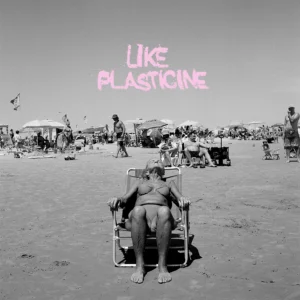 Sophie Payten keeps an endless note on her phone where she jots down lines or words as they come to her. During the eighteen months that she couldn’t bear to write songs, while working as doctor through the pandemic (having just quit to focus on music), those ideas were reasonably scattered. But when she sat in Phoenix Central Park in an early attempt to start piecing together Like Plasticine, it was clear she had absorbed enough accumulating emotion – grief felt and observed, love gained and lost – to mould it into shape. Like both her writing and recording process, the songs on the album aren’t as linear as 2020’s Our Two Skin, but they are revelatory in its softness and malleability, asserting that we are as open to transformation in life as we are in death.
 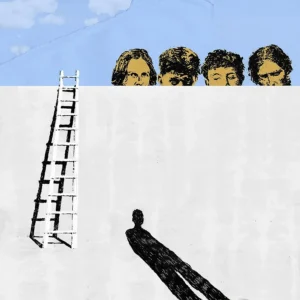 The title of
 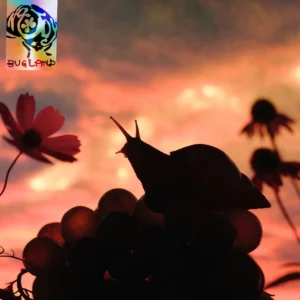 With a title like Bugland, it feels lazy to call No Joy’s new album playful. It’s really the way Jasamine White-Gluz’s work registers as a playground that’s so thrilling: a place that triggers fuzzy memories, a fantastical portal, a wild abstraction with no equivalent in the real world. Beyond their shared musical interests and boundless genre-hopping – having the most fun in the islands of nu metal, shoegaze, and pop music – it’s where her approach intersects with Fire-Toolz’s Angel Marcloid, who co-produced the Motherhood follow-up not just with wide-eyed maximalism but true enthusiasm. It’s a wonder to hear them play and burst into a swirl of emotions mostly antithetical to the project’s name, to linger and rush out of them – maybe cutting the word in half does it more justice – fully.
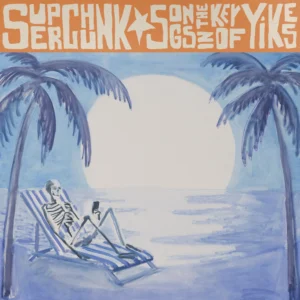 Effortless – that word has been used to describe
 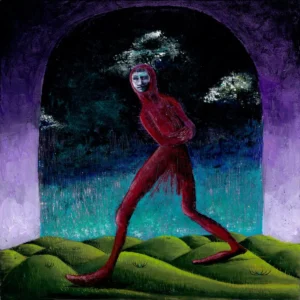 For their mesmerizing second album, Magic of the Sale, Teethe’s recording process, split between their current home bases across Dallas and Austin, stayed virtually unchanged: tracking demos and uploading them to a shared folder. This time, though, the group of trusted contributors that helped bring to life their tender-hearted melancholy and warm existentialism widened: Charlie Martin of Hovvdy, performing additional piano; Wednesday/MJ Lenderman’s Xandy Chelmis on pedal steel, producer Logan Hornyak of Melaina Kol, and Emily Elkin on cello. “Hear your words like photos felt in sound,” a muffled voice sings on ‘Iron Wine’, stirring a wave of distortion. “Holding what our eyes can’t make up now.” Magic of the Sale sounds like slowing down the blink of an eye, where the smallest, most precious emotions seep into view.
  In an
In an