

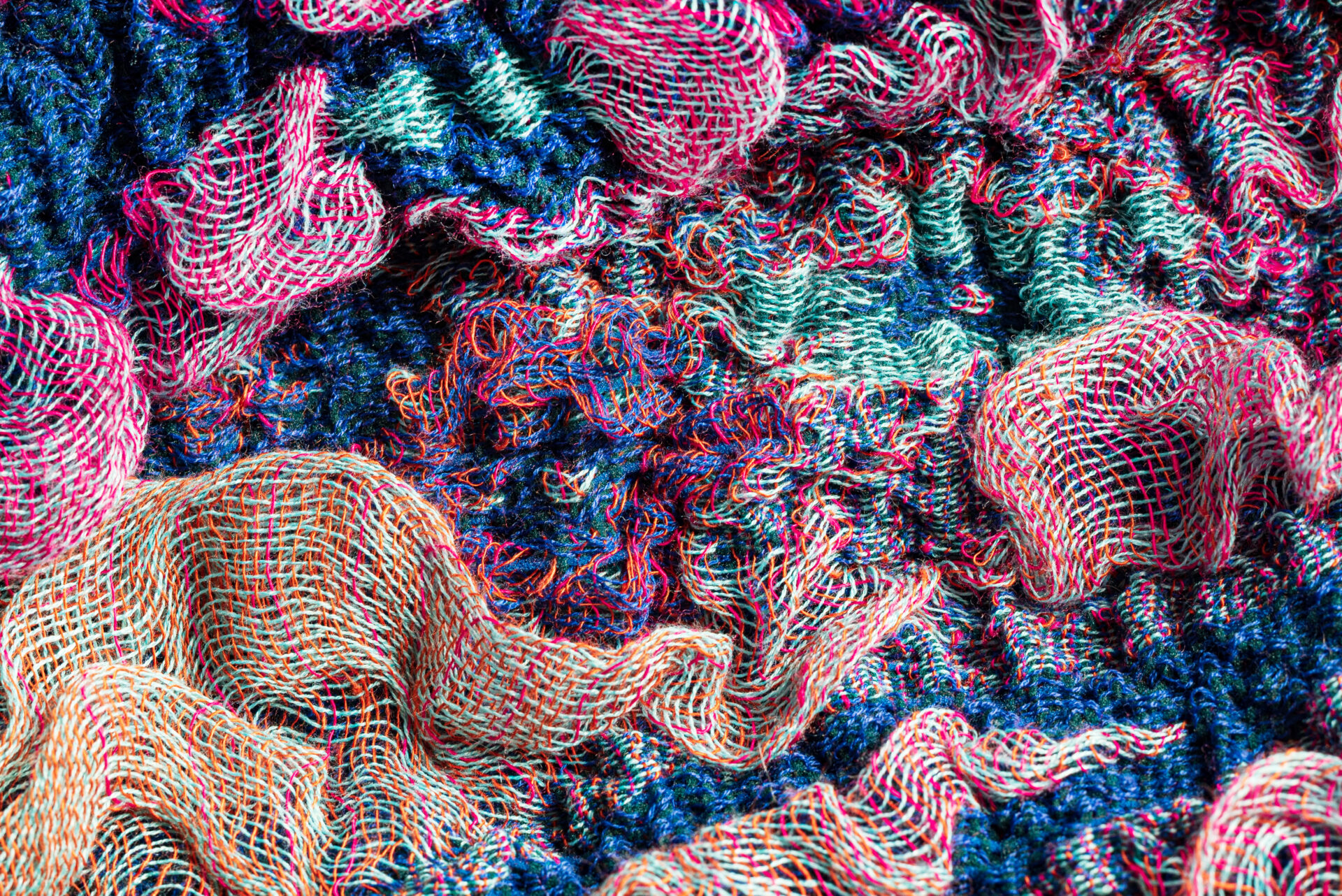
Textile art is captivating in its tangibility. Unlike paintings behind glass or sculptures on pedestals, it invites you to come closer, to examine the texture and form of a piece, sometimes even to touch it. The chosen material reveals much about the character of the work, communicating softness or edge, tradition or innovation. Here are four remarkable textile artists whose experimentation and craft deserve your attention:
Sylvie van Oosterhout
Van Oosterhout describes herself as an ‘artist, art teacher, textile artist, painter, and zenpractitioner.’ Through careful stitching and layering of materials, she creates abstract pieces defined by their textured surfaces, gestural marks and saturated palettes. Shaped like otherworldly shells, each piece showcases her exceptional use of colour, with hues that balance and elevate one another.
View this post on Instagram
El Anatsui
Ghanaian sculptor El Anatsui is particularly renowned for his monumental sculptures made from thousands of folded and crumpled aluminium bottle caps, sourced from local alcohol recycling stations and woven together with copper wire. These intricate works can span entire walls, shimmering with metallic richness and maintaining a weighty presence.
View this post on Instagram
Annalisa Bollini
Born in Turin, Italy, Bollini studied art history and illustration while developing a distinctive style that blends embroidery with collage. Her work is wonderfully whimsical, guided by an intuitive approach where materials and process shape the final piece. As she describes it: “the needle and the threads speak to the hands and eyes, suggest paths, are an integral part of the illustration itself, you just have to listen.”
View this post on Instagram
Pia Camil
Working between Acatitlán, Estado de México, and Mexico City, Pia Camil draws on the Mexican cityscape and modernist visual culture in her practice. Her textile works abstract urban scenes into geometric shapes and colours, constantly pushing the artistic medium into new territory. Recently, Camil has used found and repurposed fabrics like secondhand T-shirts to interrogate consumer culture and retail aesthetics.
View this post on Instagram

