

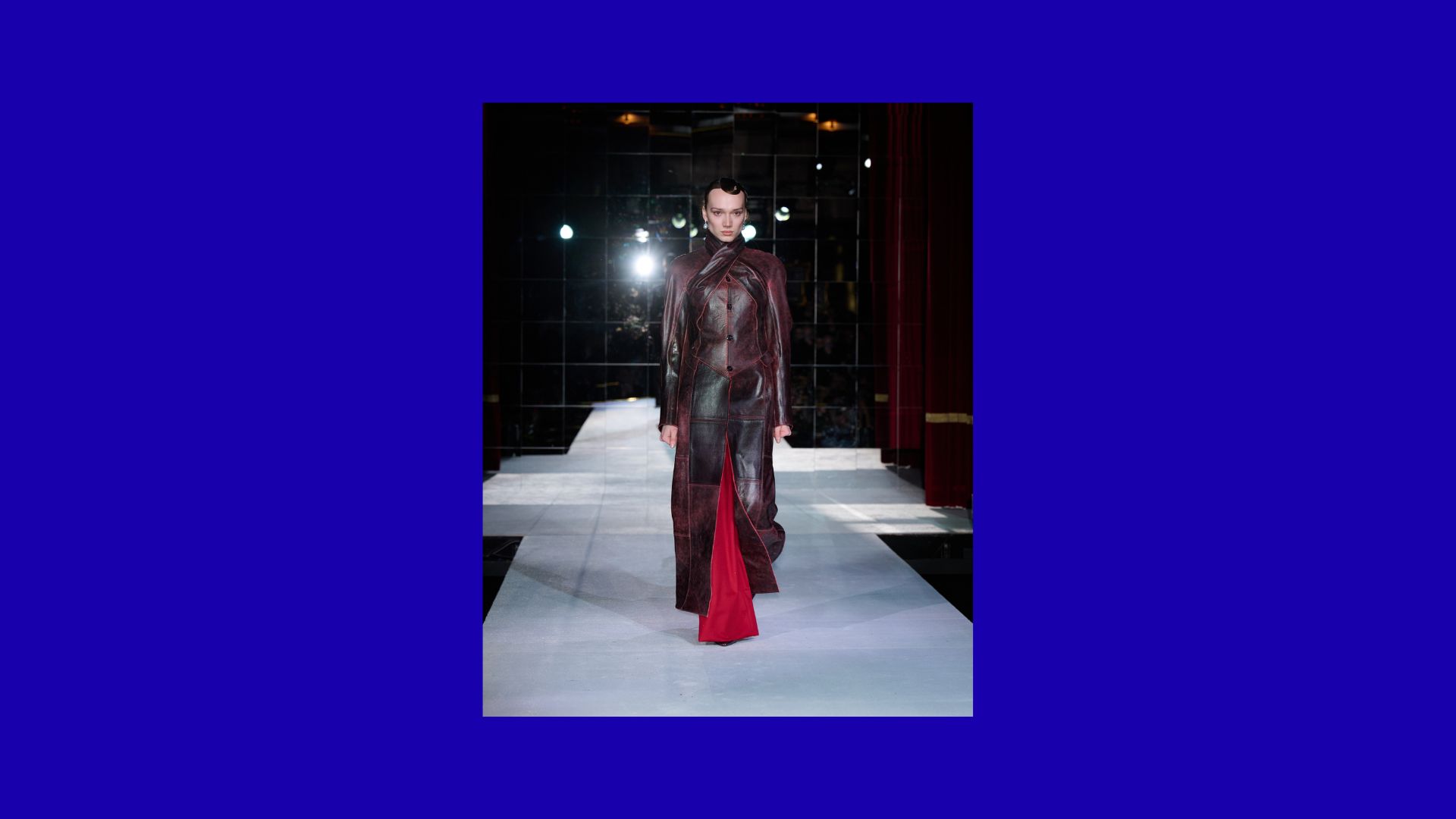
Haderlump is one of Berlin’s hottest tickets, one of the most attended shows, and if there’s a place where the industry actually respects the clock, it’s at a fashion week capital. Looks like the Big Four aren’t the only key stops anymore. With the brand’s new store in the city opening just two months ago, Johann Ehrhardt, the man behind it all, went for something clear, tailored, and sharp.
Many designers find their inspiration in stuffy studios over espresso-fueled sketches. Not Ehrhardt, though. He managed to find his for Fall 2026 with a big moving box in hand. Don’t worry, he’s not going anywhere, Berlin has a lot more coming. But his friend did. Specifically to Leberstraße 65 in the Schöneberg district. Uncomfortable brown cardboard boxes may not scream “creative breakthrough,” but the address had more to offer. It’s the birthplace of Marlene Dietrich, after all. So, what does one do? Snap photos of the building, the street, the stairwell, and start mentally casting every friend who can dance or act. Voilà, the true Dietrich effect.
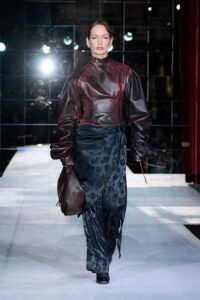
The collection took place at the Wintergarten Varieté theater, the place to be in the 1920s, where Dietrich learned the ropes, long before Hollywood came along and slapped the international-star sticker on her. For the lineup, Ehrhardt decided models alone weren’t enough. Naturally, he also tapped actors, dancers, some of the theater’s staff, and even John Carlsson to play the piano. Fair enough, considering the collection’s roots. Varius. Not the roots, the name. Haderlump’s new collection was titled “Varius”, which is Latin for… well, various and diverse, just like Germany’s favorite black-and-white actress.
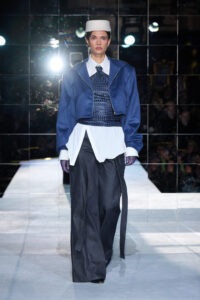
The collection felt like a sharp, modern rewrite of Dietrich’s wardrobe, everything she wore, and eventually turned into her signature. Strong tailoring, power suits, structured blazers, floor-sweeping coats, and of course, the Marlene pants, made famous back in the 1930s for their high waist, wide leg, flowing fabrics, and basically being her second skin. Ties had bigger ambitions and returned as tops. Boxy jackets arrived drenched in abstract knitting. Drapes spilled from leather vests all the way down to the toes. Collars, built from two crossed panels, melted into the waistline. Red, blue, and green flashed through a disciplined palette of black, brown, gray, and white. Tanned leather, strict denim, heavy wool, and soft lace. A very good-looking power play, actually. And let’s not forget, Haderlump only flirts with deadstock fabrics. Turns out, fewer options just meant better choices. Whether Ehrhardt’s method is easier is up for debate, but it’s definitely sharper.

