

The best Berlin had to offer this season came with a Lou de Bètoly, Haderlump, Thomas Hanisch, or Richert Beil tag stitched somewhere on it. Whether that reflects the city’s strongest voices or simply my selective attention span is up for debate. But these were the ones that stayed with me, the kind that survived low-lit theatrics, conceptual casting, and aggressive catering. That doesn’t mean they were alone though. A handful of others managed to leave a mark. So, credit where it’s due.

Kenneth Ize
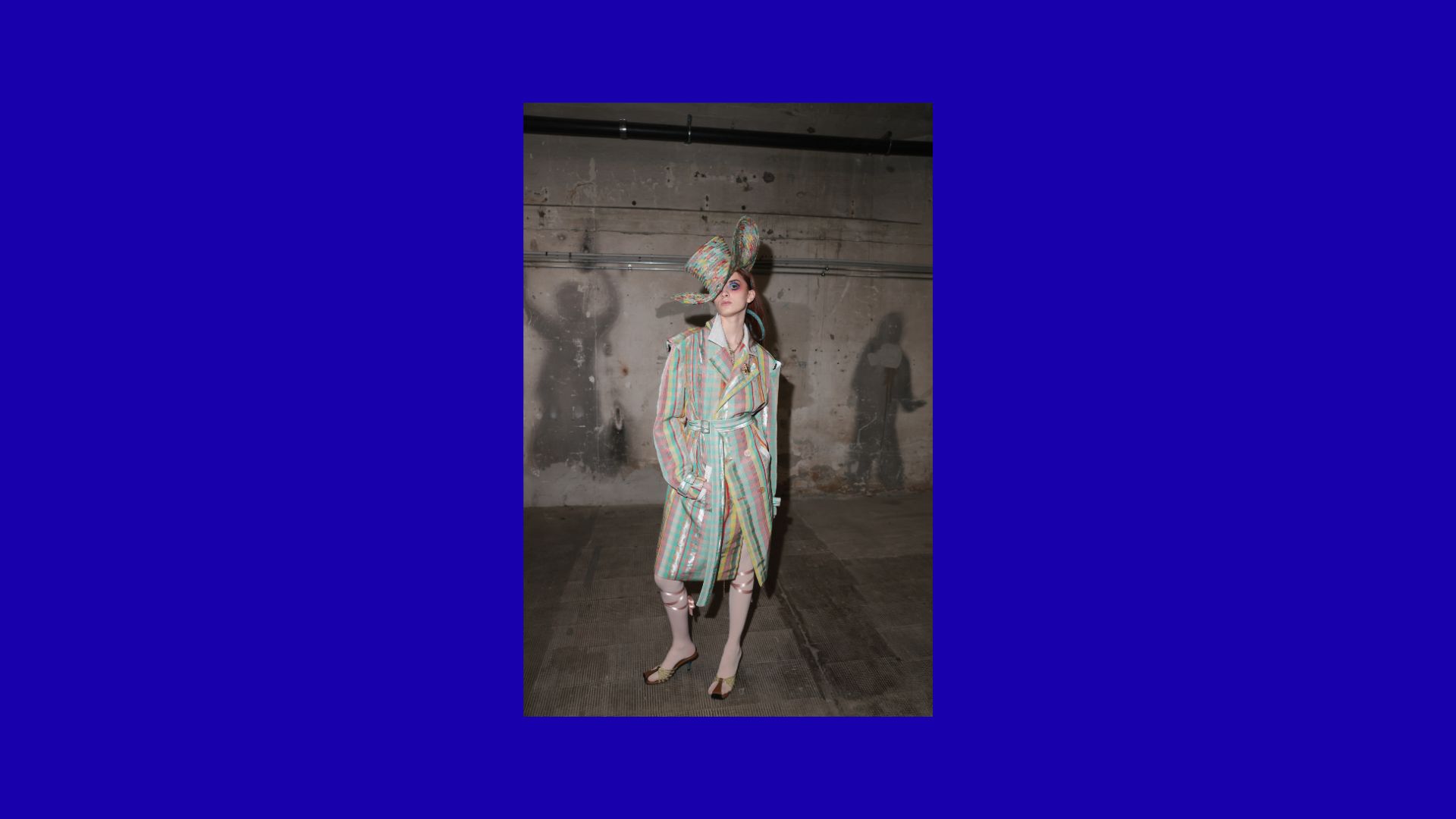
The industry clearly missed Ize these past few years. But luckily, he made his comeback to the runway by putting the traditional Nigerian woven fabric, aso oke, to clever work. “There’s so much happening in the world right now, what with the war in Sudan, Palestine…I thought that if I do a collection, I’m going to make it about togetherness,” he told Vogue. Naturally, the collection was named “Joy.” And boy is it joyful to see creatives step into their craft again, especially if it’s as good as Ize’s. Think deconstructed tailoring, colorful stripes, and some of the best top hats I’ve seen in a minute, but for that, we can thank Esenshel’s Rodney Patterson. The show was about togetherness, after all.
Sia Arnika
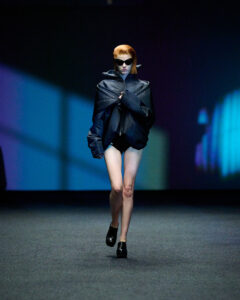
Arnika seems far more interested in what happens after clocking out than in anything remotely nine-to-five appropriate. Office staples fall apart into something noticeably less disciplined, shirts double as micro-mini onesies, fringes sit just a few inches under the waist, jackets adopt unexpected volumes, tailoring loosens its grip, and practicality just gives up. What happened at the front rarely matched what was going on at the back, often within the same look. It feels built for the fragile optimism of post-office plans, the kind that start with restraint and usually end without it. “Overtime” did exactly what a good title should. Ιt told you everything upfront.
Rebekka Ruétz
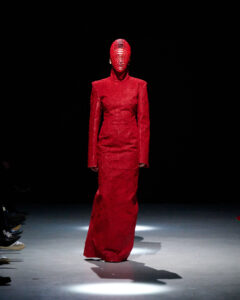
Ruétz’s ‘LILITH’ revisits the archetype of the ‘threatening woman’ as something far more unsettling. Complexity. “The collection begins where contradiction is allowed to exist.” By merging fear and dignity, vulnearbility and strength, she questions why female autonomy remains such an uncomfortable sihlouette. Sculptural corsetry and fluid draping define the volumes. Real moss crawls across deadstock fabrics, with sustainable lace, organic denim, serpent-finished latex, and Tyrolean loden tagging along, just to remind you that garments can age. Blacks and dirty-whites filled the room, but it was the reds that earned your attention.
If anything connected these collections, it was how little they had in common. Different entry points, different concerns, different definitions of what clothing is supposed to do, which, oddly enough, felt like the most coherent takeaway of all.

