

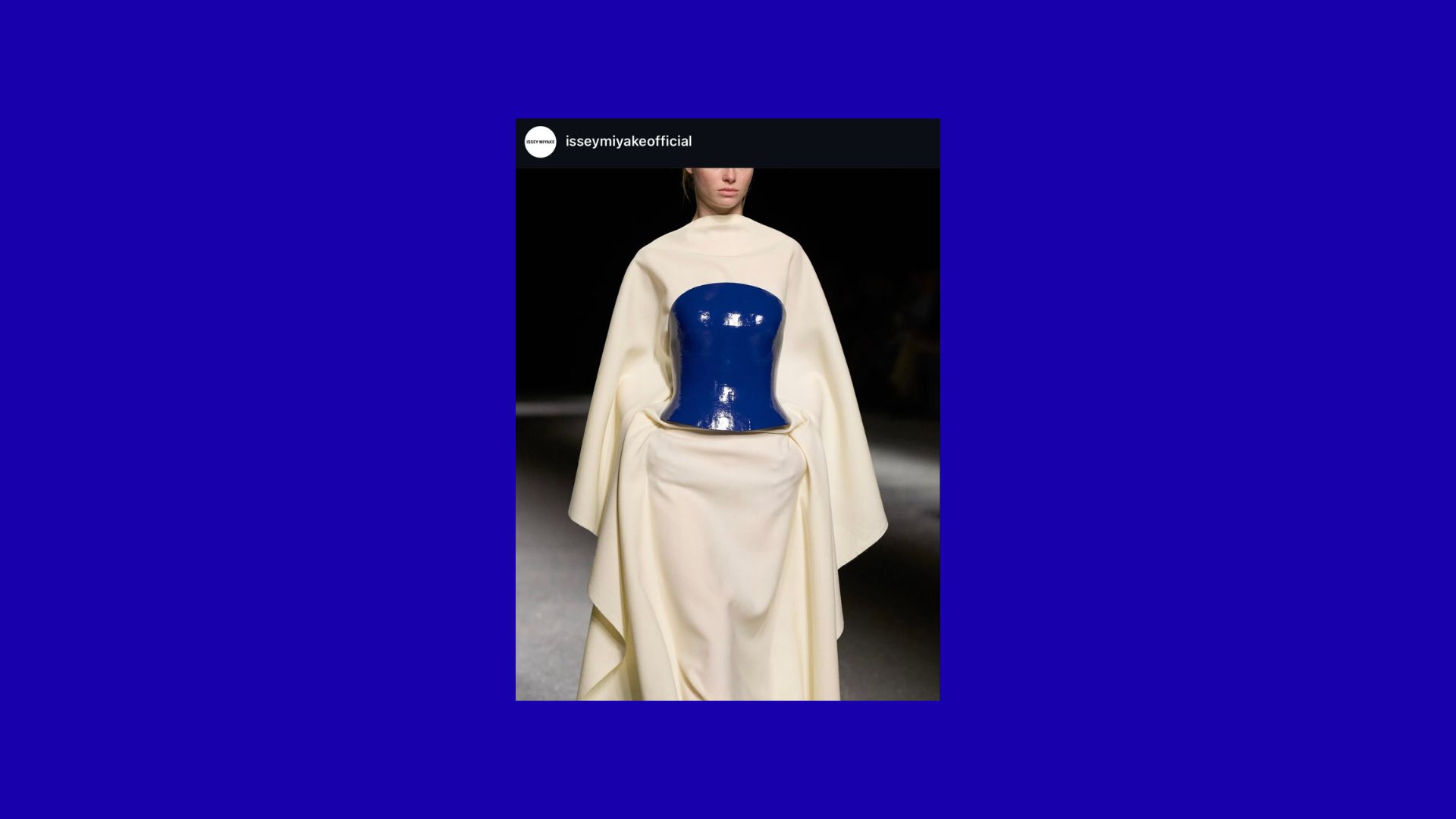
Blame Japan for Paris fashion week’s most interesting shows. Its coolest creatives still can’t pronounce ‘baguette’ like a proper Parisian. For Fall 2026, we checked in, once again, with the usuals, Satoshi Kondo at Issey Miyake, Junya Watanabe, and Rei Kawakubo at Comme des Garçons. Different philosophies, different silhouettes, different techniques, but the same reminder. Experimentation still seems to travel particularly well from Tokyo to Europe.
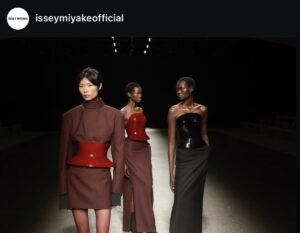
Issey Miyake
At the Miyake studio, even stones make their way in. Stones picked up during Satoshi Kondo’s lunch break, to be exact. Think of it as a small manifesto in mineral form. A stone doesn’t argue with its surroundings, it adapts to them. Kondo’s “Creating, Allowing” collection followed a similar principle, meeting the body halfway. The show opened exactly the way it closed, with sculptural bustiers that began as layers of glued paper before Kyoto artisans sealed them in lacquer, sitting stiffly atop softer, freer fabrics. In between, we locked eyes with flexible pleats, knitwear with unexpected volumes, high collars, movement, and structure. A balance Miyake has been working on for decades.
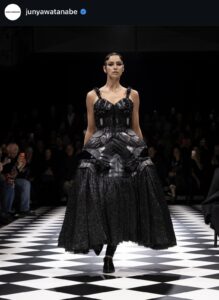
Junya Watanabe
Twenty-two looks is a commitment at Paris Fashion Week. Luckily, Junya Watanabe had an idea, “The Art of Assemblage Couture.” Set to Astor Piazzolla’s Libertango, the show almost begged for a flash of red, which appeared here and there, mostly on protective gear. The rest was volume piled on structure, helmets, gloves, license plates, stuffed animals, and the list goes on. Moto-mania, in other words, but taken somewhere stranger. Each look was choreographed across the checkered floor in full drama, mascara dripping and all. Look nine alone carried half a living room, a balloon-like gown dragging along a picture frame, a ruler, Marilyn Monroe, a rug, and a Spanish sign asking for very little, “May peace prevail in the world.” Turns out our greatest wish looks good in leather boots.
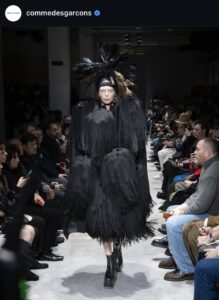
Comme des Garçons
How much black can a brand handle, and how much of it remains interesting? A question I can’t imagine Rei Kawakubo sweating over, and she might be one of the very few. “It’s just the strongest, the best for creation, and the color that embodies the rebellious spirit. And has the biggest meaning: the universe and the black hole,” the show’s notes read. The show moved with the confidence, and pace, of someone who has nothing left to prove. Slowly, almost stubbornly, reminding the audience that Comme des Garçons still prefers questions to easy conclusions. And the audience seems happy to sit there, puzzling through the answers. Here, stitches matter a little less than the idea.

