

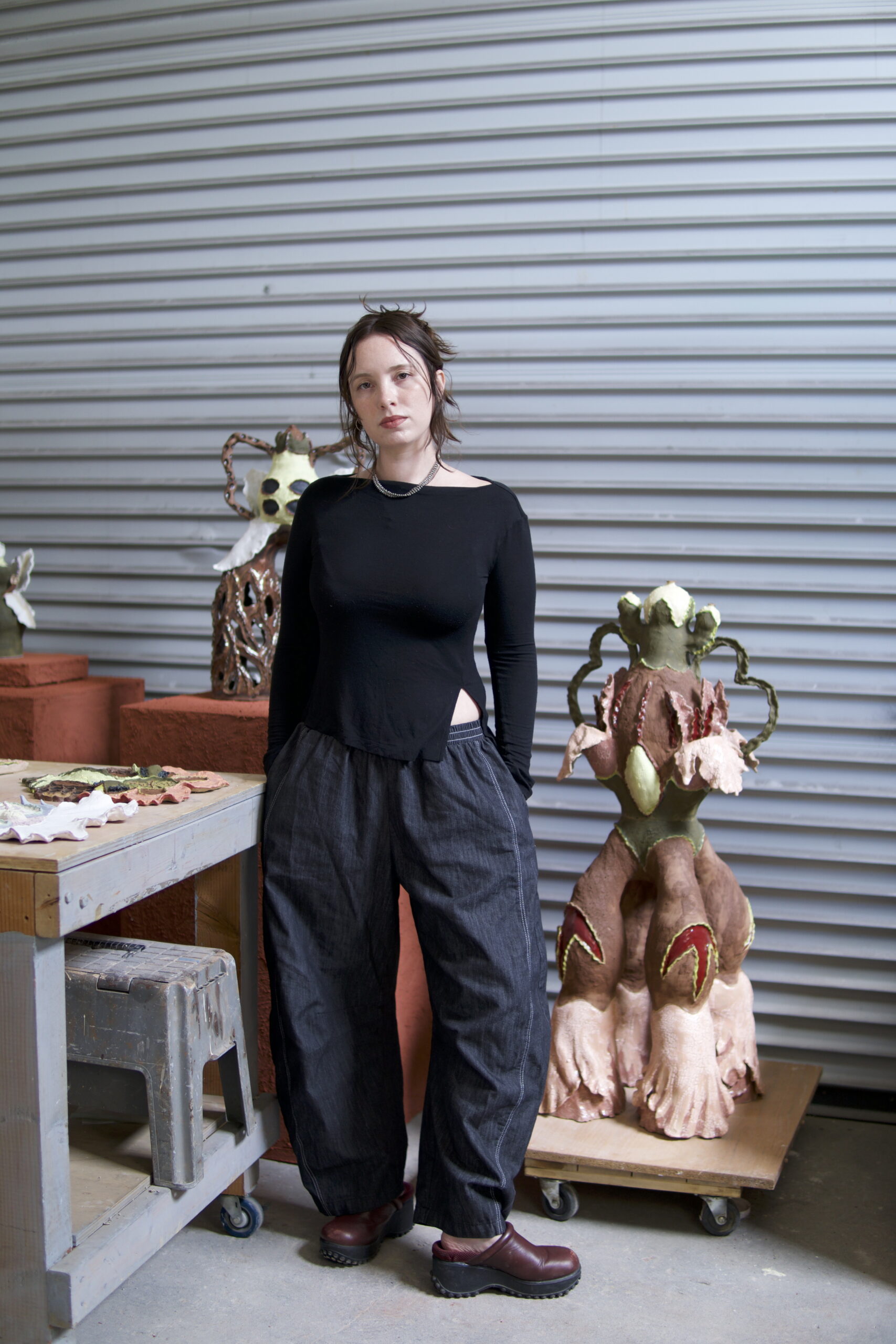
Maddy Inez utilises ceramics and sculpture to explore themes of healing and ancestral memory, treating clay as both a medium and a metaphor for collective trauma. Her works often evoke plants known for their healing properties or mythological significance, merging the spiritual with the ecological. This approach prompts reflection on humanity’s fragile yet powerful relationship with the natural world. Inez’s artistic practice is deeply influenced by her matrilineal heritage; her mother, Alison Saar, and grandmother, Betye Saar, are both renowned artists whose legacies of Black feminist and spiritual artmaking resonate through her work. This lineage informs Inez’s exploration of intergenerational knowledge and the transformative power of art as a means of healing and remembrance.
Maddy Inez lives and works in Los Angeles and earned a BFA from the Pacific Northwest College of Art in Portland, OR. Her solo exhibitions include “Of Pith and Balm” at Harkawik Gallery, New York, and “Venus Freak” at NOON Projects, Los Angeles. Group exhibitions include “Adornment Artifact” at Crenshaw Plaza and Band of Vices, Los Angeles; “Earth House Hold” at Murmurs, Los Angeles; “Obscurity and the Unknown” at Sebastian Gladstone, Los Angeles; and the Japanese American Cultural and Community Center, Los Angeles; among others.
Maddy Inez: Nascence will be on view May 16 – June 20, 2026 at Megan Mulrooney Gallery in LA.
You come from an extraordinary artistic lineage – your grandmother Betye Saar and your mother Alison Saar are both towering figures in sculpture. Was making art ever a question for you or did it feel inevitable? How did it feel to carve out your own artistic identity within that context?
We always say that art making is in the blood. My aunt, grandfather, cousins, brother and dad are all artists as well. Making art is just how I was taught to think critically and process the world. I feel so honoured to be able to create amongst the women in my life. We are all interested in similar topics, whether it be social justice, myth or magic but we all have unique voices and perspectives. I’ve never felt like I need to fight to have my own identity, I was always taught to honour and respect my ancestors. I’m very proud to be an accumulation of the people who raised me.
Your practice moves between ceramics and printmaking, two processes that feel quite different in temperament. Do you find yourself in a different emotional or mental state depending on which you’re working in?
They are different in so many ways but they both have long processes and a little bit of alchemy. I used to work mainly in intaglio in print making, and I found the process so meditative. There was preparing the copper plate, applying the hard ground, the etching bath, the aquatint booth, and finally the act of cleaning the ink off with your hand. I found that the processes are what really drew me to printmaking more than the final result. Ceramics is the same in that I’m drawn to the meditative process. I usually coil build, so there is a moment in my studio where I’m rolling a big pile of coils in preparation of making a sculpture. The sensation of rolling a coil feels deeply ritualistic to me. There is something innate and ancient in working in clay that I’m attracted to.
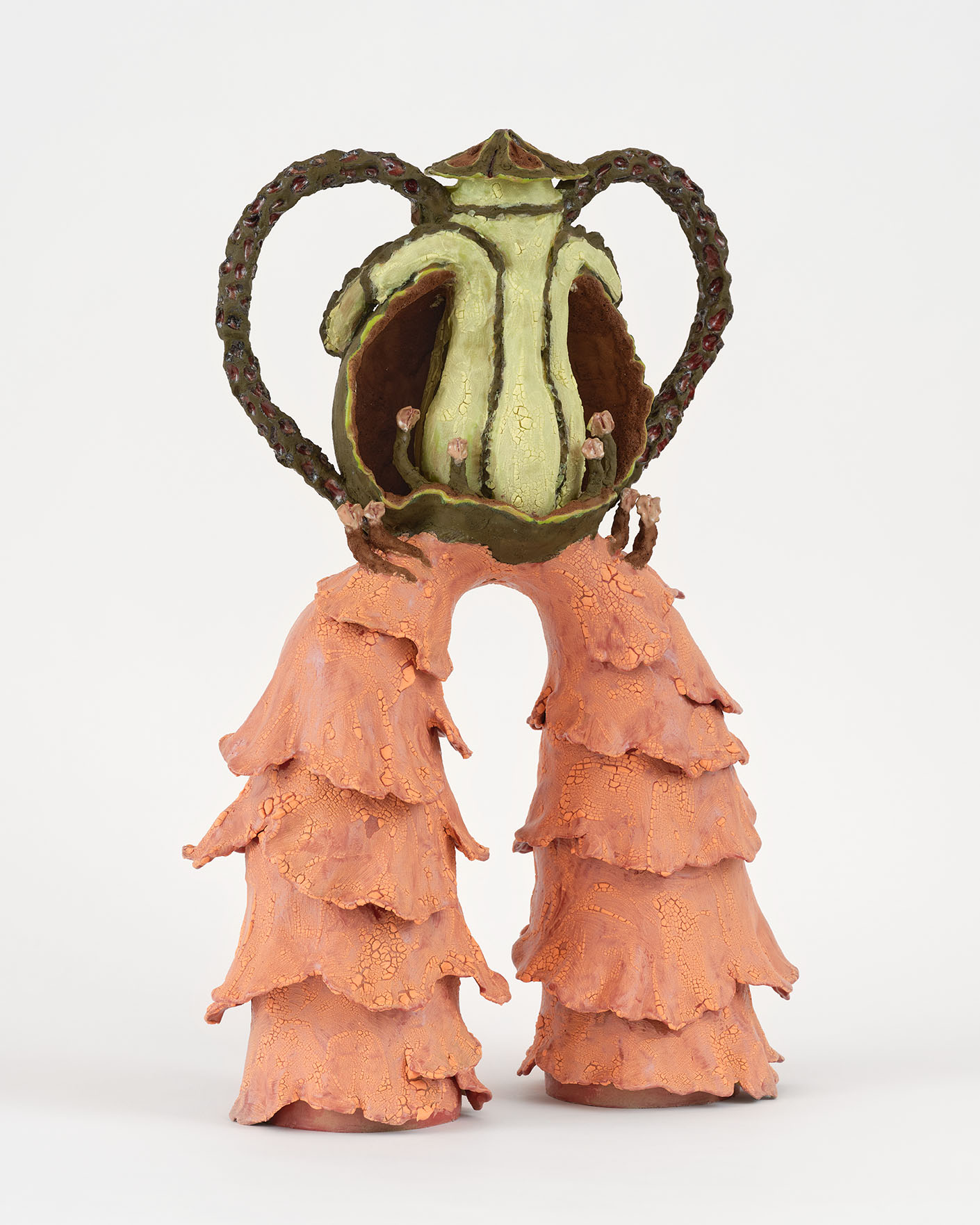
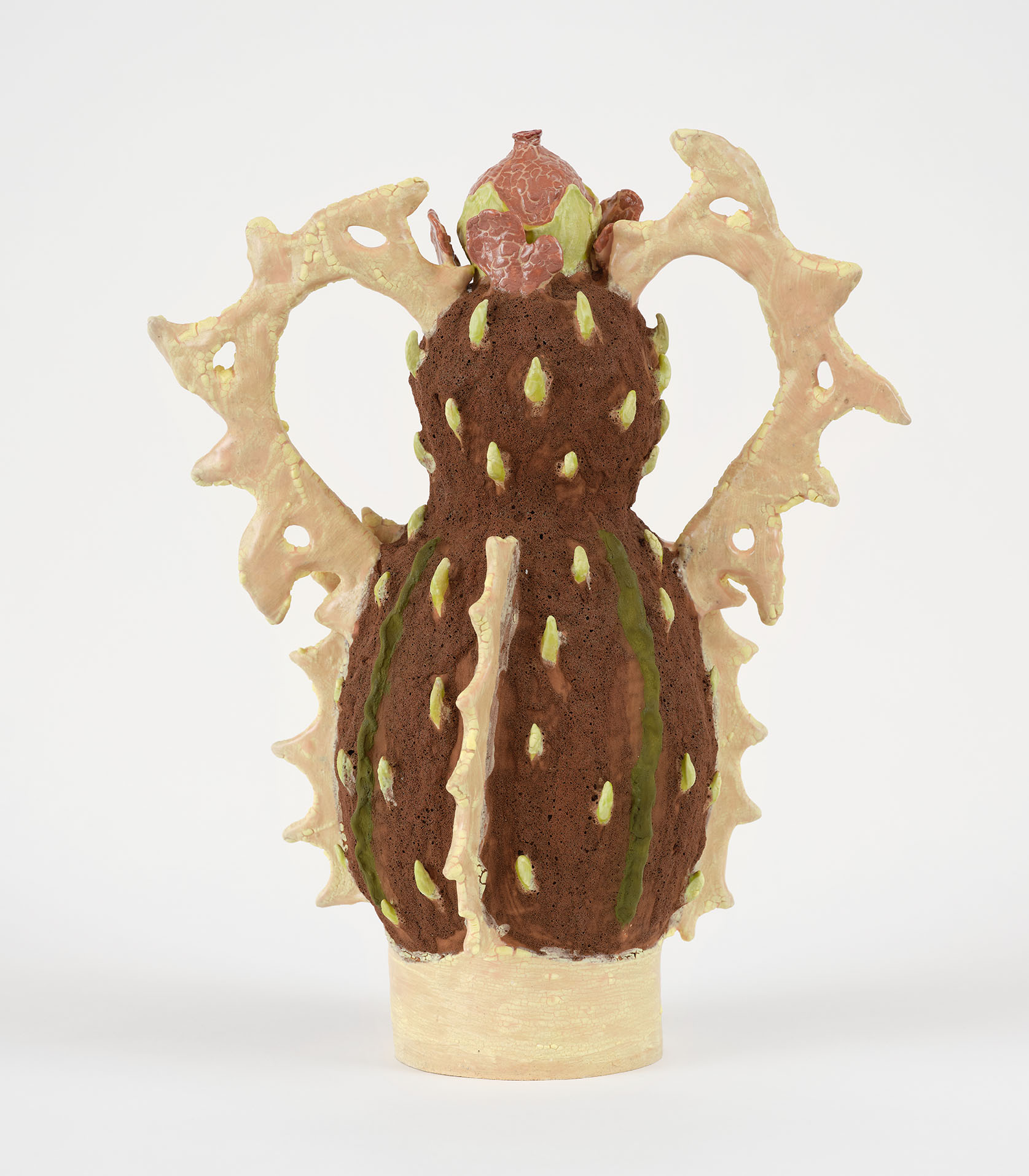
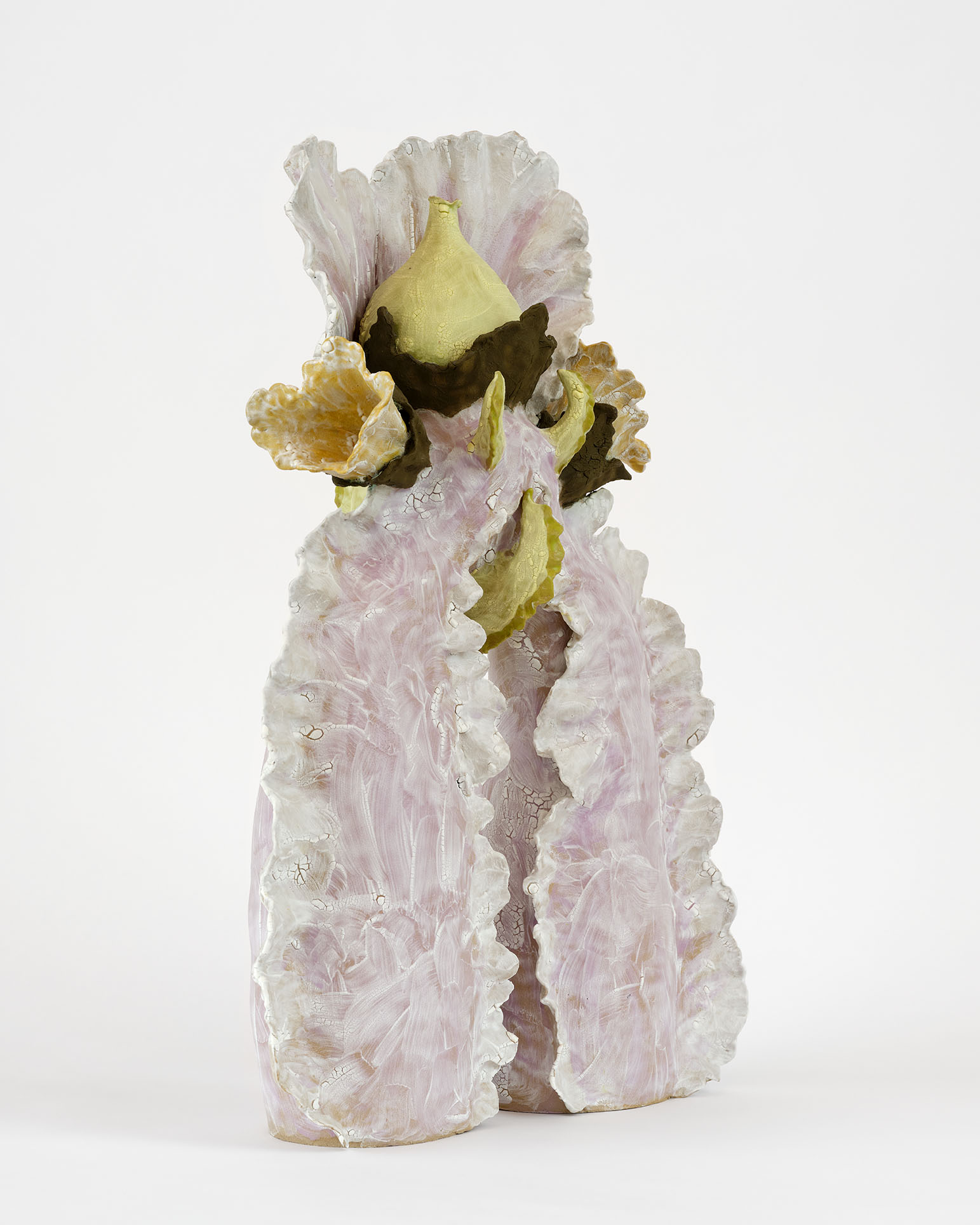
Each vessel in your upcoming show at the Megan Mulrooney Gallery is an ode to a specific plant brought over during the transatlantic slave trade, including Okra, Sudanese Hibiscus, Black-eyed peas, Palestinian olives. How did you arrive at that one-to-one relationship between vessel and plant?
I work in the shape of the vessel because of the human history ties to it. For as long as humans have had a relationship to clay, we have been making sculptures of bodies. I think there is an unspoken language of understanding when a viewer is looking at a vessel. We see ourselves or our gods in the shape. I think of my sculptures as votives to the spirits of the plants I am researching.
Finding your great-great-great grandmother’s midwifery certificate must have been an extraordinary moment. Can you take us back to that discovery and what it unlocked in you? Was it immediately clear that it would influence your work?
I had just recently read Nalo Hopkinsons’s book Salt Roads when I found it. The book is about lineage, suffering, resilience and magic. Making the discovery of a healer in my lineage felt validating, and I knew I wanted to research her experience. That research led me to knowledge about the cycles of colonisation that we are still witnessing today.
You investigate themes of healing in your artwork, processing trauma through clay and viewing vessels as “votives of ancestral alchemy.” Has making this show been healing for you?
Researching this show has been really heavy. There were moments where I felt hopelessness at the way humanity was progressing. I was frustrated and angry with the patterns of erasure I was witnessing. That’s when I decided to interview farmers, land stewards and educators that share the same ideas as I do. I landed on the idea of gardening as an act of resistance. Having a relationship to land when so much violence is being inflicted on that land and its people is one of the purest examples of reliance. Talking to these people who are planting for a future they believe in was very healing for me.
The show frames gardening as an act of resistance. You volunteer at your local garden in Pasadena, you’ve interviewed farmers and herbalists across LA… How do you view the relationship between art practice and community practice?
Community work has always been really important to my practice. I worked at this amazing organisation for adult artists with developmental disabilities in Los Angeles called Tierra Del Sol for five years. While teaching there the artists and I processed the Covid pandemic, BLM movement, ICE raids and wars through art. It was the voices and friendships that I made there that made me realise that building community was part of my practice. Hearing stories and learning from the people around me has really helped me grow as a person and as an artist. My community feeds my art practice and I hope my art gives something back in return.
Clay and soil are both earth, so you’re working with the same element in the studio and in the garden. Do you think about that often? Does one influence how you handle the other?
Yes, absolutely. Until this year, my studio was located in the garage at my parents house in Laurel Canyon. Working alongside my mother’s garden and with the plants I grew up with really informed my practice. I made a lot of work based on the plants in that garden. One of these was Dandelion – I made many sculptures based on this plant and drinking tea from its root is part of my everyday life. Sometimes I will buy the plant I’m researching to draw and look at under a microscope, and then it will be placed in my garden.
Do you have any rituals in the studio – music, silence, a particular time of day? And do you think the conditions you make art in show up in the work?
I listen to a lot of audio books while working in the studio. I use the LA county library app and borrow a lot of science fiction books, which have influenced my art aesthetically and conceptually. One of the books I was listening to while working on this body of work was Conjuring of America: Mojos, Mermaids, Medicine, and 400 years of Black Women’s Magic by Lindsey Stewart. I learned a lot about the plants I was researching from this book, and there was a really special chapter that mentioned one of my grandmother’s pieces that brought me to tears. At night, when I’m the only person in the studio, I will listen to music and dance around.

