

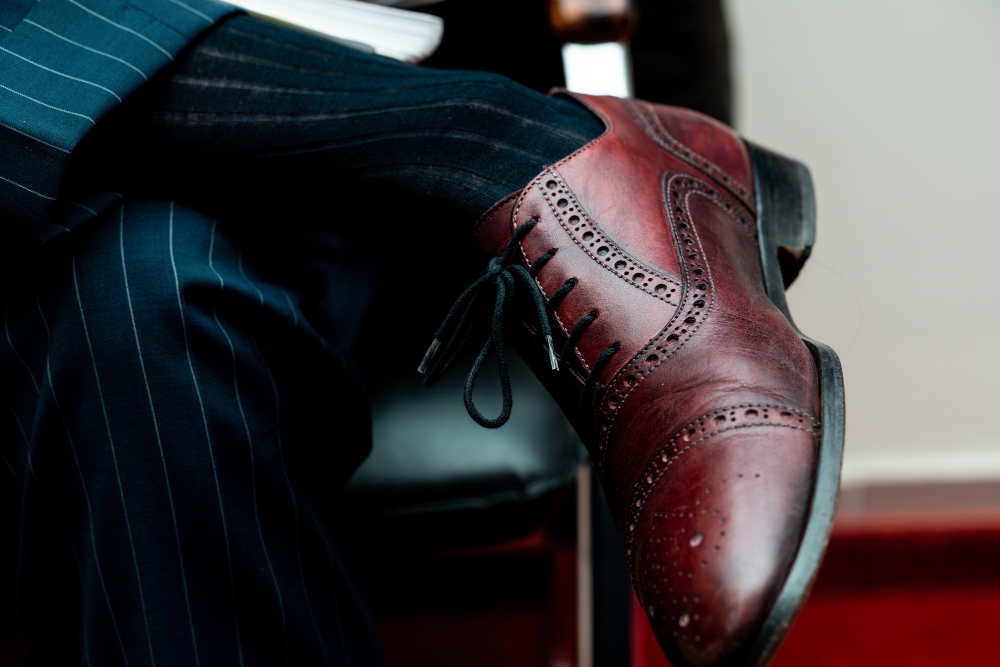
The truly versatile dress shoe is rarer than it appears. Most men own shoes that handle one context well and struggle in others. Finding a pair that genuinely bridges the professional and formal divide requires knowing exactly what to look for.
The working wardrobe presents a persistent challenge for men who move between professional environments during the week and formal social occasions on evenings and weekends. Maintaining a separate pair of shoes for every occasion is neither practical nor economical for most people, yet arriving at a black-tie dinner in business casuals, or at a board meeting in shoes better suited to a wedding, creates an impression that is difficult to recover from.
The solution is not a larger shoe collection. It is a more considered one. A single, well-chosen dress shoe, built from the right materials and in the right style, can carry a man credibly from a morning boardroom presentation to an evening black-tie event without asking him to choose between appropriateness and convenience.
Understanding which styles, constructions, and details make this possible is the essential starting point.
The Style Hierarchy of Men’s Dress Shoes
Men’s dress shoes exist within a clear formality hierarchy, and understanding where each style sits within it is the foundation of any intelligent purchase decision.
At the most formal end sits the Oxford – a closed-lacing shoe in which the quarters are stitched beneath the vamp, creating a clean, unbroken line across the upper. The Oxford’s inherent formality makes it the only genuinely appropriate choice for white-tie events and the strongest option for black-tie occasions. In black calf leather with a high shine finish, it is the dress shoe benchmark against which everything else is measured.
The Derby sits one level below the Oxford in the formality register. Its open-lacing construction – in which the quarters are stitched on top of the vamp – creates a slightly more relaxed silhouette that accommodates a wider range of foot shapes and works across both business formal and smart casual environments. It is a more versatile style than the Oxford for daily professional wear, though it carries slightly less formal weight in evening contexts.
Monk strap shoes – those fastened with a buckle rather than laces – occupy a similar position to the Derby in terms of formality. The single monk is cleaner and more formal than the double monk, which reads as more fashion-forward and is best reserved for professional environments with a relaxed dress code.
For a shoe that genuinely needs to work across boardroom and black-tie occasions, the Oxford in black calf leather is the correct starting point. It is the one style that meets both briefs without compromise.
Material: Where Quality Becomes Non-Negotiable
The visual quality of a dress shoe is determined more by its leather than by any other single factor. This is not an area where corners can be cut without immediate and obvious consequences.
Full-grain calf leather is the standard material for quality dress shoes and the correct choice for a shoe expected to function across formal contexts. It takes a high polish, develops a patina that improves with age and wear, and carries a visual refinement that corrected-grain leather, suede, or synthetic materials cannot replicate at the formal end of the dress code spectrum.
The tanning method matters too. Shoes constructed from vegetable-tanned leathers develop deeper, more characterful patinas over time than those produced with chrome-tanned alternatives. European tanneries, particularly those operating in Italy and Spain, remain the global benchmark for calf leather quality – which is one reason why European-made dress shoes continue to command premium status in the global market.
For a shoe expected to represent a man well at a board meeting and a black-tie dinner, there is no viable substitute for full-grain calf leather in black. The investment is justified by the versatility and longevity that this material delivers across both contexts.
Construction: What Determines Longevity
How a dress shoe is constructed determines not just how long it will last, but whether it can be repaired when the sole eventually wears through. This distinction is particularly important for a shoe being purchased with the intention of wearing it across formal and professional occasions for years rather than seasons.
Goodyear welted construction, in which the upper and insole are joined to a leather welt that is then stitched to the outsole, allows the shoe to be resoled multiple times without disturbing the upper. A well-made Goodyear welted Oxford in quality calf leather can, with appropriate maintenance and periodic resoling, last decades. Florsheim, an American brand with a long history in quality men’s dress footwear, builds a significant portion of its dress shoe range on Goodyear welted construction, producing shoes that balance accessible pricing with the construction quality required for long-term formal use.
Blake-stitched construction, more common in Italian dress shoes, creates a lighter and more flexible shoe with a trimmer welt profile that reads as more elegant on the foot. It is slightly more involved to resole than a Goodyear welted shoe but entirely viable in the hands of a skilled cobbler.
Cemented construction, in which the sole is bonded to the upper with adhesive, should be avoided in a shoe intended for serious long-term formal use. It cannot be resoled, and the bond typically begins to fail before the upper has reached the end of its useful life.
Fit: The Foundation of the Entire Investment
A dress shoe that does not fit correctly is not a dress shoe that works from the boardroom to a black-tie event. It is a source of discomfort that will determine how long the shoe can be worn before the wearer’s attention shifts from the occasion to their feet.
Dress shoes should fit with minimal heel lift, no pressure across the widest part of the forefoot, and enough room at the toe that the toes can rest naturally without contacting the front of the shoe. The leather upper will soften and yield slightly over the break-in period, but a shoe that causes discomfort at the point of purchase will not improve to the point of genuine wearability through use alone.
Width is a variable that many men overlook when purchasing dress shoes. A shoe that is the correct length but too narrow across the ball of the foot will cause forefoot compression that becomes pronounced during extended formal wear. Brands that offer their dress shoes in multiple width fittings, or that use generous lasts accommodating a range of foot profiles, are worth prioritising.
Florsheim produces its dress shoe range across a variety of widths and last shapes, reflecting a fitting philosophy consistent with the brand’s longstanding focus on professional footwear. Its collections are available through retailers including Brand House Direct, which stocks the Florsheim dress shoe range across its key styles, allowing buyers to assess fit options and construction quality across the brand’s formal offering.
Colour and Versatility
Black is the only colour that fully meets the requirements of both boardroom and black-tie contexts. It is the standard at formal evening events and reads as authoritative in professional settings. For a single pair of dress shoes intended to cover both occasions, there is no other appropriate choice.
Dark brown is a strong second option for professional environments and certain smart-formal contexts but is not appropriate at black-tie or white-tie events. If the budget allows for two dress shoes, black covers the formal brief and dark brown extends the range into smart casual and business casual territory.
Tan, cognac, and lighter browns are professional and versatile but do not belong in formal evening contexts. They are wardrobe additions rather than wardrobe foundations for a man whose shoe collection begins with the formal brief.
Finishing Details That Signal Quality
At close range, the details of a dress shoe communicate its quality more clearly than its silhouette or colour. In boardroom and formal contexts alike, these details are noticed by people who understand footwear and registered subliminally by those who do not.
A leather sole, rather than a rubber one, is the traditional mark of a formal dress shoe. It produces a distinctive sound on hard floors, develops a patina consistent with the upper over time, and signals quality construction in a way that a rubber sole, however practical, does not.
Bevelled waists, hand-finishing on the upper, and welt stitching executed in a matching thread colour all indicate construction care that distinguishes a quality dress shoe from a well-priced alternative at a glance.
The presence or absence of these details does not determine whether a shoe is appropriate for a given occasion. It does determine how the shoe is perceived by those paying close attention, which in boardroom and formal social contexts is rarely nobody.
The Investment Case
A single pair of quality Oxford dress shoes, properly maintained and resoled as needed, will serve across every formal and professional occasion a working man is likely to encounter for years. The cost of that single pair, measured against the combined cost of maintaining separate shoes for professional and formal use over the same period, almost always favours the quality investment.
The dress shoe that works from boardroom to black-tie is not a compromise between two different shoes. It is the correct shoe for both contexts, selected with the understanding that genuine formal occasions have always set the standard that professional dressing aspires to meet.
Men with wide feet, high arches, or foot conditions that affect fit should seek specialist fitting advice before purchasing formal footwear, as the narrower lasts typical of dress shoe construction can exacerbate existing discomfort in ill-fitting styles.

