

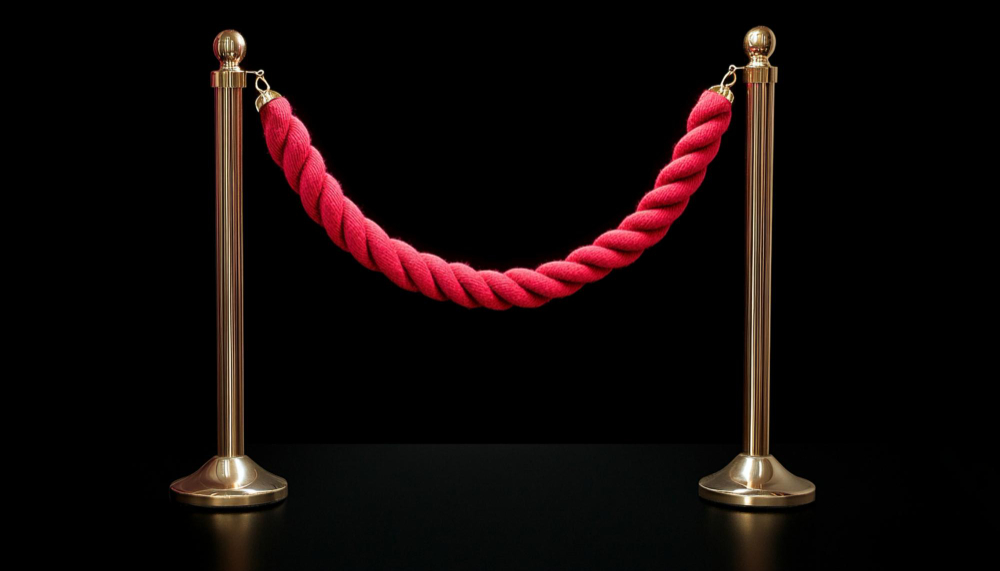
The velvet rope is back — and this time, there is no rope at all.
Across London, Dubai, and a handful of European capitals, a familiar social format is quietly reasserting itself. Invitation-only evenings — curated, intimate, deliberately restricted — are returning to the centre of how the well-connected spend their time.
And this resurgence is driven by motives that go beyond mere nostalgia.
For the best part of a decade, the cultural tide pulled in the opposite direction. Openness was the currency. Pop-ups courted walk-ins. Restaurants broadcast availability on Instagram. Even the most exclusive members’ clubs softened their entry requirements in the post-pandemic scramble to fill rooms again. The logic was simple: more reach, more footfall, more revenue.
But something shifted. Quietly, without a press release or a trend piece to announce it, the most interesting people in the room started looking for smaller rooms.
Why the Doors Are Closing Again
The shift did not happen overnight, and it did not begin with a single event. It started with fatigue.
By 2024, the sheer volume of “experiential” evenings had become its own kind of noise. Immersive dining concepts, themed cocktail bars, influencer-friendly launch parties — all fighting for attention in the same social feeds, all promising something extraordinary, most delivering something interchangeable.
The people who could afford to be selective started being selective again.
What emerged was a return to curation over capacity. Smaller rooms. Personally addressed invitations. Guest lists are built on referrals rather than ticket sales. The kind of evening where the host knows every name at the table — because the table only seats twelve.
This is the trend that hospitality analysts and luxury event planners have been tracking into 2026. Martha Stewart’s team identified micro-celebrations as one of the defining social movements of the year. The Times reported on the rise of intimate, often invitation-only gatherings as a form of “next-gen hedonism” — a deliberate rejection of scale in favour of quality.
And it makes sense. When everything is accessible, access loses its meaning. The paradox of modern social life is that the easier it became to attend something, the less it felt like anything worth attending.
The Psychology Behind the Closed Door
There is something worth examining here beyond the surface trend. The appeal of invitation-only evenings is not purely about status, though status does play a role. It is about trust.
A curated guest list signals that someone has considered who belongs in the room. That the evening has been designed, not just organised. That the people beside you have been chosen for a reason — shared interests, mutual connections, a certain standard of company.
For high-net-worth individuals and senior professionals, this carries real weight. Privacy matters. The ability to relax in company without calculating who might be recording, photographing, or name-dropping matters more than a Michelin-starred menu.
In practical terms, this means the most successful private evenings share a common trait: every guest feels both chosen and at ease. The formality is in the curation, not the atmosphere.
Which brings us to the venues making this happen.
London’s Quiet Renaissance
London has always understood the private evening better than most cities. The members’ club tradition runs deep — from White’s, established in 1693, to the modern generation of curated spaces like 5 Hertford Street, Maison Estelle, and The Twenty Two.
But the current wave goes beyond traditional club membership. What is happening now involves private residences, boutique hotel suites, and unlisted dining rooms being used for evenings that exist entirely off the public radar.
In Mayfair and Kensington, hosts are commissioning private chefs, sommeliers, and even art dealers to create single-evening experiences for groups of eight to twenty. No public listing. No social media presence. The invitation arrives by message, sometimes by handwritten note, and the details of the venue are shared only on the day.
The New Hosts
One of the more interesting developments is who is hosting these evenings.
Traditionally, the invitation-only circuit was the domain of society figures, gallerists, and the occasional brand with a launch to justify the expense. That has broadened considerably. Today’s hosts include private wealth managers entertaining clients, founders celebrating quietly rather than publicly, and even agencies that specialise in connecting accomplished people in relaxed, high-quality settings.
VIP companions in London have become an integral part of this world — adding warmth, conversation, and social ease to evenings where the guest list is small, and the standard of company is everything. In circles where first impressions are formed over a single dinner, the calibre of who is at the table defines the experience.
The common thread is intent. These are not networking events with name badges and elevator pitches. They are evenings designed around a specific atmosphere, and the guest list is the most important ingredient.
So what happens when this philosophy travels?
Dubai and the International Circuit
London may be leading the revival, but it is not happening in isolation.
In Dubai, where social life has always carried an element of spectacle, the shift towards privacy is particularly striking. Ultra-high-net-worth communities in Dubai Marina, Palm Jumeirah, and Downtown are moving away from the bottle-service-and-flashbulbs model towards something more considered.
Private penthouse dinners, invitation-only art viewings at collectors’ residences, and curated cultural evenings at boutique hotels have become the preferred format for those who have grown tired of seeing their social lives documented without consent.
The Gulf Between Public and Private
The contrast is telling. Dubai’s public-facing social scene remains as visible as ever — rooftop bars, influencer-populated brunches, red-carpet hotel openings. But running alongside it, almost invisibly, is a parallel circuit of private, referral-only evenings that never appear on any feed.
This mirrors a broader pattern across international luxury culture. In Geneva, the watch industry has embraced invitation-only previews as a core strategy. In the South of France, property events and cultural salons increasingly operate on a “DM for access” basis. The message is consistent: the most desirable experiences are the ones you cannot simply buy your way into.
What This Means for Hospitality and Events
The implications stretch well beyond the social pages.
For luxury hospitality, the return of the private evening represents a shift in what premium clients actually value. The five-star hotel that offers a discreet private dining room with impeccable service will outperform the one that relies solely on its public restaurant’s reputation. The concierge who can arrange an introduction to the right evening will be worth more than the one who books a table at the obvious choice.
For event planners, the shift demands a different skill set. Building a guest list now requires social intelligence, not just a contacts database. Understanding compatibility, reading the room before the room exists, knowing which eight people will create the best possible evening for each other — these are the competencies that matter.
Quality Over Quantity — In Everything
This extends to every element of the evening. When the guest list is twelve, every detail is magnified. The wine selection cannot be generic. The conversation cannot be left to chance. The setting must feel intentional, because in a small room, anything careless is immediately visible.
It is perhaps no coincidence that this trend has gained momentum alongside the broader “quiet luxury” movement. The same instinct that replaced logo-heavy fashion with understated tailoring is now replacing large-scale events with carefully composed evenings.
The connection is worth noting: both movements are driven by people who have enough to stop performing and start curating.
The Invitation Economy
There is a commercial dimension to all of this that deserves attention.
Where invitation-only evenings were once purely social, they are increasingly becoming strategic. Wealth managers use them to deepen client relationships. Property developers use them to preview off-market listings. Luxury brands use them to create genuine desire rather than broad awareness.
The return on a well-executed private evening is difficult to measure in traditional marketing terms, but the people who commission them are not concerned with impressions or reach. They are concerned with depth. One meaningful connection at a private dinner can be worth more than a thousand interactions at a public event.
This is why the format is proving so durable. It works precisely because it refuses to scale.
Who Gets Invited — and Why It Matters
The mechanics of the invitation itself have become a subject of quiet fascination. In an age where most social transactions happen digitally and instantly, the deliberate, personal nature of an invitation carries outsized significance.
Being invited says something. It says someone considered you specifically, thought about who you would enjoy spending an evening with, and decided you belonged. In a world saturated with open-access everything, that act of selection has become genuinely rare — and genuinely valued.
Where This Goes Next
The private evening will not replace the restaurant booking or the members’ club. But it has firmly re-established itself as something distinct: a social format that prioritises the quality of connection over the size of the crowd.
As 2026 continues, the trend shows every sign of deepening. More cities, more hosts, more variety in format — but always the same principle. The best evenings are the ones that were never advertised.
For those who move in these circles, the question is no longer where to go on a Friday evening. The question is who curated the room — and whether the evening will be worth remembering on Monday.
The best invitations are the ones that arrive when you are not expecting them.

