

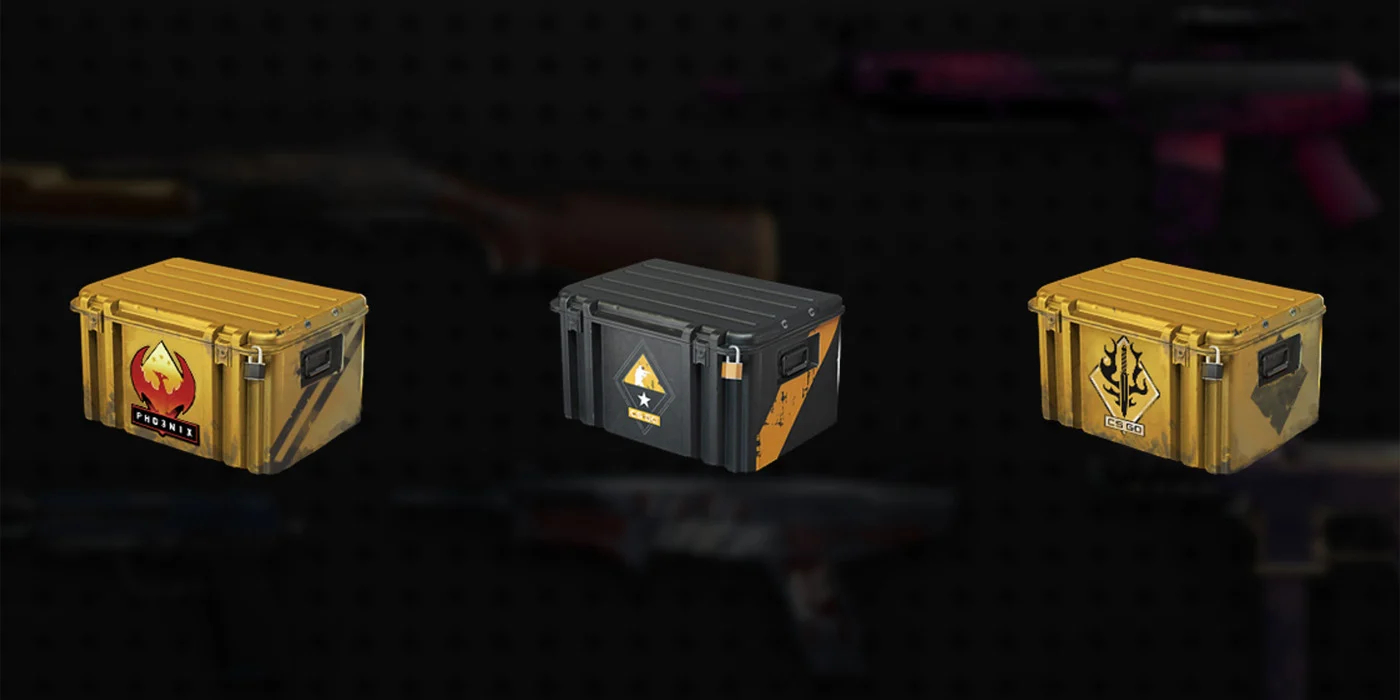
The first time I opened a case on a third-party site, in late 2017, it took me forty minutes to figure out the deposit screen, two minutes to lose six dollars on a Galil that was already in my inventory, and another six months to understand that I had completely misunderstood what the activity actually was. The streamer clip that brought me there showed a one-in-a-thousand pull on a knife, framed as the entire experience. The thing itself, as I learned slowly, is much closer to model trains than to a slot machine.
This article is not a how-to and not a defence. It is what I would have told my 2017 self about what case opening actually is, six years and a few thousand spins later, after I stopped treating the loud wins as the point.
A practical anchor up front: most of what I describe below assumes you are using a platform where winnings come out as actual Steam-tradeable skins, not as locked-in platform credit. The best case opening sites in that bracket, with csgofast the one I have used continuously since 2018, share the same operational property. The skin you win arrives in your Steam inventory and the operator takes no further cut. Sites that pay out as platform balance are running a different category of product, closer to a closed-loop casino than to the collector hobby this piece describes.
The Streamer Framing Is the Wrong Lens
Every clip about csgocase opening on YouTube and TikTok in 2026 is filtered through the same survivorship effect. The clips that go viral are the ones where someone hit a high-tier knife or an extremely rare pattern. Nobody films the other 9,990 spins. The result is a category that looks, from the outside, like a slot machine where the slot machine occasionally pays out an apartment deposit.
The case-opening community on the inside does not see it that way. The serious players I have met over the past six years have collections in the same way a watch enthusiast has a collection or a model-train hobbyist has a layout. The spins are episodes in a much longer ownership arc, not the centre of the activity.
If you have only watched the clips and never spent twenty minutes actually using one of the sites, you are seeing one in ten thousand frames of what is going on.
What the Practice Actually Looks Like
A representative session, in my actual rotation, looks something like this. I open the site I use regularly, scan the cases that contain skins I have been watching, open one or two of them. The drops land in my Steam inventory within minutes. I either keep what I won, trade it for something more specific to taste, or sell it on a third-party marketplace and put the funds toward a skin I have been hunting for weeks.
The active platforms in my rotation share two properties. They pay out in real Steam-tradeable skins, not platform credit. They have been operating long enough that the community has settled on whether they are reliable. The withdrawal pipeline on the platforms I keep using is short, the skins land in Steam within minutes, the rest of the workflow is invisible. That kind of operational invisibility, where the platform stops being a step in the process, is what experienced players are quietly looking for.
The session ends. Nothing about it would film well.
The Collector Mindset Took Over a Few Years In
The shift from “spinning for the rush” to “spinning as part of a longer hobby” happened gradually. I can mark it roughly to 2021, when I noticed I cared more about the float value and the pattern index of a specific AK-47 finish than I did about whether the next case I opened was lucky.
By 2022 my mental categories had reorganised entirely. The CS2 inventory I held had three buckets in my head: items I liked aesthetically and wanted to keep, items that had appreciated and I was watching, and items I treated as inventory for trades. The cases I opened were just one of several sources for those items. Buying directly on third-party marketplaces was another. Trading with other players I trusted was a third.
This is what most active participants in the category do day to day. The visible part is loud. The actual day-to-day is closer to a stamp-collecting subreddit than to a casino floor.
Provenance and Float Are the Real Game
What turns CS2 inventory from “decoration” into “collectible” is the same set of properties that turn vintage watches into collectibles. Specific pattern indices are rare and the community knows which ones. Float values describe the wear and tear of a finish, and within a single named skin the lowest-float versions trade at a premium of two to ten times the average.
I have a Karambit Doppler with a pattern index in the low single digits, which means the colour gradient lands in a specific visual zone the community happens to value. That gradient is the entire reason the knife is worth what it is. To someone who does not follow the patterns, the knife looks like any other Doppler. To someone who does, it is a specific piece of provenance.
The same logic applies to stickered rifles from major esports tournaments. A standard AK-47 Redline trades around forty dollars. The same rifle with a coordinated set of stickers from a 2023 final can trade at ten times that, because the stickers are no longer in production and the provenance is fixed.
This is what makes the CS2 skin economy behave like a collectibles market and not a video-game accessory category.
Where I Spend Time When I Am Not Opening Cases
Most of the hours I put into this hobby are not spent on case-opening sites. They are spent on community boards, float checkers, pattern databases, and pricing aggregators. The case sites are the deposit-and-withdraw layer. The actual decision-making about what to acquire, what to trade, and what to hold lives in a separate set of tools.
The single most active independent hub for the kind of long-form community discussion that informs my decisions is csgoreddit, where serious players post drop comparisons, payout reports, platform reviews, and trade-pattern observations. The threads are not curated by any operator, which makes the discussion much more representative of how platforms actually behave than the operators’ own social channels are. When a case site quietly changes its withdrawal terms or starts slow-walking payouts, the pattern shows up there before it shows up anywhere else.
I check three or four threads a day. The five minutes that takes saves me much more time downstream by ruling out platforms before I deposit anywhere new.
The Generational Story Underneath It
There is a sociological pattern in this hobby that I find more interesting than the economics. The people I have met in the csgo collector circle since 2018 fall into two clear generations. The older cohort, broadly mid-twenties to mid-thirties in 2026, came into the category through Counter-Strike: Global Offensive when the original Arms Deal cases dropped in 2013. They treat the inventory the way a Generation-X record collector treats vinyl.
The younger cohort, late teens to early twenties, came in after the CS2 transition in late 2023. Their reference frame is closer to NFT and sneaker-resell culture. They speak about float and pattern variants the way previous collector generations spoke about printing variants and stitching anomalies.
Both groups end up with similar inventories. They got there from different starting cultural reference points, and the way they talk about the inventory differs significantly, but the actual ownership behaviour overlaps almost completely. This is one of the more quietly interesting cross-generational hobby continuities I have seen in the last decade.
What This Does Not Cover
I should be honest about the limits of this framing. Most people who interact with cs go case-opening sites do not become collectors. The standard pattern is closer to what the streamer clips show: a few sessions, a small recreational budget, a vague sense of either enjoying the variance or not, and either staying as a casual user or drifting away within a few months. The collector arc I am describing is a minority outcome, not the default.
The hobby framing also does not address the legitimate concerns around variable-reward mechanics and the people who do not have a stable relationship with that kind of stimulus. The case-opening category is structurally close enough to gambling that the same caution applies. The mature traders I know in the community set hard rules about session length and monthly budget. The ones who do not eventually stop, sometimes painfully.
The collector experience and the cautionary experience can both be true in the same category. They usually are.
Frequently Asked Questions
Is case opening the same as gambling?
Structurally close. The drop weights function the same way as the probability distribution on a slot. The difference is that the payout is a virtual item that can be moved to a Steam inventory and sold for real money on third-party marketplaces, which gives the player optionality that pure casino slots do not.
Why does the community care so much about float values?
Float describes the wear and tear of a finish, on a scale from zero (factory new) to one (battle-scarred). Within a single skin, the lowest-float versions trade at a premium because they look visibly cleaner and because they are rarer. A skin advertised as Factory New with a 0.005 float versus one with a 0.06 float can be worth two to ten times more.
Are CS:GO skins really worth real money?
Yes, in a regulated and observable way. The Steam Marketplace alone processes millions of dollars in weekly skin transactions, and the third-party marketplaces handle multiples of that. A withdrawn skin can be sold for fiat or crypto on independent platforms in minutes.
How long does the average collector stay in the hobby?
In my anecdotal observation across the players I have met since 2018, the people who get past the first six months tend to stay for years. The drop-off happens early. The ones who treat it as a quick lottery typically leave within twelve months. The ones who reorganise their attention toward the underlying inventory tend to keep at it.
What changes after the CS2 transition?
The skins themselves were rendered differently in the new engine, which redistributed values. Skins that benefited from the new lighting (the Doppler family, several rare-pattern knives) appreciated. Skins that exposed flaws under the new renderer (some Field-Tested rifles) lost value. The transition did not change the underlying economy structure, only the relative pricing within it.
How should someone new to the category start?
Slow and small. Make the minimum deposit on one well-known platform, open one or two of the cheapest cases, immediately try to withdraw whatever you win. The completeness of that first deposit-spin-withdraw cycle answers most of the questions about whether the operator is trustworthy. Whatever you decide to do after that, you will be making the decision with information instead of marketing.
What I Would Tell My 2017 Self
If I could send a message back to the version of me who lost six dollars on a Galil and would have left if not for accidentally finding a serious community board the next week, the message would be three sentences. First, the streamer clips are not what the activity is. Second, the people who stay are not the ones who chase the rush, they are the ones who develop an actual interest in the inventory. Third, the only platforms worth your time are the ones where you can leave at any moment with real skins in your Steam inventory.
The rest of it figured itself out over the following years. The community taught me what I needed to know, the inventory grew in pieces I actually cared about, and the loud-streamer framing receded into background noise that no longer represented what I was doing with the hobby.

