

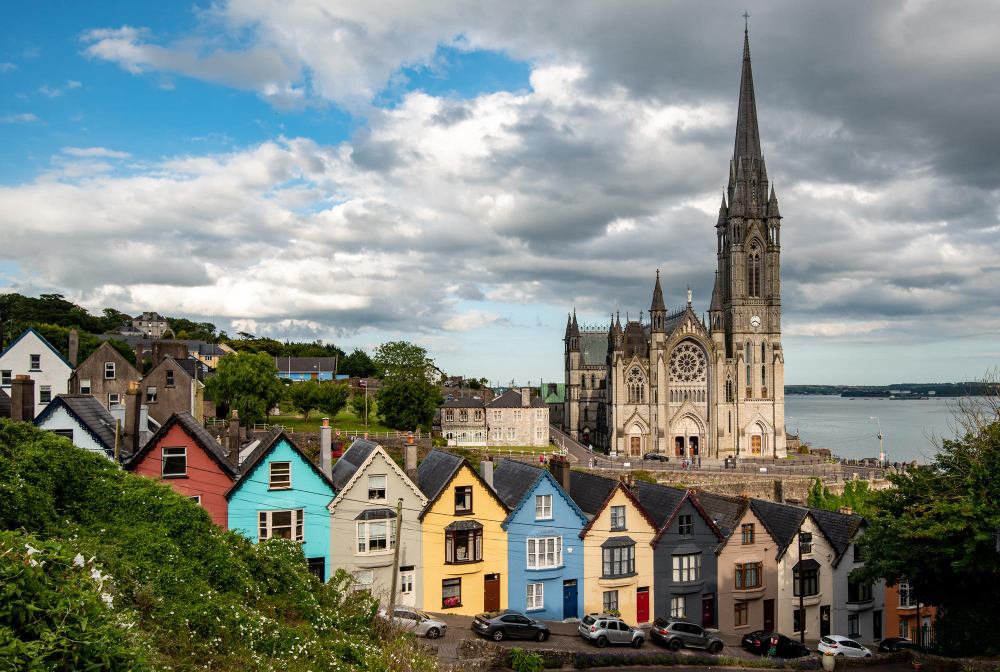
Ireland has a way of throwing people off. Visitors show up with cliffs and castles in their heads – and fair enough, those things are real – but that version of the country sits on top of a quieter one that most outsiders never quite reach. The version where a GAA pitch on a Sunday morning has that particular smell of cut grass and anticipation. Where a trad session starts in the corner of a pub with no announcement and no fanfare, just someone taking out an instrument. Where news travels fast because everyone already knows everyone. That Ireland hasn’t gone anywhere in 2026. If anything, people are holding onto it a bit more deliberately than before.
The GAA: Not Just a Sport, Practically a Religion
Ask almost any Irish person about their GAA club and you’ll notice a particular shift in their voice. It’s not the way someone talks about a hobby. It’s closer to how they’d talk about a neighbourhood, or a family. That’s because for many people in Ireland, the two things genuinely overlap.
The Gaelic Athletic Association runs hurling, Gaelic football, camogie, and handball at every level – from primary school pitches to Croke Park in Dublin – and it does so on entirely amateur principles. Nobody gets paid. At the highest levels of county championship, players still hold day jobs; they train in the evenings, travel to away fixtures on weekends, and represent their communities with the same intensity you’d expect from professional athletes. For those who want to follow the county championship more closely – or simply enjoy the match day atmosphere with added skin in the game – using a 1xbet promo code when registering can give new users a head start without any extra spend. It’s a small thing, but on the Saturday before a county final, it can make watching feel even more electric.
County colours run deeper than most outsiders expect. Kerry in gold and green. Kilkenny in black and amber. Tipperary in blue and gold. These combinations don’t just appear on jerseys – they’re on car flags, painted walls, and shop window displays throughout the summer months. When a county is doing well in the All-Ireland Championship, that energy is hard to ignore. It spills out of every conversation in the local shop and dominates every radio programme for miles around.
Hurling: The Game That Defies Easy Description
Of all the Gaelic games, hurling tends to produce the strongest reactions in people seeing it for the first time. It is one of the oldest field sports in Europe, with origins tracing back centuries in Irish history and mythology. Players use a wooden stick called a hurley to strike a small leather ball, the sliotar, which can travel at speeds of over 150 kilometres per hour. The ball goes airborne, players leap, and the whole thing happens on a pitch that’s significantly larger than a standard football field. It’s chaotic and beautiful in equal measure.
What makes hurling particularly special in 2026 isn’t the spectacle, though – it’s the intimacy. Local club games draw crowds that would seem disproportionate for the size of the venue. A parish final in a rural county might bring out three thousand people to a ground that holds fifteen hundred. They stand along the sideline. They argue with the referee. They sing. The experience is completely unlike anything a stadium offers, and it stays with you.
Trad Sessions: Where the Real Craic Lives
If the GAA represents the sporting soul of Ireland, then the traditional music session might be its emotional one. Not the tourist-facing kind – the ones with laminated menus and bodhráns played on cue – but the real sessions, the ones that happen because musicians want to play together and a pub happens to have a corner for them.
These gatherings operate without rehearsal or setlist. A fiddle player starts a reel; others pick it up; a tin whistle joins mid-phrase; and within a minute, something is happening that nobody planned. This is how Irish traditional music has been transmitted for centuries – not through notation or formal teaching, but through presence. By sitting close enough to hear the fingering. By playing the same tune badly until you play it well.
In 2026, the session scene across Ireland is as active as it’s been in decades. County Clare is often cited as the “Home of Trad,” and the villages of Ennistymon, Doolin, and Feakle remain the epicentre of the music that Ireland is famous for. But it’s not just the west. In Dublin, venues like Devitts on Camden Street host live traditional music seven nights a week – a commitment that says something meaningful about the demand. These sessions remain a vital part of Irish cultural life – informal, welcoming, and intergenerational – where musicians of all ages gather to share tunes late into the evening.
What First-Timers Get Wrong
Walking into a trad session without knowing the unwritten rules can lead to a few awkward moments. Here’s what actually matters:
- Don’t clap between tunes. In a proper session, sets of three or four tunes run together without pause. Wait for the end of a set.
- Don’t make requests. Sessions are instrumental and self-directed. The musicians play what they want to play.
- Give the musicians space. The corner or table where they’re sitting is theirs. Don’t lean in with a phone.
- Do order a drink. The pub is hosting this for a reason.
- Arriving early is always the better option. The good spots disappear fast once word gets out.
None of this is unfriendly – quite the opposite. It’s a code that exists because the music itself is being respected. And once you understand that, the whole experience opens up.
The Smaller Traditions That Actually Hold Things Together
There’s a tendency when writing about Irish culture to reach for the big symbols – the cliffs, the castles, the craic. But the daily traditions that actually sustain community life in Ireland are considerably quieter. They’re the coffee morning held in the GAA clubhouse every Saturday. The agricultural show where someone’s grandmother enters her soda bread and genuinely hopes to beat her neighbour. The Tidy Towns competition, where volunteers spend months painting kerbs and planting flower beds because they care what their village looks like to other people.
The following table gives a sense of how some of these regular community fixtures are distributed throughout the year in rural and semi-rural Ireland:
| Time of Year | Community Event | What It Involves |
| Spring (Feb–Apr) | Comhaltas music classes resume | Children and adults return to weekly group sessions |
| Late Spring (May) | Tidy Towns judging season begins | Villages clean up, plant, and paint for national competition |
| Summer (Jun–Aug) | All-Ireland Championship | GAA fixtures dominate weekends; county finals draw huge crowds |
| August | Fleadh Cheoil na hÉireann | National traditional music festival, different host city each year |
| Autumn (Sep–Oct) | Agricultural shows and ploughing championships | Rural communities gather around farming heritage |
| Winter (Nov–Jan) | Indoor music sessions, parish fundraisers | Community life retreats indoors but stays active |
These events don’t exist separately from each other. They’re nodes in the same network – the same volunteers who run the Tidy Towns committee also organise the Christmas fundraiser. The young lad playing hurling on Saturday is the same one learning fiddle on Tuesday. That overlap is not accidental; it’s the structure of how small communities sustain themselves.
Rural Ireland in 2026: Holding On and Moving Forward
There’s been no shortage of concern over the years about whether rural Ireland can hold its own against urbanisation and emigration. Towns that once had five pubs now have one. Post offices have closed. Schools have merged. And yet the picture in 2026 is more complex than simple decline. Some communities are genuinely thriving, precisely because people decided to stay and make things work rather than leave and wait for someone else to sort it out.
The rise of remote working since 2020 has had a measurable effect. People who might previously have relocated to Dublin for work are now living in Roscommon or Leitrim and contributing to local life in ways that were uncommon ten years ago. They’re joining GAA clubs. They’re becoming regulars at trad sessions. They’re entering kids in the local summer camp and arguing about planning decisions at county council meetings. It sounds mundane, but it adds up.
Several factors are shaping rural Irish community life in particular directions right now:
- Remote working: Changed where people live, which changed which communities have population.
- GAA investment: The association has significantly expanded youth development, bringing more children into club structures at earlier ages.
- Irish language revival: Gaeltacht areas and Irish-medium schools are seeing renewed interest, particularly among younger parents.
- Festival tourism: Events like the Fleadh and local food festivals draw visitors who spend money locally rather than funnelling through large hotel chains.
- Community broadband: Better connectivity in rural areas has made it easier to both work from and stay connected within smaller towns and villages.
None of this means every challenge has been resolved. Housing in particular remains a serious pressure point in many counties. But the narrative of inevitable rural decline deserves more scrutiny than it usually gets.
The Pub: Still the Centre of Everything
It would be impossible to write about Irish community life without addressing the pub – and not because of alcohol, exactly, but because of function. The Irish pub, at its best, is a community notice board, a debate chamber, a concert venue, and a place to sit alone with a book without anyone asking you to leave. It’s one of the few spaces in Irish life that manages to be simultaneously social and solitary.
In 2026, that function is being renegotiated in interesting ways. Non-alcoholic options have improved dramatically – craft sodas, zero-percent beers, proper coffee. Some pubs host book clubs on quiet Tuesday nights. Others have become informal co-working spaces in the early afternoon. And the trad session, as discussed above, pulls in a crowd that spans generations and backgrounds in a way that very few other Irish institutions still manage.
For anyone planning to spend time in Ireland and actually engage with daily life rather than just pass through it – attend a GAA match, find a real session, enter the pub quiz. None of it requires money or insider knowledge. Just showing up is usually enough. And if the county happens to be playing that weekend, using a 1xbet promo code beforehand won’t hurt the experience one bit.
Why It Still Matters
There’s something worth noting about what Ireland has managed to preserve. Not every country that went through rapid modernisation in the late twentieth century came out the other side with this many functioning community structures still intact. The GAA, the session, the parish event calendar – these things could easily have faded into nostalgia. In many places, traditions like these have. Ireland is not immune to that pressure, but it has pushed back harder than most.
That resistance isn’t purely cultural sentiment. It’s practical. Communities that have strong local institutions – sports clubs, music groups, volunteer networks – tend to cope better with economic shocks, isolation, and demographic change. Ireland’s traditions serve a social function that goes well beyond identity. In 2026, that function looks more valuable than ever.

