

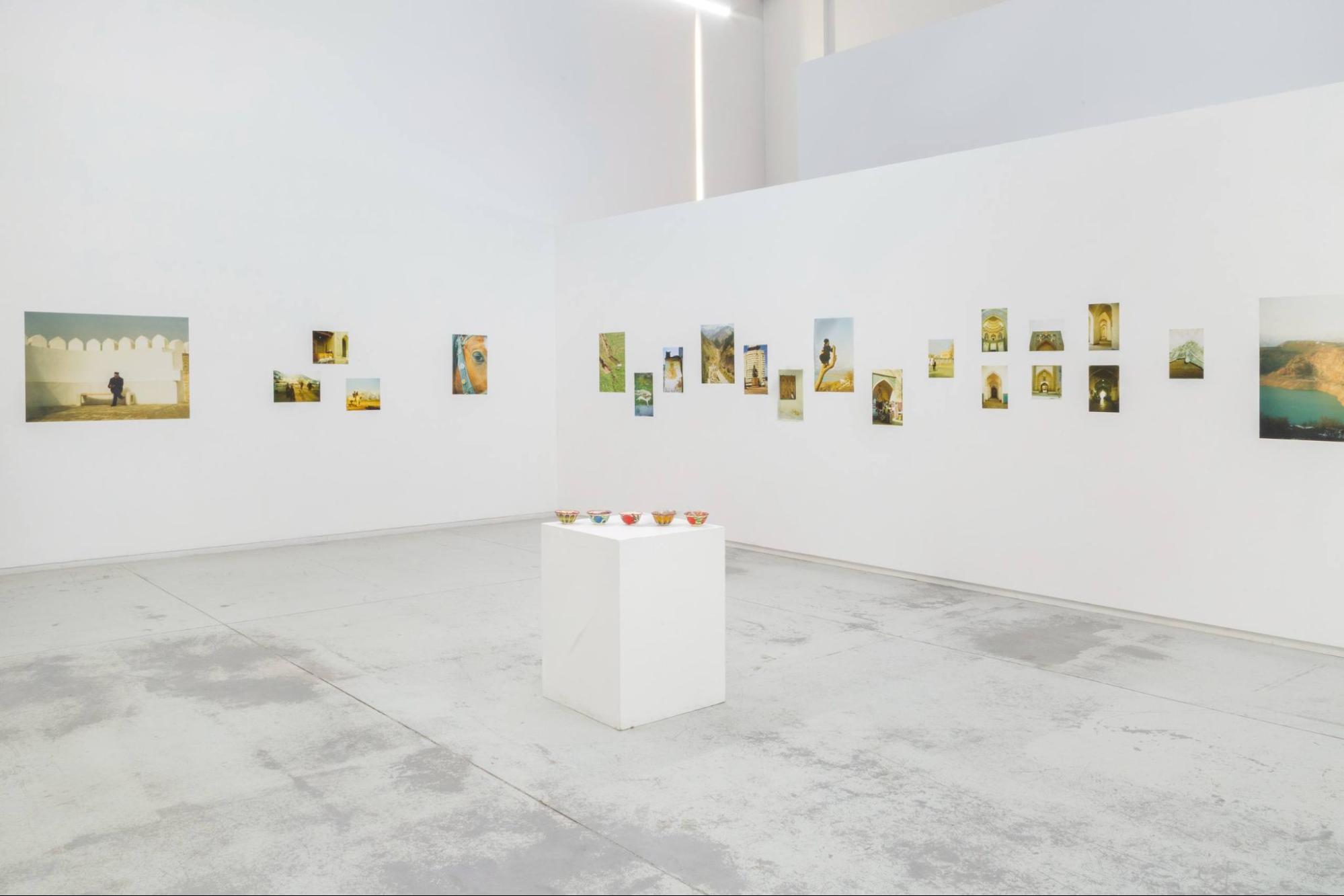
When you look at a photograph of a moment, you aren’t just witnessing that fraction of a second when the camera captured the scene we see. We are witnessing a moment from a story and then building our own narrative around it. That’s what London-based analogue photographer Arlau is encouraging people to do through the images she has captured across Central Asia in her solo exhibition ‘Chromatic Terrains’ at the Handbag Factory in Vauxhall, London.
If the places she’s captured are places you’ve been, then we meld our memories with what’s in each photograph to create a story that’s part our own and part Arlau’s. It’s likely that most visitors to the exhibition haven’t been to Uzbekistan, Kazakhstan, and Georgia, and she’s painting a picture of these places: the people, the natural beauty, and her own nostalgia for the places she has visited.
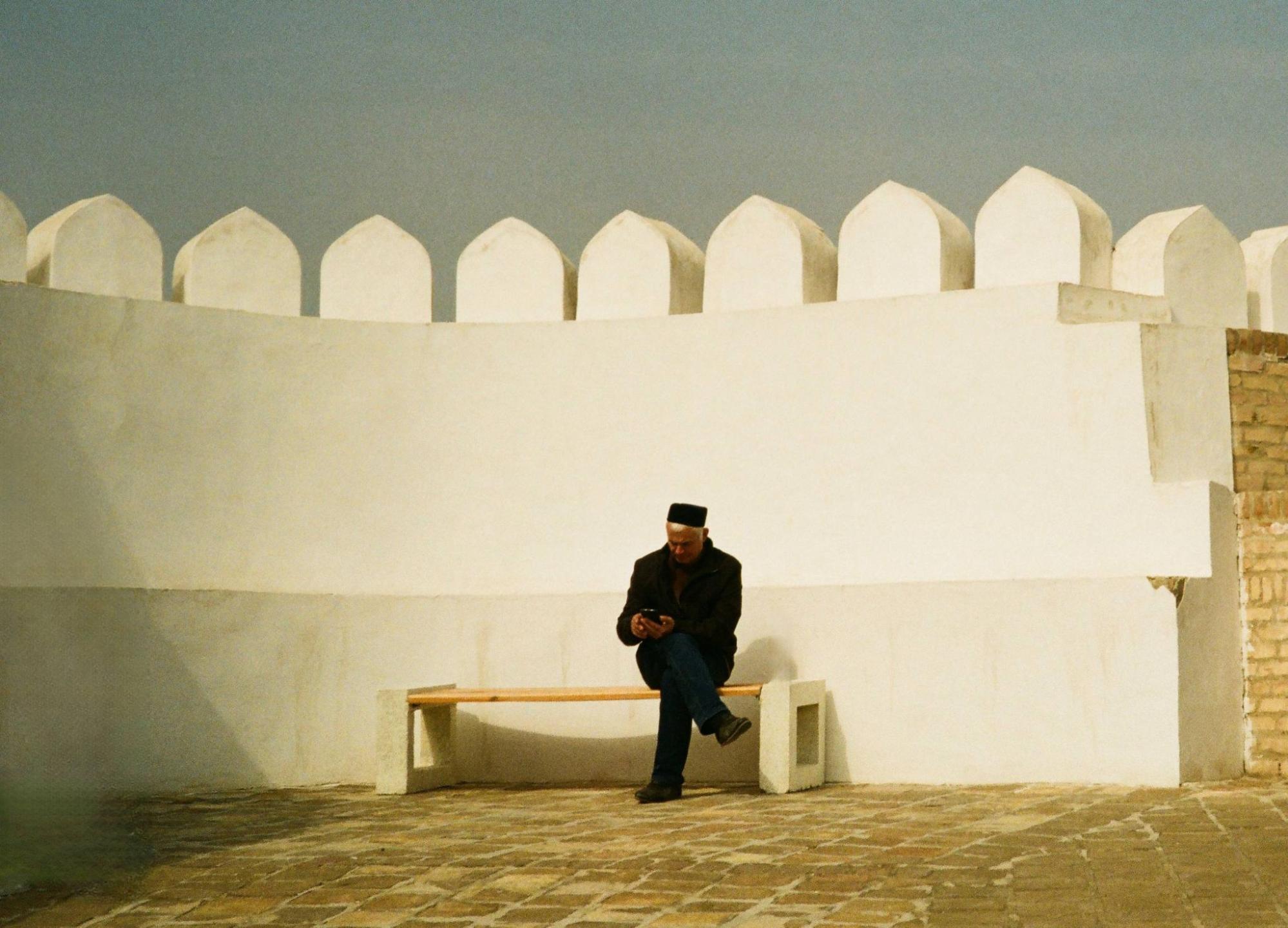
The colour photographs range from stunning architecture to a cat lying atop a piece of street furniture, capturing the everyday life that greats like Martin Parr, Vivian Maier and Jeff Wall have done. However, the Central Asian setting of Arlau’s images would make them unfamiliar to a largely Western audience. The use of analogue photography does give them a dated feel, deliberately employed to trigger a sense of nostalgia that wouldn’t be as effective in a digital format.
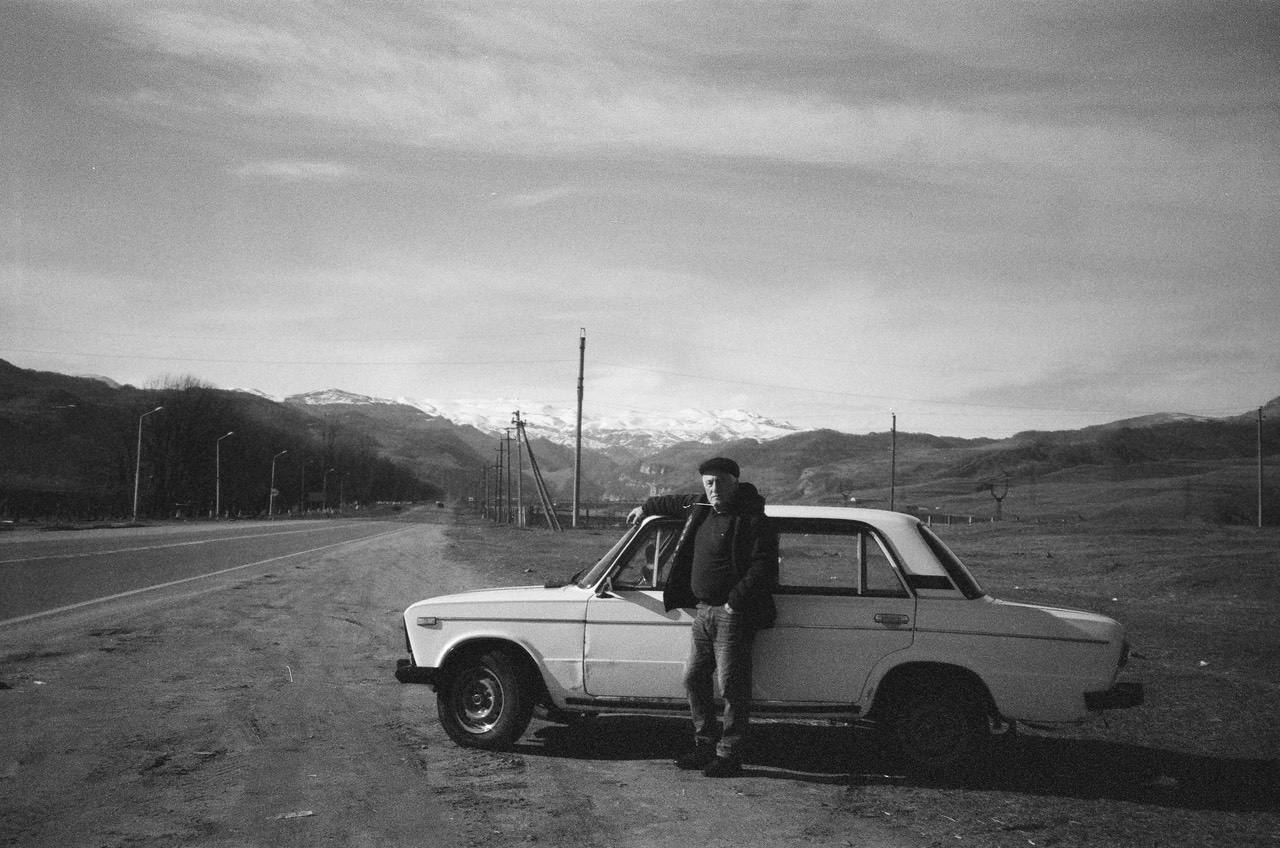
The black-and-white photographs have the timeless quality we associate with the medium, and the grand, sweeping landscapes evoke the work of Sebastiao Salgado and Ansel Adams. Placing these empty landscapes alongside those of people on a train or in a car parked within the landscape provides a strong contrast and highlights how landscapes transform with human presence.
The final third belongs to risographs, which feature far less detail, so we only get snatches of the information we find in Arlau’s photographs. However, risographs are much more tactile than photography, so there’s more information to be found in the way they feel.
Each of the three sets of images – colour, black-and-white photography, and risographs – is given one wall each, in a beautiful curation by Darya Kalembet. It represents how memory functions: we remember a moment vividly, in colour, before it fades to monochrome and then to the faintest details, as we see in the risographs.
By placing the works in a scattered hang, rather than in straight lines, the hang captures how memory works: we get snatches of it when we see a familiar image, sound, or smell, rather than a linear projection that lets our brains fixate on a particular date.
The centre of the space features bowls from Bukhara, Uzbekistan, in recognition of the traditional crafts that are such an important part of Central Asian culture and heritage.
Arlau’s work reminds us of how much there is still to explore in the world, the images we are yet to capture, the memories we will form, and how those memories will consolidate or fade over time. As the great Ansel Adams once said, “You don’t make a photograph just with a camera. You bring to the act of photography all the pictures you have seen, the books you have read, the music you have heard, the people you have loved.”
‘Chromatic Terrains’ by Arlau, curated by Darya Kalembet, was on at The Handbag Factory in London, from 4-9 June.

