

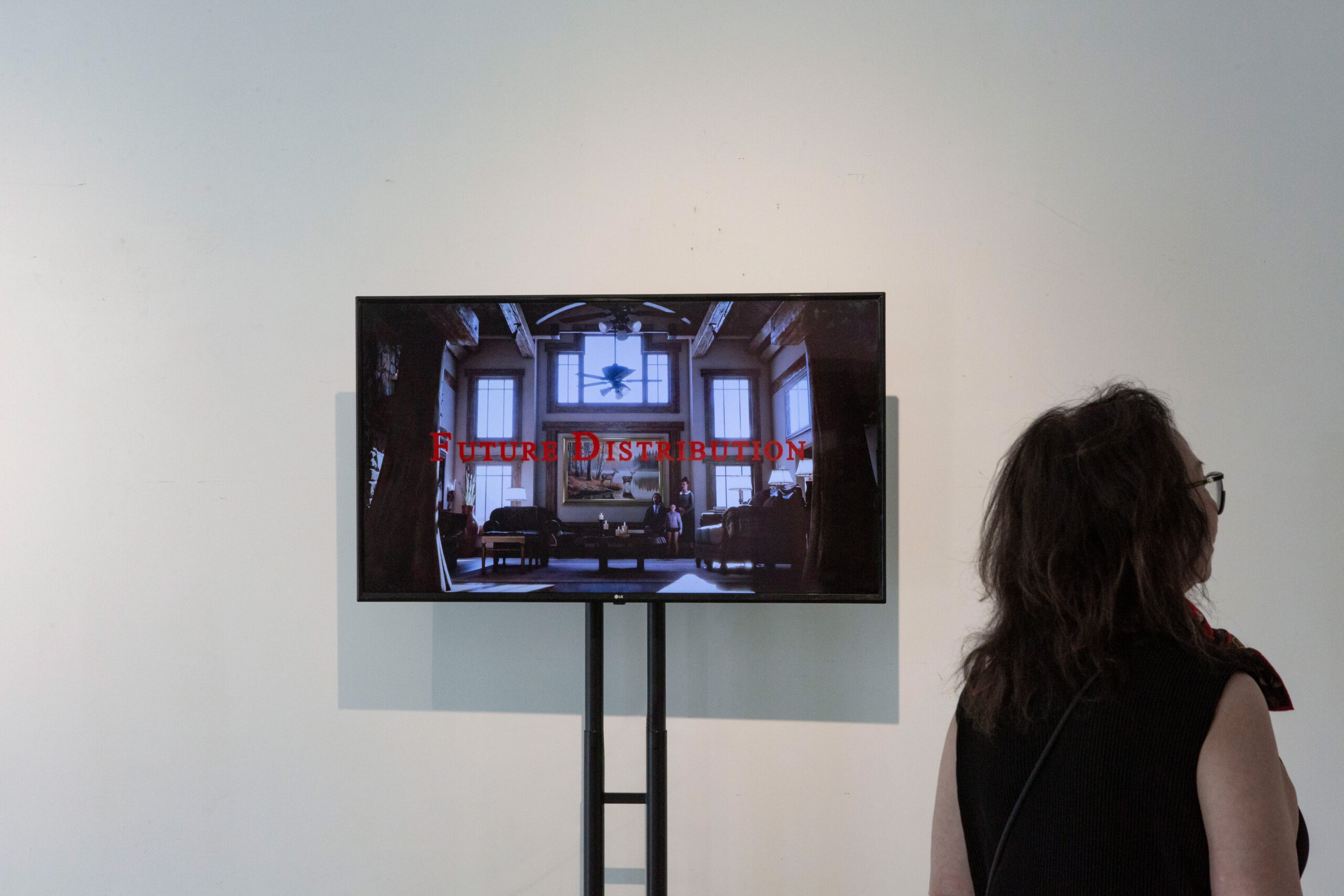
A grand bourgeois sitting room, where the family at the centre of Future Distribution (2025) embodies the social codes and ethical values of its class, serves as the entry setting for Jiangyu Huang’s digitally constructed environment. Their solemn gaze function as metaphor for supremacy and privilege, and Huang’s attribution of slow, automated movements to the father, mother, and daughter throughout the video is a deliberate choice that associates spatial and temporal order with the processes of inculcation necessary for the reproduction of existing social structures.
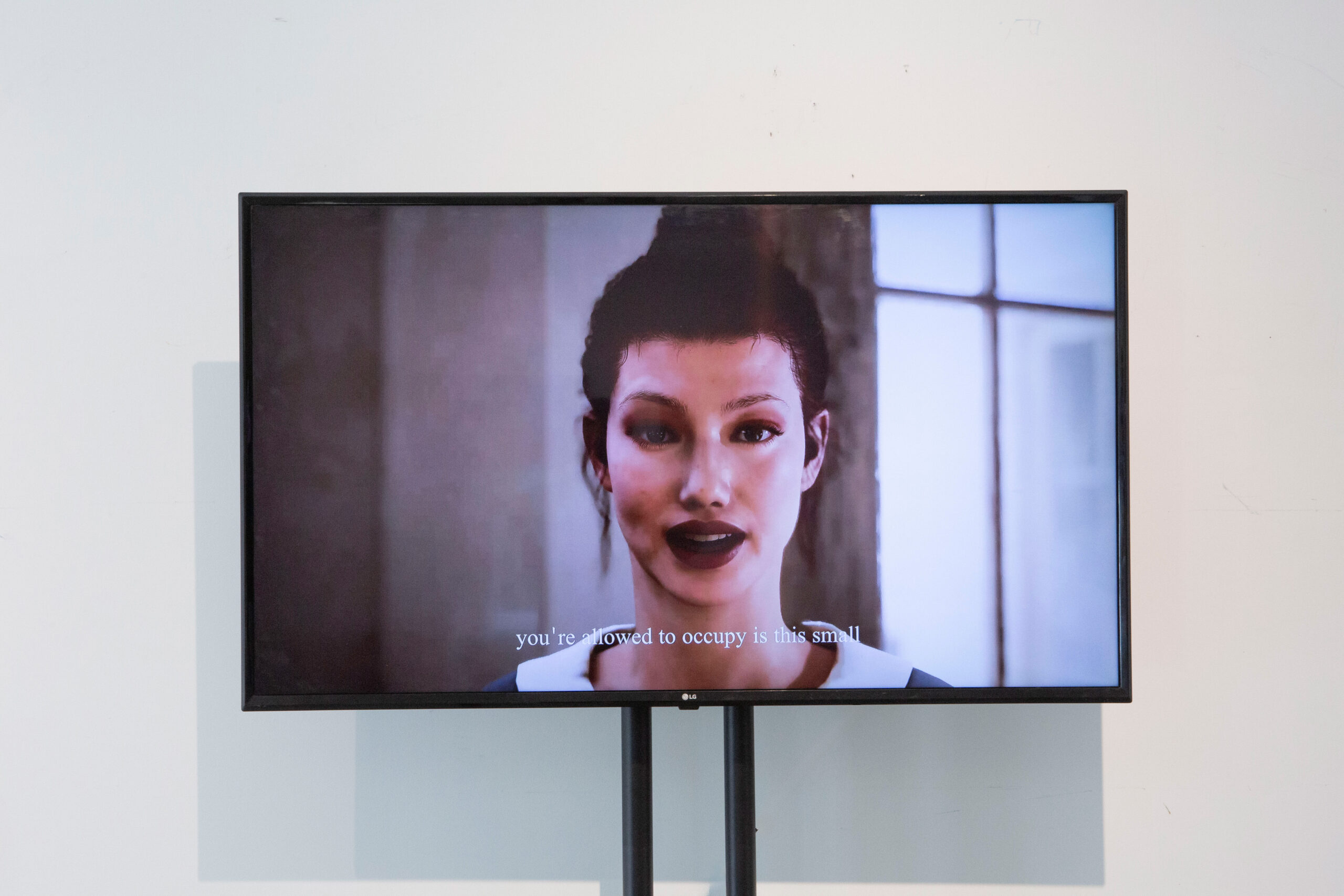
Yet, Huang also speaks of personal memory, intergenerational dynamics, and the right to be countercultural and refuse the discourses, institutions, and practices of power. In Future Distribution, Huang rejects the status quo whilst critiquing the inner mechanisms of his familial nucleus, examining how larger ideological structures have entered and operated within it. According to Althusser, the family is one of the apparatuses through which the Self is socialised and prepared to abide by dominant values, accepted behaviours, and ruling worldviews; hence, it plays a crucial role in preparing subjects to inhabit and conform to their class of extraction. As he traces the diachronic and psychological trajectory of the daughter’s interaction with her parents through memory, melancholy, and a sharp analytical approach, Huang recounts not only the frustration and inner pain through which the child confronts her parents’ conformism and bourgeois narrow-mindedness, but also the constraints and limitations they internalised in order to comply as they moved from youth into adulthood.
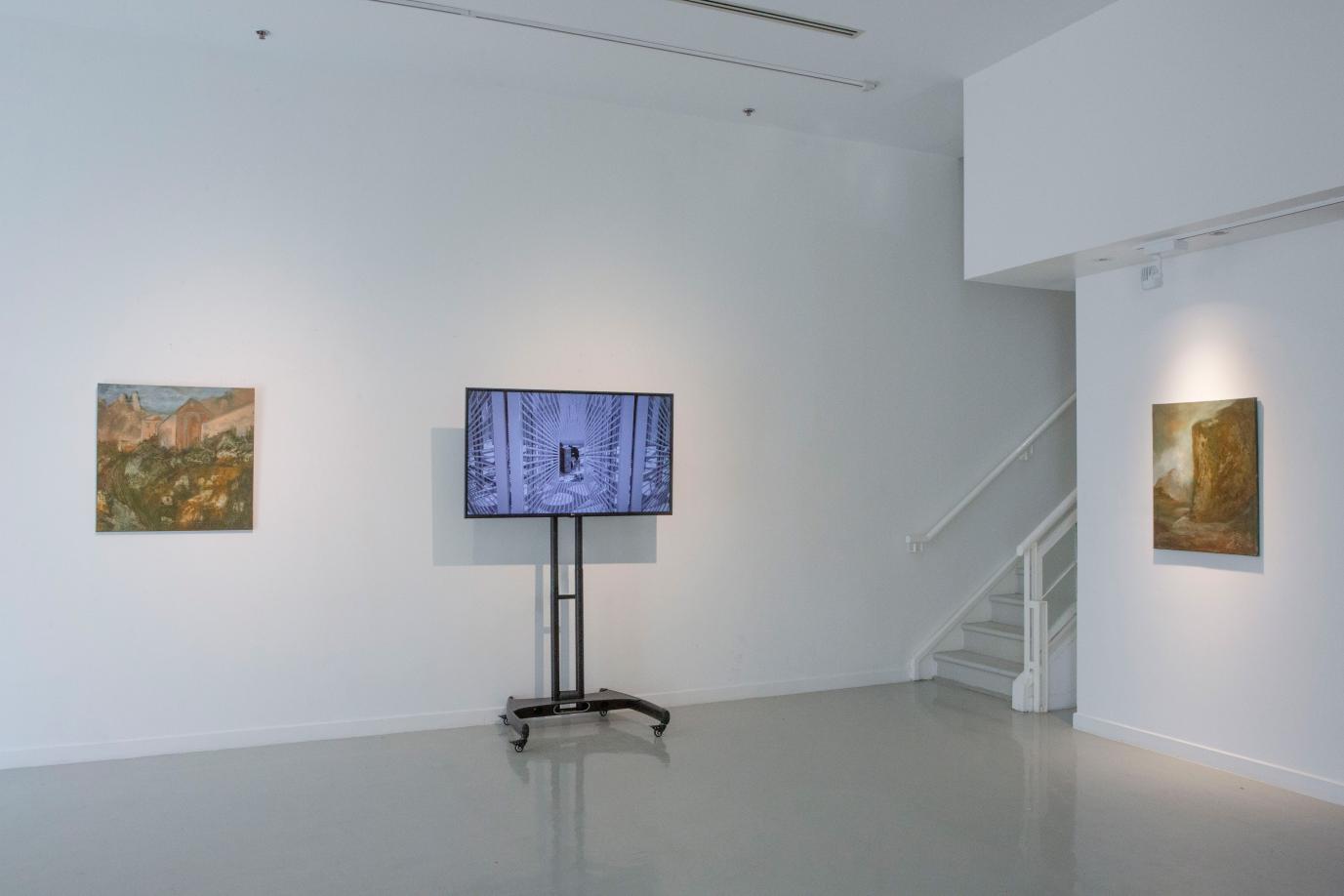
The oppressive self-narrativisation that the parents had to endure in order to belong to a privileged class is visually expressed through the changing scenarios in which the mother and father operate as actress and pianist, respectively, in the video. As the father no longer “commands the piano keys” but is instead “commanded by the keys to success”, his hair whitens and he becomes imprisoned within a diaphanous, chapel-like room, whose apparently clean and orderly architectural elements evoke the structure of a cage or prison. As the mother decides to abandon the stage, the oscillating giant golden chandelier that towers above it — and which epitomises the inexorable chronology through which social conditioning transforms her into a normalised subject — disappears, and her self-expression is reduced to fit the narrow screens of digital society.
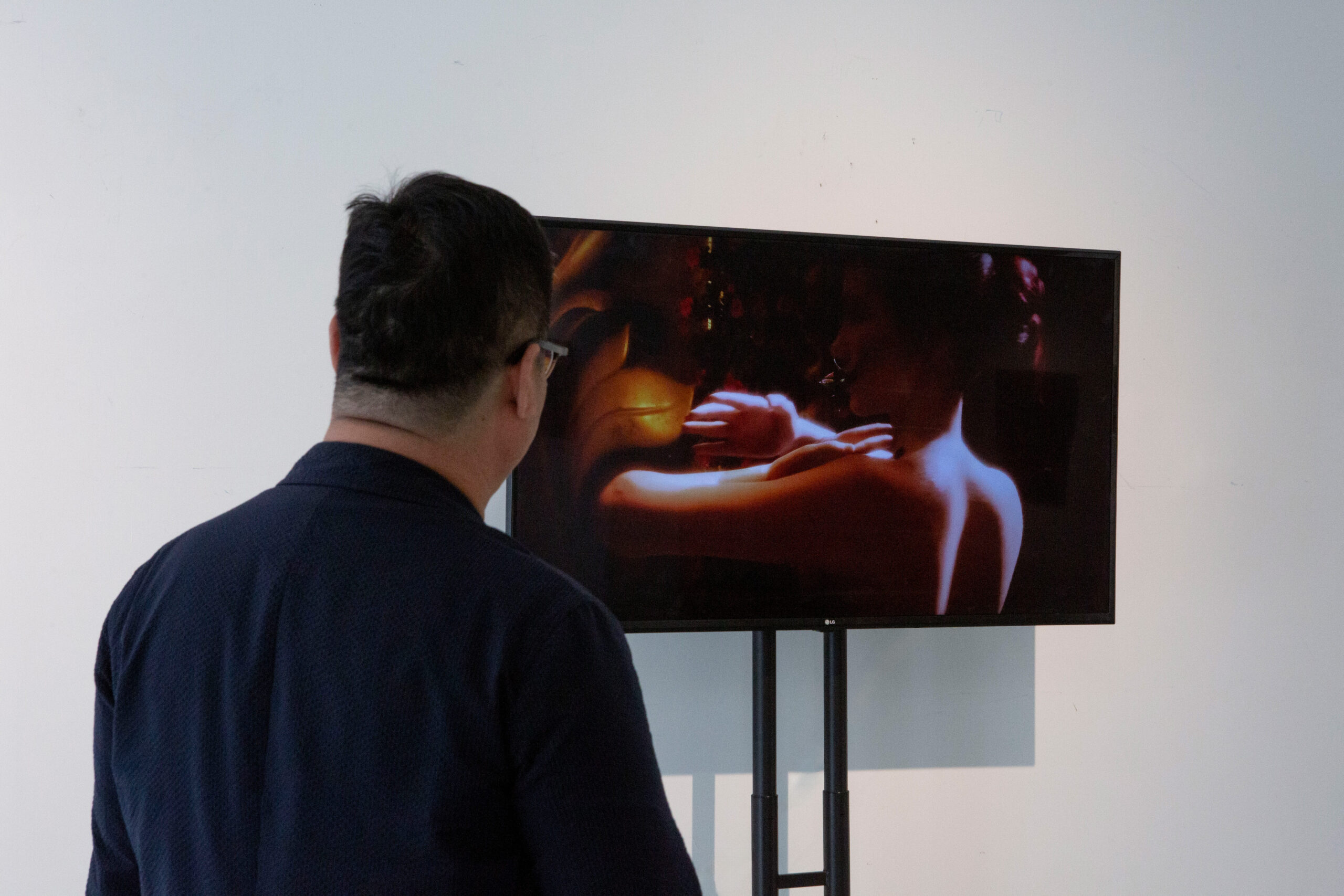
On the one hand, Future Distribution entwines virtual visual spaces with symbolic architectural settings, sound, language, and ideological content. Every element — from colour schemes and compositions ranging from cool minimalist interiors to warm, carefully curated domestic elegance, to the melodic quality of the soundtrack interwoven with politically charged spoken texts — reflects on class structures, hegemonic social relations, and the mechanisms through which capitalist society reproduces itself. On the other hand, Huang allows art to function as a familial constellation; thus, Future Distribution becomes a microcosm of resistance, where the artist negotiates and asserts his identity by evaluating the compromises and forms of self-regulation his parents underwent to adapt to the dominant socio-economic system.

