

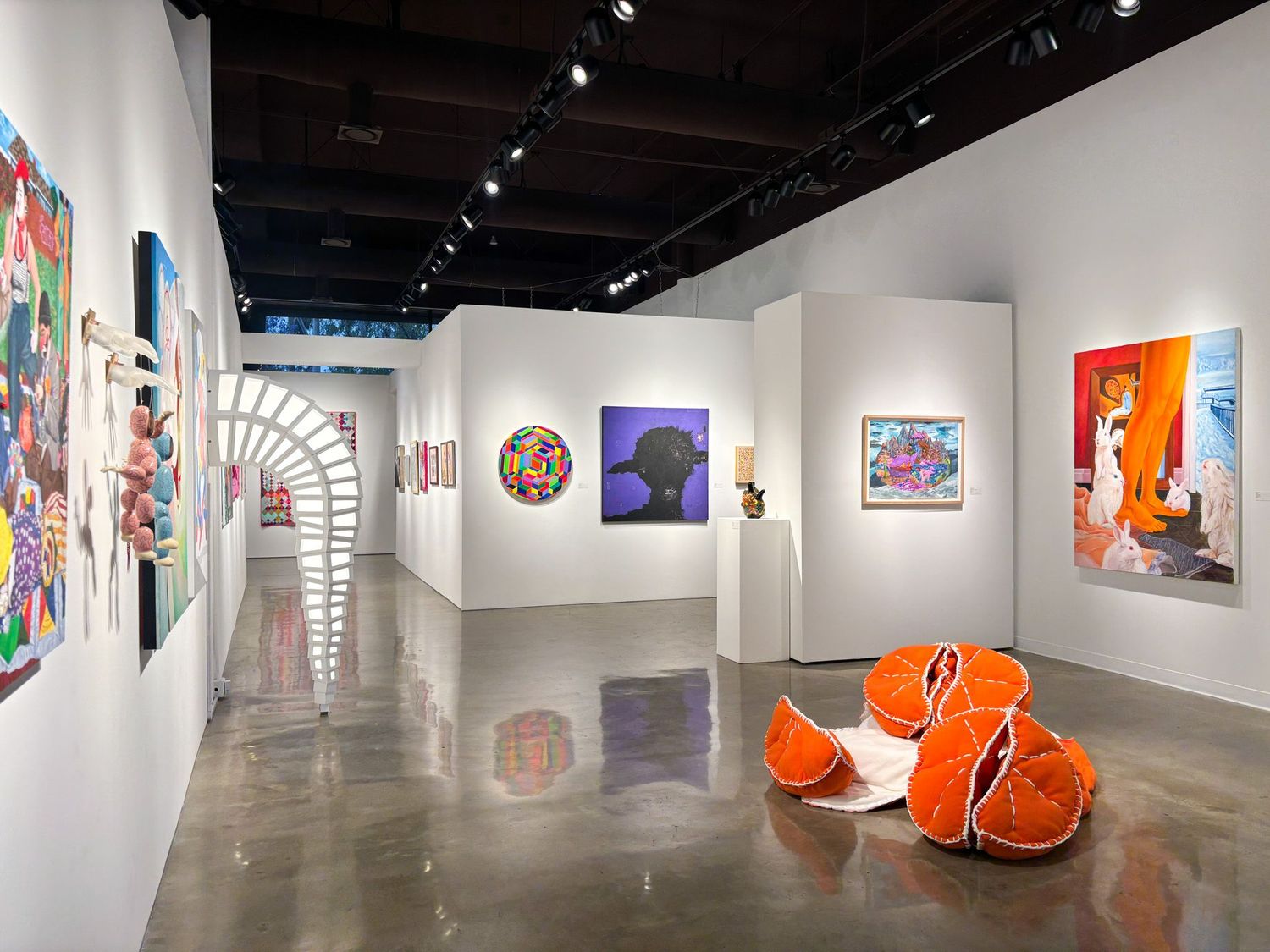
California has long provided artists with a distinctive visual vocabulary, from its expansive landscapes and urban environments to the cultural exchanges that shape everyday life. Yet no single aesthetic or regional identity can account for the range of art produced across the state. At Brea Gallery, the 41st Annual Made in California Juried Exhibition offered a view of how contemporary artists working across California approach questions of identity, memory, labor, and place through markedly different materials and visual languages.
Held from April 25 through June 28, 2026, the exhibition brought together more than 90 California artists working across painting, sculpture, ceramics, and mixed media. Selected through an annual juried process, the works were presented without a prescribed curatorial theme, allowing connections to emerge among otherwise distinct practices. Some addressed California through its social and cultural histories, while others turned toward personal memories or the physical properties of materials. Together, they demonstrated how artistic perspectives are shaped by the histories and identities that artists bring into their surroundings.
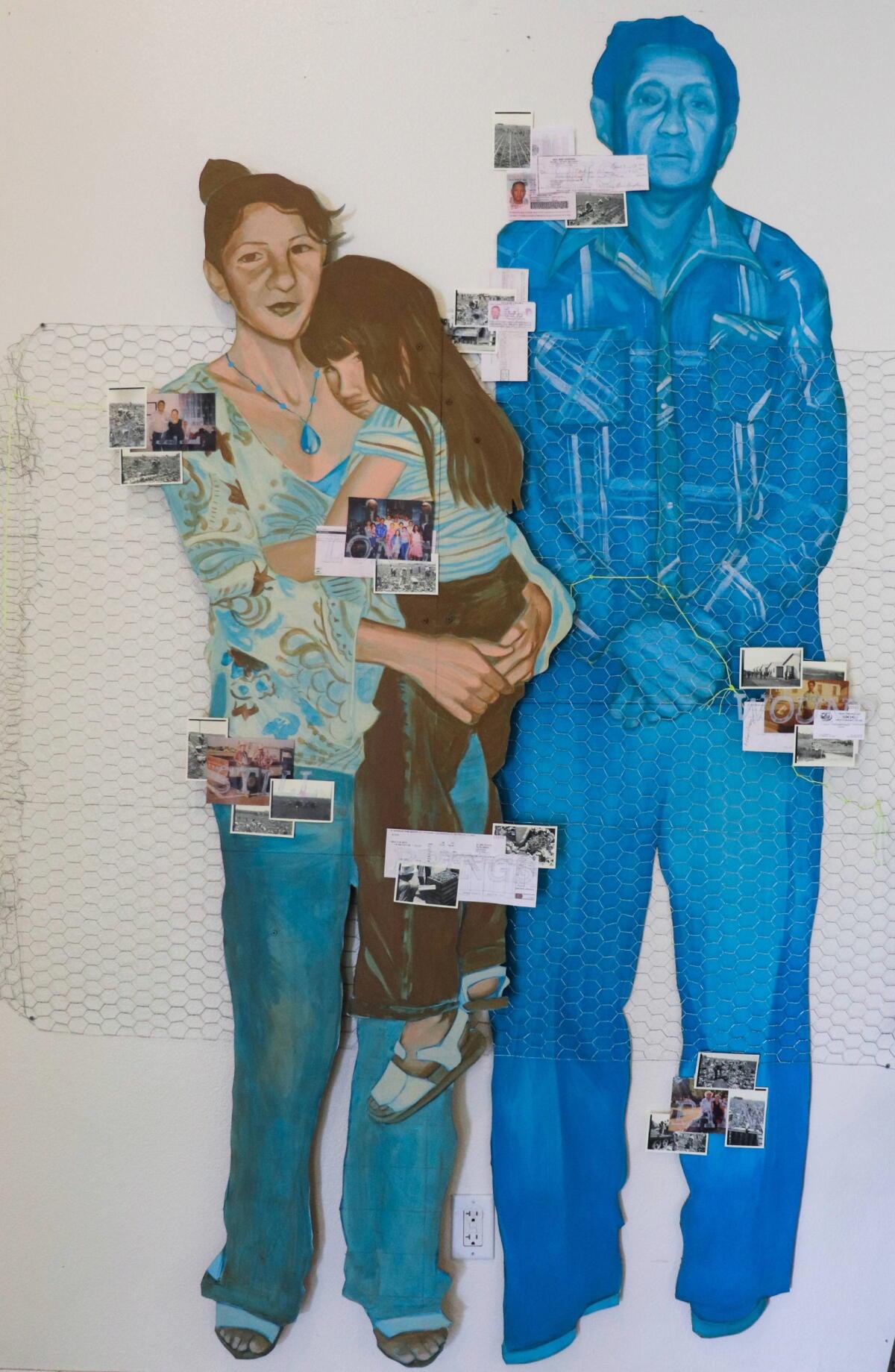
Among the exhibition’s most direct engagements with cultural inheritance was Nataly Barajas’s Granddaughter of a Wetback (2025), which received first place. Combining acrylic painting, photographs, documentary fragments, string, and fencing wire, the work reconstructs a family history shaped by migration and agricultural labor. A vividly blue figure representing the artist’s grandfather stands alongside an intimate image of a mother holding a child. Surrounding photographs and records interrupt the painted surface, transforming a family portrait into a layered examination of historical experience.
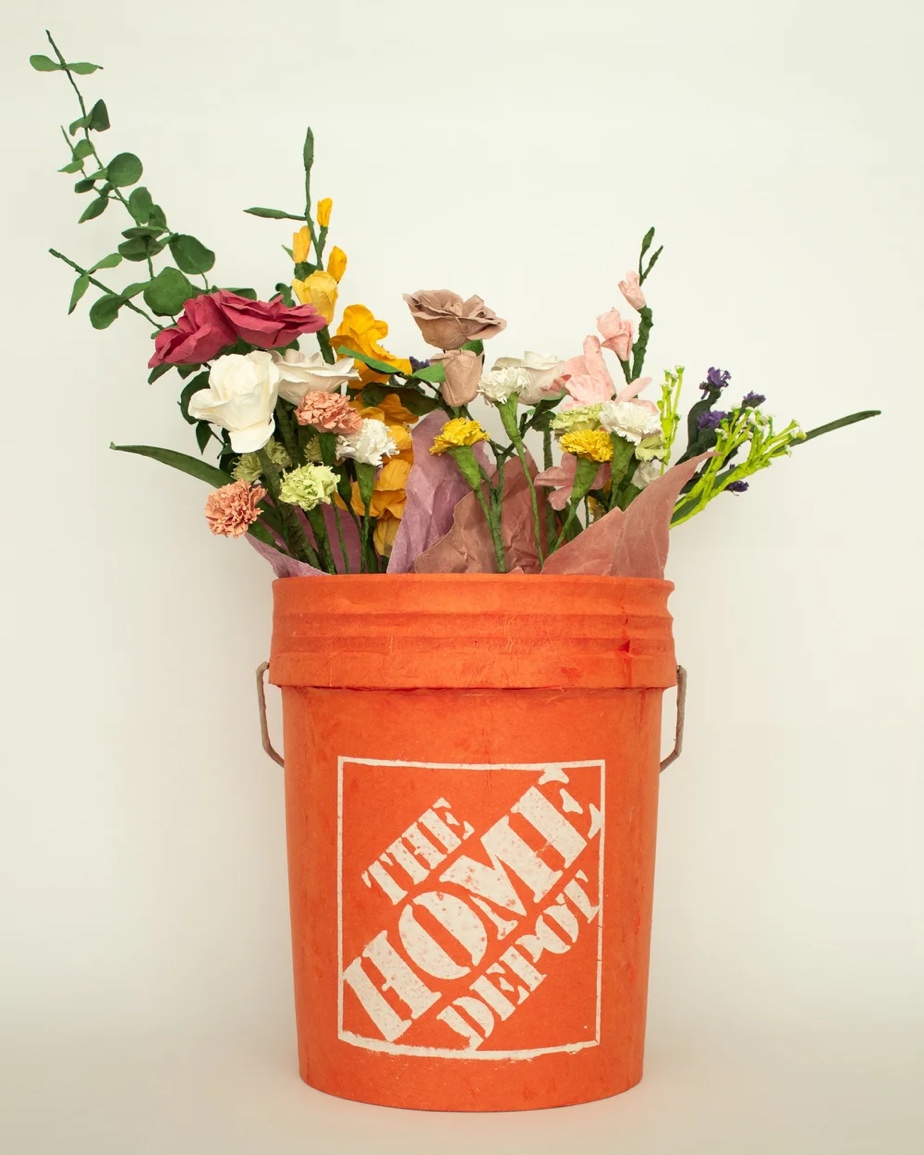
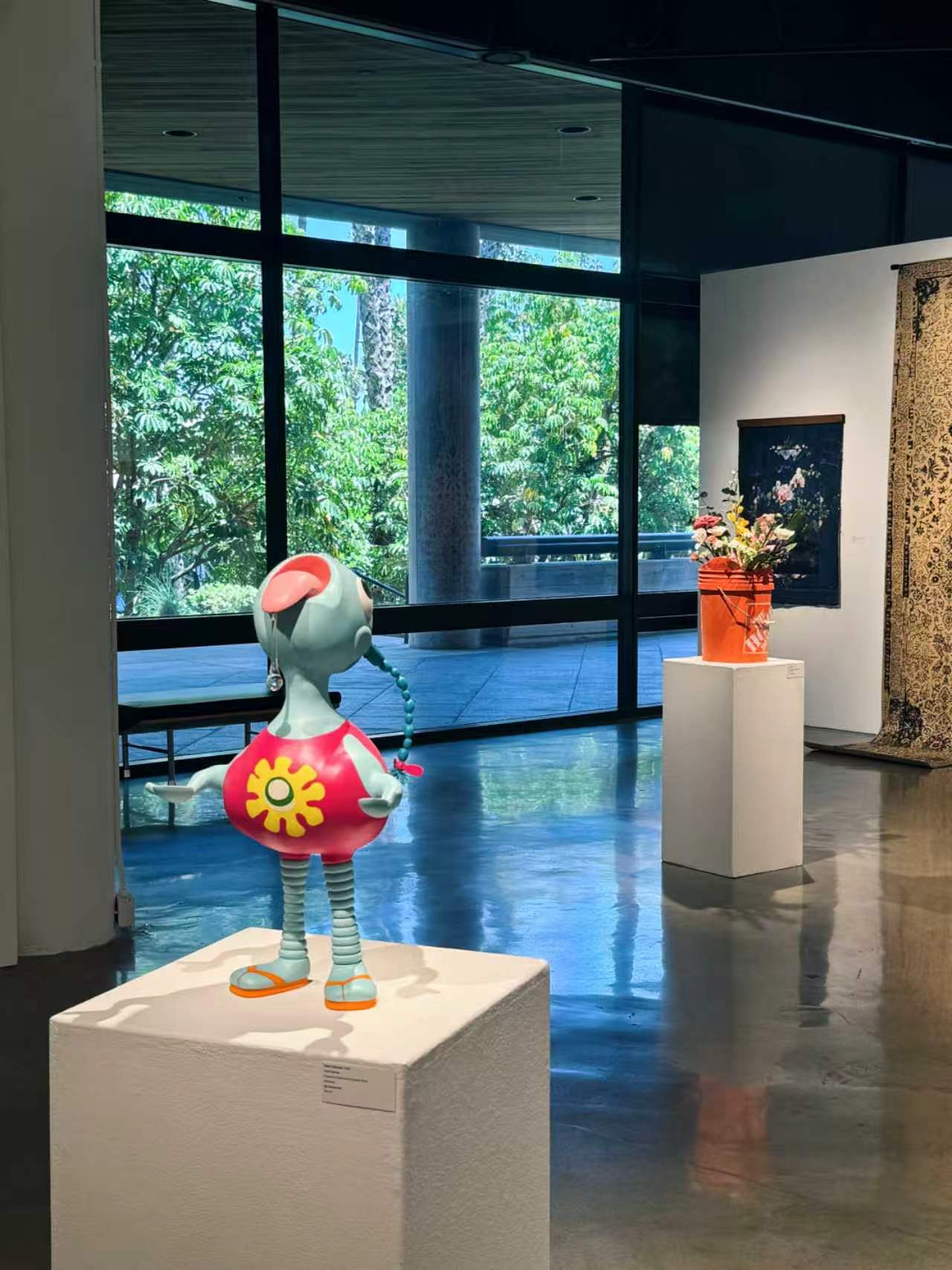
A different examination of labor and cultural identity appears in Alyssa Dolleschal’s Azusa Ave. Using handmade paper flowers arranged in an orange Home Depot bucket, Dolleschal draws attention to objects associated with street vending and day labor in Southern California. The flowers possess an immediate decorative appeal, but their painstaking construction also emphasizes the time and physical attention involved in making them.
Where Barajas and Dolleschal examine histories embedded in family records and recognizable objects, Zhisheng Wu approaches collective experience through the architecture of memory. His work Classroom (2025) depicts an empty schoolroom, its rows of desks extending toward the front of the space beneath a restrained palette of blues and pale neutrals. The composition is built around repetition. Desks, windows, and architectural divisions establish a visual rhythm that is orderly, controlled, and almost architectural in its precision.
Based on Wu’s memories of growing up within China’s collective educational environment, the work explores a space in which personal experience and institutional structure are inseparable. The classroom is recognizable as an ordinary setting, yet its emptiness makes the arrangement of furniture unusually prominent. Without students or teachers to direct attention, the room’s physical organization becomes its central subject. The desks imply regulated movement, shared routines, and expectations of behavior.
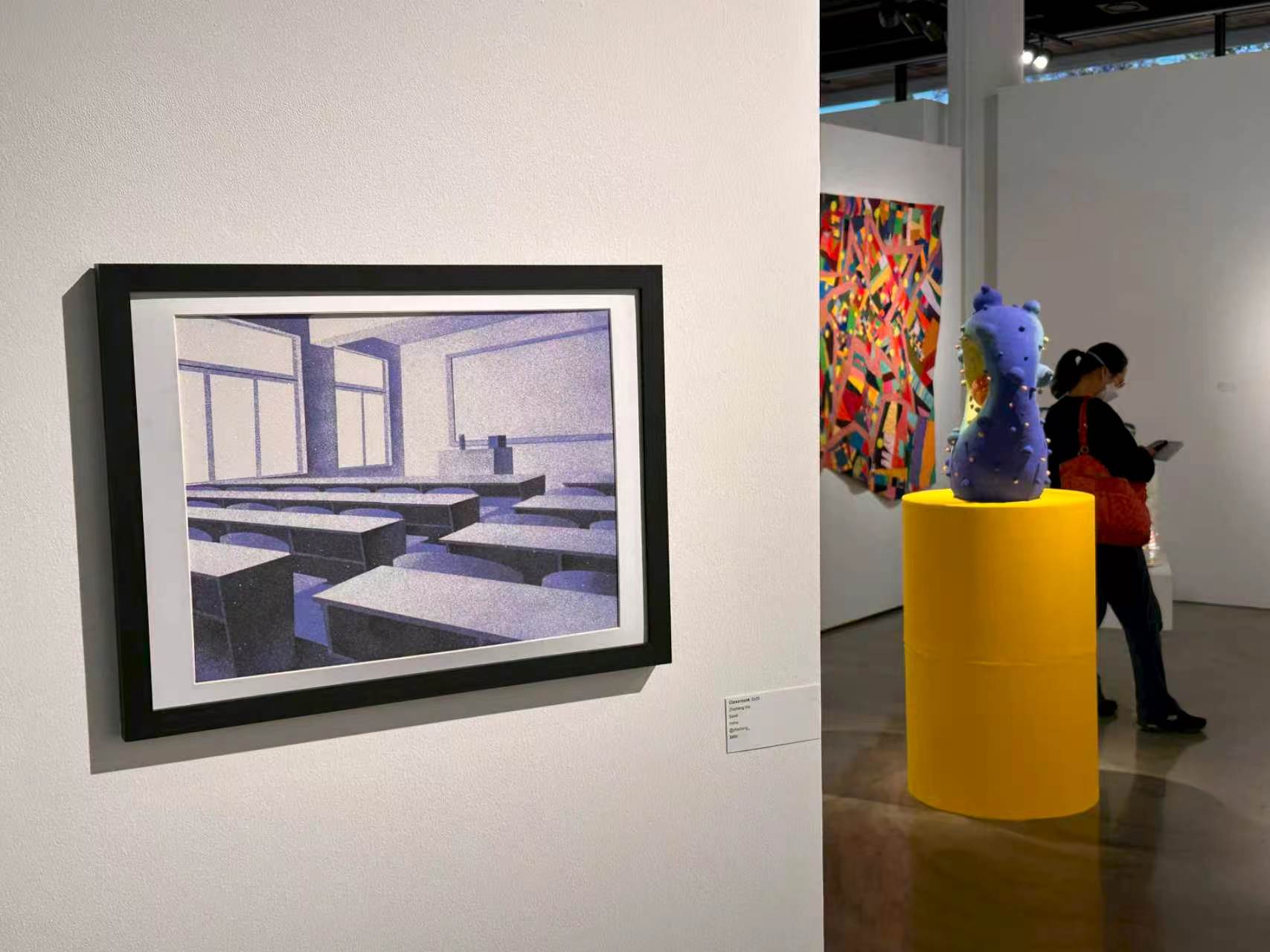
Wu’s use of sand adds another dimension to this controlled visual environment. Its granular appearance introduces a subtle instability into the otherwise precise geometry. The textured surface softens the classroom’s rigid architectural divisions, giving the remembered space a sense of distance and uncertainty. This contrast suggests how a place can remain visually distinct in memory even as the feelings attached to it change.
Particularly compelling is the emotional ambiguity of the composition. The repeated desks and rigid spatial divisions suggest an environment shaped by discipline, yet their predictability can also produce a sense of reassurance. Time changes the emotional weight of the room without erasing its rigid order. The painting holds those contradictory responses in a quiet, carefully controlled image.
The exhibition’s material range extended further through Joseph Heffernan’s Siphon, which received third place. The ceramic sculpture combines a rounded, organ-like body with projecting tubular forms and a brightly patterned surface. Flowers, geometric motifs, and bold bands of color establish an almost playful visual language, while the sculpture’s pipe-like extensions suggest the movement or extraction of resources.
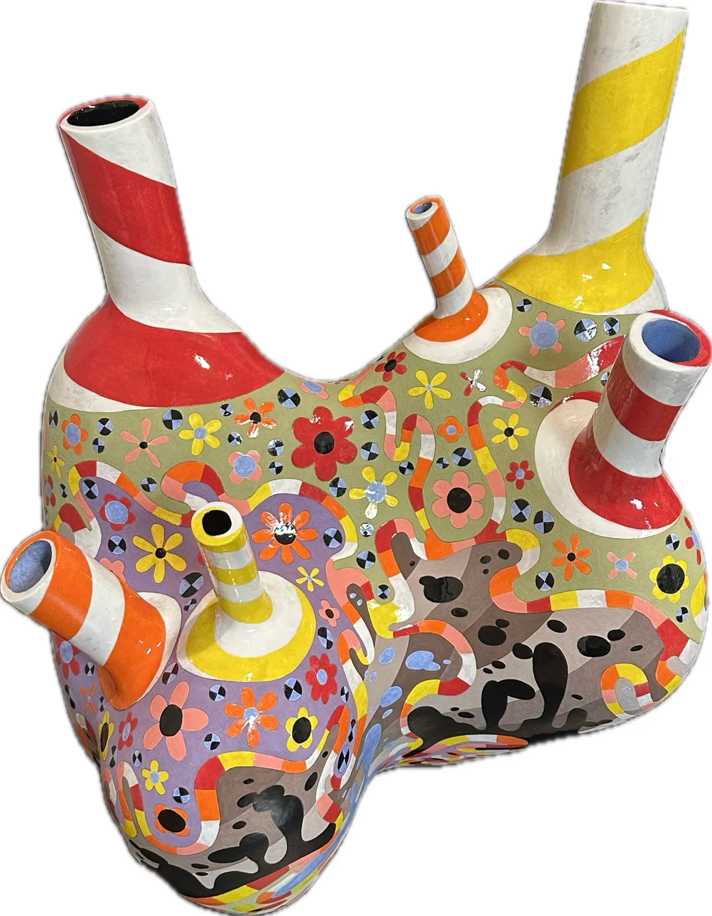
Informed by the environmental tensions surrounding agriculture and resource extraction in California’s Central Valley, Siphon brings together decorative exuberance and industrial associations. Its surface initially invites pleasure, but the unusual relationship between its organic body and mechanical-looking extensions introduces a less comfortable reading. Heffernan’s sculpture demonstrates how ceramic form can address environmental concerns through visual contradiction, allowing its formal qualities to carry the underlying tension.
The contrast between these works reveals both the possibilities and the challenges of an exhibition organized without a single thematic framework. Barajas uses family archives to examine inherited history, while Dolleschal locates questions of labor and cultural belonging within everyday objects. Wu transforms a remembered institutional space into an examination of collective experience, and Heffernan explores the relationship between natural resources and human intervention through sculptural form. Their approaches differ significantly, and the breadth of the exhibition inevitably limits the depth with which every artistic proposition can be considered. Nevertheless, these differences give the survey its character, allowing distinct artistic concerns to coexist without forcing them into a uniform interpretation.
The exhibition also reveals how geographical identity can accommodate experiences that extend far beyond a region’s physical boundaries. A classroom remembered from China, family documents tracing Mexican American labor histories, objects associated with street-level economies, and the environmental conditions of California’s agricultural regions each contribute a different perspective. Seen together, these works suggest that California’s contemporary art landscape is shaped by the interaction of personal histories, cultural inheritance, and the material conditions of everyday life. The exhibition’s significance lies in the individuality of these artistic responses and the connections that become visible when they share the same space.

