

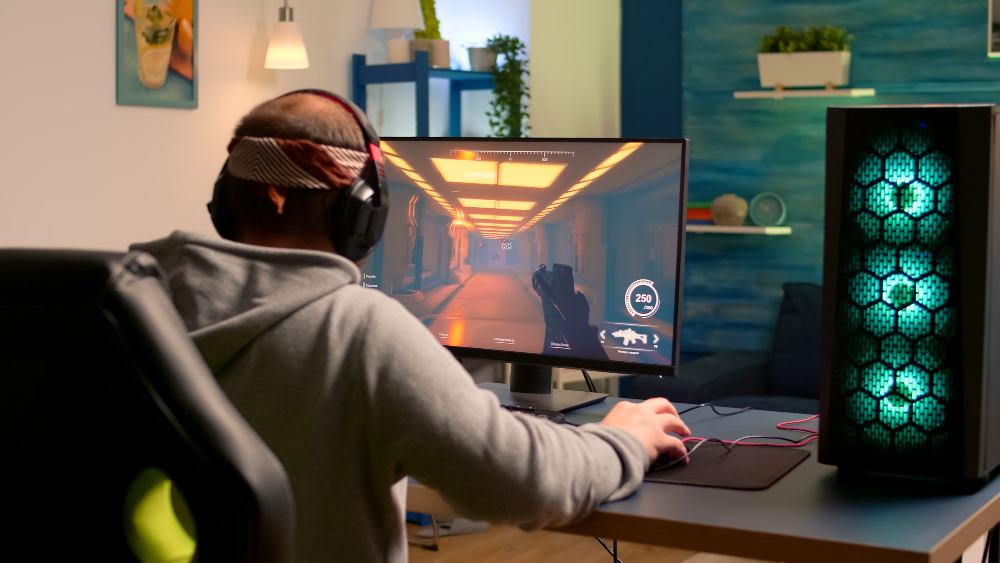
Esports has moved far beyond basement tournaments and LAN parties. Today, professional gaming fills arenas, commands broadcast deals, and draws viewership numbers that rival traditional sports leagues. The competition is structured, the players are trained athletes, and the prize pools run into the millions.
Monetization has followed the audience through sponsorships, media rights, merchandise, and streaming revenue; the business of esports is genuinely serious. The broader gaming world has grown alongside it, touching everything from music and fashion to film. Online casino and gambling platforms have also become part of this wider cultural shift, reaching audiences who value fast-paced, skill-adjacent entertainment.
Platforms like MrQ Casino now sit alongside gaming communities as part of the same connected, competitive culture. Gaming, in every form, has earned its place at the mainstream table.
From Subculture to Stadium Sport
For years, competitive gaming was dismissed as a hobby with a ceiling. That ceiling no longer exists. Games like League of Legends, Valorant, and Counter-Strike have produced professional ecosystems complete with franchised teams, scouting pipelines, and coaching staffs.
The Esports World Cup, held in Riyadh, drew players from dozens of countries competing across multiple titles for a combined prize pool exceeding $60 million. Stadiums fill up. Broadcasts stream to millions simultaneously. The scale is undeniable.
What changed was legitimacy, and legitimacy came through consistency. Regular seasons, league formats, and dedicated media coverage gave esports the structure it needed to be taken seriously. Fans could follow a team over months, track standings, and invest emotionally in outcomes.
That formula is not new; it is exactly what made football and basketball global. Esports simply applied it to a different arena.
The Athletes Behind the Screens
Professional esports players train with the same discipline as traditional athletes. Daily practice sessions can run six to ten hours, split between individual mechanics, team strategy, and review. Physical conditioning has become standard: hand health, posture, and reaction time all require active management.
Teams employ analysts, psychologists, and nutritionists. The margin between winning and losing at the top level is often measured in milliseconds. Players like Lee “Faker” Sang-hyeok in League of Legends or s1mple in Counter-Strike have built careers spanning over a decade, a long time in any competitive field.
They are recognized globally, command massive followings, and represent the kind of sustained excellence that defines sporting greatness. The conversation around whether esports athletes deserve the same recognition as traditional athletes has largely been settled by the players themselves through sheer performance.
How Streaming Built the Audience
Twitch, YouTube Gaming, and platforms like Kick changed who gets to watch and how. Before streaming, esports coverage was fragmented; you had to seek it out. Streaming made it ambient. A viewer could drop in on a professional match, a ranked solo queue session, or a casual playthrough without any subscription or schedule. That accessibility accelerated audience growth at a rate no traditional broadcast model could match.
Content creators built massive audiences by simply playing games on camera, often games tied to competitive scenes. This created a feedback loop: streamers drove interest in titles, titles drove tournament viewership, and viewership drove sponsorships back into the ecosystem.
The audience became part of the product, participating through chat, donations, and subscriptions. Streaming turned gaming from a solitary activity into a shared one, often watched by more people than the players themselves.
Gaming’s Reach Across Culture
The influence of gaming has spread well past the screen. Fashion brands have partnered with game titles for limited drops. Musicians perform virtual concerts inside games, reaching audiences in the tens of millions.
Films and television series adapted from game IP have found serious critical and commercial success, The Last of Us being a clear example. Gaming references appear across advertising, social media, and mainstream comedy without needing explanation.
This cultural saturation reflects how deeply games have embedded themselves into daily life. They are not a niche interest for a specific demographic; they are a shared language across age groups, geographies, and backgrounds. Game mechanics show up in education platforms, workplace tools, and fitness apps.
The vocabulary of gaming has become general vocabulary. Speed, skill, and spectacle are no longer confined to the controller; they are values that the wider culture has absorbed and made its own.
Defining Force in Modern Culture
Esports and gaming are no longer emerging forces. They are fully established pillars of modern culture. What began as a niche pastime has evolved into a global ecosystem that blends competition, entertainment, and community at an unprecedented scale. The infrastructure mirrors traditional sports, the athletes demonstrate elite-level dedication, and the audience continues to grow across every platform and demographic.
More importantly, gaming has reshaped how people interact with media and with each other. It is participatory rather than passive, global rather than local, and constantly evolving. The lines between player, viewer, and creator have blurred, creating a dynamic environment where engagement drives value.

