

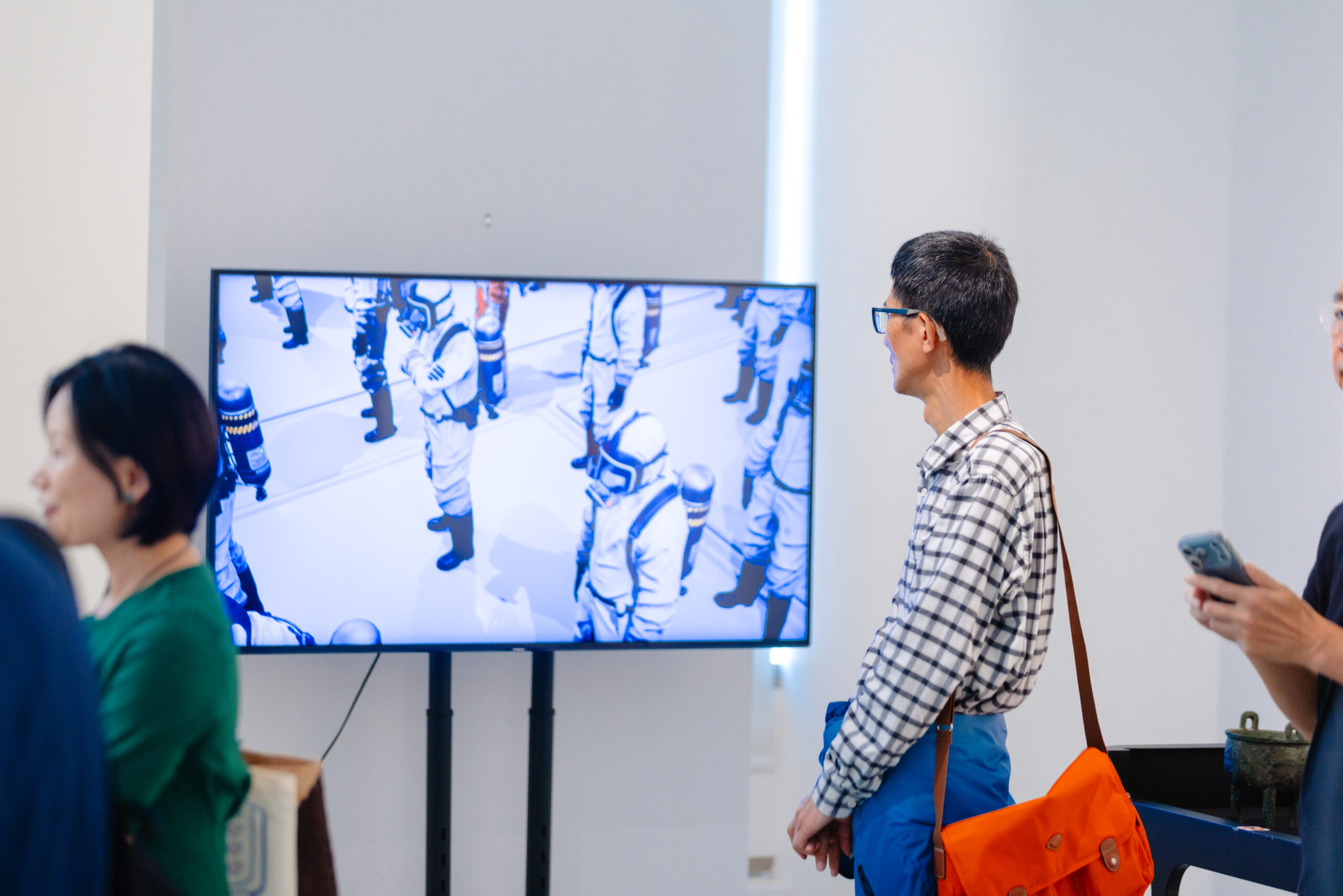
The camera tilts up from the bottom to gradually reveal a vast crowd of anonymous workers wearing identical whole-body protective suits, respirators and oxygen tanks on their backs. They’re standing still, as if waiting for instructions. Set within a white, aseptic, futuristic environment, Chonghao Hua’s Burnout Current (2025) recreates an indistinct world, where standardisation has become the norm, and individuality is therefore no longer an obvious human trait: each worker appears to be interchangeable, inscrutable through their masks, and invisible under their uniforms.
As the video progresses and exhaustion accumulates, Hua treats it as labour’s structural component rather than its mere consequence. In the second scene, a defenceless body gets hoisted up by a crane while other workers witness unperturbed. The figure, treated like industrial cargo, is ambiguously being rescued or discarded; regardless, human life and industrial components are intertwined parts of the same operational logics, both equally aimed at endless productivity. Indeed, for Hua, burnout doesn’t interrupt completion, rather it feeds it.
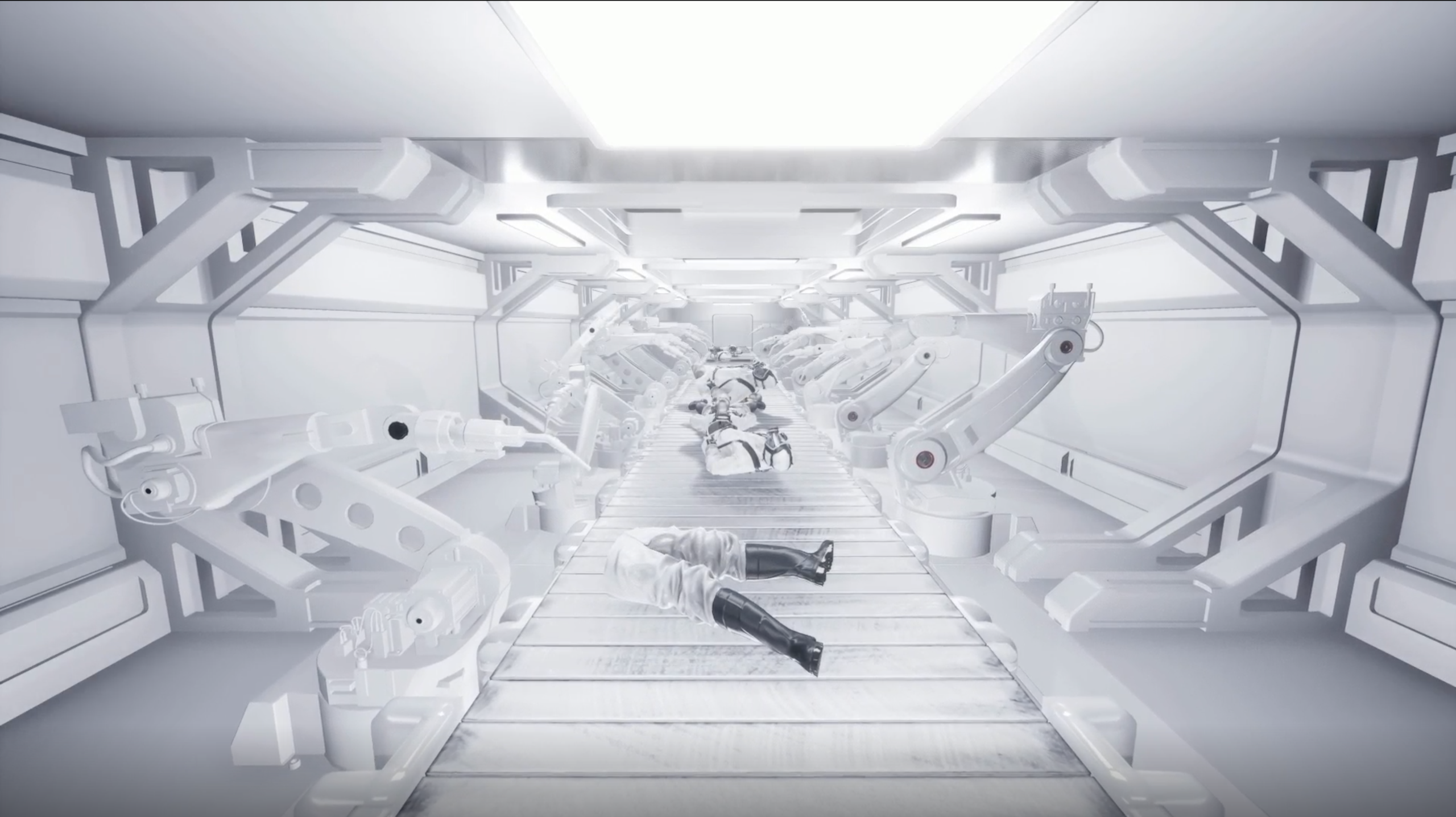
Across moving image and performance, the Chinese artist explores how the capitalist system of production depletes individual subjectivity, and how exploitation annihilates and revises human behaviour, needs, and biological cycles. His practice doesn’t position itself as a critique of work conditions but extends into a speculation of contemporary and future life, where values are reconsidered and reimagined, aptly evoking current debates about the supplantation of human labour carried out by AI––thus the future of work as we know it. Burnout Current epitomises this through eerie images of body parts on assembly lines and the uncanny absence of any social interaction. The space depicted functions like a Foucauldian panopticon, where surveillance, order, efficiency are internalised and performed by the workers themselves, perfectly in synch with the automated movements of the central robotic arm.
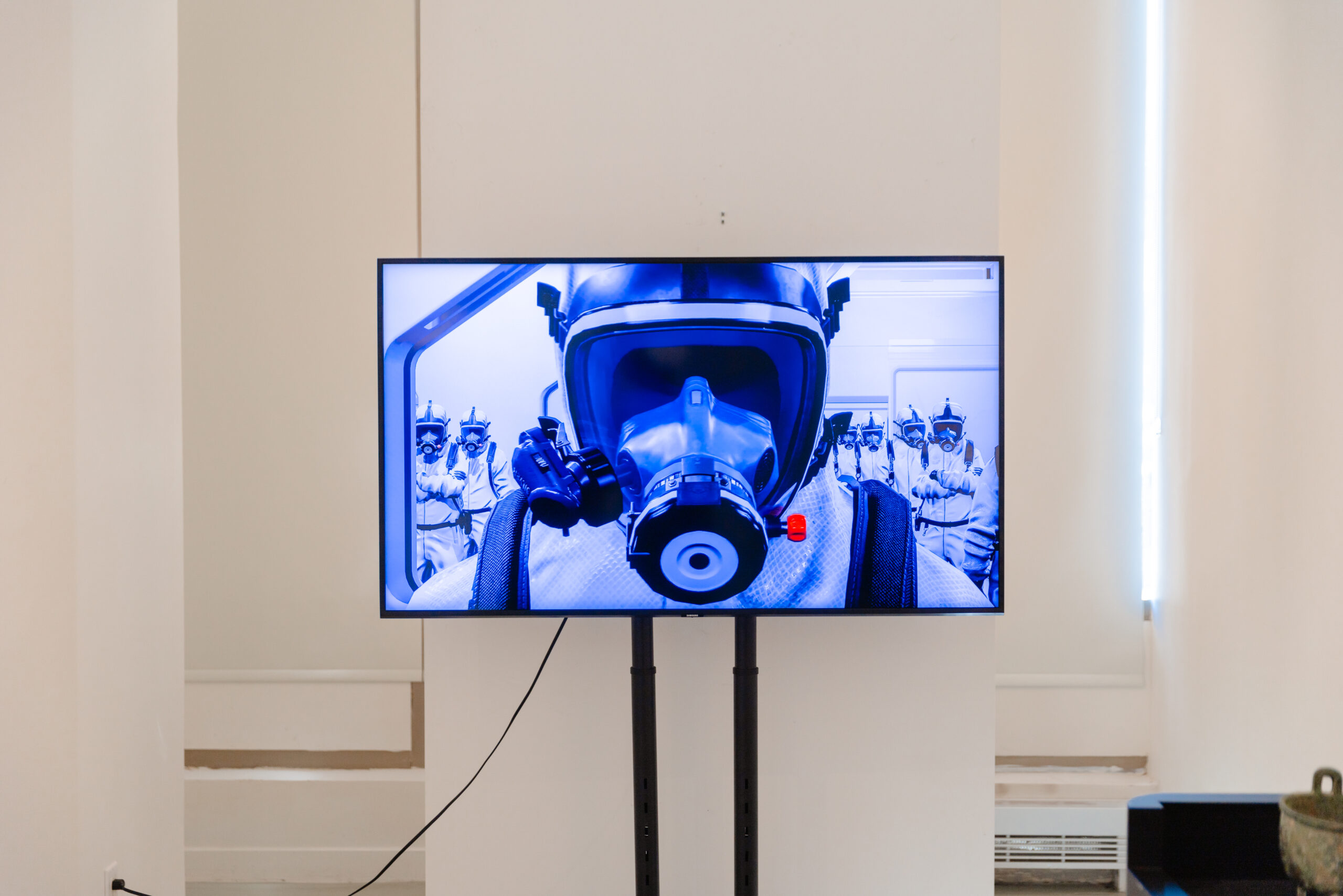
While the visuals remain pristine and sterile throughout the length of the video work, the closing sequence takes on some poignant colouring: the room turns blue, as one of the workers—the only one wearing an orange suit—sits in front of the working robotic arm. He then stands up and touches the machine, now still, in a strikingly affective manner, while piano music sublimates the encounter. Through the staging of this moment, Hua veers from the dystopian and produces a narrative where workers and machine may recognise each other, reconcile, or even, ultimately, converge.

