

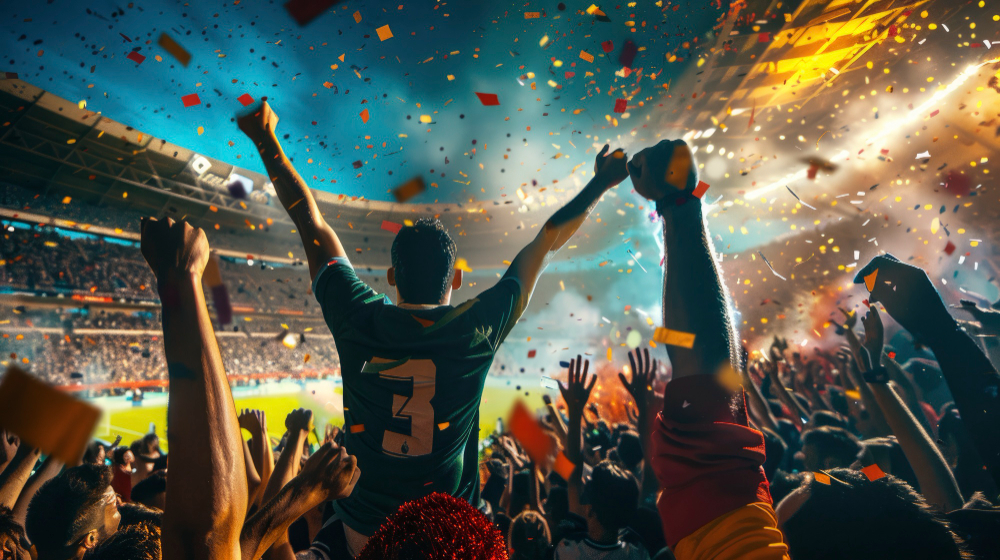
Somewhere around the moment Madonna walked out onto the MetLife Stadium pitch on Sunday night, something clicked. Not just for the 80,000 people in the stands. For the roughly 33 million Americans watching at home, the ones who had never cared about football in their lives, the ones who tuned in because their group chat wouldn’t shut up about it. For them, something shifted too.
The 2026 World Cup Final halftime show. The first-ever official halftime show in World Cup history. Wasn’t just a concert. It was a cultural announcement. America, the country that spent decades insisting it didn’t really get football, just threw the biggest live entertainment event the sport has ever seen. And everyone showed up.
This isn’t a story about music. It’s a story about what Americans want now, and how fast the culture is moving to give it to them.
From the Super Bowl to the World Stage
For decades, the Super Bowl halftime show was America’s uncontested live entertainment crown jewel. Shakira and J.Lo in 2020. The Weeknd’s empty-stadium eeriness in 2021. Beyoncé, Eminem, Dr. Dre bringing out an era. UCLA cultural studies professor Safiya Noble has written about how the halftime show evolved from a marching band novelty into America’s most powerful cultural stage, a place where identity, politics, and pop converge in front of the largest TV audience of the year.
But Sunday moved that crown. Slightly, maybe. Enough to matter.
FIFA had never done this before. The World Cup final has always ended at the final whistle and that’s that. Choosing to install a halftime show for the first North American edition was a deliberate statement about the audience they were playing to. And the roster. Madonna, Justin Bieber, alongside a supporting lineup that skewed young and deliberately global. Told you exactly who FIFA thinks America is in 2026.
Wayne Rooney, watching from the BBC studio, apparently gave the whole thing a five-word review that left the anchors speechless. We don’t need to repeat it. The reaction said everything.
America Is Finally Buying What Europe Has Sold for Years
Ask anyone who grew up going to football matches in England or attending a summer festival in Spain what live events feel like there, and they’ll tell you: it’s participatory. It’s communal. The crowd isn’t an audience, it’s an ingredient.
America has always had live events. But the cultural posture has historically been different. More passive, more consumer-oriented, more about the spectacle delivered toyou rather than the experience you’re part of. The Super Bowl is watched on a couch. Concerts happen in seated arenas where you’re not quite sure if it’s okay to stand up.
That’s been changing. Fast.
According to survey data from Allianz Partners USA and Ipsos, 63% of Americans planned to attend at least one ticketed live event in summer 2025, with travel increasingly being planned around those experiences rather than around destinations. People aren’t going to Miami and catching a show. They’re going because the show is there. That’s a European instinct, and it’s arrived in full force.
The World Cup accelerated it. Thirty-three million viewers for a group-stage match between the US and Belgium. Fox Sports executives saying it rivals NFL numbers. This isn’t a blip. It’s a generation of American fans who grew up watching the Premier League on NBC, playing FIFA on their consoles, and following European clubs on social media finally getting their home tournament.
The Same Appetite Is Reshaping American Leisure Policy
Here’s where it gets interesting, and where sports intersects with something broader.
The same cultural shift driving Americans toward participatory live entertainment. The desire to be inthe moment, to have skin in the game, to engage rather than just observe. Is visible in how US states are rethinking leisure regulation. Spectating has become participating. Watching a match now often means having something riding on it.
State legislatures have noticed. The US online gaming map has been expanding steadily since the Supreme Court’s 2018 PASPA ruling opened the door, and the momentum hasn’t slowed. States like Georgia are actively responding to that demand. Baseball America’s reporting on https://www.baseballamerica.com/stories/georgia-online-casinos/ captures exactly this moment. A state weighing its options as the cultural appetite for interactive entertainment collides with real legislative possibility.
This isn’t about gambling in the abstract. It’s about a generation that expects to engage with entertainment, not just consume it.
Gambling involves risk. Please play responsibly and only wager what you can afford to lose. If you feel gambling is becoming a problem, visit BeGambleAware.org or call 1-800-GAMBLER.
What the Halftime Show Actually Got Right
Back to MetLife. Because the show itself deserves more than a backdrop role in this argument.
The choice of Madonna was deliberate in a way that went beyond nostalgia. She’s an artist who has spent forty years understanding what rooms need, what moments need, what cultural permission slips look like. Bieber brought something different. A generation that grew up online, for whom live performance is almost an act of radical presence, something you have to consciously choose over the screen. Together, they bracketed a huge swath of the American audience.
The staging leaned global. The visual language borrowed from stadiums in São Paulo and Johannesburg and Cairo, not just from Las Vegas residencies. That was intentional. FIFA knows exactly what it’s doing here, and what it’s doing is telling American audiences: this is a world event, and you are finally, fully part of it.
For a country that spent decades treating international football as a niche interest, that’s not nothing. That’s actually quite a lot.
The Communal Future
There’s a version of this argument that gets cynical fast. Everything is content, everything is a product, the halftime show was just FIFA monetising American eyeballs. Fine. Maybe. Probably, on some level.
But the people in those stands didn’t feel like product. The fans in the watch parties across New York and Atlanta and LA didn’t feel like demographics being activated. They felt like people who wanted to be somewhere together, watching something that mattered, at the same time.
That’s what live entertainment does when it works. And right now, in the summer of 2026, it’s working in America with an intensity that hasn’t been seen before.
The World Cup halftime show didn’t create this shift. But it captured it perfectly. America wanted a moment to announce its arrival at the global live entertainment table. Sunday gave them one.
FAQ
Was the 2026 World Cup halftime show the first in World Cup history? Yes. The 2026 edition marked the first time FIFA staged an official halftime show at a World Cup Final. The North American tournament, hosted across the US, Canada, and Mexico, was specifically chosen as the moment to introduce the format, given the host nation’s appetite for spectacle-driven live entertainment.
Why did the 2026 World Cup Final draw such large US audiences? A combination of home-soil momentum, two decades of growing Premier League fandom in the US, and the genuinely strong US national team performance throughout the tournament created a perfect storm. Variety reported that viewership for select matches approached NFL-level numbers. Something that would have seemed implausible at the 2014 or 2018 tournaments.
How has American attitudes toward live events changed in recent years? Survey data from 2025 showed 63% of Americans planning to attend at least one ticketed live event over summer, with a growing number organising travel around entertainment rather than the reverse. The shift tracks with what European fans have practised for generations: treating concerts, festivals, and sporting events as experiences you build your calendar around.
What made the Madonna and Justin Bieber pairing work culturally? The pairing bridged roughly forty years of American pop in a single performance. Madonna represents the era when American pop became a global export; Bieber represents the generation that grew up as that global culture fed back into the US through the internet. Together, they addressed an unusually wide audience demographic in one show. Which is exactly what an event of this scale demands.
Will the World Cup halftime show become a permanent fixture? FIFA hasn’t confirmed a permanent format, but the combination of record viewership and overwhelming cultural response makes it difficult to imagine them walking it back. The commercial and cultural case for continuing is strong. Whether future editions match Sunday’s lineup is another question entirely.

