

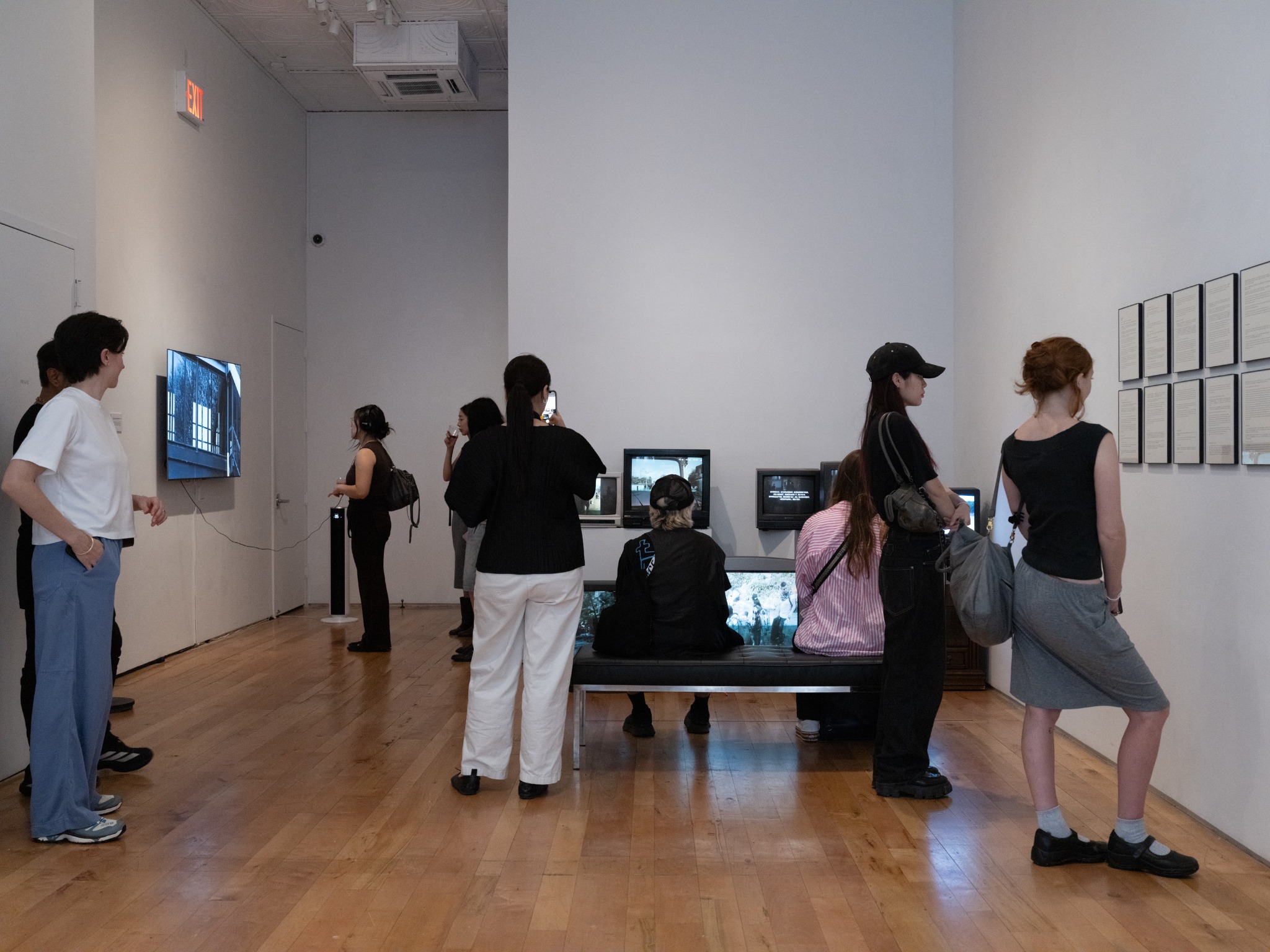
Through moving image, installation, photography, language, and archival material, Ryan Muchen Wang’s solo exhibition Perhaps It Was Not Still presents the work of an established multimedia artist whose sustained interdisciplinary practice examines migration, translation, cultural memory, and lived experience with conceptual rigor and formal precision.
There is a remarkable restraint at the heart of Ryan Muchen Wang’s Perhaps It Was Not Still. Rather than relying on spectacle or technological novelty, Wang demonstrates an authoritative command of multimedia form, constructing an environment in which memory unfolds through spatial relationships, fragmented narratives, and shifting modes of perception. Across moving image, photography, sculptural installation, translated text, and archival material, he establishes a precisely calibrated visual language that treats memory not as a fixed record, but as an experience continually reshaped through movement, language, and lived experience.
Opening on July 23, 2026 at Isabella Sullivan Gallery in New York, Perhaps It Was Not Still brings together works created over several years into a coherent multimedia installation, reflecting the consistency, conceptual depth, and formal discipline of Wang’s established artistic practice. Rather than following a chronological sequence, the exhibition unfolds spatially, allowing visitors to navigate relationships among image, text, sound, and architecture. Meaning emerges through movement within the gallery, where each work expands and reframes the others as part of a unified artistic structure rather than functioning as an isolated object.
“Memory is never recovered intact. It is continually rewritten through movement, language, and perception.”
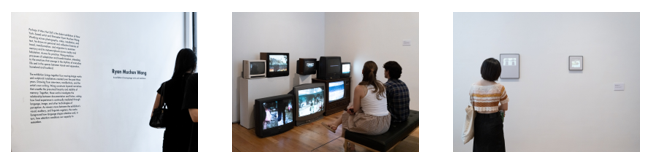
Photos courtesy of Isabella Sullivan Gallery.
One of the exhibition’s greatest strengths lies in Wang’s assured treatment of medium. Photography, moving image, language, projection, printed transcripts, and sculptural elements exist in careful equilibrium, with no single form dominating the experience. Translation becomes visual as much as linguistic, subtitles acquire an independent rhythm, and printed material operates as an extension of the installation rather than as supplementary documentation. This rigorously integrated approach demonstrates the distinction of Wang’s contribution to contemporary multimedia practice: meaning is produced through relationships among media, allowing viewers to move continuously between reading, looking, listening, and remembering.
The conceptual center of the exhibition is In Transit, a multi-channel installation distributed across multiple CRT televisions. Interviews, participant-recorded imagery, landscapes, and fragments of everyday life unfold simultaneously without resolving into a singular narrative. Each monitor maintains its own temporal rhythm while contributing to a larger constellation of movement, displacement, and personal memory. Rather than reducing migration to a unified historical account, the installation allows individual experiences to retain their complexity, creating an environment in which multiple perspectives coexist without hierarchy. The work exemplifies Wang’s ability to transform extensive research and diverse source material into a formally controlled and emotionally resonant installation.
Nearby, What Remains extends these ideas with remarkable subtlety and precision. Photographs created by migrants are projected into empty picture frames, occupying an ambiguous position between archive, monument, and personal recollection. Detached from their original circumstances, the images acquire new meanings through installation, suggesting that photographs continue to evolve long after the moment of their creation. The work reflects on what persists after movement has altered both people and places, proposing that memory resides not only within images but also in the spaces surrounding them. Through this restrained intervention, Wang demonstrates a sophisticated understanding of photography’s relationship to absence, testimony, and cultural memory.
Language functions throughout the exhibition as an artistic material rather than a transparent vehicle for communication. Mandarin and English intersect through subtitles, voiceovers, and written text, continually shifting the viewer’s attention between reading and looking. Translation becomes an active process of transformation, reinforcing Wang’s broader proposition that memory itself is continually rewritten through interpretation. The exhibition demonstrates that language does not merely describe experience but actively shapes how experience is understood and remembered, positioning translation as a central formal and conceptual force within Wang’s practice.
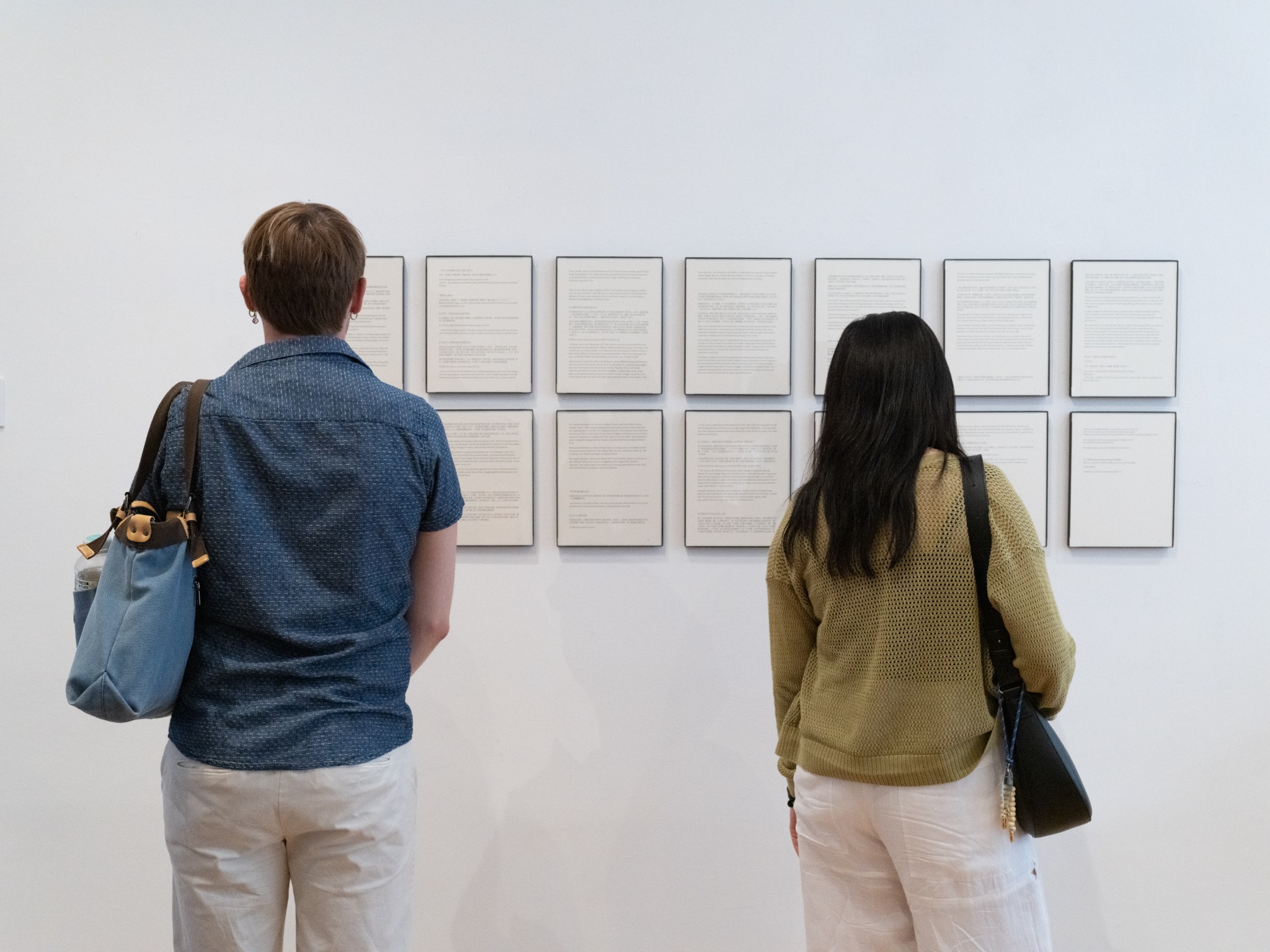
Photo courtesy of Isabella Sullivan Gallery.
Although the exhibition is rooted in themes of migration and travel, its broader achievement lies in transforming these subjects into rigorous formal questions about perception itself. Landscape is never presented as a stable backdrop, photographs never function simply as documents, and moving images resist becoming complete narratives. Instead, Wang constructs an exhibition in which uncertainty becomes a productive space for reflection. Visitors are encouraged to inhabit moments of transition rather than search for definitive conclusions, discovering that ambiguity itself can become a form of knowledge. Wang’s ability to translate complex social and cultural subjects into a precise visual and spatial language distinguishes his work within contemporary multimedia art.
The lasting achievement of Perhaps It Was Not Still lies in its ability to transform memory from subject matter into artistic structure. Rather than merely illustrating recollection, Wang constructs an environment in which viewers experience the instability of remembering through shifting relationships among image, language, sound, and space. The exhibition demonstrates how multimedia installation can function not simply as a container for individual works, but as a medium capable of producing its own forms of perception. Through this synthesis, Wang advances a sustained and coherent body of work defined by conceptual clarity, formal precision, and an authoritative command of interdisciplinary practice.
At a time when questions surrounding migration, translation, and cultural memory continue to shape contemporary artistic discourse, Perhaps It Was Not Still reinforces Ryan Muchen Wang’s standing as an established and significant voice in contemporary multimedia art. By integrating moving image, photography, installation, language, archival research, and artist publishing into a rigorously conceived spatial experience, Wang makes a distinctive contribution to critical conversations surrounding memory, representation, displacement, and visual culture. The exhibition confirms the coherence and distinction of a practice developed through years of sustained inquiry. Its synthesis of conceptual clarity, formal precision, and interdisciplinary thinking establishes Perhaps It Was Not Still as a significant contribution to contemporary multimedia practice and affirms Wang’s broader artistic contribution to the field.
About the Artist:
Ryan Muchen Wang is a New York-based multimedia artist whose established interdisciplinary practice encompasses photography, moving image, installation, and text. Drawing on personal and collective histories of travel and migration, he examines memory and its metamorphosis across reality and fabulation. Across a sustained body of work, Wang explores modes of human adaptation and change, paying particular attention to the emotions that emerge in everyday life and within the spaces between transit and separation, homeland and hostland.
Wang’s work has been exhibited and screened at the Jewish Museum in New York, the NARS Foundation in Brooklyn, 4C Gallery in Los Angeles, the Manhattan Film Festival, Athens Animfest, Shanghai International Short Week, and international festivals in Sweden, Canada, Chile, and the United States. His work has also received recognition from the New York Cinematography Award, the Independent Shorts Awards, and the Art Film Spirit Awards. He holds an MFA in Visual Arts from Columbia University.

