

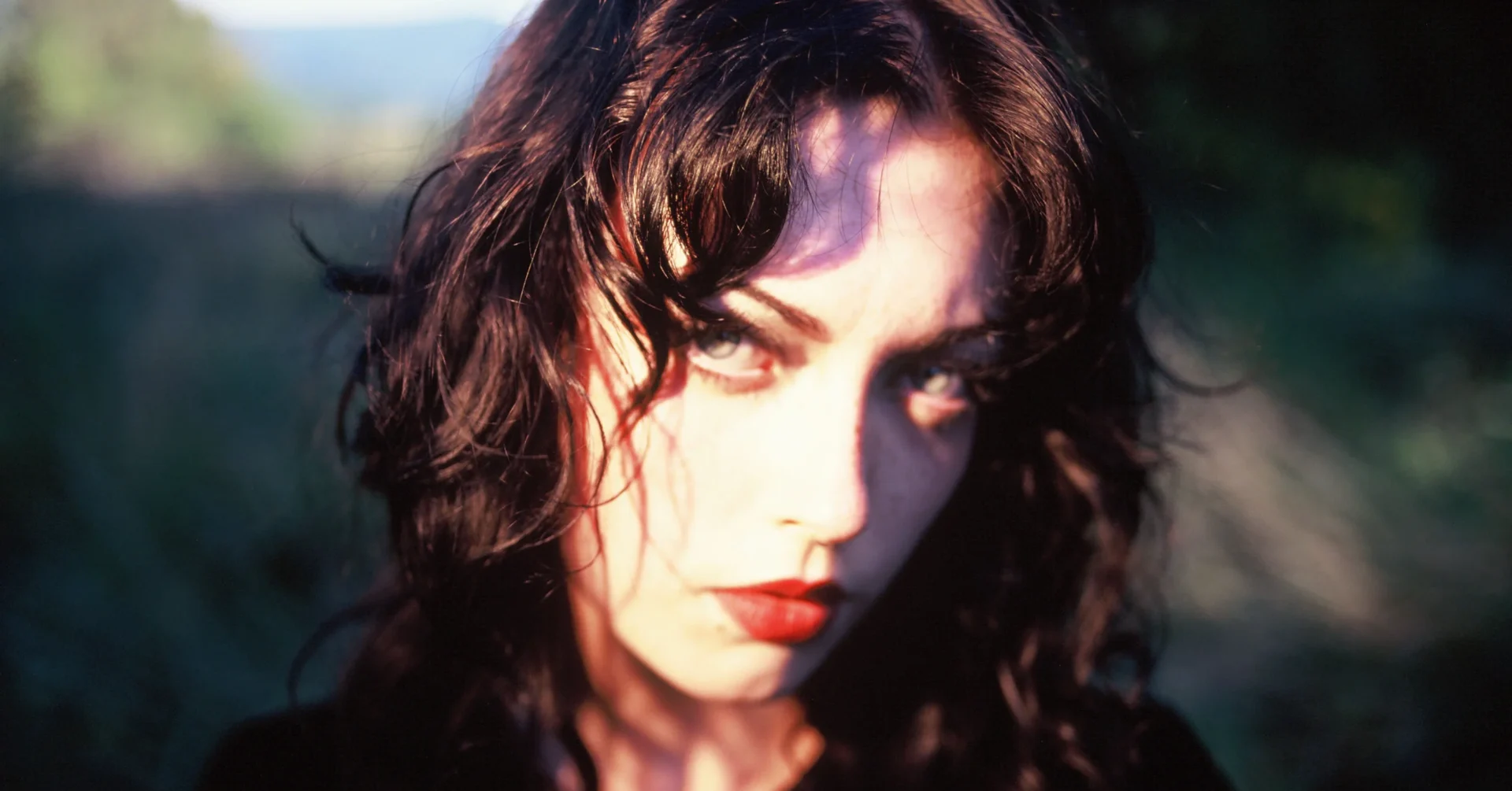
At the 2020 Nirvana reunion show, in what was not even her first highly publicized performance, 13-year-old Violet Grohl joined Krist Novoselic, Pat Smear, and her father Dave for a memorable rendition of ‘Heart-Shaped Box’. By 2025, when the surviving members of Nirvana reunited once again for the Fire Aid benefit concert and she handled vocals for ‘All Apologies’, Grohl already had one thing in common with Kim Gordon, the Sonic Youth legend who was performing alongside her: they’d both made an album with producer Justin Raisen. (Gordon, in fact, had made two, and a third was well on the way.) Inspired by hours-long conversation as well as playlists that spanned everything from trip-hop to Scandinavian black metal, Grohl took her lifelong love of songwriting into the collaborative space of Raisen’s LA studio, experimenting with songs that are by turns naturally grungy, hauntingly ethereal, and altogether dynamic. Now, a few months after the release of her debut album, Be Sweet to Me, and following a brief run of shows that included opening for the Breeders, she’s about to go on her first headlining tour, beginning this Friday in Berlin and stretching through November, before another set of dates supporting beabadoobee.
We caught up with Violet Grohl to talk about her debut album, working with Justin Raisen, her upcoming tour, and more.
Has Be Sweet to Me taken on a new resonance for you since its release? Are there parts of it that have come to light in a different way?
It’s just a new experience for me. It’s rooted in a world that I’ve grown up in and I’ve been around my whole life, but having first-hand experience and going out there and doing it has been really exciting. But the music has definitely taken on new meaning, and my perspective on certain songs has totally shifted. I wrote the album when I was 18, and we did it two years ago, and it kind of sat in the files for a while while we were figuring out all the logistical things behind the scenes. Now it totally feels like something completely different to me, and it feels like a reflection of my life at the time, and even experiences that were prior to that period of my life.
The song that I always think about whenever I think about the meanings changing is ‘Mobile Star’. When I wrote that song, I was so tired that day. I had been in the studio for a couple of weeks at that point, and we had pauses in between, and then we would come back and we would just kind of hammer it out in the studio. And that one was a really laid-back day. It was pretty much me, my producer Justin, Joe Kennedy, who played guitar and played some keys on the record, and our engineer Brad [Lauchert]. We were trying to come up with something, and I had this vague idea of what I wanted the song to sound like instrumentally, but I just didn’t have a clear concept in my head, which isn’t very typical when I’m in the studio space. I usually have a very clear picture, and it all comes together pretty quickly. But that day, I was just really foggy, and the melody that we had written for the keys and the drum beat all felt kind of sleepy to me. I think it really reflected how I was feeling that day, but I know we were all exhausted at that point. And then all of a sudden, I had this visual, kind of a mind’s-eye picture of a baby bassinet with these golden, almost iridescent stars spinning around, and I just started writing about that.
Throughout that recording session, Justin and I were talking a lot about Ian Curtis from Joy Division, and there was this really weird, dark parallel with his passing, the visual I saw, and the lyrics that were coming out. The puzzle pieces fell into place, and it felt like a really disassociated song with the weight of expectations from the outside world, and from people who are trying to look in. But as I’ve gone on, it ended up kind of becoming like a “mobile” [holds up phone] star, and I wasn’t thinking of that when I wrote it, but it kind of started to feel like a song almost about bed rotting going through an existential crisis in your room. Having visions of what you wish the world could look like, but it’s unattainable, and all you’re doing is just sitting in your bed and complaining about it, and a hopeless feeling. But that song has totally evolved and morphed as time has gone on. It becomes different things. But I love that song, and I’m super stoked with the way that it’s been able to move and grow.
I wanted to ask about the vocals on that track, too, because you’re singing so intimately into the mic, and that sense of exhaustion comes through even in the detail of dragging out the word “end.” Were you conscious of exposing your voice in that way in that moment?
Once we had the song written and all of those puzzle pieces were in place, I just kind of went into a daze, and I went into the song. I tend to close my eyes – not always when I’m singing, but especially when I’m recording, because I really like to just feel the music, and I get visuals and colors and stuff like that. But there were just a few little things, lyrically, that I wanted to emphasize; you picked up on holding out, “As we begin, so shall we end.” It was something I was doing consciously, but at the same time, it just was what I heard in my head, and it felt like the way that I had to sing it. But that one’s really special to me, and that whole day was definitely a standout from the rest of them. It was a different energy from all of the other sessions that we did for this album.
I read that you were initially supposed to meet Justin Raisen at an Elliott Smith tribute concert where you were going to perform, but you got sick. Was he one of the artists you talked about when you did get to hang out for the first time? What do you remember about that conversation?
The first time meeting Justin was a trip. I mean, he’s a trippy dude. He’s a perfect caricature of the mad scientist kind of archetype. He’s always running around, he always has an idea, constantly working. But he’s so sensitive and just has that real artistic antenna that can tap into wherever it is that we as creatives pull from when we make art. But he’s just really in tune to that, and he’s able to translate these visual concepts that I’ll come up with into the exact sonics that I’m hearing in my head but I can’t exactly describe properly, or that would take me 30 minutes to find myself on a synth, and he just gets it. Him and I jokingly call it “The Shining,” where we’ll both have the same idea at the same time. We’ll look at each other or we’ll be sitting across the room from each other and brainstorming lyric ideas, and we’ll basically write down the same thing. It’s just this special something that he and I have where the flow of creativity really moves through us when we get together, and when we’re with all of our friends and musical partners.
But the initial hang, we talked about music for anywhere from 6 to 8 hours in his little back studio. We just talked and talked and talked. Elliott came up a lot in the beginning talking about that tribute show that I had missed, and I was so devastated about it. It was truly gonna be one of the highlights of performance for me, and to have it fall apart because I got pneumonia, of course, is just stupid. I was actually supposed to do ‘Everything Reminds Me of Her’ at that show, and so we had talked about that song a lot, because that song is just so emotionally potent. You can just feel his suffering and the pain that he was going through at the time. It’s just engraved into that song, it’s so palpable.
We talked about Elliott’s influence on my songwriting and, you know, growing up around people who knew him. Over time, when I was getting ready for that, I had talked to a bunch of people about him, and I found out that my aunt had seen him at Largo in LA before. I had no idea that she’d ever seen him play, and they hung out at a bar once. It was just so beautiful to hear all these stories about him. Everyone just has this deep appreciation for him, for his art, and just for who he was as a person. I just find that so admirable and so special that even through death, his legacy has left such a massive impact on the people around him, and then newer generations and generations to come. It’s really special.
You talked about your visual approach to lyric writing, which is something that stood out to me while listening to ‘Applefish’. How did your approach to writing lyrics develop as a result of working on this record, and doing so collaborative?
Yeah, I’ve always been a very visual person. I’ve done creative writing since I was a kid. My dad’s mom was an English teacher, and it was always something that was encouraged – I don’t want to say pushed upon me, because it wasn’t forced, but it was always, “This is a really beautiful tool that you have access to, and everyone has access to. Hone in on that, and use it to your advantage.” I started writing songs when I was 12. It started out as a form of journaling, because I’ve never found the release from writing out, “This is what I did today, this is how it made me feel.” That doesn’t get it out of me – it just puts it somewhere else temporarily. But music and songwriting really help to get whatever I’m feeling out, and to express it in a way that is truer to how I feel. I guess I’ve always drawn inspiration from things I see around me, places I’ve been, and little objects around me. As a kid, when I wanted to just write poetry for fun, I would pick objects in my room, or in whatever room I was in, and I would just write about those objects and try to build a story around what I was looking at and how I was feeling.
I think with this album, it made me realize that I was doing that. I wasn’t fully aware of my process – it was just a habitual thing that I did because I needed to do it. Being in a room with other people and writing with other people for the first time, and jamming with the intent to write my music, made me more aware of it. Having people around me, like Justin interpreting those visuals and putting music to those visuals that I’m giving them, was just so eye-opening. It also really helped me let go of these negative attachments and mental blocks that I had when it came to songwriting, and even to singing, doing vocal takes. Since I was 12, I had a little laptop bedroom set up with a MIDI keyboard, an interface, speakers, and a mic. I would literally sit in my room after school for hours doing vocal takes. I would just go back and try to do it over and over again, and I would stop myself eventually and give up because I would get so frustrated that I wasn’t getting what I wanted.
Being in the studio with other people for the first time helped me let go a bit and, you know, do three takes, and out of those three, there will be one that will work. Even if there aren’t three that I like, I can always do one more, and it’s no problem. It made it less frustrating for me. I still come down pretty hard on myself, but not as hard as I used to, and I’m able to actually follow through with projects I’m working on rather than just giving up and scrapping them entirely.
Keeping that memory in mind of singing alone in your bedroom, how do you feel in light of these upcoming shows? What kind of significance does it have for you to take your own songs on the road, especially at festivals like Reading?
It’s all such a whirlwind, but at the same time, I’m doing things that I’ve wanted to do since I was a little kid. Actually getting into the studio and making music, which is something I’ve wanted to do for as long as I can remember, and playing shows with people that I love, like The Breeders, and with a band of people that I love so much and that I made my record with. It’s all really special, and it’s all happened in a way that I’m just beyond grateful for. I’ve been really, really fortunate to be in the position that I’m in, to work with the people I work with, and to make the music I make. But it’s so exciting – and also, I don’t want to say daunting, but it’s a big task to have to really open up and drop the armor, and let those songs come out the way that they’re supposed to come out and the way that they’re written, basically. Not exactly note for note, but the feeling, the meaning, and the intention behind it all.
And that’s honestly the thing that I have the most anxiety about: Am I performing these songs in a way that people will really be able to feel and understand what I’m trying to get across, and what these songs mean to me? I always love hearing people’s interpretations of not just my music, but music in general, and I’ve always loved the way that music and memory are so closely linked, and songs can bring up feelings from a couple days ago or 20 years ago. I just want to be able to provide a real musical experience, because that’s what matters – just the music and how it makes people feel. It’s been so much fun getting all the music ready for tour. We have a blast rehearsing. I’m excited and I’m nervous, and I guess I’m trying not to think about it too deeply, because if I do, then I’ll really psych myself out. [laughs] But this is a really big moment for me. This is something I’ve wanted to do my whole life.
This interview has been edited and condensed for clarity and length.
Violet Grohl’s Be Sweet to Me is out now via Universal.

