

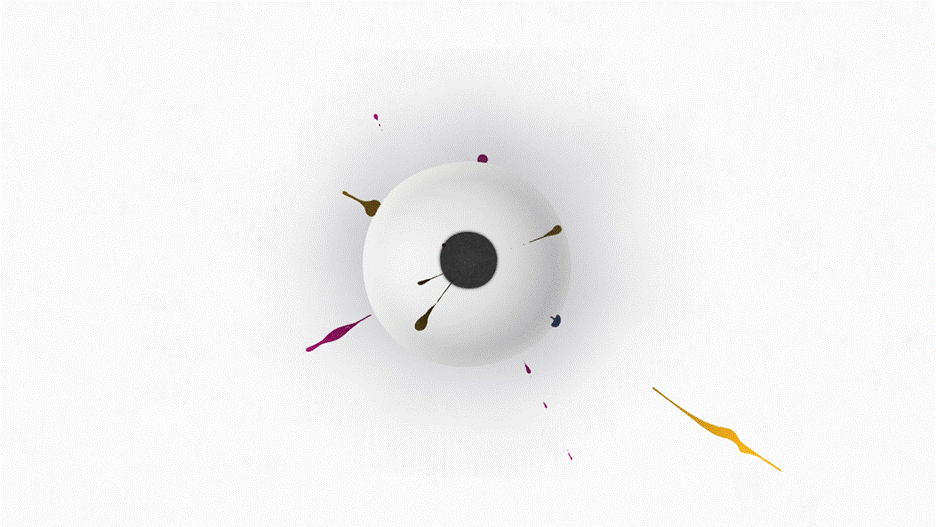
In 2026, digital tools are evolving at a rapid pace, meaning the boundaries defining animation and motion design are rapidly shifting. Traditional visual pipelines have historically forced creators into narrow specializations—separating keyframe animators from 3D generalists, procedural artists and software developers.
Yet, Los Angeles-based cross-disciplinary animator and motion designer Anna Huijun Wang demonstrates that true innovation emerges when an artist refuses to be constrained by single-medium boundaries.
Operating fluidly across hand-drawn cel 2D animation, 3D render environments, procedural motion systems, compositing and generative AI pipelines, Wang has built an influential body of work. As a 2D animator at BUCK, she has worked on campaigns for clients including Apple, Google, and Airbnb, her professional practice spans high-profile commercial work — including HoYoverse’s Annie-nominated Natlan Impressions trailer and Airbnb’s Webby-winning “Get an Airbnb” campaign — alongside award-winning independent films and public art installations.
For Wang, technical versatility is not merely a collection of software skills; it is a fundamental mindset required to answer complex visual questions in modern production.
“The questions that come up in production don’t respect those software boundaries,” Wang explains. “Take artificial intelligence. Doing it well isn’t a matter of knowing which model to use or how to write a prompt; it’s knowing how images and motion work underneath. If you need consistent camera movement across generated shots, you have to understand depth maps well enough to drive two different images so they move the exact same way.”
“That isn’t just AI knowledge,” she adds. “That is motion picture fundamentals applied to a new tool.”
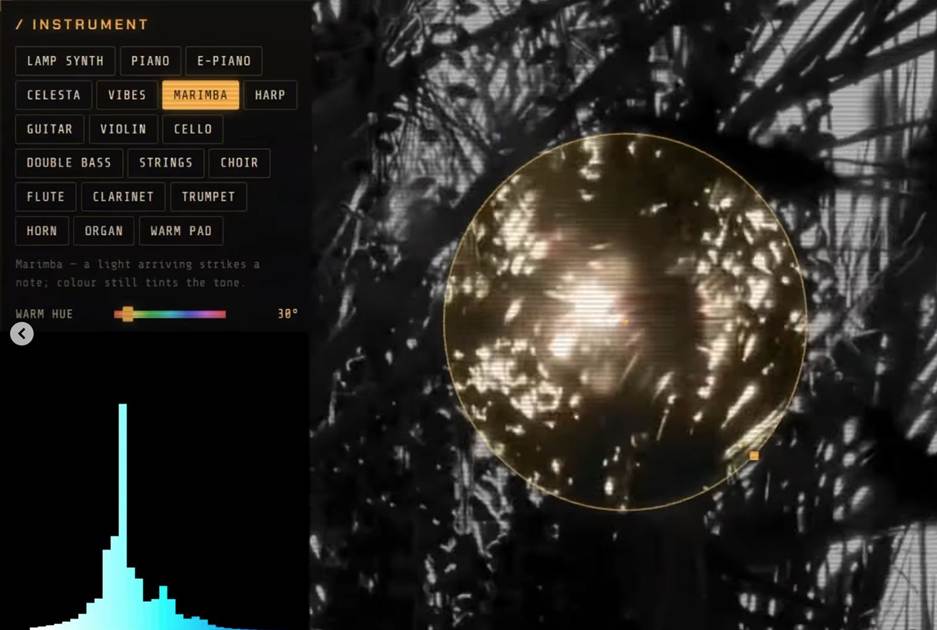
Blending Mediums: The Narrative Architecture of OROBORO
The power of Wang’s hybrid approach is seen in her internationally award-winning independent short film, OROBORO. A visual exploration of identity, memory, and impermanence, the piece earned top global honors, including a MUSE Creative Awards Gold, a Telly Award, and Motion Design Awards’ Video of the Day.
In OROBORO, a character accumulates dimensions, images, and experiences, with each rendered in a distinct visual medium, from hand-drawn cel 2D animation to Cinema 4D physics simulations, until those accumulated layers form a self that eventually dissolves back into a blank canvas.
“The idea came first, and the technique followed from it,” Wang notes. “The film is about the layers a person accumulates—experiences, images, filters—and how we mistake that accumulation for a self. So, I treated each state the character passes through as a different medium. The material the film is made of carries the meaning rather than simply illustrating it.”
Combining cel animation with 3D physics posed significant technical challenges, as two mediums with vastly different rules for weight, lighting, and texture risk reading as separate pieces stitched together.
“Three things solved it: motion continuity, match cutting, and design coherence,” says Wang. “I designed a movement that carried across transitions so the eye followed a trajectory through the change rather than stopping at it.”
Wang notes she used fast match cuts where compositions rhymed across the edit. “I ensured that 2D and 3D elements shared a unified visual language within every frame,” she adds. “The milestone I’m proudest of is that the technical solution and the core idea turned out to be the exact same thing.”
Navigating the friction between mathematical precision and human imperfection is central to Wang’s aesthetic philosophy. Procedural animation reads as exact, sleek, and structured, whereas traditional frame-by-frame cel animation carries a human warmth derived from subtle line wobbles and timing variations.
“The hardest part isn’t technical compatibility—it’s controlling style,” Wang emphasizes. “If you put procedural precision and hand-drawn irregularity together carelessly, the piece looks like two different films arguing with each other. The goal is deciding where precision should dominate, where hand-drawn work should, and being deliberate rather than letting tools set the tone by default.”
To achieve visual harmony, Wang approaches multi-medium workflows from two strategic directions. Sometimes she builds the procedural layer first because it’s harder to control, and then hand-animates on top of it to set the style and “warm it up,” as she calls it.
“Other times, I animate by hand first, then bring those frames into a procedural tool to manipulate them into the final design system,” said Wang. “Either way, the goal is intentionality. When it works, you get something neither approach could produce alone: precision with a pulse in it.”
Wang’s cross-disciplinary mastery has helped reshape how animation interacts with physical space and broadcast culture. Her independent film Starry Night was selected from 735 global submissions for “The Screen” mapping open call at OFFF Barcelona 2026, where it was projected at architectural scale onto the geometric façade of the Disseny Hub Barcelona.
Additionally, her spatial installations include Wired for Wonder: A Multisensory Maze at Kidspace Children’s Museum, developed in collaboration with the Getty Museum for PST ART, and public building projections for USC’s Rhythms + Visions initiative.
This expansive work across physical and digital formats mirrors the evolving landscape of title and motion design recognized by the Television Academy.
“What strikes me most about the Television Academy’s Motion & Title Design peer group is simply that it exists,” Wang notes. “Motion design carries deep narrative meaning now, not just decorative polish. Admission is credit-verified by peers in the discipline, which is a meaningful form of recognition.”
She explains that the line between broadcast and digital has dissolved. “The same craft principles apply whether you are designing a main title sequence, a digital campaign, or a projection mapped onto a building,” explains Wang. “The medium changes; the core thinking doesn’t.”
Storytelling as an Emotional Catalyst
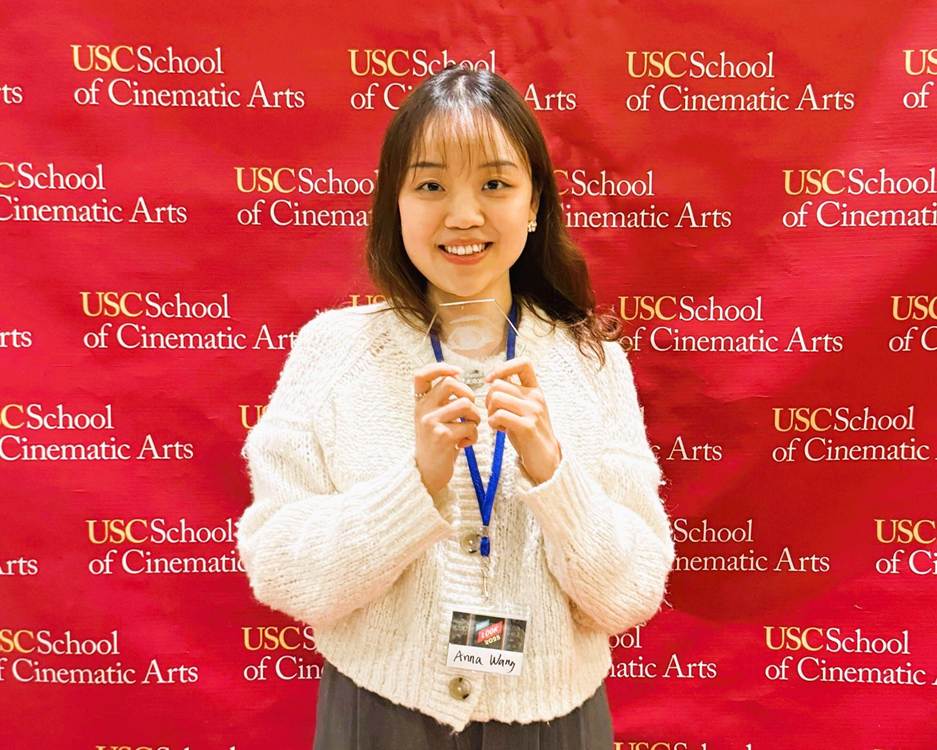
When guest lecturing or reviewing portfolios for animation students at the USC School of Cinematic Arts, Wang urges emerging creators to prioritize narrative intent over software trends. Her advice to emerging designers is to remain authentic.
“Start from what you want to make, not from what’s trendy,” Wang advises. “Chasing tools produces work that looks like everyone else’s. The better order is to figure out the story you want to tell, then work out what technical workflow it needs. If a narrative needs a camera moving through 3D space, go learn 3D. If it needs fluid simulation, go learn Cinema 4D. Every tool I know, I learned because a story wouldn’t work without it.”
Ultimately, for Wang, technical toolmaking and multi-medium pipelines exist to serve emotional human connections. “Storytelling is the whole reason for technique,” Wang concludes. “I don’t think of myself as someone who just makes things move; I think of myself as someone asking a question and using motion to give it a body.”
To Wang, there are so many tools available now that make it easier to execute a creative idea technically. “Adapting is the habit of the cross-disciplinary designer—and as technology continues to evolve, the sheer range of what we can create only becomes more exciting,” she says.

