

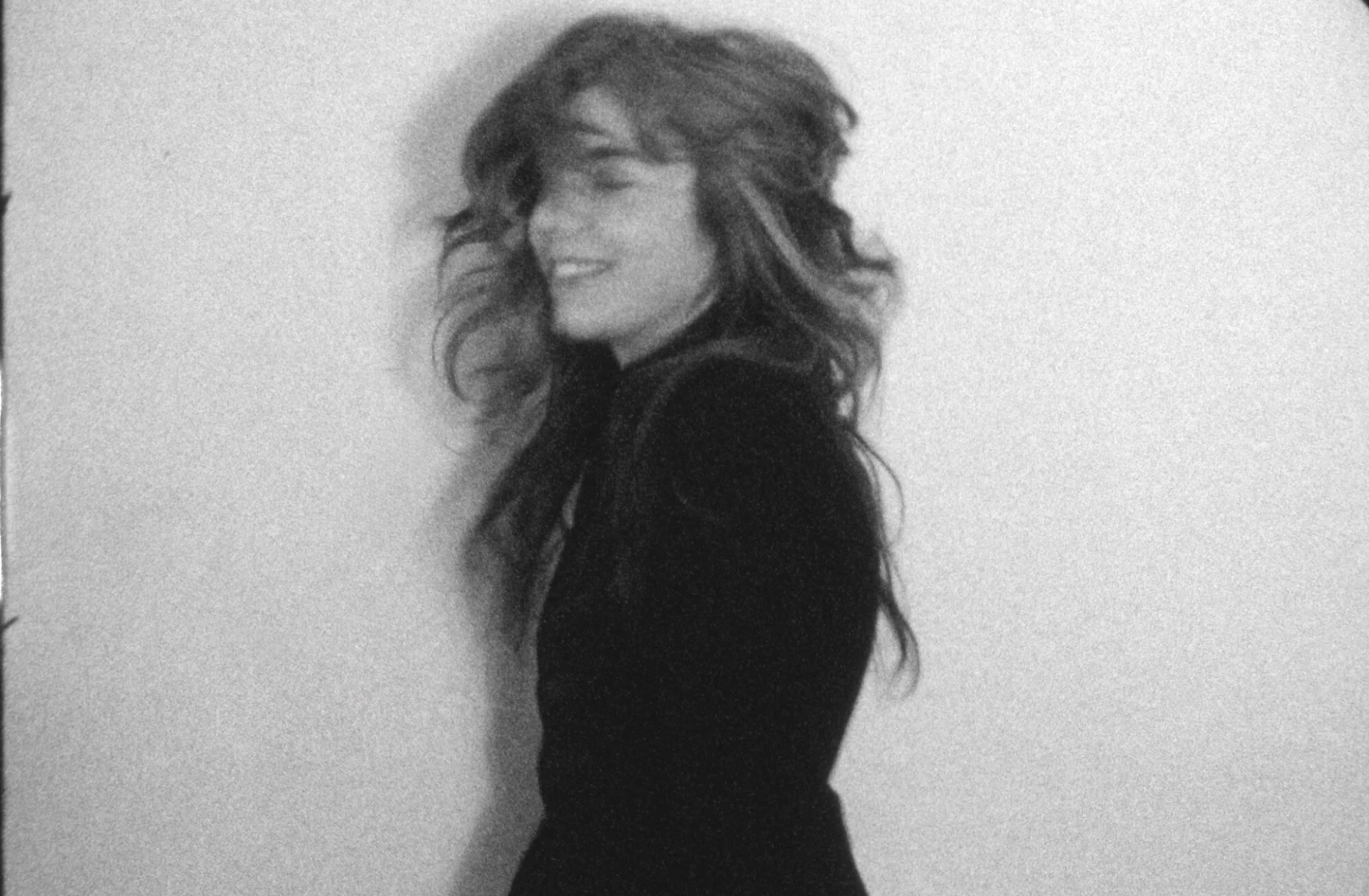
On the opening track of her latest album Materia, Julia Holter delivers a quietly revelatory line about needing to “learn to make the sweetness stay.” Instead of trying to preserve the sensation by abstracting it, the artist lingers in the fluid, wondrous space of her previous record, Something in the Room She Moves, taking its bones and making something new out of them. In finding its way to the final recordings, the improvisational quality of these songs, some of which date back to lockdown, makes day-to-day survival feel like a daydream, suspended between domestic bliss and nationwide horror, homebound experiments and full-band production, a life at once sequestered, well-travelled, and twinned in that of your neighbour. Rearranging melodies, stretching out ideas, and conceiving fresh ones out of the well that produced Something in the Room She Moves, the new album is not only Holter’s most obvious but subtly illuminating effort in weaving magic out of the familiar, visions of abundance through minimalism. Whether you call it a companion piece or a sister record, it’s one of today’s most fantastically inventive musicians putting faith in the work of reimagination. Love it enough, and the sweetness hardly feels ephemeral.
We caught up with Julia Holter to talk about touring, the domestic setting, freeways, and other inspirations behind Materia.
The touring band
I was reading about how you were making ‘The Laugh Is in the Eyes’ in the middle of touring, which inspired you to make something new with your current lineup. I’m curious how the thought of being able to play these songs live factored into the process in a way that wasn’t so prominent before.
I was just in between tours, and I was like, “We should make another song. It would be cool to make a song.” I didn’t think a lot about it. I was just making something, and something that would work with the group and was fun to make. When I say I didn’t think a lot about it, I just mean I didn’t come to it with a lot of intention or put pressure on it. But I decided to record it and make more songs. I’ve always loved the bands that I’ve worked with. They’ve always been full of musicians that are great, and there’s, of course, also a lot of overlap – various people have been playing together for a long time with them. In this particular band, it was just four of us, but also Kenny [Gilmore], so it was really five – Kenny, who co-produced the record with me, doing sound. It was much more performance-oriented in some ways on this record – even in the solo tracks. The performance of ‘My Lost One’ is maybe one and a half takes. We just didn’t have time, but it also was great as it was. Usually, if I’m doing a record, I would have the time and do lots of takes, and then I would overthink.
I think that focus on performance is pretty important here, because if you compare it to Something in the Room She Moves – even though I didn’t have a lot of time on Something in the Room She Moves compared to Aviary, I think that record is very typical of my records. ‘Sun Girl’ is the most extreme of all the songs in terms of it not being a performance so much as a collage of sounds that we captured and that I put together and did heavy production. There’s heavy production on this material, too – I’m realizing something while I’m talking: Materia has this focus on the performance maybe more than usual, but there are actually elements of that with Something in the Room She Moves, too, because there’s ‘Talking to the Whisper’, and there are songs that we did record in that similar way where it was the rhythm section and myself, and that became the foundation of the song. But we had more time, and it created this slightly different focus than I usually have, which was a lot more about capturing an improvisation or performance on Materia. I guess it’s just more extreme on Materia.
I should name the people who performed on it: Beth Goodfellow on percussion, Devra Hoff on fretless bass, Tashi Wada on analog synths, and me playing a lot of Yamaha CS-60 and keyboards generally. And then there’s Maia, who plays flute on ‘My Lost One’, and Chris Speed, who is all over this record with both saxophone and clarinet. My friend Jessika Kenney sings on ‘Materia 2’. All of these people were a huge part of the sound on the record. Kenny was doing sound for the live shows, so because he knew the record, he was bringing it out live. We don’t have backing tracks live – sometimes Beth is playing samples, but it’s very much live.
What I’m getting at is this in-between space between performance and recording. Because we were doing this live, Kenny was doing the things we would normally do in production for the record, but applying those effects live. There becomes a blur between live performance and recording. In the past, I used to have a lot of separation between those things; I thought of live shows as completely different than a recording in energy and experience. But it became this connection between what was happening live and what we were doing on the record. It didn’t feel crazy to be like, “We recorded this, and tomorrow we’ll perform it.” I know that’s what everyone does, but sometimes to me, the difference between recording and live can be so vast. I guess for me it wasn’t so vast, but I’m not sure what the significance of that revelation is.
Trains and freeways
My mind went to ‘My Twin’ and that image of drifting to sleep while driving. Do you tend to come up with ideas when you’re literally on the road, or was it a part of the process in a different way?
It’s not very profound, but when we made the video for ‘Fantasy’ with Dicky [Bahto], for some reason ‘Fantasy’ needed to have a train in it. It just felt like a train song. I don’t think Dicky thought that way, but he obliged – looking out the window on a train, that image felt like how I wrote that song. I do spend a lot of time driving because I’ve been teaching music lessons – a class or two – at CalArts, which is about 30 to 40 minutes from where I live. Taking the freeway became really helpful for Materia, because I was listening to it in the car. I was really struggling with Materia, especially with the song ‘Fantasy’, and almost gave up on it many times.
It really helped to listen to it in the car. I tell my students to do this all the time now – if you live in New York City or don’t have a car, listen on the train or subway, just something moving. It helps contextualize the music. It helped a lot to listen to ‘Fantasy’ in particular, but generally Materia overall. Both ‘Fantasy’ and ‘My Twin’ were ones that I fussed with and struggled with a lot. ‘Fantasy’ is more complicated in terms of the content of what I was dealing with, while with ‘My Twin’, I was just trying to realize what it wanted to be production-wise. Listening to both of those songs on the freeway was helpful during those 35-minute drives. I’m not stuck in traffic, that’s the thing – if you’re stuck in traffic, it’s not fun. [laughs] But that kind of movement does something that helps you zoom out. It was helpful for me in making Materia because it kept me from getting frustrated and helped me realize what was working and what wasn’t. Driving up the freeway was kind of a guide for me.
Corrupt federal government
Again, my mind went to a specific line: “Blink at the light and hope to survive.” You singled that line out in talking about the song ‘Fantasy’ when it came out, and I was wondering if you could elaborate on that sentiment of “daydreams being scary in a fascist state.”
It was just what was going on when I was making something. This record was a specific thing, so it’s sort of hard to talk about the inspirations, and I’m just talking about what was going on in my head. A lot of people probably hate what I’m saying right now, but I feel like there’s always this question of whether your record is personal or political. I feel like it always is both. Art is always personal and political; it’s all in there. There is work that is explicitly political that is trying to send out a message, and I realize that, but we all come from a certain context and have certain experiences, and that makes it political in a way. And personal as well – we make choices out of our own personal experiences. So I don’t think there’s more personal music and less personal music. It might be that there’s more political music, but I think it’s all connected.
When I was finishing up Materia, it was the height of the ICE raids in LA, which are terrible now, too. I saw some things – there are lots of different ways to be involved, but one thing is observing, seeing what’s happening, and alerting neighbors to try to help people stay safe. It was very upsetting to see people being kidnapped by federal agents. It’s very disturbing, and our government just keeps pouring money into this.
I know this isn’t explicitly in my record, but that was happening while I was making it, and it’s sort of in there for me. In ‘My Twin’, the poetic idea behind it was not present in the original improvisation; that was developed over the past year when I was making it. I usually don’t talk about things in this way because I don’t want to impose on the listeners, but you can think of it as a duality of experience: my privileged experience of not being targeted and someone else’s experience of being targeted for their race, where their family came from, or the color of their skin. That’s an example of how you could experience that song, that split where people just have very different experiences, and it’s all kind of chance. Watching what’s going on in Gaza for the past three years has been really unbearable, just seeing my government dropping bombs on people. It’s hard for people to process when there’s this duality of experience, knowing that it could be you – why not?
It was an inescapable thing that was on my mind when I working on this record. Definitely the line that you mentioned from ‘Fantasy’ has an element of that: the feeling that no one’s safe when there’s an armed agent with a gun and innocent people are just standing there being shot. That human vulnerability in front of that kind of force is something we all should be aware of.
Touring
How do you differentiate the touring experience from the band as having an impact on the record?
I’ll be honest, I’m kind of a homebody and I get stressed about the idea of touring. But then once I’m on tour, it’s amazing. One of the things that’s special about touring is that you really learn the songs so well. You get so good at playing them because you’re playing them all the time. That’s something people who haven’t had the privilege to tour are really jealous of, and I get it – it’s really a luxury to be able to play so much and get really good at playing stuff. I’ve appreciated that on every tour, and my bands are always so great. This band was cool because it was smaller than my last band. The Aviary band was kind of my fantasy band; it was incredible, like having an orchestra on stage. It was really massive; for an artist my size, it was very ambitious to bring that many people on tour.
This band feels like a contrast. It’s much more focused. There were only four of us, but if you say there were five of us because of Kenny, there were seven of us in the Aviary band. This time around, it felt very tightly knit. Everyone in the band expressed that it felt focused in a nice way, solid, and fun in that tightness. Something about it being a smaller group made the sound production of the live show more of a thing than ever. And our kid was with us, which obviously makes certain things a little harder, but it was really fun, and she really enjoyed it.
Domestic setting
We mentioned daydreams, and I feel like the domestic setting is where they materialize on the record. Part of what struck me about your interpretation of ‘My Twin’ is domestic bliss feeling like a dream in that song. But I wanted to zero in on ‘Clepsydra’, which we haven’t talked about, because there’s something in there, too, about how home messes with your understanding of time.
Yeah, well, there’s the song ‘Something in the Room She Moves’ from that record, and that whole thing started in 2020 during the pandemic. I was very at home, like everyone else. The imagery there was actually me imagining being right where I’m sitting right now in my house, right by the window. I always think of this part of the house when I think of that song – it’s weird, I never realized that. There’s something about a green screen and a scene on the beach, so it’s like you’re transposing the beach into your room. That’s sort of what the pandemic was like – this constant bringing of the outside into the inside. That comes through a little on Materia as well. On ‘My Lost One’ I talk about that, but ‘Clepsydra’ and ‘My Twin’ are also from that same time period.
It’s kind of boring to talk about COVID now, and no one really wants to, but because parts of Materia date from 2020, it’s part of it. And yeah, time moves in different ways when you’re just at home, and the measuring of time, in terms of the lyrics in ‘Clepsydra’. I actually have another song from 2008 that is about this, too, called ‘Measure What More’. I just have a funny relationship with time as a person who’s late a lot.
Children’s books
You mentioned your child being on this tour, and I read about how reading children’s books at night specifically inspired ‘My Lost One’ lyrically. I’m curious if you could talk about that song, but also whether you find inspiration in that period of time after your kid falls asleep. I’ve talked to artists who really treasure that little pocket of time.
It was more extreme when my child was younger. Now I have a bit more time to work, but when you have a really young child – it depends on your situation, but this was the pandemic. But that time at night, it’s precious to have some time for yourself and to have space to think. There’s something funny about that time of night when I’m reading to Simone, my child. I’m a little delirious because I’m really tired, and I’m reading these really weird stories. [laughs] Then I go to sleep next to my child – not intentionally, but we fall asleep together afterward – and there’s weird stuff floating in my brain because children’s books can be very strange.
It’s really that simple, but also them being sometimes stories that I read as a kid – often not, but sometimes. There’s this thing of anthropomorphism, I guess that’s the word. It’s a big part of children’s stories, along with the superimposition of fantastical places onto the familiar. Where the Wild Things Are is a really good example, like trees growing inside houses. There’s a specific thing about children’s books that I’ve noticed and tried to bring out in ‘My Lost One’, which is that sing-songy element with nonsense syllables like a “do-we-do” or “la-la-la.” It has this kind of creepy quality.
Love
With love, there’s a parallel I can think of from the abstract to the more technical things, coming back to the performance focus of the record. Having my first long relationship with my partner, Tashi – we’ve been together as romantic partners for over 10 years now – and also having a child, you learn that in any long-term love, there’s a constant level of zooming in and zooming out. We change as people, and how our love can exist through change – we change in different ways as individuals, but we still love each other. Families are so fraught, people have horrible family relations – I love my family, but I’m 41, and I know a lot of family dynamics. Love is so hard, and having a child comes with a lot of challenges.
To me, having a sense of improvisation is actually a useful skill that musicians have to live their lives. To be able to accommodate change, or the struggles of having a newborn; postpartum depression that people have after they give birth, all these things that are really hard on relationships, and also make it hard for your relationship with your baby at first. All those challenges in love are so much a part of love. To me, it’s similar to music with improvisation: you learn to work with what’s there and engage with it. I think that’s why I’m appreciating Materia so much. I feel like I put a lot of love into it. It’s not really a qualitative statement; I’m not saying I think it’s a brilliant piece of art – it’s just something I made. I’m not building it up, but I feel love for it because I think it was at a place where I wasn’t happy with it, and then I worked with it and found a way. Like, “Oh wow, there’s something new here. I’m making something meaningful.”
Sometimes people ask me, “How do you know a song is worth keeping and working with?” It’s a really hard thing. I talk about this with students a lot; it is hard. I had this with ‘Fantasy’. I had these conversations with a friend who’s a writer, and she hadn’t heard the song, but she was like, “What you’re describing to me sounds kind of like this thing where I call it ‘polishing a turd.’ [laughs] You keep trying with something, but it’s not working.” There was a point with ‘Fantasy’ where I was like, “I don’t think this is working.” But I had this feeling every time I’d hear the riff, and I was like, “I do believe in it, though. I think this is special.” It sounds really cheesy, but it’s true. I realized I needed to process it a certain way, so I did some reverb stuff with it, and I sent it through just the right thing that made it sound just the right way, and it finally worked. Technically, it was a timbral thing that was bugging me. Sometimes it’s a compositional thing for people. There can be a lot of structural issues with a song.
Sometimes it’s not worth doing, and sometimes it is. I feel like it’s a good thing to have in life, too, where it’s like, do I want to be with this person, or do I want to maintain my relationship with my difficult cousin? Maybe I’m just trying to connect life and art a little too much, but I think it’s true that with deep love, you enjoy trying new things with it and working with it. Learning from each other, like in the case of my relationship with Tashi – he and I are both artists, so we’re always talking. We work together a lot in music and we grew from a similar time period in LA. He also has a whole back history with art, even from childhood, growing up around it, which is separate from me. But as adults, we grew up in LA as artists, and I can’t help but connect those things with our relationship.
Simone Forti, who I know through Tashi, is an artist who just passed away, who we were close with. Maybe she brings out this thing I’m trying to explain, connecting improvisation with love somehow. Not forcing it, not trying to impose abstract ideas onto movement, in her case, or art in general, but this elemental connection between improvisation and life and love is really well articulated in her work. That’s been on my mind a lot as I’m reading her biography right now, and there are elements of what I’m talking about on that record that are why I appreciate it.
This interview has been edited and condensed for clarity and length.

